

Skip to content
  • Facebook
  • X
  • Linkedin
  • WhatsApp
  • YouTube
  • Associate Journalism
  • About Us
  • Privacy Policy
  • 033-46046046
  • editor@artifex.news
Artifex.News

Artifex.News

Stay Connected. Stay Informed.

  • Breaking News
  • World
  • Nation
  • Sports
  • Business
  • Science
  • Entertainment
  • Lifestyle
  • Toggle search form
  • Access Denied Sports
  • Access Denied Business
  • With Focus On ‘Act East’ Policy, PM Modi Meets Top Asian Leaders In Laos
    With Focus On ‘Act East’ Policy, PM Modi Meets Top Asian Leaders In Laos Nation
  • Access Denied Sports
  • Access Denied Business
  • Maharashtra Discom Staffer Goes To Collect Bill Of Rs 6,000, Gets Beaten Up: Cops
    Maharashtra Discom Staffer Goes To Collect Bill Of Rs 6,000, Gets Beaten Up: Cops Nation
  • Yes, History Will Be Kinder To You. For Manmohan Singh, A Deluge Of Posts
    Yes, History Will Be Kinder To You. For Manmohan Singh, A Deluge Of Posts Nation
  • Access Denied Sports
What citizenship laws do countries follow? | Explained

What citizenship laws do countries follow? | Explained

Posted on February 1, 2025 By admin


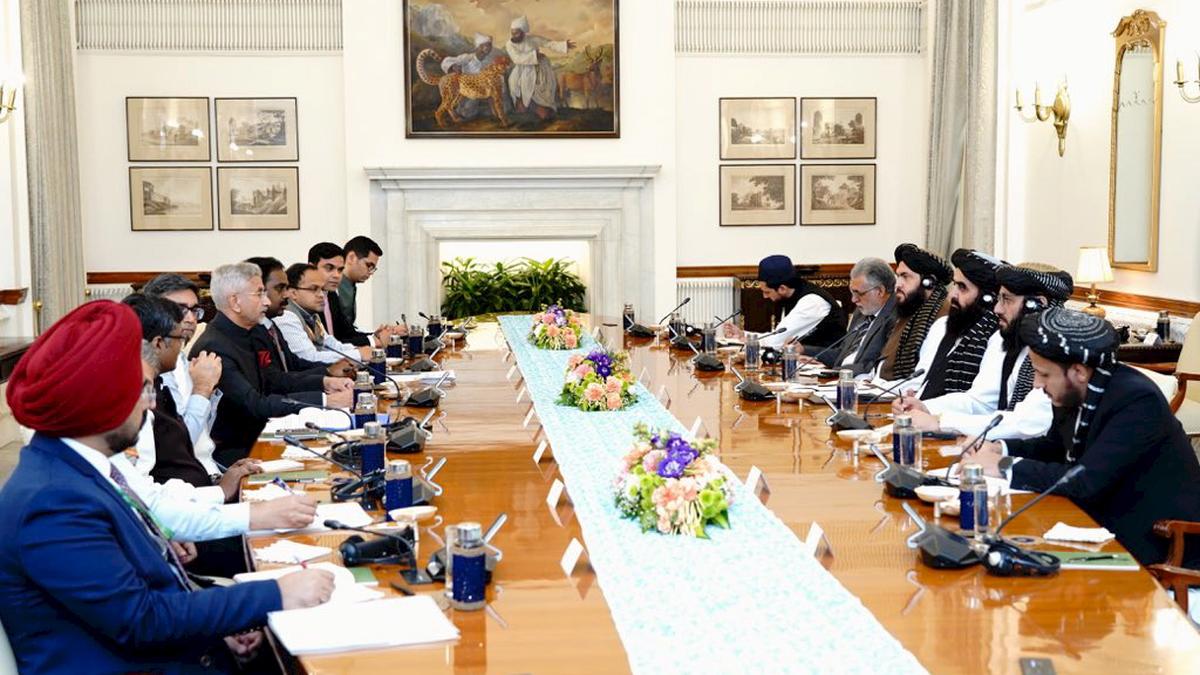
President Donald Trump signs an executive order on birthright citizenship in the Oval Office of the White House on January 20, 2025.
| Photo Credit: AP

The story so far: In the gale of executive orders announced after Donald Trump assumed office for a second term, the President issued one diluting birthright citizenship, which has been written into the U.S. Constitution since 1866. The order has been challenged in court in more than 20 States and a federal judge has temporarily blocked it. If implemented, it will mean that children born to illegal immigrants — as well as those legally in the U.S. on temporary visas for study, work or tourism purposes — will not be eligible for automatic U.S. citizenship. At least one parent must now be a U.S. citizen or legal permanent resident, the order says.

What is the history of birthright citizenship?

The 14th amendment to the U.S. Constitution, which granted citizenship to “all persons born or naturalized in the United States, and subject to the jurisdiction thereof” was enacted in 1866, against the backdrop of the Civil War which had just ended, and was an effort to guarantee equal civil and legal rights to Black citizens. It was meant to overturn the infamous U.S. Supreme Court ruling of 1857 in Dred Scott vs Sandford, which held that enslaved people brought to the U.S. and their descendents could not be citizens of the country.

The principle was challenged in the 1890s, a time of rising anti-immigrant sentiment, when Wong Kim Ark, born in the U.S. as the son of Chinese nationals, went to visit relatives in China and was denied re-entry into the U.S. on the grounds that he was not an American citizen. In 1898, the Supreme Court upheld his citizenship, establishing that “every citizen or subject of another country, while domiciled here, is within the allegiance and the protection, and consequently subject to the jurisdiction, of the United States”. Over a century later, Mr. Trump is seeking to contest the court’s interpretation of “jurisdiction”, arguing in his executive order that the children of those “unlawfully present”, or whose residence in the U.S. is “lawful but temporary”, are not subject to U.S. jurisdiction. His supporters rail against the practice of birth tourism, or anchor babies, where foreign nationals seek to give birth in the U.S., in the hope that those babies will be able to help their families migrate to the country as well.

How do citizenship laws vary elsewhere?

The U.S. follows the principle of jus soli (the right of soil), based on geography regardless of parental citizenship, as opposed to jus sanguinis (the right of blood), which gives citizenship based on the nationality of the child’s parents. According to the CIA’s World Factbook, there are only 37 countries which currently enforce the jus soli principle, of which 29 are in the Americas. Of the other eight, two are in India’s neighbourhood: Nepal and Pakistan, though the latter introduced a Bill seeking to end this.

Jus soli historically allowed colonisers to quickly outnumber native populations as citizens. “Countries that have traditionally built their national character through diverse immigrant populations have used jus soli as a way of integrating diversity into the common stream of nationhood,” says Amitabh Mattoo, dean of the School of International Studies at Jawaharlal Nehru University, adding that countries protective of their culture and identity have generally followed the principle of jus sanguinis. Jus soli derives from English common law and, until anti-migrant backlash a few decades ago, was implemented in the U.K. and most of its former colonies, including India.

India offered automatic citizenship to all those born on Indian soil before 1987. Introducing the Citizenship Bill in Parliament in 1955, then-Home Minister Govind Ballabh Pant said, “The mere fact of birth in India invests with it the right of citizenship in India…we have taken a cosmopolitan view and it is in accordance with the spirit of the times, with the temper and atmosphere which we wish to promote in the civilised world.” Three decades later, sentiments had changed, in the wake of unrest in Assam due to increasing migration from Bangladesh as well as the influx of refugees from Sri Lanka, following the civil war there. “The time has come to tighten up our citizenship laws…We cannot be generous at the cost of our own people, at the cost of our own development,” said P. Chidambaram, Union Minister of State for Home Affairs, while introducing the Citizenship (Amendment) Bill in the Lok Sabha in 1986.

Will the order affect Indian immigrants?

“America once considered itself a melting pot, welcoming immigrants to become citizens, but has lately abandoned that metaphor for the salad bowl of distinct ethnicities. The rise of identity politics as well as political Islam has led to this desire to redefine citizenship,” says Professor Mattoo. “It will certainly result in reduced immigration, both legal and illegal.”

Of the 47.8 million immigrants living in the U.S. in 2023, 2.8 million were born in India, the second-largest group after those born in Mexico, according to data analysed by the Pew Research Center. About 1,45,000 people born in India are estimated to have arrived in the U.S. in 2022, legally and illegally. There are estimated to be 7,25,000 illegal immigrants from India living in the U.S. Every year, more than 70% of H1B visas — a temporary work visa that is often seen as a pathway to permanent residency — are issued to Indian citizens. There are more than 3,30,000 Indians in the U.S. on student visas, many of whom hope to apply for permanent residency. Over a million Indians, including dependents, are also waiting for employment-based green cards. For many of them, Mr. Trump’s order comes as a blow. Reports have emerged of dozens of pregnant women on temporary visas seeking to give birth prematurely before the order comes into effect, so their children can be born as U.S. citizens.

Published – February 02, 2025 05:15 am IST


Source link

World Tags:Birthright Citizenship, Citizenship laws, India citizenship laws, Indian immigrants in U.S., Principles for granting citizenship

Post navigation

Previous Post: What citizenship laws do countries follow? | Explained
Next Post: Taliban have no legal right to multibillion-dollar Afghan fund, says U.S. watchdog

Related Posts

  • Donald Trump calls for  trillion from an initially promised 0 billion Saudi investment, lower oil prices
    Donald Trump calls for $1 trillion from an initially promised $600 billion Saudi investment, lower oil prices World
  • More than 7,000 student exchange visitors from India overstayed in U.S. in 2023: Expert tells lawmakers
    More than 7,000 student exchange visitors from India overstayed in U.S. in 2023: Expert tells lawmakers World
  • France Orders Apple To Stop iPhone 12 Sales Over Radiation Concerns
    France Orders Apple To Stop iPhone 12 Sales Over Radiation Concerns World
  • New Zealand Changes Visa Rules To Meet Labour Demands. How It May Affect Indian Migrants
    New Zealand Changes Visa Rules To Meet Labour Demands. How It May Affect Indian Migrants World
  • Access Denied World
  • US Senate May Set Up Court Showdown Over TikTok’s Free Speech Protections
    US Senate May Set Up Court Showdown Over TikTok’s Free Speech Protections World

More Related Articles

Russians Urged To Have Sex During Work Breaks Amid Country’s Declining Birth Rate Russians Urged To Have Sex During Work Breaks Amid Country’s Declining Birth Rate World
Tanzanian president names ‘mischievous’ lion after opposition leader Tanzanian president names ‘mischievous’ lion after opposition leader World
Access Denied World
Syrian army and SDF reach ceasefire deal in Aleppo city following clashes Syrian army and SDF reach ceasefire deal in Aleppo city following clashes World
Russia-Ukraine war: EAM Jaishankar raises safety of Indians with Russian counterpart Lavrov Russia-Ukraine war: EAM Jaishankar raises safety of Indians with Russian counterpart Lavrov World
China Faces New Virus Outbreak Five Years After Covid Crisis China Faces New Virus Outbreak Five Years After Covid Crisis World
SiteLock

Archives

  • May 2026
  • April 2026
  • March 2026
  • February 2026
  • January 2026
  • December 2025
  • November 2025
  • October 2025
  • September 2025
  • August 2025
  • July 2025
  • June 2025
  • May 2025
  • April 2025
  • March 2025
  • February 2025
  • January 2025
  • December 2024
  • November 2024
  • October 2024
  • September 2024
  • August 2024
  • July 2024
  • June 2024
  • May 2024
  • April 2024
  • March 2024
  • February 2024
  • January 2024
  • December 2023
  • November 2023
  • October 2023
  • September 2023
  • August 2023
  • July 2023
  • June 2023
  • May 2023
  • April 2023
  • March 2023
  • February 2023
  • January 2023
  • December 2022
  • November 2022
  • October 2022
  • September 2022
  • August 2022
  • July 2022
  • June 2022
  • May 2022

Categories

  • Business
  • Nation
  • Science
  • Sports
  • World

Recent Posts

  • ATS questions 57 in Maharashtra over alleged gangster network links
  • Nicobarese oppose proposal for three wildlife sanctuaries
  • Visakhapatnam Collector calls for inter-departmental synergy to boost investments
  • Kohli’s masterful knock powers Royal Challengers to the top
  • Senior IPS officer Asra Garg posted IGP Intelligence

Recent Comments

  1. RichardClage on UP Teacher Who Asked Students To Slap Muslim Classmate
  2. StevenLek on UP Teacher Who Asked Students To Slap Muslim Classmate
  3. Leonardren on UP Teacher Who Asked Students To Slap Muslim Classmate
  4. NathanQuins on UP Teacher Who Asked Students To Slap Muslim Classmate
  5. Davidgof on UP Teacher Who Asked Students To Slap Muslim Classmate
  • Canada Call For Accusations Against India Met With US’ Reluctance: Report
    Canada Call For Accusations Against India Met With US’ Reluctance: Report Nation
  • Moment When Huge Boulders Crush Moving Trucks In Peru
    Moment When Huge Boulders Crush Moving Trucks In Peru World
  • Access Denied Sports
  • China announces plan for a new space telescope as it readies to launch its next space station crew
    China announces plan for a new space telescope as it readies to launch its next space station crew World
  • Equity markets climb in early trade on buying in HDFC Bank, TCS
    Equity markets climb in early trade on buying in HDFC Bank, TCS Business
  • Access Denied Business
  • No Longer Running National Camps, Athletics Federation Of India To Monitor Athletes For Dope Testing
    No Longer Running National Camps, Athletics Federation Of India To Monitor Athletes For Dope Testing Sports
  • Access Denied World

Editor-in-Chief:
Mohammad Ariff,
MSW, MAJMC, BSW, DTL, CTS, CNM, CCR, CAL, RSL, ASOC.
editor@artifex.news

Associate Editors:
1. Zenellis R. Tuba,
zenelis@artifex.news
2. Haris Daniyel
daniyel@artifex.news

Photograher:
Rohan Das
rohan@artifex.news

Artifex.News offers Online Paid Internships to college students from India and Abroad. Interns will get a PRESS CARD and other online offers.
Send your CV (Subjectline: Paid Internship) to internship@artifex.news

Links:
Associate Journalism
About Us
Privacy Policy

News Links:
Breaking News
World
Nation
Sports
Business
Entertainment
Lifestyle

Registered Office:
72/A, Elliot Road, Kolkata - 700016
Tel: 033-22277777, 033-22172217
Email: office@artifex.news

Editorial Office / News Desk:
No. 13, Mezzanine Floor, Esplanade Metro Rail Station,
12 J. L. Nehru Road, Kolkata - 700069.
(Entry from Gate No. 5)
Tel: 033-46011099, 033-46046046
Email: editor@artifex.news

Copyright © 2023 Artifex.News Newsportal designed by Artifex Infotech.