



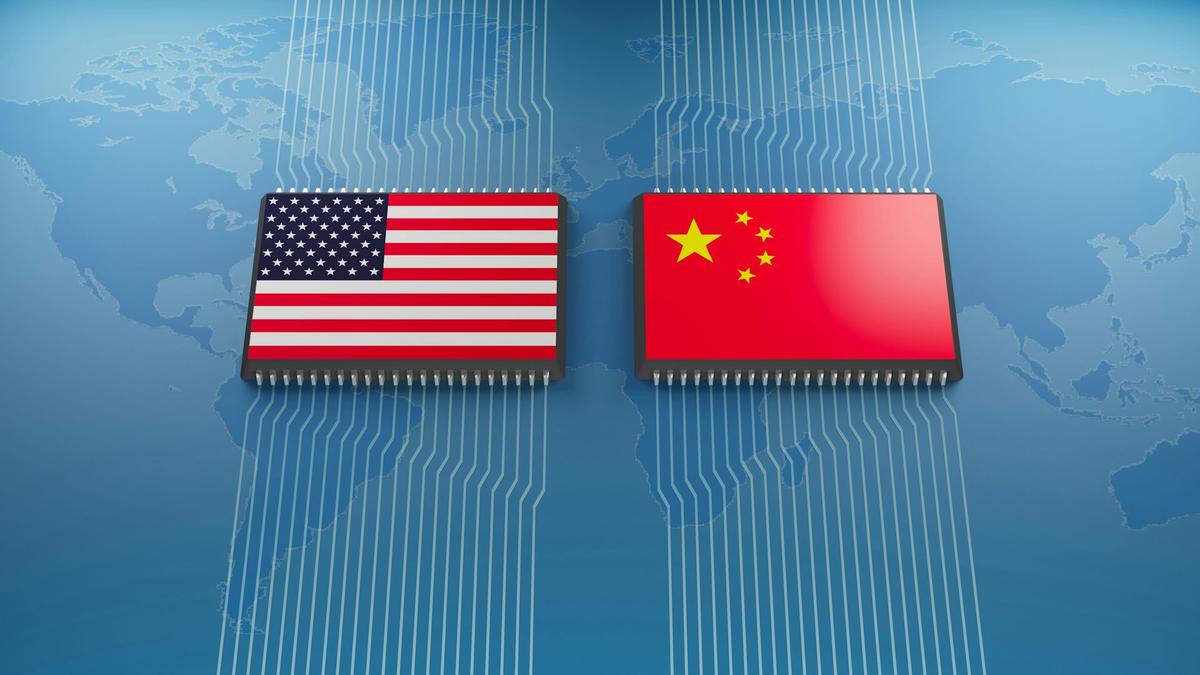
Amid heightened tensions between the United States and China, the two countries signed a bilateral science and technology agreement on December 13, 2024.
| Photo Credit: Getty Images
Amid heightened tensions between the United States and China, the two countries signed a bilateral science and technology agreement on December 13, 2024. The event was billed as a “renewal” of a 45-year-old pact to encourage cooperation, but that may be misleading.
The revised agreement drastically narrows the scope of the original agreement, limits the topics allowed to be jointly studied, closes opportunities for collaboration and inserts a new dispute resolution mechanism.
This shift is in line with growing global concern about research security. Governments are worried about international rivals gaining military or trade advantages or security secrets via cross-border scientific collaborations.
The European Union, Canada, Japan and the United States unveiled sweeping new measures within months of each other to protect sensitive research from foreign interference. But there’s a catch: Too much security could strangle the international collaboration that drives scientific progress.
As a policy analyst and public affairs professor, I research international collaboration in science and technology and its implications for public and foreign policy. I have tracked the increasingly close relationship in science and technology between the U.S. and China. The relationship evolved from one of knowledge transfer to genuine collaboration and competition.
Now, as security provisions change this formerly open relationship, a crucial question emerges: Can nations tighten research security without undermining the very openness that makes science work?
China’s ascent changes the global landscape
China’s rise in scientific publishing marks a dramatic shift in global research. In 1980, Chinese authors produced less than 2% of research articles included in the Web of Science, a curated database of scholarly output. By my count, they claimed 25% of Web of Science articles by 2023, overtaking the United States and ending its 75-year reign at the top, which had begun in 1948 when it surpassed the United Kingdom.
In 1980, China had no patented inventions. By 2022, Chinese companies led in U.S. patents issued to foreign companies, receiving 40,000 patents compared with fewer than 2,000 for U.K. companies. In the many advanced fields of science and technology, China is at the world frontier, if not in the lead.
Since 2013, China has been the top collaborator in science with the United States. Thousands of Chinese students and scholars have conducted joint research with U.S. counterparts.
Most American policymakers who championed the signing of the 1979 bilateral agreement thought science would liberalize China. Instead, China has used technology to shore up autocratic controls and to build a strong military with an eye toward regional power and global influence.
Leadership in science and technology wins wars and builds successful economies. China’s growing strength, backed by a state-controlled government, is shifting global power. Unlike open societies where research is public and shared, China often keeps its researchers’ work secret while also taking Western technology through hacking, forced technology transfers and industrial espionage. These practices are why many governments are now implementing strict security measures.
Nations respond
The FBI claims China has stolen sensitive technologies and research data to build up its defense capabilities. The China Initiative under the Trump administration sought to root out thieves and spies. The Biden administration did not let up the pressure. The 2022 Chips and Science Act requires the National Science Foundation to establish SECURE – a center to aid universities and small businesses in helping the research community make security-informed decisions. I am working with SECURE to evaluate the effectiveness of its mission.
Other advanced nations are on alert, too. The European Union is advising member states to boost security measures. Japan joined the United States in unveiling sweeping new measures to protect sensitive research from foreign interference and exploitation. European nations increasingly talk about technological sovereignty as a way to protect against exploitation by China. Similarly, Asian nations are wary of China’s intentions when it seeks to cooperate.
Australia has been especially vocal about the threat posed by China’s rise, but others, too, have issued warnings. The Netherlands issued a policy for secure international collaboration. Sweden raised the alarm after a study showed how spies had exploited its universities.
Canada has created the Research Security Centre for public safety and, like the U.S., has established regionally dispersed advisers to provide direct support to universities and researchers. Canada now requires mandatory risk assessment for research partnerships involving sensitive technologies. Similar approaches are underway in Australia and the U.K.
Germany’s 2023 provisions establish compliance units and ethics committees to oversee security-relevant research. They are tasked with advising researchers, mediating disputes and evaluating the ethical and security implications of research projects. The committees emphasize implementing safeguards, controlling access to sensitive data and assessing potential misuse.
Japan’s 2021 policy requires researchers to disclose and regularly update information regarding their affiliations, funding sources – both domestic and international – and potential conflicts of interest. A cross-ministerial R&D management system is unrolling seminars and briefings to educate researchers and institutions on emerging risks and best practices for maintaining research security.
The Organisation for Economic Co-operation and Development keeps a running database with more than 206 research security policy statements issued since 2022.
Openness waning
Emphasis on security can strangle the international collaboration that drives scientific progress. As much as 25% of all U.S. scientific articles result from international collaboration. Evidence shows that international engagement and openness produce higher-impact research. The most elite scientists work across national borders.
Even more critically, science depends on the free flow of ideas and talent across borders. After the Cold War, scientific advancement accelerated as borders opened. While national research output remained flat in recent years, international collaborations showed significant growth, revealing science’s increasingly global nature.
The challenge for research institutions will be implementing these new requirements without creating a climate of suspicion or isolation. Retrenchment to national borders could slow progress. Some degree of risk is inherent in scientific openness, but we may be coming to the end of a global, collaborative era in science.
This article is republished from The Conversation under a Creative Commons license. Read the original article here.
Published – January 09, 2025 01:02 pm IST