Skip to content
  • Facebook
  • X
  • Linkedin
  • WhatsApp
  • Associate Journalism
  • About Us
  • Privacy Policy
  • 033-46046046
  • editor@artifex.news
Artifex.News

Artifex.News

Stay Connected. Stay Informed.

  • Breaking News
  • World
  • Nation
  • Sports
  • Business
  • Science
  • Entertainment
  • Lifestyle
  • Toggle search form
  • Delhi Police Sub-Inspector Shoots Self In Apartment Nation
  • People Of Unrecognised Villages Can’t Receive Government Benefits: Manipur Nation
  • Class 10 Boy Dies After Falling From 15th Floor Of Noida High-Rise: Cops Nation
  • Actor Gayatri Joshi, Husband Back In Mumbai After Horrific Italy Crash Nation
  • Rohan Bopanna, Matthew Ebden Suffer Second Straight Loss In ATP Finals 2024, Semis Hopes All But Over Sports
  • Autopsy Done For 5 Bodies Out Of Missing 6 From Manipur, Last Body Found Floating In Assam Nation
  • RBI annual report 2023-2024: MSPs for kharif and rabi crops ensured minimum return of 50% over cost of production Business
  • Apparel exports register 11.84% growth in July Business

Why public health nutrition policies need novelty, precise targeting

Posted on January 4, 2025 By admin


Global Nutrition Targets (GNTs) were set by the World Health Assembly as key national indicators of the effect of public health policies in alleviating maternal and child malnutrition. Some of the targets were — reduce stunting by 40% in under-5 children, reduce anaemia by 50% in women of reproductive age, and no increase in childhood overweight.

A recent evaluation of the global progress toward the achievement (or not) of the targets was published in The Lancet. This colossal analysis provided estimates of progress at a regional and national level in 204 countries from 2012 to 2021, with projections up to 2050. In general, there appeared to be slow and insufficient progress across countries. By 2030, it was projected that few countries (not India) would meet the targets for stunting, and none would meet low birthweight, anaemia, and childhood overweight. In short, little progress in undernutrition, but an increase in overweight.

We are now in the last year of the first quarter of the 21st century. Fresh thinking is needed if the same sorry situation is to be avoided at the end of the next quarter of this century. The immediate questions are: why is there slow progress, and what next?

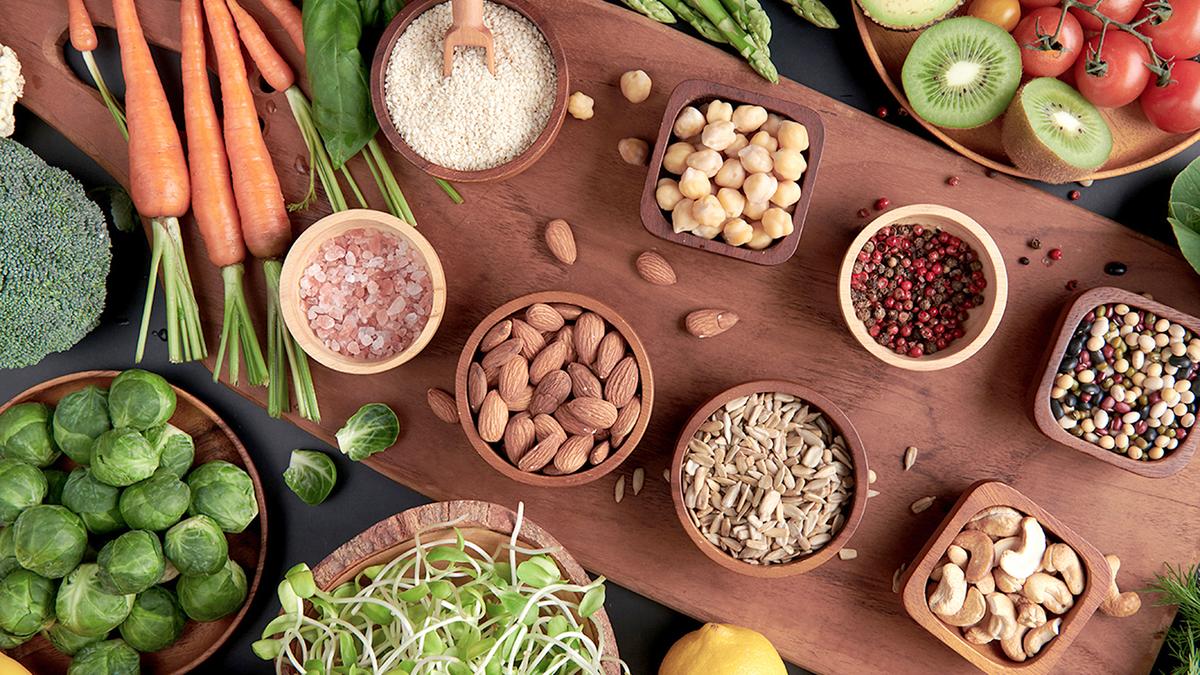
Slow progress can be blamed on poor programme implementation. However, other important aspects merit consideration too. For instance, the prevalence of anaemia has remained static in India for the last two decades. First, with no national surveys, we do not know the cause of anaemia in India. This is presumed to be iron deficiency, resulting in policies to improve dietary iron intake through fortification and supplementation. But recent large-scale surveys reveal that iron deficiency accounts for only a third of anaemia, while unknown causes account for another significant third. Tellingly, a study in north Karnataka school children during the COVID lockdown documented an increase in anaemia when the midday school meal was stopped, but this was not due to iron deficiency. Clearly, a medley of nutrients prevents anaemia, and the whole diet works better than the sum of its parts. Therefore, rather than focusing on select nutrient deficiencies, it is time to diversify diets effectively.

Second, the static anaemia prevalence, despite adaptation and chemical nutrient intake, begs the question of the metrics of measurement, which vary by context and method. In India, a national survey in children showed that venous blood-based anaemia prevalence (as recommended by WHO) was roughly half the capillary blood-based prevalence in comparable national surveys. Third, the actual diagnostic cut-off for anaemia (true for stunting as well) is the subject of much science: one cut-off might not fit all populations. Accurate metrics are crucial for successful public health interventions.

As for the sustained negligible progress in the target for stunting, the knee-jerk response might be to feed even more. But this has unintended consequences — children are more likely to grow fatter rather than faster when overfed after two years of age. This is because stunting actively occurs within the first two years of life; in India, stunting increases from about 7-8% at birth to nearly 40% at two years of age. On average, children reach half their adult height in two years. If already stunted at two, it is difficult to un-stunt children by overfeeding in the hope of faster growth. Prevention in the first two years is most important, even though the global nutrition target refers to stunting in under-5 children.

Second, energy intake is the driver of growth in the first two years. The most energy-dense food is oil. It is disheartening that the average fat intake of poor children in India is just 7 grams per day (NNMB reports), versus their requirement of 30-40 grams per day. But it is encouraging to note that the new POSHAN guidelines for feeding children aged under-3 with take-home rations now include oil, which was not specified earlier.

Finally, The Lancet paper showed that overweight had increased in children in almost all countries but was less than the prevailing undernutrition. This might mean that policy should continue to focus on undernutrition. But overweight does not capture the risk of ‘metabolic overnutrition’ in children. It has been shown that metabolic risk occurs in about no less than 50% of Indian children aged 5-19 years, even in those stunted and underweight. Therefore, the burden of childhood overnutrition should be an important policy target.

The slow progress in GNTs on undernutrition, notwithstanding the considerations pointed out above and the hidden overweight burden, tell us that the need of the hour is to zealously and precisely focus on double duty actions to simultaneously address the under- and over-nutrition burden. Else, ongoing efforts that are skewed towards undernutrition will continue to fuel overnutrition and related non-communicable diseases. 

(Anura Kurpad is Professor of physiology and nutrition at St John’s Medical College, Bengaluru. Harshpal Singh Sachdev is a senior consultant in paediatrics and clinical epidemiology, Sitaram Bhartia Institute of Science and Research, New Delhi)

Published – January 04, 2025 10:00 pm IST


Source link

Science

Post navigation

Previous Post: Sam Konstas Blamed For Usman Khawaja Dismissal After Spat With Jasprit Bumrah: “Didn’t Need…”
Next Post: Barcelona vs Barbastro Live Streaming Copa Del Rey Live Telecast: When And Where To Watch

Related Posts

  • How climate change contributes to wildfires like Chile’s Science
  • Inside the underground lab in China tasked with solving a physics mystery Science
  • Firm to produce ‘rectangular’ solar cells that require less land Science
  • We are sharing state-of-the-art expertise with ISRO for Gaganyaan: French space agency chief  Science
  • Blue whales make comeback near the Seychelles after 60 years Science
  • Using AI to classify neem fruits based on azadirachtin content Science

More Related Articles

Is it possible to remove microplastics from water? Science
Galactic tides: Pushing and pulling the heavens Science
World’s oldest cave painting in Indonesia shows a pig and people Science
Polluting shipwrecks are a ticking time-bomb at the bottom of our oceans Science
What is it? IceCube: The big, chill neutrino-spotter Science
Study shows fatal spread of H5N1 virus from ferrets to suckling kits Science
SiteLock

Archives

  • January 2025
  • December 2024
  • November 2024
  • October 2024
  • September 2024
  • August 2024
  • July 2024
  • June 2024
  • May 2024
  • April 2024
  • March 2024
  • February 2024
  • January 2024
  • December 2023
  • November 2023
  • October 2023
  • September 2023
  • August 2023
  • July 2023
  • June 2023
  • May 2023
  • April 2023
  • March 2023
  • February 2023
  • January 2023
  • December 2022
  • November 2022
  • October 2022
  • September 2022
  • August 2022
  • July 2022
  • June 2022
  • May 2022

Categories

  • Business
  • Nation
  • Science
  • Sports
  • World

Recent Posts

  • Duty cut on smartphone parts to hit electronics ecosystem, trigger job loss: GTRI
  • Takeaways From Trump’s News Conference
  • Beliefs could delay cancer screening and care in Meghalaya, study finds
  • Trump Says NATO Members Should Raise Defense Spending To 5% Of GDP
  • V. Narayanan appointed new Space Secretary and ISRO chief

Recent Comments

  1. dfb{{98991*97996}}xca on UP Teacher Who Asked Students To Slap Muslim Classmate
  2. "dfbzzzzzzzzbbbccccdddeeexca".replace("z","o") on UP Teacher Who Asked Students To Slap Muslim Classmate
  3. 1}}"}}'}}1%>"%>'%> on UP Teacher Who Asked Students To Slap Muslim Classmate
  4. bfg6520<s1﹥s2ʺs3ʹhjl6520 on UP Teacher Who Asked Students To Slap Muslim Classmate
  5. pHqghUme9356321 on UP Teacher Who Asked Students To Slap Muslim Classmate
  • Law To Enforce ‘Bail Is Rule’ Principle Nation
  • “Viksit Bharat No Longer A Dream, But A Target”, Says Vice President Jagdeep Dhankhar Nation
  • US’s Georgia School Shooter Was 14-Year-old Student: Police World
  • Kolkata Doctor Rape Murder, RG Kar Medical College and Hospital: 150 mg Semen In Kolkata Doctor’s Body, Suspect Gangrape: Parents To Court Nation
  • Trump’s FBI director pick Kash Patel attacked by Iran hackers: Report World
  • Stock markets rise for 4th day; metal, power shares gain ahead of key Fed policy decision Business
  • Akhilesh Yadav Joins Rahul Gandhi Yatra, Days After Seat-Sharing Deal Nation
  • Colin Munro’s retirement from International cricket after T20 World Cup snub Sports

Editor-in-Chief:
Mohammad Ariff,
MSW, MAJMC, BSW, DTL, CTS, CNM, CCR, CAL, RSL, ASOC.
editor@artifex.news

Associate Editors:
1. Zenellis R. Tuba,
zenelis@artifex.news
2. Haris Daniyel
daniyel@artifex.news

Photograher:
Rohan Das
rohan@artifex.news

Artifex.News offers Online Paid Internships to college students from India and Abroad. Interns will get a PRESS CARD and other online offers.
Send your CV (Subjectline: Paid Internship) to internship@artifex.news

Links:
Associate Journalism
About Us
Privacy Policy

News Links:
Breaking News
World
Nation
Sports
Business
Entertainment
Lifestyle

Registered Office:
72/A, Elliot Road, Kolkata - 700016
Tel: 033-22277777, 033-22172217
Email: office@artifex.news

Editorial Office / News Desk:
No. 13, Mezzanine Floor, Esplanade Metro Rail Station,
12 J. L. Nehru Road, Kolkata - 700069.
(Entry from Gate No. 5)
Tel: 033-46011099, 033-46046046
Email: editor@artifex.news

Copyright © 2023 Artifex.News Newsportal designed by Artifex Infotech.