

Skip to content
  • Facebook
  • X
  • Linkedin
  • WhatsApp
  • YouTube
  • Associate Journalism
  • About Us
  • Privacy Policy
  • 033-46046046
  • editor@artifex.news
Artifex.News

Artifex.News

Stay Connected. Stay Informed.

  • Breaking News
  • World
  • Nation
  • Sports
  • Business
  • Science
  • Entertainment
  • Lifestyle
  • Toggle search form
  • Indian flag at half-mast as nation mourns death of Iran President Ebrahim Raisi
    Indian flag at half-mast as nation mourns death of Iran President Ebrahim Raisi World
  • Access Denied Business
  • Athletes Test ‘Anti-Sex Beds’ At Paris Olympics, Share Videos On Instagram
    Athletes Test ‘Anti-Sex Beds’ At Paris Olympics, Share Videos On Instagram Sports
  • Access Denied Sports
  • India vs Pakistan: Pakistan Reveal Playing XI Ahead Of Asia Cup 2023 Match Against India
    India vs Pakistan: Pakistan Reveal Playing XI Ahead Of Asia Cup 2023 Match Against India Sports
  • Riyan Parag, Yuzvendra Chahal Excel As Rajasthan Royals Hand Hardik Pandya’s Mumbai Indians 3rd Straight Loss In IPL 2024
    Riyan Parag, Yuzvendra Chahal Excel As Rajasthan Royals Hand Hardik Pandya’s Mumbai Indians 3rd Straight Loss In IPL 2024 Sports
  • Access Denied Sports
  • Israel Says Forces Carrying Out “Offensive Action” Across Southern Lebanon
    Israel Says Forces Carrying Out “Offensive Action” Across Southern Lebanon World
A beginner’s guide to quantum computing | Explained

A beginner’s guide to quantum computing | Explained

Posted on December 24, 2024 By admin


Over the last decade or so, quantum computing has become the talk of computer town. Their potential to solve complex problems much faster than classical computers is an intriguing proposition that could benefit, if not transform, several industries.

The working of a quantum computer is based on the principles of quantum mechanics, an area of physics that deals with the smallest particles in the universe.

Physicist Richard Feynman proposed the idea of developing a computer to simulate quantum systems in 1982. He discussed the idea of a universal computer that could simulate all physics — both quantum and classical. Researchers realised classical computers, the computers of today, would struggle with the complexity of quantum systems and thus the idea of a quantum computer was born.

Since then, scientists have made significant progress in quantum computing.

Basics of quantum computing

Classical computers work on the principles of classical physics. Their fundamental computing unit is the bit: each bit represents one piece of information with two possible values, 0 or 1. It is possible to represent all types of information as a combination of 0s and 1s using the binary system.

Quantum computers rely on quantum bits or qubits to perform computations. Unlike classical bits, qubits can exist in the states 0, 1 or in a state that’s partly 0 and partly 1. In this context, state refers to all the possible values the qubit can have.

The ability of qubits to be in two states is known as superposition. Superposition is one of two fundamental principles that animate quantum computers.

Imagine a spinning coin. While the coin is spinning, it can be both heads or tails, and it isn’t until the coin collapses that you can see which it is. A qubit is like a spinning coin that holds both values simultaneously.

When a qubit is measured, it collapses to one of the values, 0 or 1. This means while a classical bit holds one unit of information, a qubit can hold two. Because of this quantum computers can perform multiple computations simultaneously, with the measurement revealing one of the possible outcomes of the computations.

The second fundamental principle upon which quantum computers are based is called entanglement. This phenomenon allows qubits to be intrinsically linked no matter how far apart they physically are. Albert Einstein famously called it “spooky action at a distance”.

So measuring the state of one of the qubits could immediately yield information about the state of the other. Say you have a pair of gloves. Each glove is put in a separate box and sent to different locations, and we don’t know which box has which. But once a box is opened to reveal the left glove, we instantly know the other box has the right glove.

The instantaneous correlation between qubits allows shared information to be processed simultaneously, speeding up computations that would take far longer with classical computers.

Superposition and entanglement can’t be described by classical theories of physics. They are exclusive to quantum mechanics — and central to the potential that quantum computers have to offer.

Significant milestones

Quantum computers are technologically superior but this doesn’t automatically mean they will be better than classical computers at different tasks.

Over the years, experts have developed and honed specific tasks that prove quantum computers are capable of greater feats, and also show how.

In 1994, Bell Labs computer scientist Peter Shor created the famous Shor’s algorithm. The algorithm could factorise (or find the factors of) large numbers in moments rather than the millions of years required by classical computers.

This has major implications for data security. Current methods to secure data involve locking the data and hiding the key to unlock it in the solution of a difficult mathematical problem.

Large-number factorisation is one such problem and classical computers require enormous amounts of resources to solve it. But using Shor’s algorithm, a quantum computer could quickly solve the problem and open the locks.

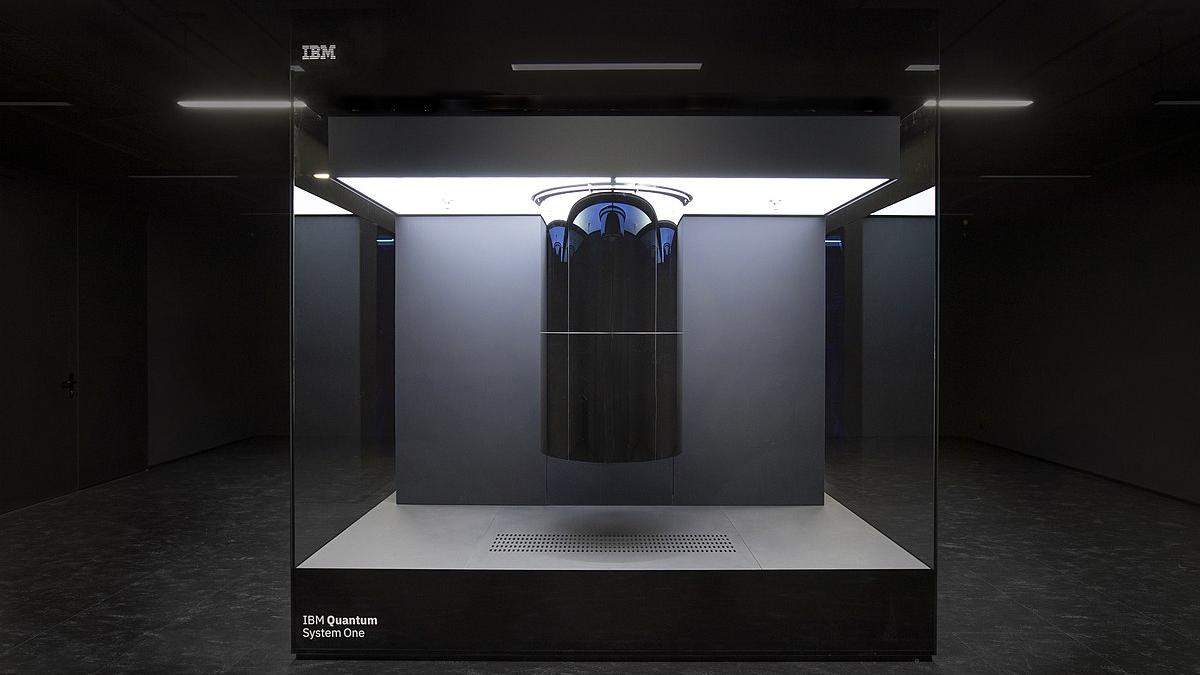
The state of quantum computing came a long way in the next 25 years. In 2019, for example, IBM unveiled the world’s first circuit-based commercial quantum computer Q System One. Circuit-based designs are believed to be the most versatile for general quantum-computing applications.

Q System One uses quantum circuits composed of quantum gates that manipulate qubits, analogous to how classical computers use logic gates.

In the same year, researchers at Google reported in a paper in Nature that their 53-qubit ‘Sycamore’ processor had achieved quantum supremacy.

A quantum computer achieves quantum supremacy when it can solve a problem that would take classical computers an unreasonable amount of time. The paper claimed Sycamore completed a task in 200 seconds that would take a supercomputer 10,000 years.

Earlier this month, in fact, Google unveiled a quantum chip called Willow, purportedly the world’s first quantum processor in which error-corrected qubits improve as they scale.

Quantum states are easily prone to errors due to interactions with the environment. Quantum computers need error correction to hold information long enough to perform useful calculations with them.

Willow, Google has said, can finish a standard test in five minutes whereas the same calculation would take today’s best supercomputers 10 trillion trillion years.

Present limitations

The advancements are flying thick and fast but there are still many significant challenges to overcome before quantum computers can become (relatively) common.

The chief concern is that building quantum computers remains expensive and complex. Keeping many qubits stable is also difficult because of error rates and decoherence (when a qubit loses superposition because of noise from its surroundings).

The problems for which we really need quantum computers — like discovering new drugs or cracking mysteries in astronomy — also require millions of qubits.

All said, their potential to be useful is clear. This is why India launched the National Quantum Mission in 2023. The government has set aside ₹6,000 crore for the mission to be spent over eight years, among other things to develop quantum computers.

Tejasri Gururaj is a freelance science writer and journalist with a master’s degree in physics

Published – December 24, 2024 10:49 pm IST


Source link

Science

Post navigation

Previous Post: Afghan Staffer At Indian Consulate In Jalalabad Injured: Report
Next Post: Syria authorities say armed groups have agreed to disband

Related Posts

  • The Science Quiz | The great women of mathematics
    The Science Quiz | The great women of mathematics Science
  • Common man may get a peek into Chandrayaan-3 at Bengaluru Tech Summit
    Common man may get a peek into Chandrayaan-3 at Bengaluru Tech Summit Science
  • RRI technique yields certified randomness with one qubit
    RRI technique yields certified randomness with one qubit Science
  • NASA chief rules out March launch of Moon mission over technical issues
    NASA chief rules out March launch of Moon mission over technical issues Science
  • Doomsday Clock is 85 seconds to midnight
    Doomsday Clock is 85 seconds to midnight Science
  • When welfare met demographic concerns
    When welfare met demographic concerns Science

More Related Articles

Scientists solve mystery of prehistoric ‘Burtele Foot’ Scientists solve mystery of prehistoric ‘Burtele Foot’ Science
Study maps future glacial lakes Study maps future glacial lakes Science
Is placental oxygen level linked to foetal brain development? Is placental oxygen level linked to foetal brain development? Science
Science Quiz: On Charles Darwin Science Quiz: On Charles Darwin Science
A Konkan secret, the sada needs more light A Konkan secret, the sada needs more light Science
Sci-Five | The Hindu Science Quiz: On Drones Sci-Five | The Hindu Science Quiz: On Drones Science
SiteLock

Archives

  • May 2026
  • April 2026
  • March 2026
  • February 2026
  • January 2026
  • December 2025
  • November 2025
  • October 2025
  • September 2025
  • August 2025
  • July 2025
  • June 2025
  • May 2025
  • April 2025
  • March 2025
  • February 2025
  • January 2025
  • December 2024
  • November 2024
  • October 2024
  • September 2024
  • August 2024
  • July 2024
  • June 2024
  • May 2024
  • April 2024
  • March 2024
  • February 2024
  • January 2024
  • December 2023
  • November 2023
  • October 2023
  • September 2023
  • August 2023
  • July 2023
  • June 2023
  • May 2023
  • April 2023
  • March 2023
  • February 2023
  • January 2023
  • December 2022
  • November 2022
  • October 2022
  • September 2022
  • August 2022
  • July 2022
  • June 2022
  • May 2022

Categories

  • Business
  • Nation
  • Science
  • Sports
  • World

Recent Posts

  • Cuba has run out of diesel and fuel oil amid U.S. oil blockade
  • Karnataka’s Leader of Opposition R Ashok to reduce escort vehicles, travel by Namma Metro
  • China, U.S. should be ‘partners not rivals’, says Xi Jinping after meeting Donald Trump
  • UAE ‘denies reports’ of secret Netanyahu visit
  • Iran working on Hormuz ‘protocol’ to cover ‘costs’, says Deputy Foreign Minister Gharibabadi

Recent Comments

  1. OrvalMaync on UP Teacher Who Asked Students To Slap Muslim Classmate
  2. Jeffreyroure on UP Teacher Who Asked Students To Slap Muslim Classmate
  3. Stevemonge on UP Teacher Who Asked Students To Slap Muslim Classmate
  4. RichardClage on UP Teacher Who Asked Students To Slap Muslim Classmate
  5. StevenLek on UP Teacher Who Asked Students To Slap Muslim Classmate
  • Access Denied Sports
  • Access Denied
    Access Denied Nation
  • Access Denied Sports
  • Virat Kohli’s Dejected Look Can’t Be Missed After RCB’s 2nd Straight Loss – Watch
    Virat Kohli’s Dejected Look Can’t Be Missed After RCB’s 2nd Straight Loss – Watch Sports
  • Access Denied Business
  • Farmers To Vacate Railway Tracks, Protest To Move Near BJP Leaders’ Homes
    Farmers To Vacate Railway Tracks, Protest To Move Near BJP Leaders’ Homes Nation
  • Israeli Strike On School Sheltering Displaced Gazans Kills 4, Second Attack In 2 Days
    Israeli Strike On School Sheltering Displaced Gazans Kills 4, Second Attack In 2 Days World
  • The Low-Profile Wife Of New UK Prime Minister
    The Low-Profile Wife Of New UK Prime Minister World

Editor-in-Chief:
Mohammad Ariff,
MSW, MAJMC, BSW, DTL, CTS, CNM, CCR, CAL, RSL, ASOC.
editor@artifex.news

Associate Editors:
1. Zenellis R. Tuba,
zenelis@artifex.news
2. Haris Daniyel
daniyel@artifex.news

Photograher:
Rohan Das
rohan@artifex.news

Artifex.News offers Online Paid Internships to college students from India and Abroad. Interns will get a PRESS CARD and other online offers.
Send your CV (Subjectline: Paid Internship) to internship@artifex.news

Links:
Associate Journalism
About Us
Privacy Policy

News Links:
Breaking News
World
Nation
Sports
Business
Entertainment
Lifestyle

Registered Office:
72/A, Elliot Road, Kolkata - 700016
Tel: 033-22277777, 033-22172217
Email: office@artifex.news

Editorial Office / News Desk:
No. 13, Mezzanine Floor, Esplanade Metro Rail Station,
12 J. L. Nehru Road, Kolkata - 700069.
(Entry from Gate No. 5)
Tel: 033-46011099, 033-46046046
Email: editor@artifex.news

Copyright © 2023 Artifex.News Newsportal designed by Artifex Infotech.