







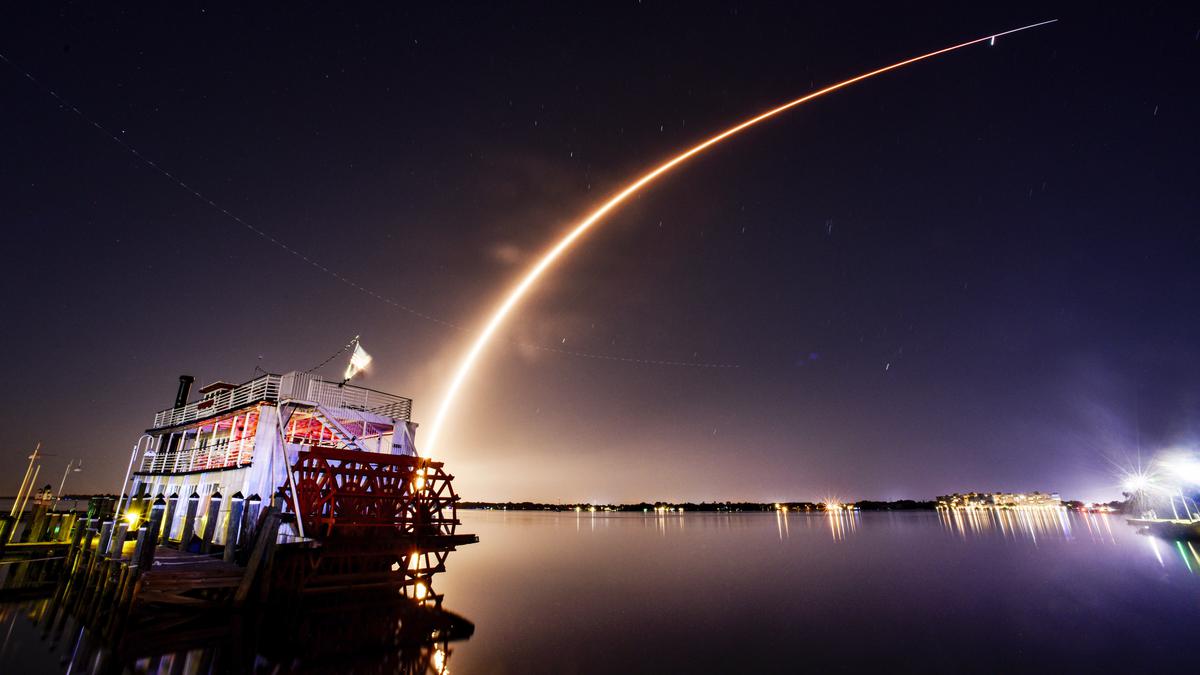
As the world becomes more reliant on space technologies for vital functions like climate monitoring, the environmental consequences of space activities also become increasingly urgent and in need of more attention. The rapid growth of the number of satellites in orbit has led to concerns about interference with climate monitoring systems and the accumulation of orbital debris. With no specific international regulations addressing these challenges, it is crucial the world’s governments act quickly to ensure space exploration doesn’t drift into unsustainability.
How are space activities affecting the environment?
Every rocket launch releases carbon dioxide, black carbon, and water vapour into the atmosphere. Black carbon is of particular concern because it absorbs sunlight 500-times more effectively than carbon dioxide does, amplifying global warming. As commercial space ventures become more common, the cumulative impact of these emissions will worsen.
Rocket propellants, especially those using chlorine-based chemicals, deplete the ozone layer at high altitudes, increasing exposure to ultraviolet radiation on the ground as well as disrupting atmospheric circulation — both of which affect the global climate. According to a December 9 article in MIT Tech Review, when satellites “burn up in the atmosphere” once their missions end, they release “satellite ash in the middle layers of the earth’s atmosphere. This metallic ash can harm the atmosphere and potentially alter the climate.“
Next, like many other forms of manufacturing, the production of satellites demands energy-intensive processes involving metals and composite materials, whose extraction and preparation have large carbon footprints of their own. Satellites also use propulsion systems to adjust their location and orientation in orbit, and their emissions add to the overall count. Equally, the rise of space mining — e.g. extracting valuable (on the earth) minerals from asteroids — could lead to increased industrial activity both in space and on the ground. Such mining activities haven’t begun yet but they are sure to be part of the future.
While space technology supports essential climate monitoring and disaster management, the environmental costs for the earth’s atmosphere and space are escalating, requiring urgent redressal.
What are the dangers of orbital debris?
Orbital debris, or space junk, refers to defunct satellites, spent rocket stages, and pieces of satellites produced when they break apart in low earth orbit (LEO). According to the European Space Agency, as of September 2024, there had been around 6,740 rocket launches since 1957 that placed 19,590 satellites in orbit. Around 13,230 are still in space and of them 10,200 are still functional.
Since the space in earth’s orbit is a resource just like water bodies and land masses on the ground, the occupation of orbits by non-functional objects constitutes a form of pollution as well — with the added threat of risk magnification.
For example, space surveillance networks have catalogued around 36,860 space objects thus far, including those produced in the 650+ fragmentation events (break-ups, explosions, and collisions). The total mass of all space objects in orbit exceeds 13,000 tonnes. As this mass continues to increase, the collision risks to satellites increase as well.Most space junk can reach speeds of up to 29 km/hr. When moving so fast, even a minuscule piece of metal can smash through a satellite like a bullet, damaging critical components, including those used for communication, navigation, and to monitor climate parameters of merit.

Orbital debris also poses an indirect threat by interfering with scientists’ ability to collect data about the earth — from tracking disasters to monitoring weather — from space, such as by interfering with radio waves. Such threats also obligate satellite operators to invest in shielding satellites and actively perform costly manoeuvres to avoid collisions; both requirements drive up mission cost.
The risks are even more significant for human-crewed missions. For example, the International Space Station frequently adjusts its orbit to avoid debris.
What are the barriers to space-sector sustainability?
Regulation is key to ensuring space remains accessible and space activities remain environmentally sustainable. Without clear guidelines, the unchecked growth of emissions and debris will harm the earth’s climate and increase the barriers to future space exploration.
Space activities currently fall outside international sustainability instruments like the Paris Agreement, so governments need to establish standards for emissions from rockets and satellites to prevent them from becoming overlooked contributors to global warming.
Without regulations, the increasing number of satellites and debris will overcrowd LEO, rendering future missions more expensive, which in turn would subtract from space’s identity as a shared global resource that needs to be equally accessible to everyone. International cooperation through bodies like the Committee on the Peaceful Use of Outer Space (COPUOS) is necessary to create enforceable standards in this context.
Governments can also ensure such frameworks align with the Outer Space Treaty’s principles of responsible use of space while addressing the Treaty’s current lack of binding provisions. This unity is particularly crucial if countries are to address the environmental impacts of space activities.
How can space exploration be more sustainable?
Achieving sustainability in space exploration requires innovative solutions but which also present challenges of their own. For example, reusable rockets like those developed by SpaceX and Blue Origin reduce manufacturing waste and lower costs by allowing engineers to reuse rocket components in multiple missions. But the reusable parts are often heavier, which increases fuel consumption. These rocks also have limited applicability for high-orbit missions and their wear-and-tear invokes costly refurbishments. Thus scaling this technology while maintaining efficiency remains a hurdle.
Second, transitioning to cleaner fuels like liquid hydrogen and/or biofuels can minimise harmful emissions during liftoffs. However, hydrogen is currently produced with non-renewable energy, negating its environmental benefits. Cryogenic fuels — which provide more thrust for the same mass — are more expensive and more complex to handle, keeping them out of reach of smaller operators.

Electric propulsion is another option, but its low thrust restricts its use to specific missions like in-orbit manoeuvres.
Third, designing satellites with biodegradable materials that naturally disintegrate during re-entry can prevent long-term debris accumulation. On the flip side, these materials currently lack the durability required for the extreme conditions of space. High development costs and limited adoption further slow progress. Autonomous debris removal (ADR) technologies such as robotic arms and laser systems also offer hope for cleaning up orbital debris, but again, they are currently expensive as well as need more legal clarity before they can begin to operate safely.
A global traffic system to monitor satellites and debris in real time could reduce collisions and optimise orbit use. Resistance to data-sharing, including due to security and commercial concerns, and the lack of a unified international authority hinders its development, however.
None of these hurdles are permanent of course. Moreover, whereas individual solutions face significant challenges, a combined approach may be more feasible.
For example, binding agreements through COPUOS can standardise emission limits, debris mitigation, and data-sharing practices; governments and private entities can prioritise funding for green technologies, ADR systems, and satellite biodegradability; and financial rewards, subsidies or penalties can nudge private actors towards sustainable practices.
At the intersection of technological advancement and environmental responsibility, the choices we make today will define the future of space exploration.
Shrawani Shagun is pursuing a PhD at National Law University, Delhi, focusing on environmental sustainability and space governance.
Published – December 12, 2024 05:30 am IST