



Skip to content
  • Facebook
  • X
  • Linkedin
  • WhatsApp
  • YouTube
  • Associate Journalism
  • About Us
  • Privacy Policy
  • 033-46046046
  • editor@artifex.news
Artifex.News

Artifex.News

Stay Connected. Stay Informed.

  • Breaking News
  • World
  • Nation
  • Sports
  • Business
  • Science
  • Entertainment
  • Lifestyle
  • Toggle search form
  • PM Slams Delhi, Bengal Governments For Not Implementing Ayushman Bharat
    PM Slams Delhi, Bengal Governments For Not Implementing Ayushman Bharat Nation
  • Iran says no country can deprive it of enrichment rights amid tensions with U.S.
    Iran says no country can deprive it of enrichment rights amid tensions with U.S. World
  • Liking Obscene Post On Social Media No Crime, Sharing Is: Allahabad Court
    Liking Obscene Post On Social Media No Crime, Sharing Is: Allahabad Court Nation
  • ‘Most Wanted’ Terrorist Among 3 Killed In J&K Encounter With Security Forces
    ‘Most Wanted’ Terrorist Among 3 Killed In J&K Encounter With Security Forces Nation
  • Access Denied
    Access Denied Nation
  • Access Denied Business
  • Congress vs BJP Parliament Debate Is Just A Teaser For More Disruption And Chaos
    Congress vs BJP Parliament Debate Is Just A Teaser For More Disruption And Chaos Nation
  • Access Denied
    Access Denied Nation
The fallacy of natural birth: Safeguarding mothers and newborns in modern times

The fallacy of natural birth: Safeguarding mothers and newborns in modern times

Posted on December 14, 2024 By admin


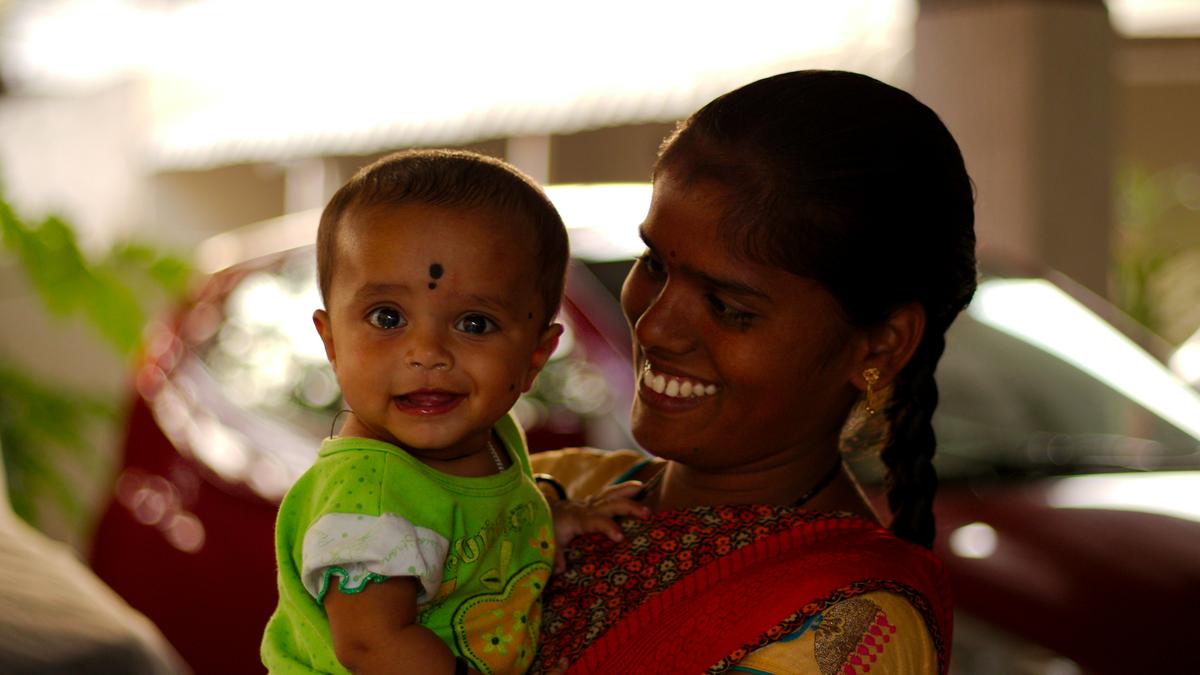
The idea of natural childbirth, outside the safety net of hospitals, is often romanticised as a return to simpler, more harmonious times. File
| Photo Credit: Getty Images

The recent case of an infant death in Pudukkottai district in Tamil Nadu shocked the health authorities. A pregnant woman, despite repeated offers of modern healthcare services, chose to deliver her child at home. Her decision is rooted in the belief in living “naturally”. It left both mother and child in a precarious state, and the infant’s life snuffed out, completely avoidable. This refusal to accept evidence-based medical care not only endangered her life but also violated the right to the health of the unborn child. Such incidents force us to confront a troubling reality—how deeply misplaced beliefs can jeopardize lives in an era where medical science offers safety. 

The idea of natural childbirth, outside the safety net of hospitals, is often romanticised as a return to simpler, more harmonious times. It carries the false allure of a past where childbirth was supposedly safer, and maternal health was ideal. Yet, data tells a starkly different story.

Maternal and infant deaths were heartbreakingly common in the past. Women frequently succumbed to infections, haemorrhages, or prolonged labour, leaving families devastated. What remains of those times are stories of survival, giving rise to a dangerous survivorship bias—the flawed perception that the methods of the past were successful because a few lived to tell the tale. It is human nature to overrate the past and underratethe present. 

Evolutionary burden

Childbirth is unique for humans among mammals. Despite their advanced standing, humans remain one of the few species requiring assistance during delivery. This peculiarity stems from the very trait that defines humanity—our upright posture. Two hundred thousand years ago, when humans evolved to walk on two legs, the structure of the pelvis narrowed to accommodate bipedalism. This evolution happened rapidly, and women did not have time to develop a broader pelvis. This narrowing came with a price. It restricted the passage through which a baby was delivered. Simultaneously, the head of newborn that harbours the brain grew in size, making childbirth even more challenging. As a result, human babies are born at a much earlier stage of development compared to other mammals, making them completely dependent on external care.

This evolutionary compromise—narrow pelvis and large head—shaped human society in profound ways. Childbirth and rearing became a communal responsibility, necessitating the support of families and tribes. Over time, this reliance laid the foundation for civilizations. But the burden of this evolutionary trade-off fell squarely on women. For them, what should have been a natural and physiological event like in other mammals became fraught with danger, leading to death or disability more often than it should. 

Story of Choices

Despite that some narratives glorify childbirth as an untouchable natural process to be endured without intervention. This misplaced idealization leads to dangerous decisions, like the one made by the mother, who rejected institutional delivery. While childbirth is indeed a natural process, it is not without risks. Modern medical care doesn’t pathologise pregnancy—it safeguards it. A pregnant mother is not a patient until complications arise, but when they do, access to timely interventions can mean the difference between life and death.

Why human childbirth is difficult

Human childbirth reflects a delicate balance between two evolutionary pressures: the need for a narrow pelvis to support efficient bipedal locomotion and the requirement to accommodate a large-brained baby. Unlike most mammals, humans have a disproportionately large foetal head relative to the dimensions of the birth canal, increasing the risk of obstructed labour. The human pelvis is adapted to walking upright, resulting in a narrower pelvic inlet and outlet. Moreover, the curvature and length of the human birth canal make delivery more complex, requiring the baby to navigate through rotations.

In contrast, quadrupedal mammals like cows, elephants, and dogs have wider pelvic outlets and straighter birth canals, reducing the mechanical challenges of delivery. Even in primates such as monkeys, the birth canal is relatively less restrictive due to their broader pelvis and smaller relative foetal head size.

Indian paradox

India’s healthcare system is caught in a striking paradox. In remote and rural regions, the cry often resounds for accessible and adequate healthcare, with government initiatives struggling to bridge the gap. Yet, in urban centres, where healthcare facilities are abundant and diverse, a contrasting challenge emerges. Rejection of modern medical interventions, swayed by personal beliefs, cultural norms, or mistrust in the system. This duality of unmet need in one sphere and voluntary abstinence in another reflects the complexity of India’s healthcare landscape. While strides have been made to ensure access to antenatal care through schemes like Janani Suraksha Yojana, cases like this remind us that awareness and education must go hand in hand with accessibility. 

The foundation of human civilization owes to the narrow pelvis, a consequence of evolution that enabled the cognitive ability of humans to make advancements that built cities, conducted revolutions, and sent humans to space. Women who have borne the brunt of this evolutionary compromise deserve every possible safeguard during childbirth. The rejection of evidence-based medicine, or institutional deliveries, is rooted in a misplaced belief. Denying healthcare services not only endangers the mother but violates the unborn child’s fundamental right to live. The health authorities are powerless as they can only request or persuade an adamant mother and her relatives. The judiciary needs to intervene by invoking the doctrine of Parens patriae and empower the health authorities to provide newborn care for the unborn. 

Fantasising the past does not bring back its hardships. It blinds us to the progress we have achieved. Self-denying institutional deliveries under the pretext of natural living is a dangerous illusion. We stand in the golden era of maternal health, with the highest chances in history for mothers and their children to survive and thrive. To squander this progress on baseless ideals is not just a tragedy—it is a betrayal of the very civilisation that has enabled us to overcome the perils of childbirth. 

Published – December 14, 2024 03:47 pm IST



Source link

Science Tags:Child delivery at home, Child delivery at hospital, Childbirth at home, delivery at home, Fallacy of natural birth, Healthy child delivery, Healthy childbirth, Hospital delivery, infant death in Pudukkottai

Post navigation

Previous Post: “I Want To Be Youngest World Champion”: D Gukesh Recalls Viral Old Video
Next Post: Liverpool’s Christmas Party Shut Down Over ‘Drug Paraphernalia’ Found In Toilets

Related Posts

  • Why do we have wisdom teeth?
    Why do we have wisdom teeth? Science
  • The Science Quiz | Numbers have celebrities, too
    The Science Quiz | Numbers have celebrities, too Science
  • China scientists rush to climate-proof potatoes
    China scientists rush to climate-proof potatoes Science
  • After traversing 100 metres, Pragyan prepares for long night of -200 degree Celsius on Moon
    After traversing 100 metres, Pragyan prepares for long night of -200 degree Celsius on Moon Science
  • IACS scientists discover a new target for cancer treatment
    IACS scientists discover a new target for cancer treatment Science
  • An overlooked molecule could help solve the Venus water mystery
    An overlooked molecule could help solve the Venus water mystery Science

More Related Articles

Chandrayaan-3 landed on possibly oldest craters of Moon, say researchers Chandrayaan-3 landed on possibly oldest craters of Moon, say researchers Science
Rare celestial object sighted over Bengaluru skies Rare celestial object sighted over Bengaluru skies Science
Using the body’s own defences to fight cancer: new research offers a clue from COVID-19 Using the body’s own defences to fight cancer: new research offers a clue from COVID-19 Science
Aditya mission continuously sending data about Sun: ISRO chief Aditya mission continuously sending data about Sun: ISRO chief Science
AI has a big and growing carbon footprint, but algorithms can help AI has a big and growing carbon footprint, but algorithms can help Science
RRI team use quantum magnetometry to make more precise atomic clocks RRI team use quantum magnetometry to make more precise atomic clocks Science
SiteLock

Archives

  • May 2026
  • April 2026
  • March 2026
  • February 2026
  • January 2026
  • December 2025
  • November 2025
  • October 2025
  • September 2025
  • August 2025
  • July 2025
  • June 2025
  • May 2025
  • April 2025
  • March 2025
  • February 2025
  • January 2025
  • December 2024
  • November 2024
  • October 2024
  • September 2024
  • August 2024
  • July 2024
  • June 2024
  • May 2024
  • April 2024
  • March 2024
  • February 2024
  • January 2024
  • December 2023
  • November 2023
  • October 2023
  • September 2023
  • August 2023
  • July 2023
  • June 2023
  • May 2023
  • April 2023
  • March 2023
  • February 2023
  • January 2023
  • December 2022
  • November 2022
  • October 2022
  • September 2022
  • August 2022
  • July 2022
  • June 2022
  • May 2022

Categories

  • Business
  • Nation
  • Science
  • Sports
  • World

Recent Posts

  • Maruti Suzuki crosses 3 million vehicle dispatches through railways, eyes 35% share by rail
  • Delhi High Court refuses to entertain PIL to prevent suicides
  • Gold ETF prices revive as investors flock on higher import duties on yellow metal
  • Kashmir MLA ‘boycotts’ L-G’s drug campaign after demolition drive in his constituency
  • Assam ships first legal agarwood chips to West Asia

Recent Comments

  1. Jeffreyroure on UP Teacher Who Asked Students To Slap Muslim Classmate
  2. Stevemonge on UP Teacher Who Asked Students To Slap Muslim Classmate
  3. RichardClage on UP Teacher Who Asked Students To Slap Muslim Classmate
  4. StevenLek on UP Teacher Who Asked Students To Slap Muslim Classmate
  5. Leonardren on UP Teacher Who Asked Students To Slap Muslim Classmate
  • U.N. to mobilise  million grant for cyclone-hit Sri Lanka
    U.N. to mobilise $35 million grant for cyclone-hit Sri Lanka World
  • U.S. fighter jets strike storage facilities in Houthi-controlled areas of Yemen
    U.S. fighter jets strike storage facilities in Houthi-controlled areas of Yemen World
  • Soldier Dies In Counter-Infiltration Operation In J&K’s Poonch
    Soldier Dies In Counter-Infiltration Operation In J&K’s Poonch Nation
  • Telegram messaging app CEO Pavel Durov arrested in France, TF1 TV says
    Telegram messaging app CEO Pavel Durov arrested in France, TF1 TV says World
  • Grandfather Of Pune Teen Driver, Who Killed 2, Sent To Police Custody
    Grandfather Of Pune Teen Driver, Who Killed 2, Sent To Police Custody Nation
  • Access Denied Sports
  • Gas leak at Malaysia’s Kuala Lumpur airport affects 39 people
    Gas leak at Malaysia’s Kuala Lumpur airport affects 39 people World
  • What are the controversies around pardoning power? | Explained
    What are the controversies around pardoning power? | Explained World

Editor-in-Chief:
Mohammad Ariff,
MSW, MAJMC, BSW, DTL, CTS, CNM, CCR, CAL, RSL, ASOC.
editor@artifex.news

Associate Editors:
1. Zenellis R. Tuba,
zenelis@artifex.news
2. Haris Daniyel
daniyel@artifex.news

Photograher:
Rohan Das
rohan@artifex.news

Artifex.News offers Online Paid Internships to college students from India and Abroad. Interns will get a PRESS CARD and other online offers.
Send your CV (Subjectline: Paid Internship) to internship@artifex.news

Links:
Associate Journalism
About Us
Privacy Policy

News Links:
Breaking News
World
Nation
Sports
Business
Entertainment
Lifestyle

Registered Office:
72/A, Elliot Road, Kolkata - 700016
Tel: 033-22277777, 033-22172217
Email: office@artifex.news

Editorial Office / News Desk:
No. 13, Mezzanine Floor, Esplanade Metro Rail Station,
12 J. L. Nehru Road, Kolkata - 700069.
(Entry from Gate No. 5)
Tel: 033-46011099, 033-46046046
Email: editor@artifex.news

Copyright © 2023 Artifex.News Newsportal designed by Artifex Infotech.