

There is no escaping the damage caused to health by climate change across the globe. But as we talk of innovation and AI-assisted vaccine platforms, there is, on the civic and local side, a stunning lack of attention to very simple issues — clean water, hygiene, and sanitation. The latter was greatly exacerbated again by climate change, resulting not only in mortality but also reduced quality of life. The recent cholera data published by the World Health Organization (WHO) falls into this category of simple issues that don’t get the attention they deserve.
Cholera is an acute diarrhoeal disease caused by the ingestion of water or food contaminated with vibrio cholerae. It can cause severe diarrhoea, vomiting, leg cramps, and weakness, and people with low immunity such as malnourished children and people living with HIV/AIDS are at greater risk of death if infected.
As a paper in Nature points out: “The dynamics of the infection involve multiple interactions between the human host, the pathogen, and the environment, which contribute to both human-to-human, and environment to human transmission pathways. The most common pathways of contracting the germs are by eating food cooked by infected people, drinking contaminated water, and shaking hands with infected people. The main symptom of cholera is severe acute watery diarrhoea that lasts for three to seven days. If treatment is delayed, this can lead to excessive and fast dehydration and possibly death.”
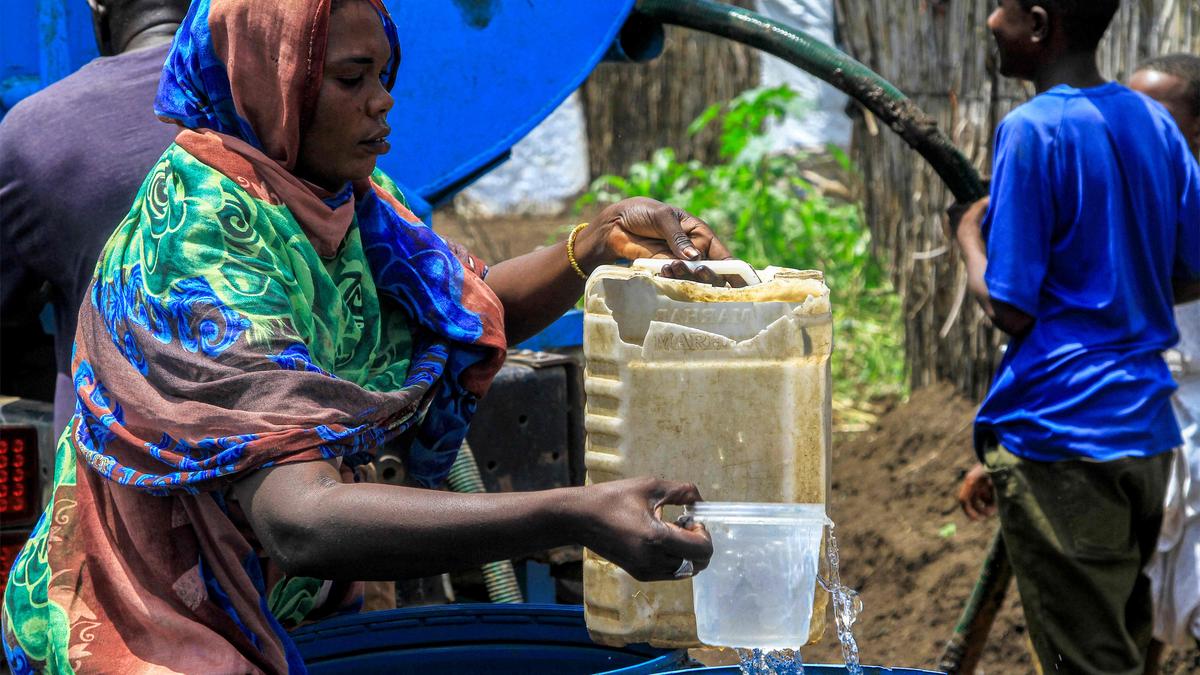
The situation is quite dire, if we take Unicef Deputy Executive Director Ted Chaiban at his word: “2 billion people still lack access to safely managed drinking water, and 3.6 billion people lack access to safely managed sanitation.”
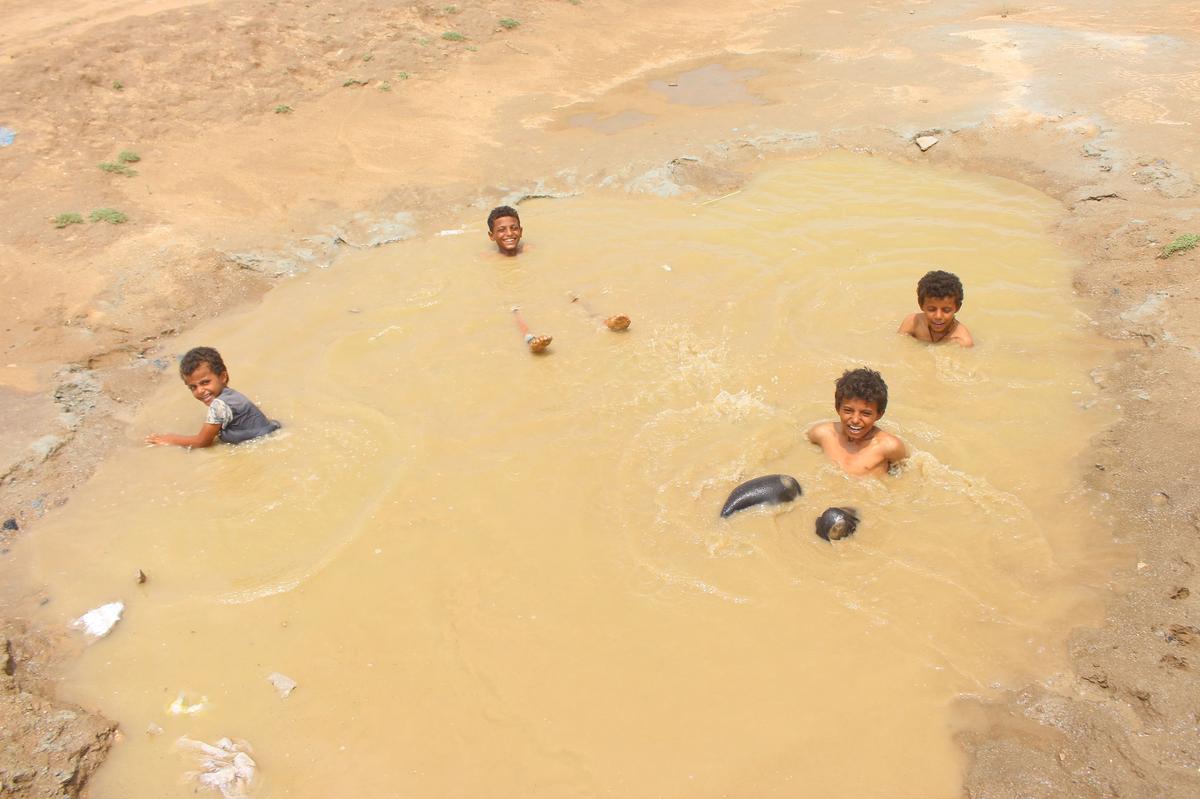
A large puddle near a camp for people displaced by conflict in Yemen’s Hajjah province on August 27. Clinics in western Yemen have been inundated with suspected cholera patients after heavy rains and flooding.
| Photo Credit:
AFP
According to the data, the number of reported deaths from cholera increased last year by 17% compared to 2022. The number of cases increased by 13%. “Cholera killed 4000 people last year, a disease that is preventable and easily treatable… Preliminary data show that the global cholera crisis continues in to 2024, with 22 countries reporting active outbreaks,” said WHO director general Tedros Tedros Adhanom Ghebreyesus.
From 1 January to 28 July 2024, a total of 5,052 cholera and AWD cases were reported across four countries in the South-East Asia Region. During this period, cases were reported from India (3,805 cases), Myanmar (1,141 cases), Bangladesh (86 cases), and Nepal (20 cases), as per WHO data. 2,400 deaths have already been reported to WHO across all continents as of 22 August.

Dr. Tedros, in his message, added that conflict, climate change, unsafe water and sanitation, poverty and displacement all contributed to the rise in cholera outbreaks last year. His revelation that the geographical distribution of cholera had also changed significantly, with cases from the Middle East and Asia declining by one-third, and cases from Africa more than doubling, was worrisome, given the existing inequities in access to health care.
Not surprisingly, the global cholera crisis has caused a severe shortage of cholera vaccines. Between 2021 and 2023, more doses were requested for outbreak response than the entire previous decade, the WHO DG said. About 36 million doses were produced last year, only half the amount requested by 14 affected countries. Therefore, since October 2022, the International Coordinating Group, which manages emergency vaccine supplies, has had to suspend the standard two-dose vaccination regimen, adopting a single-dose approach to reach and protect more people with limited supplies. Dr. Tedros also emphasised that there is currently only one manufacturer of cholera vaccines, and urged other manufacturers planning to enter the market to accelerate their efforts and make doses available at affordable rates.

His prime message though was: While vaccination is an important tool, safe drinking water, sanitation and hygiene remain the only long-term and sustainable solutions to ending cholera outbreaks and preventing future ones.
In an article in Science, Kai Kupferschmidt records microbiologist Rita Colwell’s long time argument that warmer surface waters can favour the emergence of the bacterium. He argues that whether this actually plays a role in large outbreaks across the world is contested, but another climate link is very clear. The article says: “Floods can aid spread by causing latrines to overflow into water sources, for instance, and droughts can boost the concentration of the bacterium in shrinking ponds and streams and force people to use unsafe water.”
The truth that the data has offered us cannot be ignored: conflict, climate change, limited investment in development and population displacement due to emerging and re-emerging risks are all contributing factors to the rise in the number of cholera outbreaks. Clearly several of the sustainable development goals are not on course, and nowhere near meeting the targets, and access to safe drinking water and sanitation is far from being the fundamental right that the United Nations General Assembly declared it was in 2010.
But meanwhile, there has been some galvanisation globally, to address the challenge. The Global Task Force for Cholera Control (GTFCC) by WHO developed a ‘Global Roadmap for Ending Cholera by 2030’, emphasising the need for multi-sectoral interventions — from identifying disease transmission and reporting that essential information to government agencies, to sensitising afflicted or vulnerable communities with hygiene reminders and providing sanitation facilities, and facilitating OCV campaigns — in hotspot areas.

In May this year, seven countries and 10 major health partners affiliated with the Global Task Force on Cholera Control (GTFCC) came together, on the side of the World Health Assembly in a powerful show of multisectoral commitment to end the global cholera emergency. The International Federation of Red Cross and Red Crescent Societies (IFRC), the United Nations Children’s Fund (UNICEF), and the WHO — in partnership with the GTFCC — urged immediate collective action with only six years left to meet the GTFCC’s 2030 global roadmap goals. The focus was on the critical need for sustainable funding to advance safe water, sanitation and hygiene services, strengthen disease surveillance in cholera hotspots and scale up local oral cholera vaccine manufacturing.
IFRC Secretary General Jagan Chapagain underlined what public health experts have been articulating since the global resurgence of cholera, and the pressure it has placed on health systems, globally: “We cannot accept such a staggering loss of life to a disease that is entirely preventable and treatable with the tools we have in the 21st century. This event serves as a stark reminder that there is much more work to do as we approach 2030. We must urgently refocus our efforts and elevate cholera control to the forefront of global dialogues, while backing it with tangible investments at the grassroot level.”
Now everything will hinge on whether investments come through and local governments are convinced to spend on ensuring clean water, hygeine and sanitation. It is also important for these governments to recognise the creeping significance of climate change, and take measures to mitigate and counter the effects.
(ramya.kannan@thehindu.co.in)
Published – September 13, 2024 05:00 am IST