






Like many useful innovations, it seems, the creation of high-quality steel by Indian metallurgists more than two thousand years ago may have been a happy confluence of clever workmanship and luck.
Firing chunks of iron with charcoal in a special clay container produced something completely new, which the Indians called wootz. Roman armies were soon wielding wootz steel swords to terrify and subdue the wild, hairy tribes of ancient Europe.
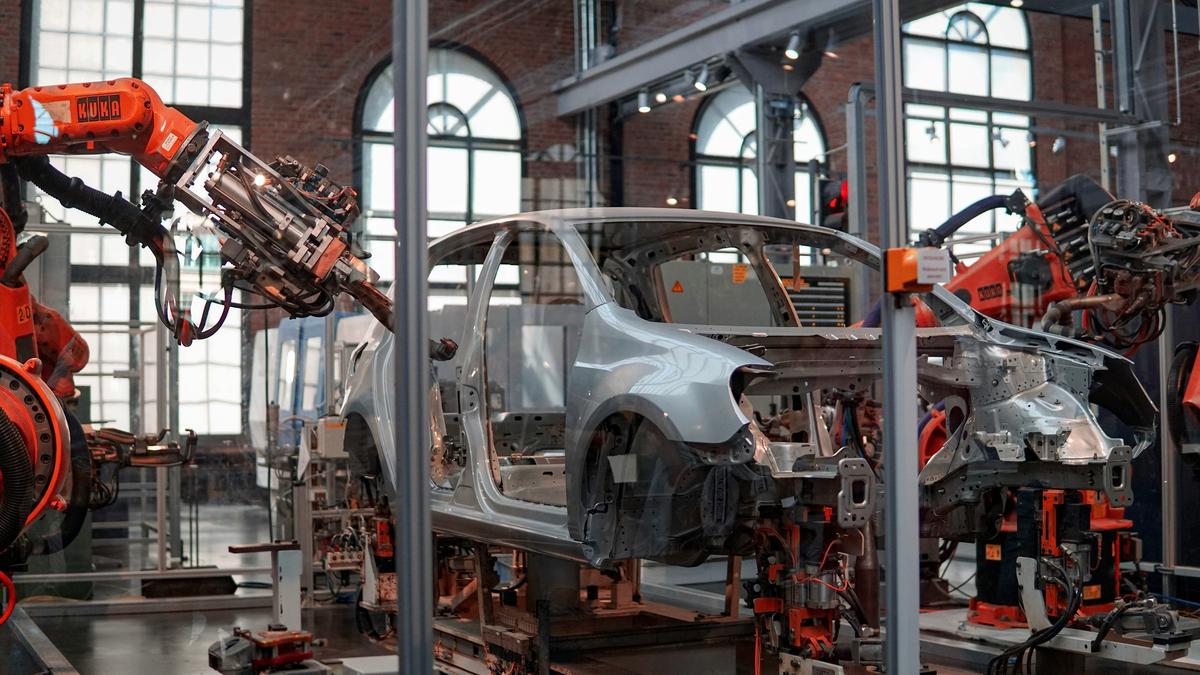
Twenty-four centuries later, automakers are relying on electric arc furnaces, hot stamping machines and quenching and partitioning processes that the ancients could never have imagined. These approaches are yielding new ways to tune steel to protect soft human bodies when vehicles crash into each other, as they inevitably do — while curbing car weights to reduce their deleterious impact on the planet.
“It is a revolution,” says Alan Taub, a University of Michigan engineering professor with many years in the industry. The new steels, dozens of varieties and counting, combined with lightweight polymers and carbon fiber-spun interiors and underbodies, hark back to the heady days at the start of the last century when, he says, “Detroit was Silicon Valley.”
Such materials can reduce the weight of a vehicle by hundreds of pounds — and every pound of excess weight that is shed saves roughly $3 in fuel costs over the lifetime of the car, so the economics are hard to deny. The new maxim, Taub says, is “the right material in the right place.”
The transition to battery-powered vehicles underscores the importance of these new materials. Electric vehicles may not belch pollution, but they are heavy — the Volvo XC40 Recharge, for example, is 33% heavier than the gas version (and would be heavier still if the steel surrounding passengers were as bulky as it used to be). Heavy can be dangerous.
“Safety, especially when it comes to new transportation policies and new technologies, cannot be overlooked,” Jennifer Homendy, chief of the National Transportation Safety Board, told the Transportation Research Board in 2023. Plus, reducing the weight of an electric vehicle by 10% delivers roughly 14% improvement in range.
As recently as the 1960s, the steel cage around passengers was made of what automakers call soft steel. The armor from Detroit’s Jurassic period was not much different from what Henry Ford had introduced decades earlier. It was heavy and there was a lot of it.
With the 1965 publication of Ralph Nader’s Unsafe at Any Speed: The Designed-In Dangers of the American Automobile, big automakers realised they could no longer pursue speed and performance exclusively. The oil embargos of the 1970s only hastened the pace of change: Auto steel now had to be both stronger and lighter, requiring less fuel to push around.
In response, over the past 60 years, like chefs operating a sous vide machine to produce the perfect bite, steelmakers — their cookers arc furnaces reaching thousands of degrees celsius, with robots doing the cooking — have created a vast variety of steels to match every need. There are high-strength, hardened steels for the chassis; corrosion-resistant stainless steels for side panels and roofs; and highly stretchable metals in bumpers to absorb impacts without crumpling.
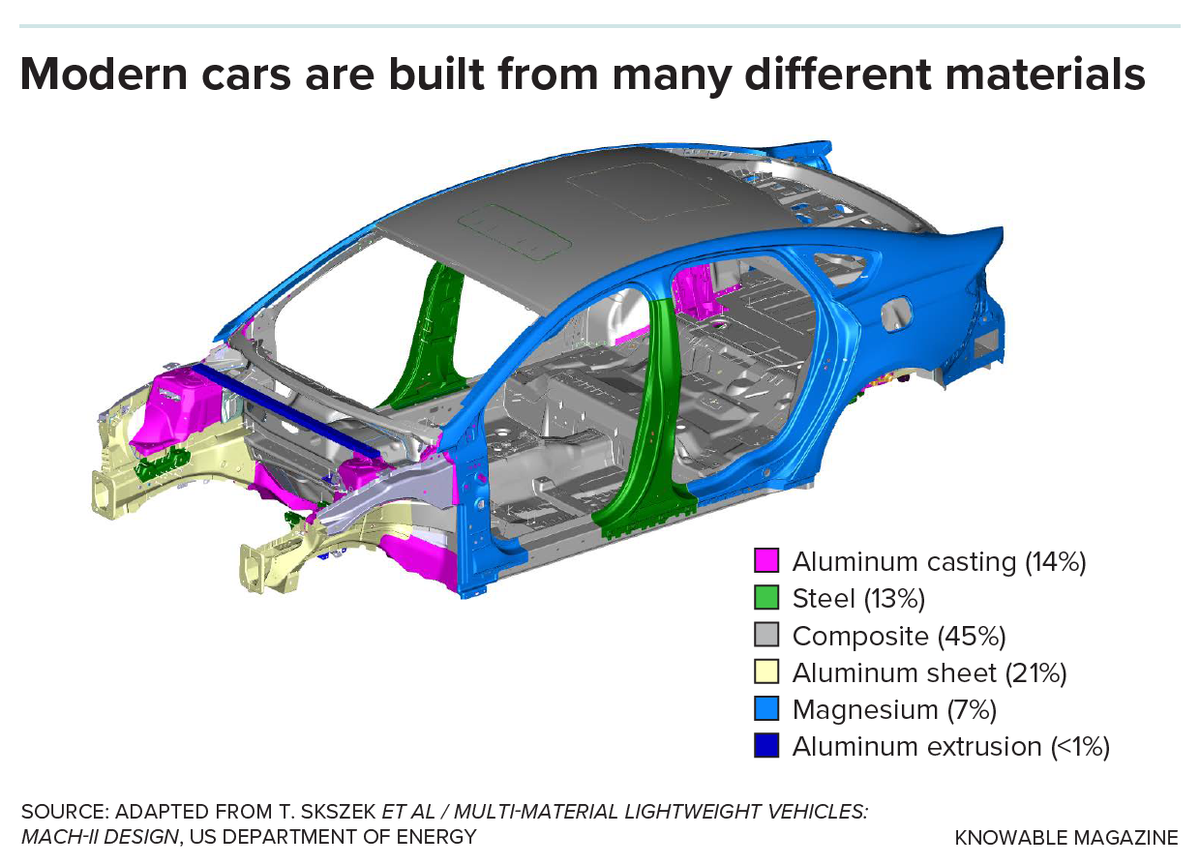
Carmakers use a wide range of materials to build a car’s body, choosing the material that works best for each application.
Tricks with the steel
Most steel is more than 98% iron. It is the other couple of percent — sometimes only hundredths of a single percent, in the case of metals added to confer desired properties — that make the difference. Just as important are treatment methods: the heating, cooling and processing, such as rolling the sheets prior to forming parts. Modifying each, sometimes by only seconds, changes the metal’s structure to yield different properties. “It’s all about playing tricks with the steel,” says John Speer, director of the Advanced Steel Processing and Products Research Center at the Colorado School of Mines.
At the most basic level, the properties of steel are about microstructure: the arrangement of different types, or phases, of steel in the metal. Some phases are harder, while others confer ductility, a measure of how much the metal can be bent and twisted out of shape without shearing and creating jagged edges that penetrate and tear squishy human bodies. At the atomic level, there are principally four phases of auto steel, including the hardest yet most brittle, called martensite, and the more ductile austenite. Carmakers can vary these by manipulating the times and temperatures of the heating process to produce the properties they want.

This electron micrograph of a steel sample shows two different types, or phases, of steel: softer, more workable austenite (blue) and harder, more brittle martensite (red). Steelmakers can vary the mix of the two by altering how they heat and cool a piece of steel.
| Photo Credit:
Adapted from R. Hossain et al./Scientific Reports 2016
Academic researchers and steelmakers, working closely with automakers, have developed three generations of what is now called advanced high-strength steel. The first, adopted in the 1990s and still widely employed, had a good combination of strength and ductility. A second generation used more exotic alloys to achieve even greater ductility, but those steels proved expensive and challenging to manufacture.

The third generation, which Speer says is beginning to make its way onto the factory floor, uses heating and cooling techniques to produce steels that are stronger and more formable than the first generation; nearly ten times as strong as common steels of the past; and much cheaper (though less ductile) than second-generation steels.
Steelmakers have learned that cooling time is a critical factor in creating the final arrangements of atoms and therefore the properties of the steel. The most rapid cooling, known as quenching, freezes and stabilises the internal structure before it undergoes further change during the hours or days it could otherwise take to reach room temperature.
One of the strongest types of modern auto steel — used in the most critical structural components, such as side panels and pillars — is made by superheating the metal with boron and manganese to a temperature above 850º C. After becoming malleable, the steel is transferred within 10 seconds to a die, or form, where the part is shaped and rapidly cooled.
In one version of what is known as transformation-induced plasticity, the steel is heated to a high temperature, cooled to a lower temperature and held there for a time and then rapidly quenched. This produces islands of austenite surrounded by a matrix of softer ferrite, with regions of harder bainite and martensite. This steel can absorb a large amount of energy without fracturing, making it useful in bumpers and pillars.
Recipes can be further tweaked by the use of various alloys. Henry Ford was employing alloys of steel and vanadium more than a century ago to improve the performance of steel in his Model T, and alloy recipes continue to improve today. One modern example of the use of lighter metals in combination with steel is the Ford Motor Company’s aluminum-intensive F-150 truck, the 2015 version weighing nearly 700 pounds less than the previous model.
A process used in conjunction with new materials is tube hydroforming, in which a metal is bent into complex shapes by the high-pressure injection of water or other fluids into a tube, expanding it into the shape of a surrounding die. This allows parts to be made without welding two halves together, saving time and money. A Corvette aluminum frame rail, the largest hydroformed part in the world, saved 20% in mass from the steel rail it replaced, according to Taub, who coauthored a 2019 article on automotive lightweighting in the Annual Review of Materials Research.
New alloys
More recent introductions are alloys such as those using titanium and particularly niobium, which increase strength by stabilising a metal’s microstructure. In a 2022 paper, Speer called the introduction of niobium “one of the most important physical metallurgy developments of the 20th century.”
One tool now shortening the distance between trial and error is the computer. “The idea is to use the computer to develop materials faster than through experimentation,” Speer says. New ideas can now be tested down to the atomic level without workmen bending over a bench or firing up a furnace.
The ever-continuing search for better materials and processes led engineer Raymond Boeman and colleagues to found the Institute for Advanced Composites Manufacturing Innovation (IACMI) in 2015, with a $70 million federal grant. Also known as the Composites Institute, it is a place where industry can develop, test and scale up new processes and products.
“The field is evolving in a lot of ways,” says Boeman, who now directs the institute’s research on upscaling these processes. IACMI has been working on finding more climate-friendly replacements for conventional plastics such as the widely used polypropylene. In 1960, less than 100 pounds of plastic were incorporated into the typical vehicle. By 2017, the figure had risen to nearly 350 pounds, because plastic is cheap to make and has a high strength-to-weight ratio, making it ideal for automakers trying to save on weight.
By 2019, according to Taub, 10-15% of a typical vehicle was made of polymers and composites, everything from seat components to trunks, door parts and dashboards. And when those cars reach the end of their lives, their plastic and other difficult-to-recycle materials known as automotive shredder residue, 5 million tonnes of it, ends up in landfills — or, worse, in the wider environment.

Researchers are working hard to develop stronger, lighter and more environmentally friendly plastics. At the same time, new carbon fiber products are enabling these lightweight materials to be used even in load-bearing places such as structural underbody parts, further reducing the amount of heavy metal used in auto bodies.
Clearly, work remains to make autos less of a threat, both to human bodies and the planet those bodies travel over every day, to work and play. But Taub says he is optimistic about Detroit’s future and the industry’s ability to solve the problems that came with the end of the horse-and-buggy days. “I tell students they will have job security for a long time.”
John Johnson, Jr. is a science writer and author based outside Los Angeles. A member of three Pulitzer Prize-winning reporting teams at the Los Angeles Times, he is the author of ‘Zwicky: The Outcast Genius Who Unmasked the Universe’. This article is republished from Knowable Magazine.