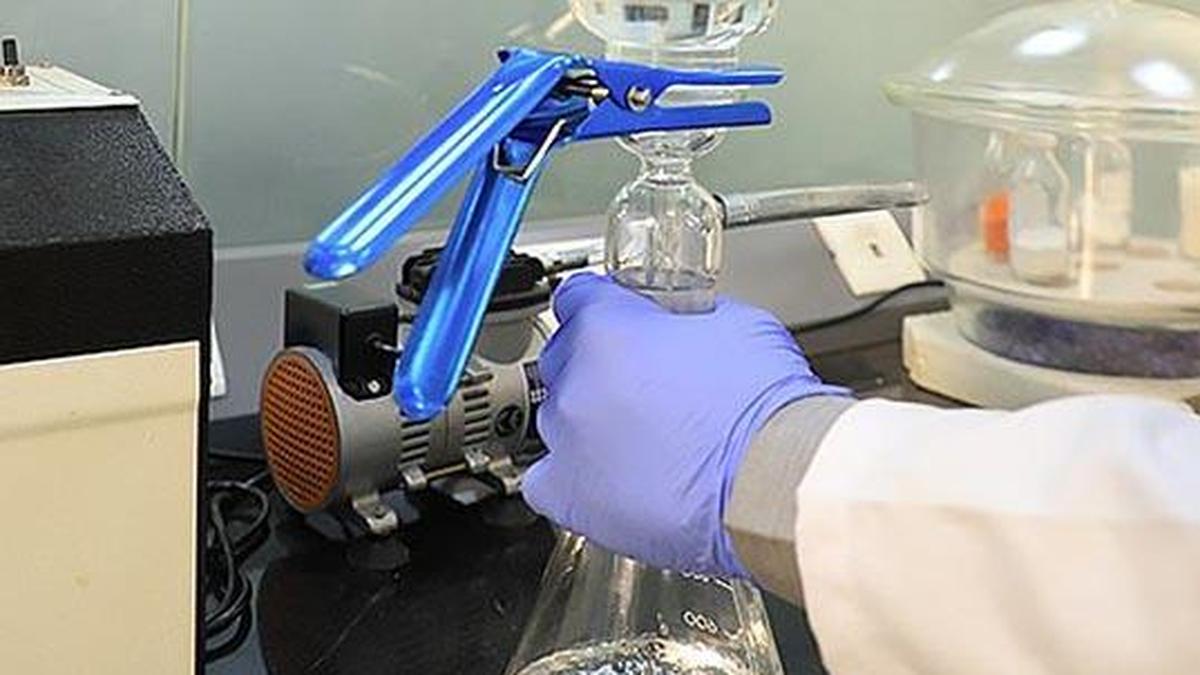







A new tablet that slowly releases the drug ketamine can ease treatment-resistant depression, offering an alternative to cumbersome clinic-based treatments for people with the condition, researchers have found in a clinical trial.
Ketamine, sometimes called a “party drug”, blocks the receptor for an excitatory neurotransmitter — those that cause neurons fire and send messages — called glutamate. It was originally used as an anaesthetic but researchers found that it had rapid antidepressant effects, acting within hours.
As such, health workers routinely prescribe ketamine to people with treatment-resistant depression, where antidepressants don’t improve symptoms, and with suicidal ideation.
Slipping past the side-effects
It is most commonly administered intravenously (i.e. by injecting into the blood), and can also be delivered via an intranasal spray. However, in these routes ketamine can have many side effects, including headache, nausea, and drowsiness and serious ones like increased blood pressure, loss of focus or dissociation from reality.
As a result, clinicians monitor patients who have been given ketamine for two hours while the side effects subside. This means an in-clinic treatment protocol that those suffering from depressive symptoms have said are inconvenient and render the drug more inaccessible.
Previous reports have suggested that tablets that release ketamine slowly can improve symptoms of depression with fewer side effects. Based on these reports, a team led by Paul Glue at the University of Otago, in New Zealand, proposed that patients could dose themselves safely at home using slow-release ketamine tablets.
“If ketamine is formulated as an extended-release tablet where it takes about 10 hours to release, most ketamine is broken down in the liver before it can get into the blood,” Dr. Glue told The Hindu in an email. Ketamine’s metabolites – the compounds formed when the liver breaks ketamine down – are the main drivers of its antidepressant effects, he explained. “However, the lower blood ketamine levels mean patients experience few or no side effects.”
An enriched clinical trial
Dr. Glue’s team developed an extended-release ketamine pill called R-107. To test its effects, they administered it to 231 volunteers recruited from 20 psychiatric clinics in New Zealand, Australia, Singapore, and Taiwan. All the participants had a major depressive disorder and whose symptoms hadn’t shown any improvement despite being treated with at least two antidepressants.
In the first stage of the study, the researchers treated all the participants with 120 mg of R-107 every day for five days. They assessed the participants’ depression symptoms after eight days. Those whose symptoms had not improved left the study at this point, leaving 168 people to proceed to the second stage of the trial.
Many clinical trials use this sort of stepped intervention — called an enrichment phase — to exclude people who don’t respond to acute treatment in the first stage. Only those who respond to the treatment proceed to the next stage, which is double-blind, meaning neither the participants nor the researchers know which participant has received the actual treatment and which a placebo.
According to Dr. Glue, “Normally, depression treatment studies have a high failure rate of about 50%,” where there is no visible difference in responses between those treated with the drug and those treated with the placebo. “The risk of study failure drops to about 20% by using this two-stage design.”

‘Very satisfying to see the results’
The 168 people recruited to the double-blind stage received either placebo tablets or one of four R-107 doses — 30, 60, 120 or 180 mg — twice a week for three months. The participants reported experiencing minimal side effects, including headache, nausea, and anxiety. Very few reported symptoms of dissociation. While some people reported more dire side effects such as severe headache, chest pain, and suicidal ideations, the researchers were able to determine them to be unrelated to the treatment.
After the trial period, more participants treated with the tablets showed improved depression symptoms compared to those who had received placebo (as measured using a standard clinical scale to assess symptom severity). Those treated with 180 mg of ketamine reported the most signs of improvement. And compared to 43% of those who received the highest ketamine dose, 71% of those taking placebo relapsed and suffered from symptoms of depression.
These results didn’t surprise Dr. Glue, since previous early clinical data had revealed rapid antidepressant response to ketamine. “However, antidepressant drug trials can be unpredictable, so it was very satisfying to see the results,” he added.
Rishabh Bajaj, a psychiatrist at Asha Hospital in Hyderabad, also said the results, described in the journal Nature Medicine on June 24, were to be expected: “I would be surprised if people did not respond to ketamine.”
The cost question
Most participants in the double-blind stage consumed the pills at home, with brief visits to the clinic that they said did not inconvenience them. This was a sign that extended-release ketamine tablets with fewer or no side effects could ease access to treatment for the people who need it the most, Dr. Glue said.
“A ketamine-containing tablet is convenient, particularly for those in tier-three cities,” said Dr. Bajaj, since they may not have access to clinics for ketamine treatment sessions. The drug costs only about Rs. 20 whereas intravenous treatment, which is more common, can cost anywhere between Rs. 750 and Rs. 2,500 per session, he said. Nasal sprays are usually inaccessible because they are even more expensive, Rs. 10,000 to Rs. 20,000, he said.
However, he added that licensing costs might push up the tablets’ cost as well.
The major limitation of the study, per Dr. Bajaj, was the enrichment phase, which can skew the results because a significant number of people had been excluded after acute treatment. Dr. Glue expressed a similar concern: “Enrichment is fine to demonstrate that the tablets work,” but further studies in more people for regulatory approval will need to have an ‘unenriched’ population as well.

Risk of abuse and overdose
Another concern, according to Dr. Bajaj, is that ketamine is a drug of abuse, and unsupervised treatment in people with depression symptoms or suicidal ideation could be dangerous.
To address some of these concerns, Dr. Glue’s team designed R-107 to be exceptionally hard and difficult to shatter, so people can’t crush the tablet and snort it or dissolve it in water to inject it intravenously for recreational use. Fortunately, none of the trial participants reported craving the tablet either.
Dr. Bajaj agreed making the tablets shatter-proof could mitigate its abuse, but said there was still the possibility of users with severe symptoms overdosing themselves with multiple tablets. He suggested this risk could be reduced by rationing the number of tablets availed to users. But the downside of this idea is that patients would have to visit the clinic to refill their prescriptions, which was the point of devising R-107 in the first place.
Having more data about the treatment in more people can make the picture clearer, Dr. Bajaj concluded. “But that is going to take time.”
Sneha Khedkar is a biologist turned freelance science journalist.