


Skip to content
  • Facebook
  • X
  • Linkedin
  • WhatsApp
  • YouTube
  • Associate Journalism
  • About Us
  • Privacy Policy
  • 033-46046046
  • editor@artifex.news
Artifex.News

Artifex.News

Stay Connected. Stay Informed.

  • Breaking News
  • World
  • Nation
  • Sports
  • Business
  • Science
  • Entertainment
  • Lifestyle
  • Toggle search form
  • ‘Disclose PEDs to insurers’ – The Hindu
    ‘Disclose PEDs to insurers’ – The Hindu Business
  • Access Denied World
  • Two persons wounded in Moscow car bombing
    Two persons wounded in Moscow car bombing World
  • Access Denied Sports
  • Haryana Assembly polls: Parties chase Dalits; voters chase papers
    Haryana Assembly polls: Parties chase Dalits; voters chase papers Nation
  • AI Tool Predicts When Recruits Will Quit Jobs
    AI Tool Predicts When Recruits Will Quit Jobs World
  • Punjab’s 2-Day Assembly Session “Is Bound To Be Illegal”: Governor Office
    Punjab’s 2-Day Assembly Session “Is Bound To Be Illegal”: Governor Office Nation
  • ED restitutes flats to homebuyers in Syndicate Bank fraud case in Udaipur
    ED restitutes flats to homebuyers in Syndicate Bank fraud case in Udaipur Business
AI comes to the rescue of elephants

AI comes to the rescue of elephants

Posted on July 6, 2024 By admin


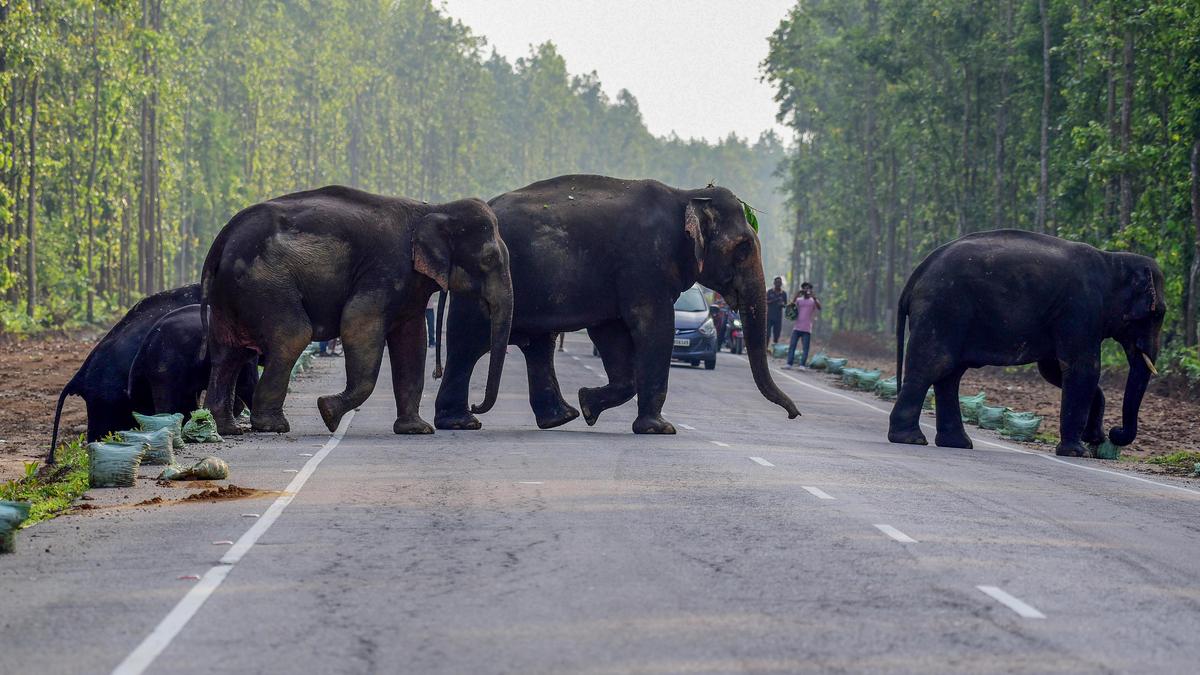
Studies have identified that 18 elephant routes exist between Tamil Nadu and Kerala
| Photo Credit: ANI

The elephant population in India stands at 25,000 to 30,000, earning the species an “endangered” status. Their range today is estimated to be only 3.5% of what it was earlier, being restricted to the Himalayan foothills, the northeast, some forests of central India, and hilly forests of Western and Eastern Ghats.

Of particular concern is the fragmentation of their habitat: small, forested areas providing sustenance for elephants, interspersed with human-developed landscapes. Fragmentation can also lead to restricted breeding choices. This creates genetic bottlenecks and, in the long term, a reduction in the fitness of the herds.

Frequent movement of elephants between their habitable zones brings them into contact with roads and railway lines. The range of a female elephant covers about 500 sq. km, and traveling over so much distance in the age of fragmented habitats makes a road or railway crossing very likely.

Fortunately, not all elephant tracks pose these hazards. The elephants of Bandipur, Mudumalai and Wayanad go on a seasonal summer migration. They head for the Kabini Dam backwaters for both water and green grass. Studies have identified that 18 elephant routes exist between Tamil Nadu and Kerala.

Wildlife corridors are a solution — these managed lands allow for migration with minimal human contact. One good example is the Motichur-Chilla corridor in Uttarakhand, which allows the flow of elephant genes between the Corbett and the Rajaji National Parks. However, there is always the risk of conflict with humans, with elephants occasionally feasting on crops, or crossing roads and railway tracks.

Train speed

In a Canadian study attempting to mitigate animal-train collisions, train-triggered warning systems comprising flashing lights and bell sounds were installed at various locations along the tracks. These signals activated 30 seconds before train arrival, were aimed at conditioning animals to associate the warnings with approaching trains.

Cameras recorded animal responses to trains with and without warning signals, on both straight and curved tracks. Large animals, such as elks (from the deer family) and grizzly bears left the tracks about 10 seconds before the train arrived when there was no warning system, and about 17 seconds before the train arrived when warning bells and lights were deployed (Transportation Research, vol 87, 2020).

The response to an approaching train is less in curved sections of the track, probably due to reduced visibility. In such places, sound is used by animals. However, the ability to hear an approaching train is significantly influenced by factors such as high train speed.

AI methods

When should an engine driver reduce speed when passing through forests that are elephant habitats? The Indian Railways has a vast network of optical fiber cables. These support telecommunications and carry data, and importantly transmit signals for train control. In a recently introduced system called Gajraj, geophonic sensors on these OFC lines are tuned to pick up the vibrations of the deep and resonant footsteps of passing elephants.

This AI-based intrusion detection system analyses data from the sensors, extracting relevant features such as frequency components and duration of vibration. If elephant-specific vibrations are detected, an alert is promptly sent to locomotive drivers in the area, and train speeds are reduced. The system is now operational in the Alipurduar area of north West Bengal, which has been the site of several tragic accidents in the past.

(The article was written in collaboration with Sushil Chandani, who works in molecular modelling)


Source link

Science Tags:AI, AI-based intrusion detection system, Animal-train collisions, elephants, Geophonic sensors on OFC lines

Post navigation

Previous Post: Bandhan Bank appoints Ratan Kumar Kesh as interim MD & CEO
Next Post: Is pregnancy-related brain impairment also seen in fish?

Related Posts

  • How Central Europe’s ’water guardians’ are fighting desertification
    How Central Europe’s ’water guardians’ are fighting desertification Science
  • A wild orangutan used a medicinal plant to treat a wound, scientists say
    A wild orangutan used a medicinal plant to treat a wound, scientists say Science
  • Faunal survey in Kerala’s Vazhachal adds 26 species to checklist of wildlife division in Western Ghats
    Faunal survey in Kerala’s Vazhachal adds 26 species to checklist of wildlife division in Western Ghats Science
  • India’s ‘heat trap’ cities make summers worse, says government official
    India’s ‘heat trap’ cities make summers worse, says government official Science
  • Why sustainable funding matters for India’s ‘science power’ ambition | Explained
    Why sustainable funding matters for India’s ‘science power’ ambition | Explained Science
  • India and the second Space Age
    India and the second Space Age Science

More Related Articles

Nobel Prize in Physics 2024 awarded to John J. Hopfield, Geoffrey E. Hinton Nobel Prize in Physics 2024 awarded to John J. Hopfield, Geoffrey E. Hinton Science
Earth is getting a new mini-moon, and it won’t be the first or the last Earth is getting a new mini-moon, and it won’t be the first or the last Science
What is space-based solar power? What is space-based solar power? Science
Scientists chronicle the earliest stages of a supernova Scientists chronicle the earliest stages of a supernova Science
Could hidden dental bacteria help explain sudden and deadly heart attacks? Could hidden dental bacteria help explain sudden and deadly heart attacks? Science
Trump asks Musk to bring back stranded NASA astronauts Sunita Williams and Butch Wilmore home Trump asks Musk to bring back stranded NASA astronauts Sunita Williams and Butch Wilmore home Science
SiteLock

Archives

  • September 2026
  • August 2026
  • July 2026
  • June 2026
  • May 2026
  • April 2026
  • March 2026
  • February 2026
  • January 2026
  • December 2025
  • November 2025
  • October 2025
  • September 2025
  • August 2025
  • July 2025
  • June 2025
  • May 2025
  • April 2025
  • March 2025
  • February 2025
  • January 2025
  • December 2024
  • November 2024
  • October 2024
  • September 2024
  • August 2024
  • July 2024
  • June 2024
  • May 2024
  • April 2024
  • March 2024
  • February 2024
  • January 2024
  • December 2023
  • November 2023
  • October 2023
  • September 2023
  • August 2023
  • July 2023
  • June 2023
  • May 2023
  • April 2023
  • March 2023
  • February 2023
  • January 2023
  • December 2022
  • November 2022
  • October 2022
  • September 2022
  • August 2022
  • July 2022
  • June 2022
  • May 2022

Categories

  • Business
  • Nation
  • Science
  • Sports
  • World

Recent Posts

  • Delegation from Ghana visits crime records bureau in T.N. to study digital policing initiatives
  • Maldives unveils $20 billion UAE investment
  • State owes sanctioned subsidies, incentives worth ₹2,880 crore to 3,716 industrial units: KASSIA
  • State owes sanctioned subsidies, incentives worth ₹2,880 crore to 3,716 industrial units: KASSIA
  • China expels generals accused of graft from Communist Party: state media

Recent Comments

  1. BrandonDib on UP Teacher Who Asked Students To Slap Muslim Classmate
  2. Daviddrire on UP Teacher Who Asked Students To Slap Muslim Classmate
  3. JesseHaf on UP Teacher Who Asked Students To Slap Muslim Classmate
  4. JustinPet on UP Teacher Who Asked Students To Slap Muslim Classmate
  5. Davidscush on UP Teacher Who Asked Students To Slap Muslim Classmate
  • Access Denied Sports
  • Access Denied Sports
  • Japanese Princess Yuriko, wartime Emperor Hirohito’s sister-in-law, dies at 101
    Japanese Princess Yuriko, wartime Emperor Hirohito’s sister-in-law, dies at 101 World
  • Iranian Supreme Leader calls for unity among Muslim countries
    Iranian Supreme Leader calls for unity among Muslim countries World
  • D’artagnan wins Zavaray S. Poonawalla Bangalore Summer Derby
    D’artagnan wins Zavaray S. Poonawalla Bangalore Summer Derby Sports
  • Paris Olympics: PV Sindhu Starts With A Dominant Win Over Fathimath Abdul Razzaq
    Paris Olympics: PV Sindhu Starts With A Dominant Win Over Fathimath Abdul Razzaq Sports
  • Access Denied Business
  • Access Denied
    Access Denied Nation

Editor-in-Chief:
Mohammad Ariff,
MSW, MAJMC, BSW, DTL, CTS, CNM, CCR, CAL, RSL, ASOC.
editor@artifex.news

Associate Editors:
1. Zenellis R. Tuba,
zenelis@artifex.news
2. Haris Daniyel
daniyel@artifex.news

Photograher:
Rohan Das
rohan@artifex.news

Artifex.News offers Online Paid Internships to college students from India and Abroad. Interns will get a PRESS CARD and other online offers.
Send your CV (Subjectline: Paid Internship) to internship@artifex.news

Links:
Associate Journalism
About Us
Privacy Policy

News Links:
Breaking News
World
Nation
Sports
Business
Entertainment
Lifestyle

Registered Office:
72/A, Elliot Road, Kolkata - 700016
Tel: 033-22277777, 033-22172217
Email: office@artifex.news

Editorial Office / News Desk:
No. 13, Mezzanine Floor, Esplanade Metro Rail Station,
12 J. L. Nehru Road, Kolkata - 700069.
(Entry from Gate No. 5)
Tel: 033-46011099, 033-46046046
Email: editor@artifex.news

Copyright © 2023 Artifex.News Newsportal designed by Artifex Infotech.