




In 1948, microbiologists John F. Enders, Thomas Weller, and Frederick Robbins were trying to find a method to grow different viruses in cell cultures. In a routine experiment involving human muscle and skin cells, they decided to test one more virus along with the ones they were already testing, since a vial containing that virus was in their freezer. To their surprise, the virus proliferated and grew well with their method. Their work eventually solved one of the most important scientific problems of the time.
They had just managed to find a way to grow the poliovirus in non-nerve cells.
A major roadblock
In the mid-20th century, researchers widely believed the poliovirus could only be grown in cultures of nerve cells. This misconception was propagated by their inability to infect rhesus macaques by the oral route, and only by directly injecting the virus into the nervous system. At the time, they didn’t know the problem was with the poliovirus strains they were using.
The poliovirus has only one natural host — humans — and many of the early strains of the virus were isolated from humans and wouldn’t infect non-human primates. Since scientists kept passing the virus through the brain tissues of macaques, it adapted to that mode of infection.
The inability to culture polio in non-nerve cells was a major roadblock to developing a polio vaccine. But thanks to Enders and his team, the poliovirus could now be mass-produced for vaccine research.
Eradication target missed
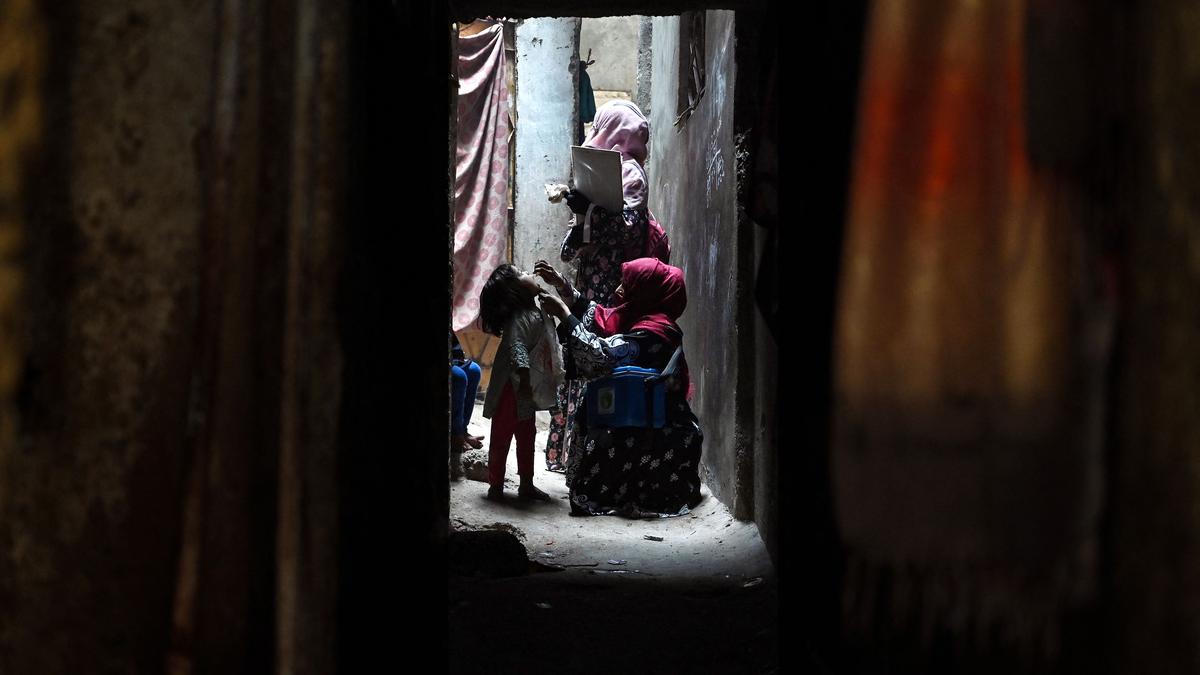
Polio eradication is one of the top priorities of the World Health Organisation (WHO). Since Africa was declared polio-free in August 2020, the wild poliovirus has been restricted to rural pockets in Afghanistan and Pakistan. But from here, according to a recent report in Science, the virus is beginning to reappear in big cities in these two countries.
This reemergence is a result of vaccine hesitancy due to misinformation, conflict, poverty, and limited access to these isolated regions. The WHO’s Global Polio Eradication Initiative is thus set to miss its deadline of eradicating polio by the end of 2024.
The Initiative’s failure in Afghanistan and Pakistan casts a long shadow on an otherwise remarkable achievement: of polio having been eradicated everywhere else. This feat was driven by two vaccines, both invented within a year of each other. They are administered differently, provide distinct levels of protection, contain different components, and target different compartments of the immune system. Yet they both played equally invaluable roles in the global fight against polio.
The systemic and the mucosal
In late 1949, Enders received a letter requesting the starting material and the procedure his team had perfected to grow the poliovirus in culture. At the time, Enders & co. were discussing their own future work. While his younger colleagues Weller and Robbins wanted to use the method to foray into vaccine research, Enders said such a job was ill-suited for basic science researchers like themselves. They handed over the sample and the procedure to the letter’s author of the letter, the director of the Virus Research Laboratory at the University of Pittsburgh, Jonas Salk.
Salk made the first successful vaccine for polio. He grew the virus using the method Enders and his team had developed, inactivated it by treating it with formaldehyde, and injected it into his test subjects. The fragments of the inactivated virus were able to induce immunity in their bodies. Importantly, since the vaccine was introduced into the muscle, it generated systemic immunity.
The immune system has two main parts: the systemic and the mucosal. The systemic component includes the blood, the brain, and all other organ systems. The mucosal component includes the inner linings of the digestive and respiratory systems, the urogenital tract, and the eyes. These regions are lined with mucous membranes that provide an additional layer of protection, as they frequently come into contact with the external environment.
Striking at ground zero
Soon after Salk made his inactivated polio vaccine (IPV), Albert Sabin developed another vaccine that contained live polio strains weakened by growing them serially in macaque cells, making them unfit for human infection. Since Sabin’s vaccine contained live virus particles, it had to rely on its natural mode of infection and was therefore administered orally. This was the oral polio vaccine (OPV).

Since the OPV went into the stomach, it induced a powerful protective mucosal immune response right where the virus would have to begin its infection.
The OPV had multiple advantages over the IPV. First, the vaccine induced a protective response at the viral entry site — the gut — allowing it to provide a much greater degree of protection relative to the IPV. Second, the OPV was administered orally and didn’t require syringes or trained personnel for its administration.
A one-two punch
But there was a catch. Occasionally, the weakened virus in the OPV would revert, and would do the very job it was designed to prevent: cause polio. On the other hand, the IPV, while being a less potent vaccine, contained inactivated virus particles and carried no risk of causing vaccine-induced polio.
The world has used both vaccines in the fight against polio. While some countries, such as Norway, Sweden, Finland, and Iceland, relied exclusively on the IPV, most countries have used a combination of the two. The latter countries prefer the OPV for its superior protection and ease of administration. When the number of natural polio cases drops to zero, they switch to IPV for its enhanced safety.
Despite the many differences between the Salk and Sabin vaccines, they share one crucial feature that armed the WHO in its fight against polio: both Jonas Salk and Albert Sabin chose not to patent their vaccines. When asked who owned the patent on his vaccine, Salk famously replied: “Well, the people, I would say. There is no patent. Could you patent the sun?”
Arun Panchapakesan is an assistant professor at the Y.R. Gaithonde Centre for AIDS Research and Education, Chennai.