

Skip to content
  • Facebook
  • X
  • Linkedin
  • WhatsApp
  • YouTube
  • Associate Journalism
  • About Us
  • Privacy Policy
  • 033-46046046
  • editor@artifex.news
Artifex.News

Artifex.News

Stay Connected. Stay Informed.

  • Breaking News
  • World
  • Nation
  • Sports
  • Business
  • Science
  • Entertainment
  • Lifestyle
  • Toggle search form
  • Durand Cup 2024: AIFF President Kalyan Chaubey Urges CM Mamata Banerjee To Reinstate Matches In Kolkata
    Durand Cup 2024: AIFF President Kalyan Chaubey Urges CM Mamata Banerjee To Reinstate Matches In Kolkata Sports
  • Access Denied World
  • Deepinder Goyal Now A Billionaire As Zomato Shares Reach Record High
    Deepinder Goyal Now A Billionaire As Zomato Shares Reach Record High Nation
  • Reliance Industries seeks CCI approval for Viacom18-Star India merger
    Reliance Industries seeks CCI approval for Viacom18-Star India merger Business
  • China, Russia start joint naval drills, days after NATO allies called Beijing a Ukraine war enabler
    China, Russia start joint naval drills, days after NATO allies called Beijing a Ukraine war enabler World
  • Wipro to acquire a Samsung-owned tech firm, in a cash deal of 5 million
    Wipro to acquire a Samsung-owned tech firm, in a cash deal of $375 million Business
  • Two Sisters Returning From Court Run Over By Car In UP: Cops
    Two Sisters Returning From Court Run Over By Car In UP: Cops Nation
  • Access Denied Sports
Remembering Dhirendra Sharma, quintessential dissenter and academic-activist

Remembering Dhirendra Sharma, quintessential dissenter and academic-activist

Posted on June 21, 2024 By admin


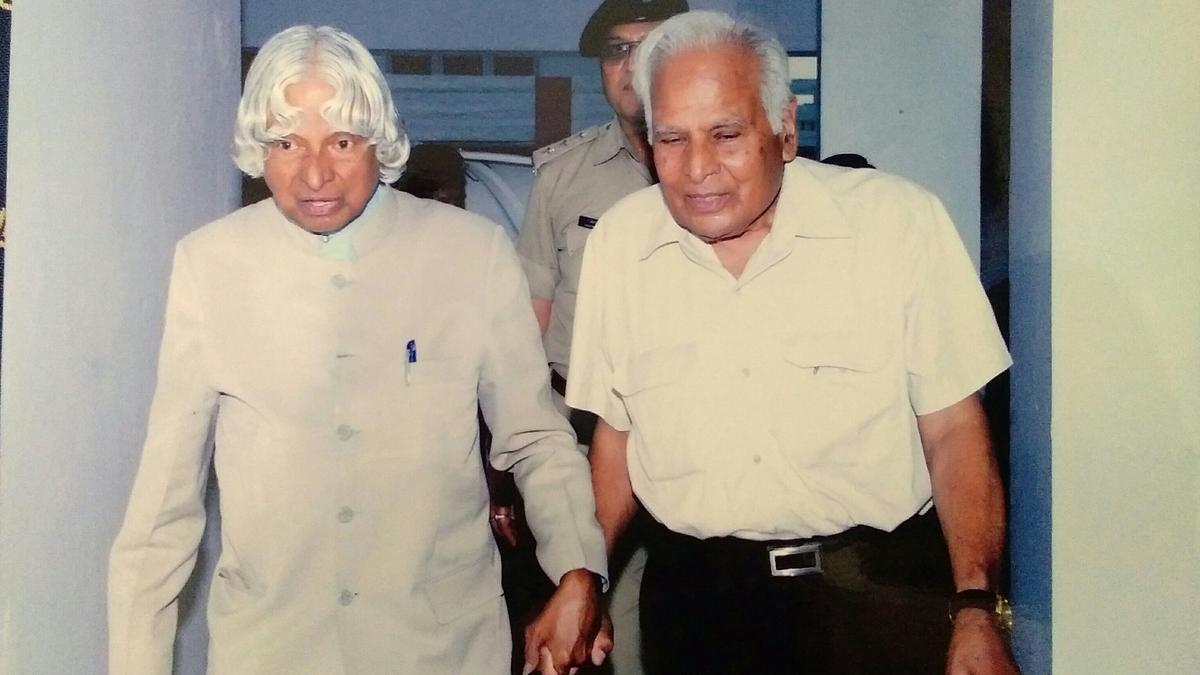
A photograph of Dhirendra Sharma (right) holding hands with A.P.J. Abdul Kalam.
| Photo Credit: Special arrangement

With the passing away of Professor Dhirendra Sharma (1932-2024) in Dehradun this week, a highly contested and sensational chapter in the history of nuclear technology development in India has ended. Prof. Sharma was the first intellectual to publicly criticise the nuclear programme in India and lead a campaign against nuclear power. Though the government did not roll back its nuclear energy development efforts, Prof. Sharma’s relentless campaign on the safety and techno-economic issues forced long-term systemic changes in the field. He did all this as a public policy expert working in a public university – Jawaharlal Nehru University (JNU) in Delhi – and ended up paying a price for raising uncomfortable questions.

Armed with a doctorate in philosophy from the University College London and a decade-long teaching experience in American universities, Prof. Sharma was appointed an associate professor in the newly established JNU in 1974. He was a member of the founding faculty of the Centre for Studies in Science Policy at the School of Social Sciences. The centre was headed by B.V. Rangarao — a pharmaceutical industry expert — and Prof. Sharma succeeded him. 

Inside view of the nuclear establishment

The period coincided with several political and technological changes in India and worldwide: the oil shock, the ‘Peaceful Nuclear Explosion’ (PNE) at Pokhran, the emergency, and the emergence of the Janata Party regime. The nuclear power programme, by this point, was more than two decades old and the Department of Atomic Energy (DAE) was drawing up ambitious plans for generating commercial nuclear power. Against this backdrop, Prof. Sharma decided to focus on the study of nuclear and energy policies in India but within the ambit of the academy. He began by studying the sociology of science and organised lectures on energy policy and writing research papers and monographs on energy policies with a focus on nuclear energy.

In one such paper, Prof. Sharma warned of “a great danger of our energy policy becoming the captive of the nuclear technological elite”. He argued: “Our national energy planning and our military and defence interests would be better served by developing solar technology” and not nuclear energy and the bomb. To achieve the target to produce 10,000 MW of nuclear electricity by 1990, he estimated India would require 2,000 tonnes of heavy water every year to run 44 reactors with 230 MW capacity each, an army of trained personnel, and massive investments. It was the first-ever critical evaluation of nuclear power in India.

With his experience of participating in antiwar, anti-nuclear, and civil rights movements in the U.K. and the U.S. while being in academia, Prof. Sharma took the next step: he organised the Committee for a Sane Nuclear Policy (COSNUP) in June 1981, the first such civil society body in India. The committee issued a statement signed by eminent citizens, including former diplomat and Mr. Nehru’s sister Vijayalakshmi Pandit, expressing concerns over the emergence of a nuclear bomb lobby in India and calling for a rethink.

All this did not go well with the establishment. JNU formed a nine-member panel headed by none other than Raja Ramanna, the ‘father’ of the PNE and soon to be the head of the DAE, to review the working of the science policy centre chaired by Prof. Sharma. As expected, the panel recommended the centre’s closure and said science policy research should focus on topics like the law of the seas, science education, etc. and that this did not warrant a dedicated centre. The centre was not shut but Prof. Sharma remained the target of the university establishment.

In a landmark book, ‘India’s Nuclear Estate’, released in May 1983, Prof. Sharma gave an inside view of the nuclear establishment and pointed to several holes, like the lack of an independent regulatory authority and any plan for safe disposal of nuclear waste. The book was based on information he collected during the Janata Party regime (1977-1979), when he was allowed to visit nuclear installations, meet scientists and access internal records.

The access was facilitated by Atma Ram, former director general of the Council of Scientific and Industrial Research and scientific advisor to Prime Minister Morarji Desai. When the book came out, some people wanted Prof. Sharma arrested for flouting the secrecy clauses of the DAE Act. He was not arrested but transferred to the School of Languages in December 1983, and the science policy centre became dormant. His transfer became international news when Noam Chomsky and British labour politician Tony Benn wrote to Indira Gandhi about Prof. Sharma’s harassment.

Friendship with Abdul Kalam

Prof. Sharma became interested in science communication when he realised the difficulties of explaining scientific terms like radiation and nuclear safety to villagers in local dialects during his campaign. He joined the Indian Science Writers Association (ISWA) and was elected its president in 1988 and again in 1992 and 1993. After a few years of his retirement, he settled down in Dehradun and remained an active member of the social and scientific community there.

He was a great advocate of South Asian solidarity and wrote extensively about the need to develop the ‘third pole’ – the Himalaya – as a zone of peace and scientific research. All his life, Prof. Sharma stood for the core values of peace, harmony, democracy, transparency, academic freedom, and openness in public life. Once he wrote: “If I had my time again, I would confront the challenges with even greater vigour.”

His friendship with A.P.J. Abdul Kalam, dating back to the 1980s, continued despite their differences of opinion on nuclear and missile development. Prof. Sharma used to describe Dr. Kalam as a “scientist-sage” and prodded him to promote spinoffs from missile development for social good. Prof. Sharma was a keen adventurer and went on regular hiking expeditions in the Himalaya and the Alps until he was in his early 80s. He was in the contingent that went to Kailash Mansarovar in 2005 and swam in the freezing waters of the lake.

Prof. Sharma’s body was donated to the Himalayan Institute of Medical Sciences (popularly called Jolly Grant Hospital) as he had willed. His wife Nirmala passed away two months ago and her body was also donated to the same teaching hospital.

Dinesh C. Sharma is a columnist and author based in New Delhi. He was associated with Vigyan Prasar as the founding Managing Editor of India Science Wire (ISW) from 2017 to 2019.


Source link

Science Tags:antinuclear activist, Department of Atomic Energy, Indira Gandhi emergency, Professor Dhirendra Sharma, Professor Dhirendra Sharma death, Science communication

Post navigation

Previous Post: Ministry On Indians In Russian Army
Next Post: India On US Murder-For-Hire Plot Case

Related Posts

  • Unwrapping India’s plastic packaging problem: from boom to crisis
    Unwrapping India’s plastic packaging problem: from boom to crisis Science
  • Smooth operation of Liquid Apogee Motor engine critical to Aditya-L1 success
    Smooth operation of Liquid Apogee Motor engine critical to Aditya-L1 success Science
  • ISRO demonstrates boot-strap mode start on CE20 cryogenic engine
    ISRO demonstrates boot-strap mode start on CE20 cryogenic engine Science
  • Does cash take away the cachet of science awards?
    Does cash take away the cachet of science awards? Science
  • Cancer immunotherapy may reshape brain’s barrier to metastasis
    Cancer immunotherapy may reshape brain’s barrier to metastasis Science
  • Cyclone frequency may rise over Indian coast from the warming of Pacific: study
    Cyclone frequency may rise over Indian coast from the warming of Pacific: study Science

More Related Articles

It’s almost impossible to keep teens off their phones in bed – but new research shows it really does affect their sleep It’s almost impossible to keep teens off their phones in bed – but new research shows it really does affect their sleep Science
What is micellar water and how does it work? What is micellar water and how does it work? Science
Why did the U.S. FDA decline to review the new mRNA influenza vaccine? Why did the U.S. FDA decline to review the new mRNA influenza vaccine? Science
Painter draws up a crown for the bottling industry Painter draws up a crown for the bottling industry Science
Bengaluru scientists develop affordable fruit fly trap; seek global patents Bengaluru scientists develop affordable fruit fly trap; seek global patents Science
The Rohini Godbole way of teaching, talking and engaging with students The Rohini Godbole way of teaching, talking and engaging with students Science
SiteLock

Archives

  • May 2026
  • April 2026
  • March 2026
  • February 2026
  • January 2026
  • December 2025
  • November 2025
  • October 2025
  • September 2025
  • August 2025
  • July 2025
  • June 2025
  • May 2025
  • April 2025
  • March 2025
  • February 2025
  • January 2025
  • December 2024
  • November 2024
  • October 2024
  • September 2024
  • August 2024
  • July 2024
  • June 2024
  • May 2024
  • April 2024
  • March 2024
  • February 2024
  • January 2024
  • December 2023
  • November 2023
  • October 2023
  • September 2023
  • August 2023
  • July 2023
  • June 2023
  • May 2023
  • April 2023
  • March 2023
  • February 2023
  • January 2023
  • December 2022
  • November 2022
  • October 2022
  • September 2022
  • August 2022
  • July 2022
  • June 2022
  • May 2022

Categories

  • Business
  • Nation
  • Science
  • Sports
  • World

Recent Posts

  • V.D. Satheesan calls on A.K. Antony
  • BEST conductor dies in accident involving four buses in Mumbai
  • U.K. Health Minister Wes Streeting resigns
  • Nayar reckons KKR got a par total, rues missed chances
  • Pope Leo decries European military spending as ‘betrayal’ of diplomacy

Recent Comments

  1. JamesHeR on UP Teacher Who Asked Students To Slap Muslim Classmate
  2. RafaelNar on UP Teacher Who Asked Students To Slap Muslim Classmate
  3. CarlosExorb on UP Teacher Who Asked Students To Slap Muslim Classmate
  4. Robertfloup on UP Teacher Who Asked Students To Slap Muslim Classmate
  5. Davidcag on UP Teacher Who Asked Students To Slap Muslim Classmate
  • Access Denied Business
  • Concussion Sub Labuschagne Steers Australia To Victory Over Proteas
    Concussion Sub Labuschagne Steers Australia To Victory Over Proteas Sports
  • Health Ministry To Set Up National Task Force For Safety Of Doctors
    Health Ministry To Set Up National Task Force For Safety Of Doctors Nation
  • City light pollution is shrinking spiders’ brains
    City light pollution is shrinking spiders’ brains Science
  • Access Denied Sports
  • Aston Villa Denied As Liam Delap Sparkles In Ipswich Town Draw
    Aston Villa Denied As Liam Delap Sparkles In Ipswich Town Draw Sports
  • India Flags Video Of Cop Joking On Andhra Girl’s Death, US Assures Probe
    India Flags Video Of Cop Joking On Andhra Girl’s Death, US Assures Probe Nation
  • Access Denied Sports

Editor-in-Chief:
Mohammad Ariff,
MSW, MAJMC, BSW, DTL, CTS, CNM, CCR, CAL, RSL, ASOC.
editor@artifex.news

Associate Editors:
1. Zenellis R. Tuba,
zenelis@artifex.news
2. Haris Daniyel
daniyel@artifex.news

Photograher:
Rohan Das
rohan@artifex.news

Artifex.News offers Online Paid Internships to college students from India and Abroad. Interns will get a PRESS CARD and other online offers.
Send your CV (Subjectline: Paid Internship) to internship@artifex.news

Links:
Associate Journalism
About Us
Privacy Policy

News Links:
Breaking News
World
Nation
Sports
Business
Entertainment
Lifestyle

Registered Office:
72/A, Elliot Road, Kolkata - 700016
Tel: 033-22277777, 033-22172217
Email: office@artifex.news

Editorial Office / News Desk:
No. 13, Mezzanine Floor, Esplanade Metro Rail Station,
12 J. L. Nehru Road, Kolkata - 700069.
(Entry from Gate No. 5)
Tel: 033-46011099, 033-46046046
Email: editor@artifex.news

Copyright © 2023 Artifex.News Newsportal designed by Artifex Infotech.