






Image for Representation.
| Photo Credit: The Hindu
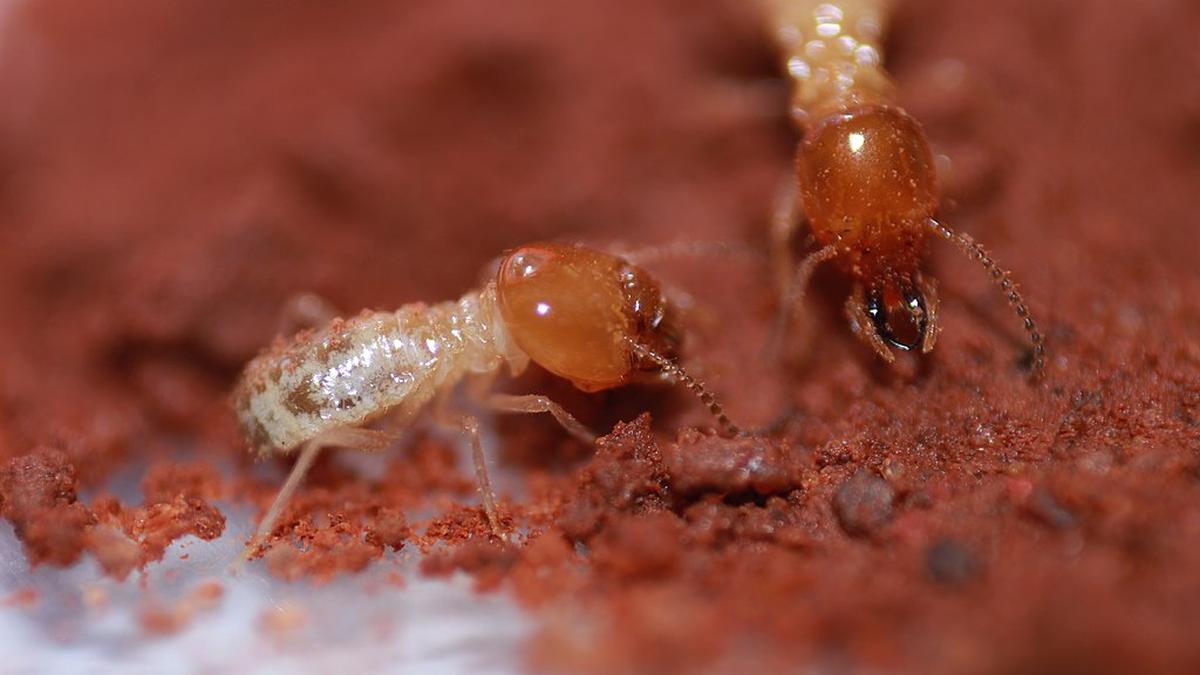
The landscape along the Buffels River in South Africa’s Namaqualand region is dotted with thousands of sandy mounds that occupy about 20% of the surface area. These heuweltjies, as the locals call them (the word means “little hills” in Afrikaans), are termite mounds, inhabited by an underground network of tunnels and nests of the southern harvester termite, Microhodotermes viator.
I’m part of a group of earth scientists who, in 2021, set out to study why the groundwater in the area, around 530km from Cape Town, is saline. The groundwater salinity seemed to be specifically related to the location of these heuweltjies. We used radiocarbon dating; dating the mounds, we reasoned, would allow us to see when minerals that were stored in the mounds were flushed to the groundwater.
The tests revealed far more than we expected: Namaqualand’s heuweltjies, it turns out, are the world’s oldest inhabited termite mounds. Some date as far back as between 34,000 and 13,000 years. The oldest previously known inhabited mounds were 4,000 years old (from a different termite species from Brazil) and 2,300 years old (from central Congo).
This is more than just an interesting scientific find or historical curiosity. It offers a window into what our planet looked like tens of thousands of years ago, providing a living archive of environmental conditions that shaped our world.

It is also hugely important today: there is growing evidence that termites have a substantial, but still poorly understood, role in the carbon cycle. By studying these and other termite mounds, scientists can gain a better understanding of how to sequester (store) carbon. This process removes CO₂ from the atmosphere and is vital for mitigating climate change.
Carbon storage
Namaqualand is a global biodiversity hotspot renowned for its spring flowers, but it is a dry area. Surface water is in short supply and the groundwater is saline.
Although most of Namaqualand receives very little rainfall, there are rare, high intensity rainfall events. When these do occur, the termite burrows on the mound surfaces serve as water flow paths that can harvest rain and channel water into the mound. This causes the salts that built up in the mounds over thousands of years to be flushed into the groundwater system via flow paths created by the tunnelling action of the termites, pushing the dissolved minerals ever deeper. This process also pushes down the carbon that slowly built up in the centre of the mounds when termites collected plant material and brought it into the mound over millennia.
The ability of these mounds to sequester carbon is linked to the termites’ unique behaviour. The insects transport organic material – such as small sticks about 2cm long and a few millimetres wide from small woody plants – deep into the soil. This way, fresh stores of carbon are continuously added at depths greater than one metre. Deep storage reduces the likelihood of organic carbon being released back into the atmosphere. So the mound acts as a long-term carbon sink.
Not only do the termites take the organic carbon material deep underground into their nests, but their tunnels also allow dissolved inorganic carbon (known as soil calcite or calcium carbonate) in the mound soil to move into the groundwater along with other soluble minerals. So the termite mounds also offer a mechanism to sequester carbon dioxide through dissolution and leaching of soil carbonate-bicarbonate to groundwater. This is a long term carbon storage method that carbon storage companies are trying to replicate to reduce atmospheric carbon.
The results of our radiocarbon dating of both the organic and inorganic carbon in this soil show that the mounds have been accumulating organic matter and nutrients, including carbon, for tens of thousands of years. This enrichment is one of the reasons that Namaqualand’s famous wildflowers are so prominent on the mounds in spring.
During the mounds’ formation, the region experienced more rainfall than it does today. Studying the layers of the mounds and looking at the carbon, sulphur, and oxygen isotopes preserved in the mounds and in the groundwater showed that periods of higher rainfall in the region were associated with global climate cooling. These cooler and wetter periods were associated with the leaching of accumulated carbon and other minerals to the groundwater.
Tiny engineers
These findings are further evidence that termites fully deserve their reputation as ecosystem engineers. They modify their soil surroundings to maintain ideal humidity and temperature conditions, and their foraging paths extend many tens of metres.
We argue that, given what we’ve uncovered in Namaqualand, termite activity should be incorporated into carbon models. These primarily focus on forests and oceans; including termite mounds can help provide a more comprehensive understanding of global carbon dynamics. In Namaqualand, mounds occupy 27% of the total area but contribute 44 % of the total soil organic carbon stock. This highlights the disproportionate contribution termite mounds make to carbon stocks in these semi-arid environments.
Public awareness and policy integration are key, too. Termite mounds are often cleared for agriculture or termites are considered pests. Raising awareness about the ecological importance of termite mounds and integrating these findings into environmental policies can help promote practices that support natural carbon sinks.
This research was conducted by a dedicated team from Stellenbosch University in South Africa (Department of Soil Science and Department of Earth Sciences), in collaboration with experts from the Institute for Nuclear Research in Hungary. C.E. Clarke, M.L. Francis , M. Hattingh, J.A. Miller, T. Nel, B. J Sakala, J. van Gend, N Vermonti, M. Vermooten (Kleyn), A. Watson (South Africa), L. Palcsu , A. Horvaěth M. Molnár T. Kertész (Hungary).
This article is republished from The Conversation under a Creative Commons license. Read the original article.