



People’s practice of burying human remains throughout modern history echoes diverse cultural, spiritual, and social beliefs, and is often considered to be a line in the sands of time between modern and ancient humans. Studying burial practices is a complex endeavour, however: it’s hard to say if some prehistoric cave burials are intentional commemorations or remains covered by sediment over time, for example.
Nevertheless, researchers have recorded the practice of burying since the time of our now-extinct Neanderthal ancestors. The oldest intentional modern human burial dates to more than 100,000 years ago, in a cave in Israel. This timeline overlaps with the discovery of the skeletal remains of a roughly three-year-old child buried in Kenya some 80,000 years ago.
Burial practices evolved with advancing human civilisations, with the construction of elaborate mausoleums (that continue to date). The pyramids of Egypt were monumental tombs for the pharaohs; the Mughal emperor Shah Jahan commissioned the Taj Mahal in Agra as a mausoleum for his wife. These structures reflect an enduring human desire to honour the dead and remember them.
The handful of well-preserved skeletal remains at ancient burial sites also open a window into the dietary habits, environmental adaptations, microevolutionary characteristics, biological kinship, sex, and genetic history of the respective population. These sites, spread worldwide, have thus been sites of intense scientific investigation as well. Some famous examples include the Tollund Man Bog Bodies in Denmark and the Thebes Tombs in Egypt.
Studies of these sites have accelerated in the last decade thanks to rapid technological advances in genome-sequencing and medical genetics, which have expanded to seed the new fields of archaeogenetics and evolutionary medicine. Of late, researchers have used the tools and concepts therein to understand the origins of the bubonic plague pandemic, the evolution of malarial parasites, the spread of the mpox virus, and even the occurrence of Down’s syndrome in ancient genomes.
Ancient Mayan genomes
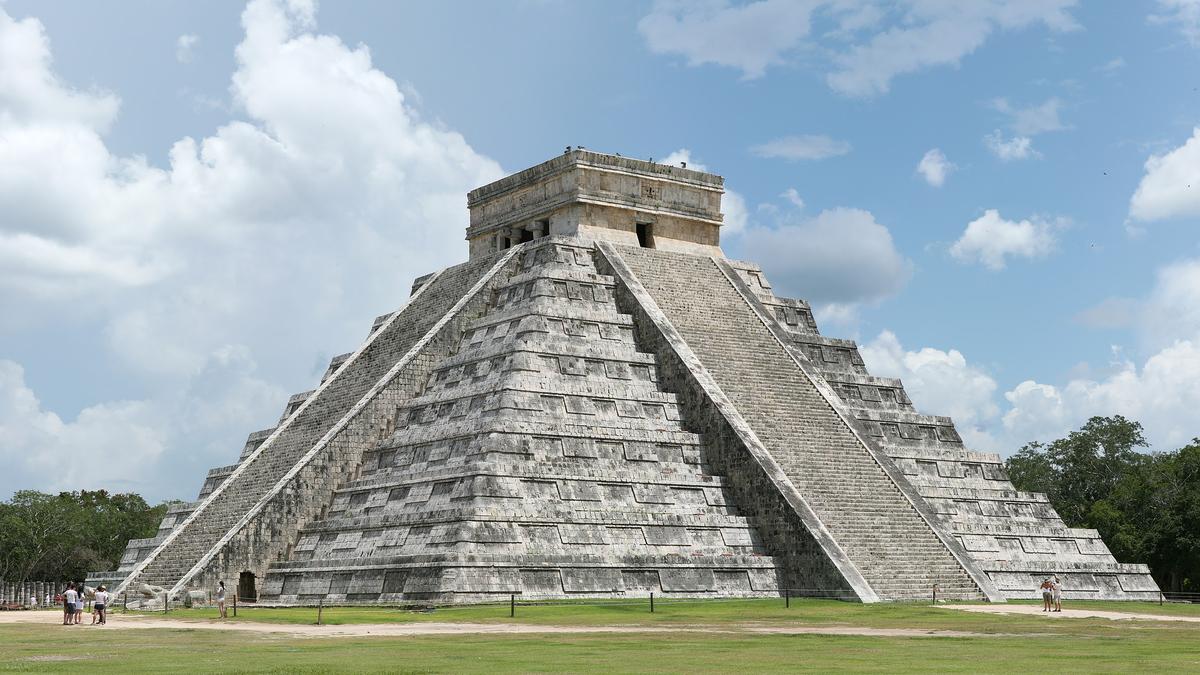
Chichén Itzá is an ancient Mayan city located in modern-day Mexico. It is known for its grand architecture and iconic ceremonial temples, built around 800-1000 AD. The temples are also infamous for having been the site of human sacrifices made as ritual offerings, and have been under constant archaeological investigation for more than a century.
The offerings were deposited in an enormous sinkhole or a subterranean cistern called the ‘Sacred Cenote’. In Mayan culture, these subterranean features were often associated with water and rain. The Sacred Cenote in Chichén Itzá holds the skeletal remains of more than 200 ritually sacrificed individuals, many of them children or adolescents. But we don’t know much about the lives of these individuals or their biological relationship (if any) with contemporary inhabitants of the region. European colonists used to believe these children/adolescents were ‘obtained’ by kidnapping, purchase, or through the exchange of gifts with other nations.
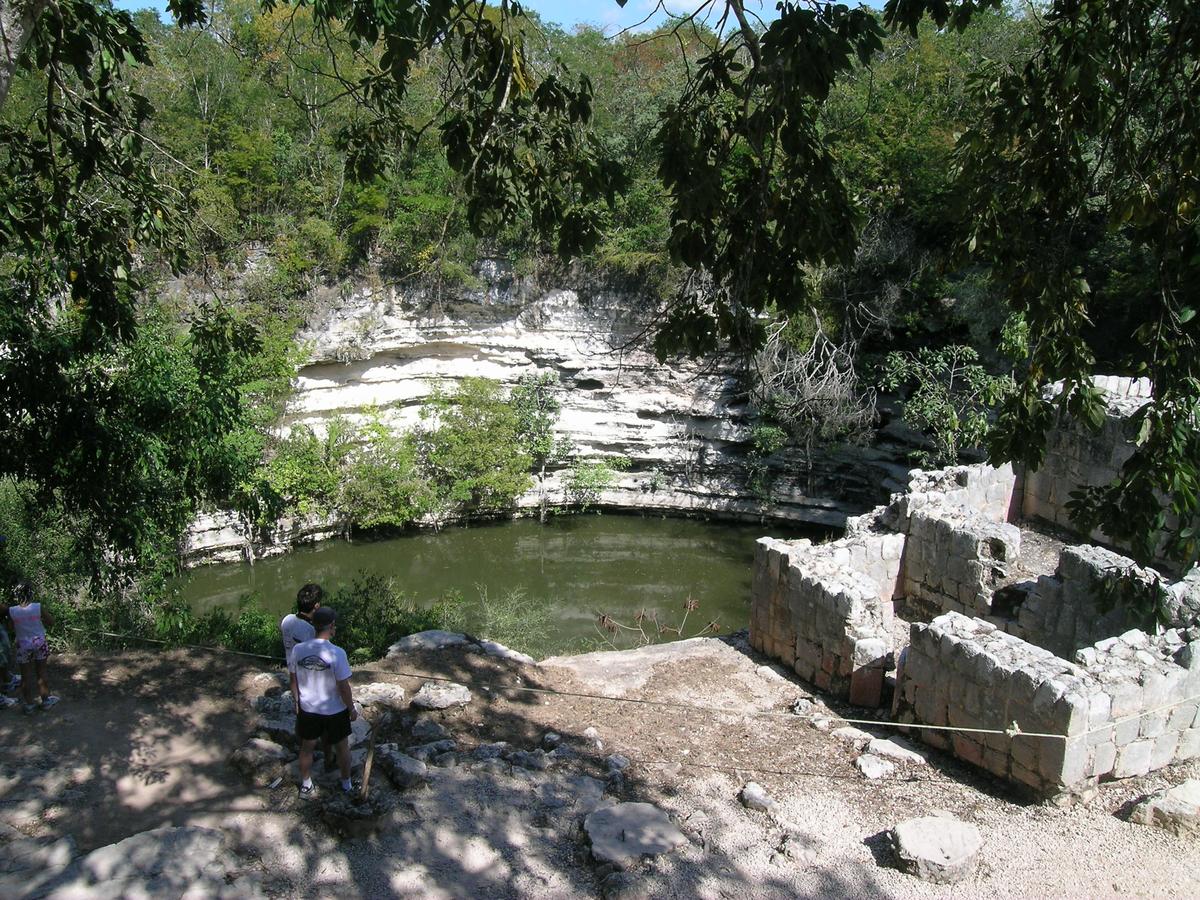
The Sacred Cenote at Chichén Itzá, January 2005.
| Photo Credit:
Salhedine (CC BY-SA 4.0)
In a recent scientific report published in Nature, a team of archaeologists and scientists from Germany, Mexico, Spain, the U.K., and the U.S. sequenced genetic material obtained from the human remains. They read the results along with bio-archeological evidence collected at the site to launch an extensive investigation of the remains of 64 sub-adults from the Sacred Cenote and compared them to modern-day individuals of Mayan origin.
Their studies revealed that all sub-adults in the cenote were genetically male and closely related to each other. The findings go against 20th century colonial accounts that claimed young women had been sacrificed here.
The study also identified two pairs of monozygotic twins among the remains. Twins held significance in Mayan spiritual life and were linked to the underworld, so their presence in the cenote wasn’t surprising. The researchers also used isotopic studies to establish that all the related individuals in the cenote had similar diets, suggesting they all belonged to the same household.
The similarities also suggested they were selected for a specific purpose. It is widely believed the Mayans organised ritual sacrifices to ensure the bountiful growth of maize and to appease rain gods.
Genetic studies comparing the skeletal remains with present-day Maya people showed the latter are direct genetic descendents of the populations involved in the ritual sacrifices. This long-term continuity within the Mayan population opens doors for additional investigations on microevolutionary studies and genomic adaptations over the years, with implications for the study of population health.
Legacy of colonial epidemics
The ceaseless wars, famine, and epidemics wrought by colonial invaders decimated the Mexican population, bringing it from 10-20 million to 2 million by the end of the 16th century. In this period, infectious diseases such as smallpox, measles, influenza, typhus, typhoid, and enteric fever spread among the people, resulting in a genetic bottleneck. (The rapid decline of a population also shrinks the genetic variations therein. Future populations will be based on this smaller pool, and will thus be at greater risk of disease.) Such events can leave long-lasting genetic footprints in the population. Studying them, in turn, researchers may be able to identify genes that have been subjected to genetic selection.
By comparing the ancient and the modern genomes from Mexico, the researchers found evidence of positive selection in genes related to immunity, especially those associated with resistance to enteric fever caused by Salmonella enterica Paratyphi C, a pathogen serotype previously identified with the 16th century cocoliztli epidemic in Mexico.
In this way, the study of the ancient genomes and their modern counterparts allows us to resolve old mysteries, dispel old hypotheses, and gain new insights from the past to light the way for the future.
The authors are senior consultants at the Vishwanath Cancer Care Foundation, Adjunct Professors at Indian Institute of Technology, Kanpur and Dr. DY Patil Medical College, Hospital and Research Center, Pune.