



Kerala’s annual battle with vector-borne diseases has begun early this year, even before the South West monsoon, with West Nile Fever (WNF) being reported from several districts.
(For top health news of the day, subscribe to our newsletter Health Matters)
The first official alert was sounded by the Health Department on May 7 and according to the IDSP report to date, the State has reported 20 suspected cases (only 10 cases confirmed so far) and two deaths are also suspected. Given that Kerala has been endemic for the WN virus for at least two decades and that 80% of cases are asymptomatic, for every officially reported case, there could be several unreported and asymptomatic cases in the community.
In symptomatic cases, patients usually have fever, headache, fatigue, myalgia, nausea and vomiting, and sometimes, swollen lymph glands. As clinical symptoms of most mosquito-borne viral diseases are similar, the possibility of WN or JE is considered only when the patient exhibits symptoms of neuroinvasive diseases like encephalitis or meningitis, collectively known as Acute Encephalitis Syndrome (AES). Thus, because of the diagnostic difficulties in identifying WNF in its acute phase, only a few cases get recorded in the State’s official surveillance mechanisms.
Diagnostic difficulties
Only 1 in 150 cases affected by the WN virus gets a severe disease, and even fewer get encephalitis. WHO states that while serious illness can occur in people of any age, people over the age of 50 and some immunocompromised persons, like transplant patients, are at the highest risk of falling severely ill when infected with WNV.
Kerala’s Director of Health Services, K. J. Reena, said that WNF has been in the official surveillance records of Kerala every year since 2011 and that cases are being reported from almost all districts now. Districts that have reported WN cases this year include the northern districts of Thrissur, Malappuram, Kozhikode, and Palakkad.
Also Read | Government issues advisory in wake of West Nile virus cases in Kerala
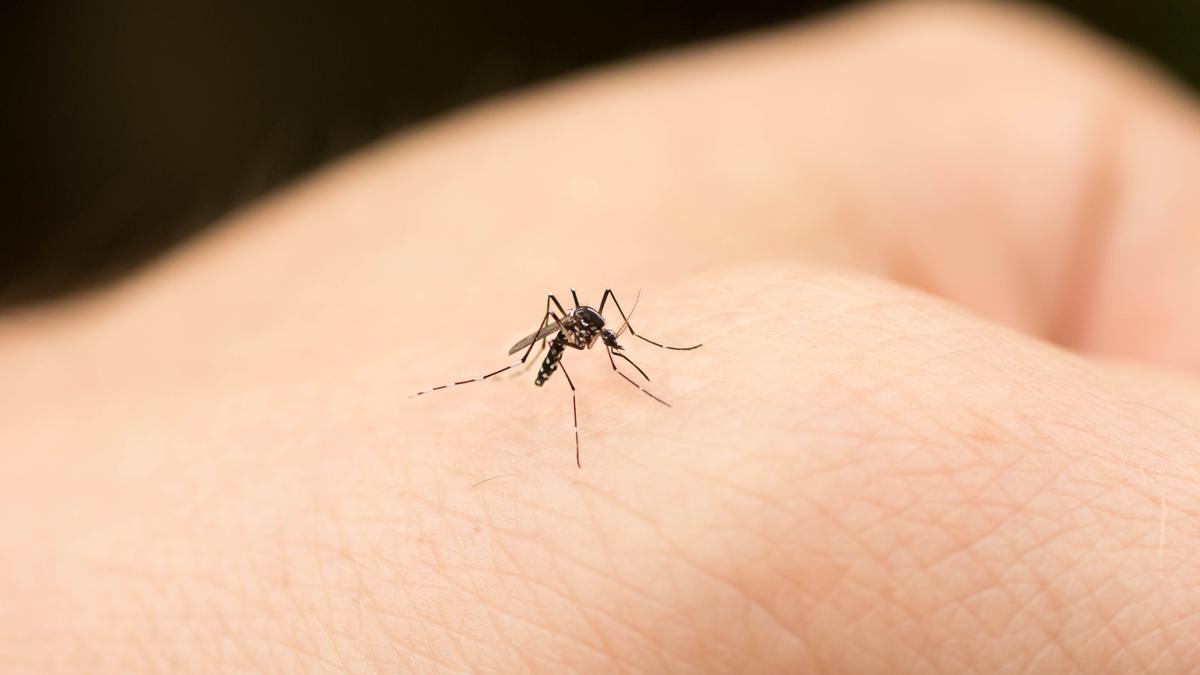
The principal vectors of the disease are mosquitoes of the genus Culex, generally found breeding in stagnant, large water bodies like paddy fields. WNV circulation is maintained in mosquito populations through vertical transmission (adults to eggs).
In a study published in the Indian Journal of Medical Research in 2017, B. Anukumar, et.al. say that the first reported acute encephalitis syndrome (AES) outbreak in Kerala occurred in the Kuttanad region between January and February 1996, causing 105 cases and 31 deaths.
Exceptional features
Although the Japanese Encephalitis virus (another highly pathogenic organism transmitted by mosquitoes and antigenically similar to WN) was reported to be an aetiological agent associated with the outbreak, there were some exceptional features noticed during the outbreak. The seasonality of the outbreak was different from the one known for JE in Kerala, and most patients were from adult age groups, whereas JE occurs mainly in children. Another outbreak occurred in 1997, causing 121 cases and 19 deaths. The role of WNV in AES cases was not ruled out during these reported outbreaks, Dr. Anukumar says.
In 2006, during the major Chikungunya epidemic in Alappuzha, one of the central districts of Kerala, abundant in paddy fields and prone to waterlogging, the possibility of the co-circulation of the WN virus was mooted because of the high mortality rate during the epidemic. However, NIV (National Institute of Virology, Pune) provided conclusive evidence about the major presence of the WN virus in the region in 2011 during an AES outbreak when 208 cases were reported.
Public health experts say that the fact that the northern districts too have begun reporting the presence of the WN virus frequently could be either due to improved diagnostic facilities or the fact that the WN virus itself has been spreading to more areas. Most cases of AES are still reported by the health system as AES/JE or JE-WN complex because only the plaque reduction neutralisation test (usually done only in NIV) can isolate the WN virus antibodies.
The WN virus is maintained in nature in a mosquito-bird-mosquito transmission cycle. More than 250 species of birds are reservoir hosts of WNV. “In Kerala, the presence of large stagnant water bodies and migratory birds provides an ideal eco system for the WN virus to thrive. In the era of climate change, when mosquito-borne diseases are emerging as major public health problems, it is important that the State establishes efficient surveillance systems on the One Health platform to identify new pockets where WN and similar arboviruses may emerge,” points out T.S. Anish, a public health expert and Associate Professor of Community Medicine, Government Medical College, Manjeri.
Avian reservoir
“Members of the crow family are said to be particularly susceptible to this virus. All our information on the WN virus is based on Western medical literature. Have there been any studies to identify if our common crow could be spreading any viruses?” Dr. Anish wonders.
Kerala’s health department, while issuing a public health alert on WN fever and asking people to seek protective measures to prevent themselves from mosquito bites, perceives WN virus to be a lesser villain because of the low mortality profile of the disease, when compared to JE or dengue. The fatality rate in JE clinical cases ranges from 20 to 30%, with neurologic or psychiatric sequelae observed in 30–50% of survivors. In contrast, WNV rarely turns fatal.
The health department also contends that unlike dengue fever, which is spread rapidly and efficiently by Aedes mosquitoes, the WN virus does not cause huge outbreaks. Viremia due to WN virus is transient in humans, and hence Culex mosquitoes cannot transmit the virus efficiently to more people.
Even though WN virus causes fatal encephalitis only in about 1% of infections, the neurological sequelae left behind by the virus, regardless of the severity of the infection in affected people, is not something that can be discounted.
Neurological sequelae reported by doctors post WN infection include cognitive dysfunction, memory loss, seizure episodes and motor deficits. In the April 2016 issue of the Journal of Medical Virology, a follow-up study by Dr. Anukumar on the outcomes of WN encephalitis in 30 patients, one year after the 2011 outbreak in Alapuzha, pointed to several issues ranging from fatigue to reduced use of limbs. The patients also had probable risk of poor cognition (29.41%) and dementia (57.14%), the study reported.
It suggested that WN infection prevention efforts should focus on those over 60 years, especially those with co-morbidities. There are Western studies that report that in patients with and without diagnosed WN neuroinvasive disease, there are long-lasting neurological sequelae that can mimic neurodegenerative diseases.
Ill effects persist
Another 2010 study published in the Journal of Infectious Diseases suggested that in some people, WNV may persist in the kidneys, even 1 to 6 years after infection, and could possibly result in chronic kidney disease. Creating awareness among the public on the risk of exposing themselves to mosquito bites and encouraging them to adopt personal protective measures might be the best way to reduce risk of infection in the community.
However, the lack of systematic epidemiological and entomological surveillance systems could prove costly in the future, especially when it is well known that viruses can adapt to new hosts or mutate to increase virulence, public health experts warn. Expertise in entomology is scarce even at the national level and there is no one to impart training to those entering health service as entomologists.
The State lags when it comes to comprehensive and integrated vector control. and the term “vector control” has been essentially reduced to just Aedes control now. Source reduction measures are effective only against Aedes mosquitoes which spread dengue/Chikungunya and Zika. We still have a huge burden of filariasis, malaria, and WN/JE because vector control measures are nil when it comes to other mosquito species,” points out a senior scientist formerly associated with the National Centre for Disease Control.
The increase in climate-sensitive zoonotic diseases in recent times is a warning that the nation and various States have to invest in science and bring more focus to the One Health approach to dealing with infectious diseases.