





The story so far: As the Indian Space Research Organisation (ISRO) forays further into space with missions to the sun and the moon, with space telescopes, landers, and astronauts, the nation’s space sector is also expanding beyond ISRO. With the Centre allowing 100% foreign direct investment (FDI) in the space sector, the industry’s private players are eyeing a boost in funding from overseas companies and investors.
Since ISRO’s founding in 1969, several state-owned firms like Hindustan Aeronautics Limited (HAL) and Antrix Corporation, and private companies like Godrej Aerospace, Ananth Technologies, and Larsen & Toubro have helped it manufacture rockets, satellites, and other space components for ISRO. However, the boost to the Indian private space sector came in 2020 when the Indian National Space Promotion and Authorisation Centre (IN-SPACe) was established to promote, authorise and supervise various space activities of non-governmental entities (NGEs).
Here is a look at India’s private space sector, the companies involved, laws promoting it and ISRO’s role.
History of ISRO’s commercialisation
Early partners of ISRO include Data Patterns, Hindustan Aeronautics Ltd (HAL), Larsen & Toubro, and Godrej Aerospace, which helped manufacture auxiliary components. While production of launch vehicles, satellites, spacecrafts, and boosters was mainly handled by ISRO (in-house or in collaboration with international partners), these companies helped fabricate spacecraft components, satellite systems, ground stations, satellite and ground station control systems, rocket engines, and communication systems
In 1992, the Department of Space (DoS) spun off Antrix Corporation Ltd., a wholly government-owned company under ISRO’s administrative control, to promote, market and deliver commercial products of ISRO to international companies. Antrix is the conduit between ISRO and its private industry partners to facilitate technology transfer, assess financial and commercial viability of joint ventures and develop the industrial capabilities of the Indian space sector.
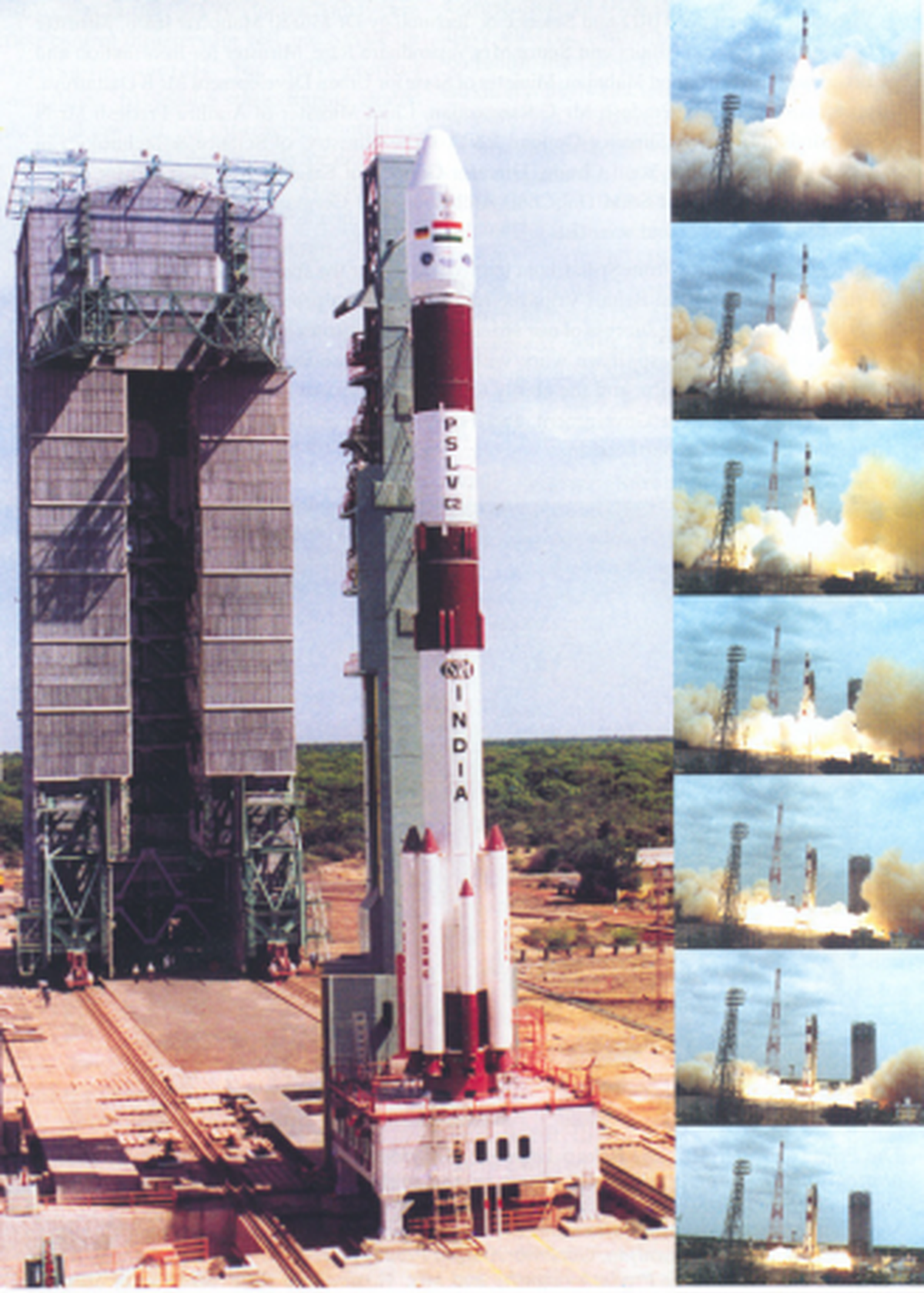
ISRO’s PSLV C-2 launched its first foreign satellites – German DLR-TUBSAT and Korean KITSAT-3 along with its own satellite OCEANSAT on May 26, 1999
Some of its core tasks are:
- Providing satellite communication services via the Indian National Satellite system (INSAT)
- Providing launch services for commercial satellites aboard ISRO’s polar and geosynchronous satellite launch vehicles – PSLV, GSLV and GSLV Mk-III for foreign customers.
- Providing data from the Indian Remote Sensing (IRS) satellite to international users,
- Building and delivering satellites and satellite sub-systems
- Provide technical consultancy and facilitate transfer of ISRO’s technologies
While Antrix has been launching foreign commercial satellites using ISRO’s PSLV since 1999, a major boost to these launch services occurred in September 2016 when the PSLV C-37 successfully injected 104 satellites into orbit in a single launch – the highest so far.
Turning its focus to India’s domestic space industry, in 2019, the Centre established NewSpace India Limited (NSIL) – a public sector undertaking run by the DoS, to boost indigenous production of various ISRO space products by the industry consortium. Like Antrix, NSIL too is a commercial arm of ISRO, offering launch services, building satellites and subsystems, remote sensing services, technology transfer and producing small and polar satellite launch vehicles in collaboration with Indian space/defence companies. While Antrix caters to ISRO’s foreign partners, NSIL focuses on its domestic customers.
Private players involved & their role
Older aerospace companies like HAL, Godrej Aerospace, Ananth Technologies, and Data Patterns catered mainly to manufacturing space components for ISRO. HAL provides structural parts of several space components, like heat shield assembly, nose cone assembly, fuel propellant tanks, and cryogenic engines for launch vehicles. Godrej Aerospace manufactures Liquid propulsion engines, complex fabricated assemblies for antennas, pods, satellite thrusters, actuators, valves, and pumps.
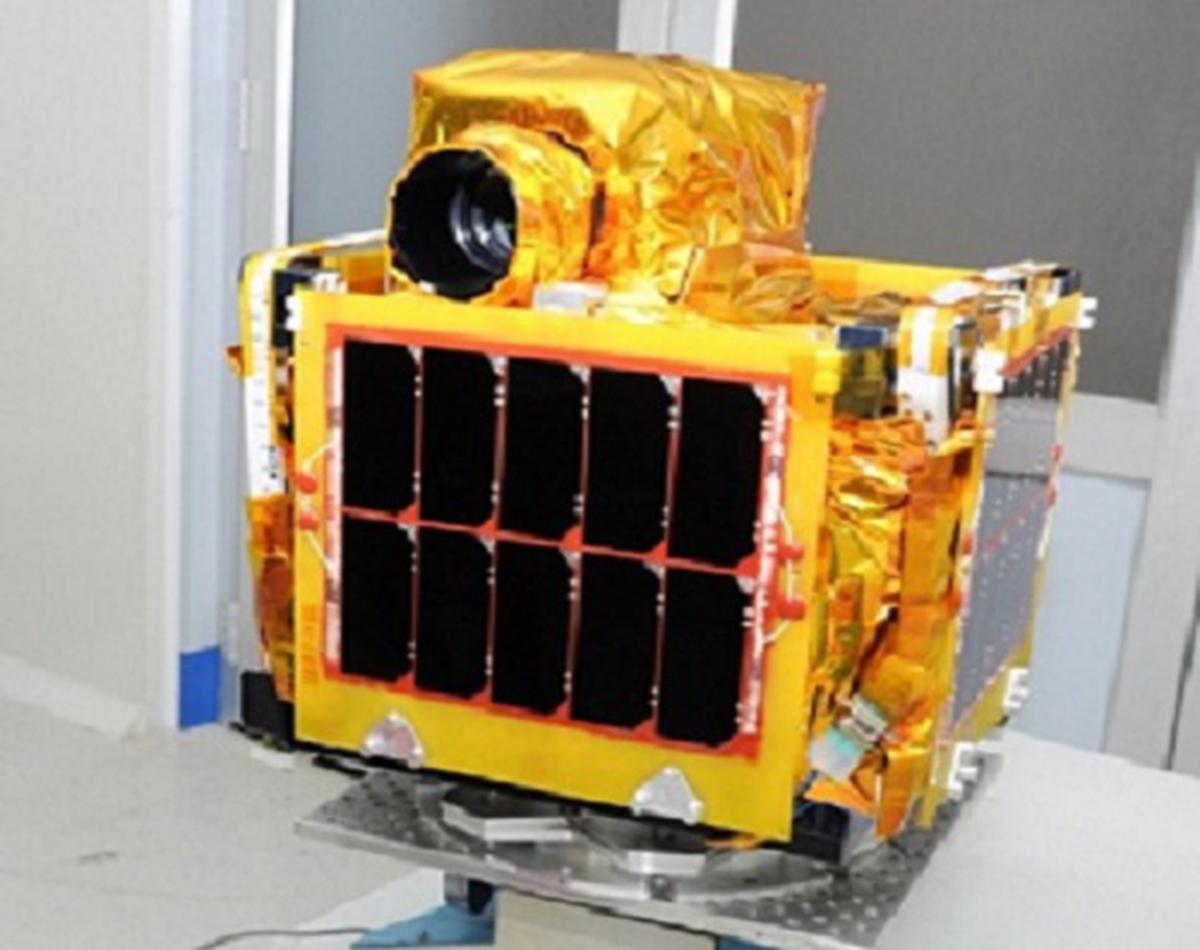
Nano satellite NiUSAT developed Data Patterns for by Noorul University, Tamil Nadu
Technological firms like Ananth and Data Patterns are the core manufacturers of ISRO’s ground stations, nano satellites, automated test equipment, printed circuit boards (PCB) for various controllers (digital, analog, radio or microwave frequency, laser,power), sub-systems of satellites – telemetry, communications, altitude & orbital control units, sensors, payloads, launch vehicle control units for navigation, power, stage integration, servo controls and inertial sensors.
However, independent and dedicated space companies dealing in manufacturing and offering launch services began much later as Centre rolled out dedicated schemes and budgetary allocations for start-ups.
Start-ups began to take root in India in the early 2010s with the first space start-up, Dhruva Space Private Limited, being established in 2012 in Hyderabad. Soon after, several other space start-ups cropped up in India: Bellatrix Aerospace (2015), Aadyah Aerospace (2016), AgniKul Cosmos (2017), Manastu Space (2017), Skyroot Aerospace (2018), Satellize (2018), and Pixxel (2019), to name a few. As of date, over 200 space start-ups are registered in the country, attracting investments worth ₹1000 crore in 2023 itself.
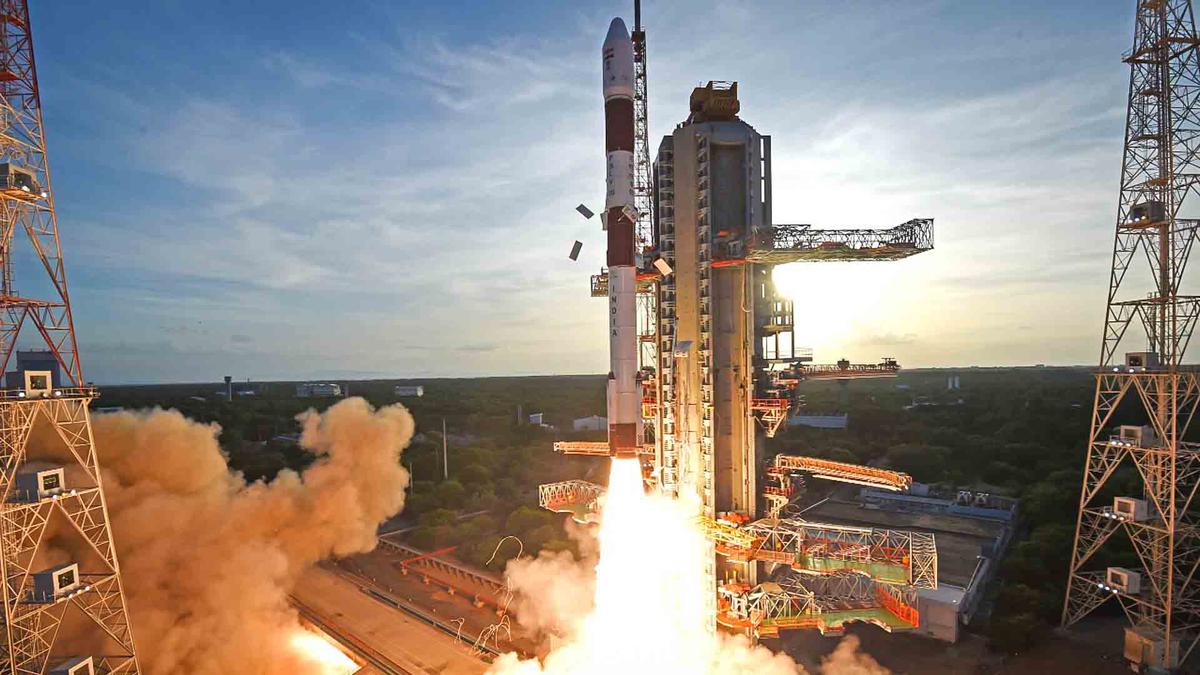
PSLV C-53 liftoff carrying Dhruva Space’s payload 1U CubeSat deployer
Most of these companies are involved in designing and manufacturing satellites, launch vehicles, ground stations, propulsion systems, propellants,and satellite subsystems and offer launch services using ISRO’s PSLV/GSLV or private launch vehicles. Several companies also manufacture technological systems for control, monitoring, tracking and geospatial activities. A few companies like Skyroot and Agnikul Cosmos are involved in manufacturing their own satellite launch vehicles. Manastu Space is one of the only companies involved in green-technology for space — offering alternative fuel for boosters, refuelling stations in space, deorbiting expired satellites.
Here’s a closer look at a few space start-ups.
Dhruva Space
Based in Hyderabad, Dhruva Space was founded by Sanjay Nekkanti in 2012 to design customised satellites, ground stations and launch services from ground or space. With 80-odd members, Dhruva Space manufactures satellites for missions in Low Earth Orbit (LEO) and beyond, orbital deployers (a system to launch small satellites/payloads), ground stations, antennas and space operations command system – a module which monitors, controls, tracks satellites, and payloads remotely. It also offers launch services for satellites from the ground via launch vehicles and from the International Space Station (ISS) using orbital deployers, as well as customised payloads.
Dhruva Space’s indigenously developed 1U, 3U and 6U Satellite orbital deployers have been successfully tested and launched in ISRO’s PSLV missions in 2022 in 2023, after being authorised by IN-SPACe. The company is also currently building a 2.8 lakh square-foot spacecraft manufacturing facility in Hyderabad after closing its third round of seed funding, which raised ₹22 crores in October 2021 via institutional investors like Indian Angel Network and Blue Ashva Capital.
Skyroot
Skyroot was founded in 2018 by Pawan Chandana and Bharat Daka in Hyderabad and specialises in manufacturing space launch vehicles. In 2020, the company became the first private Indian start-up to successfully test liquid propulsion engines as well as a 3D printed cryogenic engine. It has test-fired its own rockets Vikram-S and Vikram-I. In November 2022, it launched India’s first private rocket, Vikram-S, from Satish Dhawan Space Centre (SDSC) in Sriharikota, Andhra Pradesh on a suborbital flight.
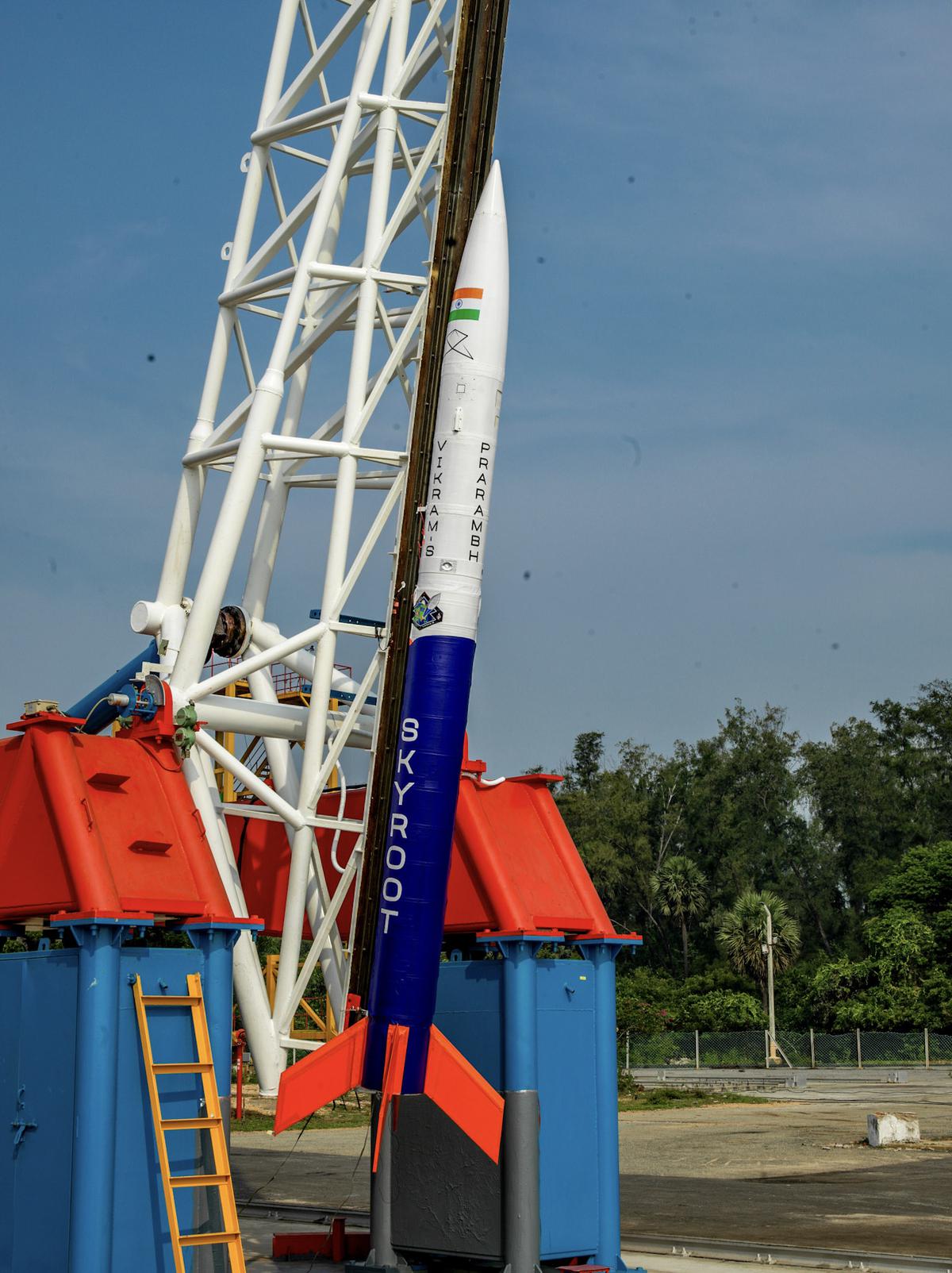
Skyroot’s launch vehicle Vikram-S ready for launch at Sriharikota in November 2022
Currently, the company is developing and testingthree space vehicles Vikram -I, II, and III, rocket engine Raman–1 and rocket motors Kalam-5, Kalam-100 and Kalam-250. Skyroot has at least four launches planned in 2024 and has raised ₹250 crores in its pre-Series C funding round led by investor Temasek in 2023.
Agnikul Cosmos
Similar to Skyroot, Agnikul Cosmos, a start-up manufacturing space launch vehicles, was incubated at the Indian Institute of Madras by Srinath Ravichandran and Moin SPM in 2017. After testing its single-piece 3D printed engine Agnilet in 2022, it also inaugurated India’s first private mobile launchpad ‘Dhanush’ and the Agnikul mission control center at Sriharikota in the same year. Due to its mobility, ‘Dhanush’ is launch location-agnostic (can be set up at any launch site) and will be used to test fire its transportable launch vehicle Agnibaan, which can deploy small satellites to Low Earth Orbits.
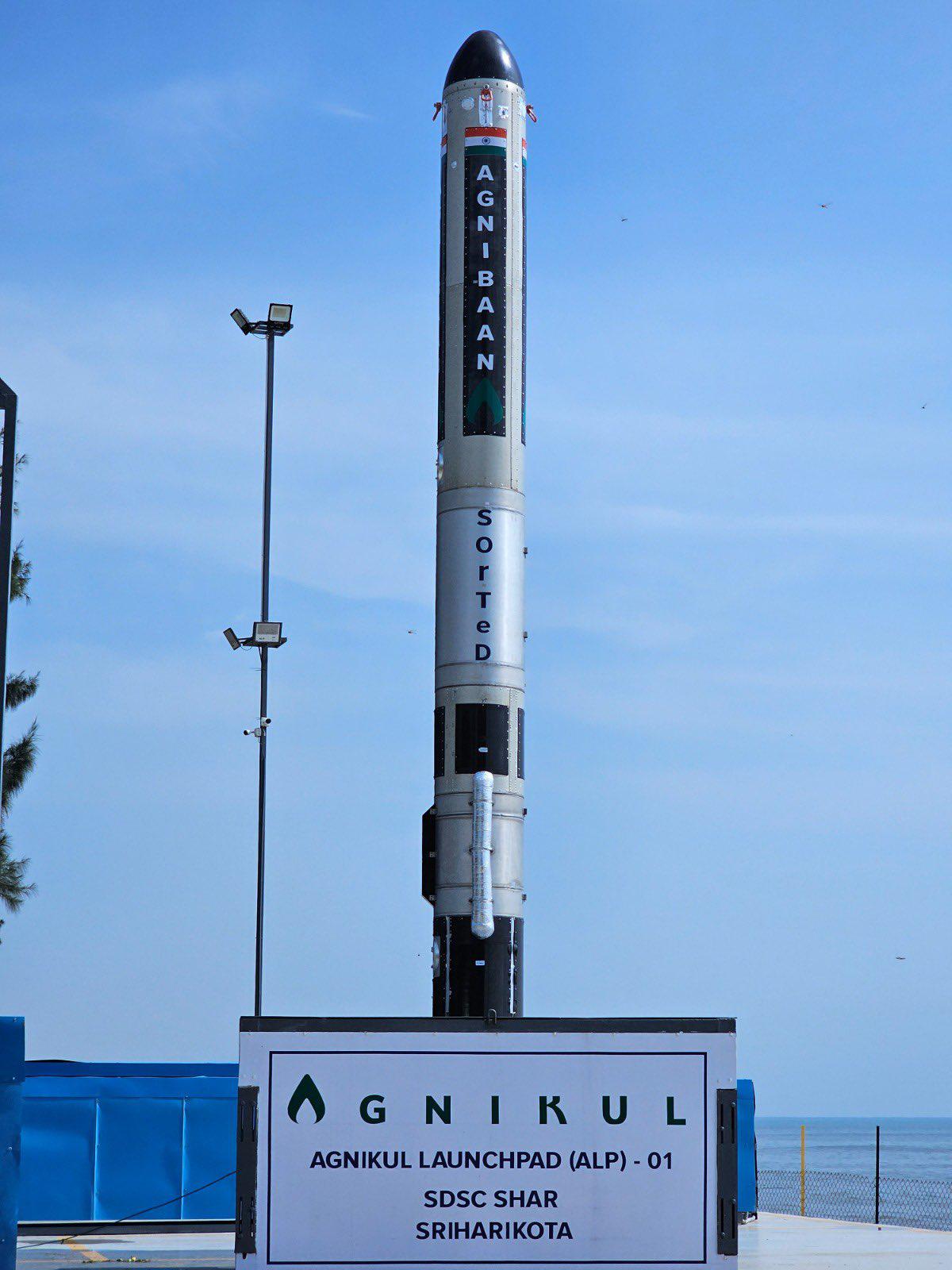
Agnikul Cosmos’ Agnibaan SOrTeD vehicle at its private Launchpad at Sriharikota on August 15, 2023
Partnering with ISRO for technology support, the Chennai-based start-up raised $11 million in Series A round funding from several institutional and angel investors and shortly after opened the Agnikul Rocket Factory– 1 at IIT Research Park. After cancelling its scheduled launch on March 22, the company is currently working on a new launch date and time for its Agnibaan rocket for a sub-orbital flight demonstration.
Manastu Space
Founded by Tushar Jadhav and Ashtesh Kumar in 2017, the Mumbai-based space start up Manastu Space specialises in green technology for space. It manufactures green propulsion systems using hydrogen peroxide-based rocket fuel for satellites, and debris collision avoidance systems for CubeSats (nanosatellites using standardised size and form factor – 1U, 3U etc) named Vyom 1U and 2U. It also offers in-space services like refuelling satellites via fuel stations in space, extending life spans of satellites which have gone out of control and removing used/expired satellites from orbits to reduce space debris.
As of date, Manastu has signed two deals for its propulsion systems – with UK-based Black Arrow Space Technologies and French satellite firm Venture Orbital systems. In 2023, Manastu Space raised $3 million in pre-Series A round funding led by the Indian Angel Network.
Indian regulatory framework for private space companies
On May 16, 2020, in the fourth ‘Aatma Nirbhar Bharat Abhiyan’ stimulus worth ₹20 lakh crores Finance Minister Nirmala Sitharamanannounced the creation of IN-SPACe to allow the private sector to benefit from ISRO’s assets including testing centres, launch site, technologies, and launch vehicles. Ms. Sitharaman also unveiled a new liberal geo-spatial data policy and opened up planetary exploration and outer space travel to private companies.
IN-SPACe
IN-SPACe was set up as a single-window, independent, nodal agency to authorise, promote and supervise space activities of private non-governmental entities. The agency will overlook NGEs’ activities such as building launch vehicles, satellites, sharing infrastructure and premises under ISRO/DoS control and establishment of new facilities and infrastructure. It also monitors and evaluates proposals from NGEs and issues authorisations for space activities such as launches and test firing. IN-SPACe also provides technical incubation for start-ups in their infancy and promotes space tourism, facilitates the start-up ecosystem and boosts student participation. Since its establishment, IN-SPACe has signed 45 Memoranda of Understanding (MoUs) with NGEs to support them in space activities.
National Geospatial Policy
In February 2021, Centre issued guidelines for private companies to acquire all geospatial data and maps from government agencies without licences, and permission or clearances for collection, use and dissemination, except certain categories. Geospatial data is information about objects, events or phenomena that occur on a location on earth’s surface indentified by latitude and longitude co-ordinates.
Building on these guidelines, the Centre also unveiled the National Geospatial Policy on December 28, 2022, laying down a framework for the development of a geospatial ecosystem, allowing democratisation of data and a strengthened integrated interface for all digital data that have location. The policy also promotes private sector participation in collection of geospatial data, allowing the Survey of India to maintain high resolution/high spatial accuracy orthoimagery (geometrically corrected image to remove distortions).
Indian Space Policy

Strengthening the private space sector in India by finally providing a legislative framework, the Centre rolled out the Indian Space Policy on April 20, 2023. This policy permits NGEs to:
- Offer communication, internet services, remote sensing and navigation services via self-owned, procured or leased satellites
- Operate ground facilities for space operations such as telemetry, tracking and command (TT&C)
- Use of Indian or non-Indian orbital resources to establish communication satellites
- Manufacture and operate space transportation systems such as launch vehicles and shuttles including reusable, recoverable and reconfigurable versions of these transports.
- Commercial recovery of an asteroid or space resource
The policy has paved the way for ISRO to transition from manufacturing operational space systems to a focus on research and development in advanced technologies.
Amended FDI policy
On February 21, 2024, Centre amended its FDI policy, allowing up to 74% FDI for satellite manufacturing and operation, up to 49% FDI for launch vehicles, spaceports and associated systems and 100% FDI to manufacture components and systems/sub-systems for satellites, ground and user segments. Beyond the above mentioned limits investment is allowed in these segments via the government route.
ISRO’s role – then & now
With the opening up of the sector and the above-mentioned slew of reforms, the Centre aims to boost Indian space economy from its current worth of $8 billion (2% of global space economy) to $100 billion by 2040. Since 2020, start-ups have successfully launched their own satellites, sub-orbital launch vehicle and also established a portable launchpad and a private mission control centre within the ISRO campus.
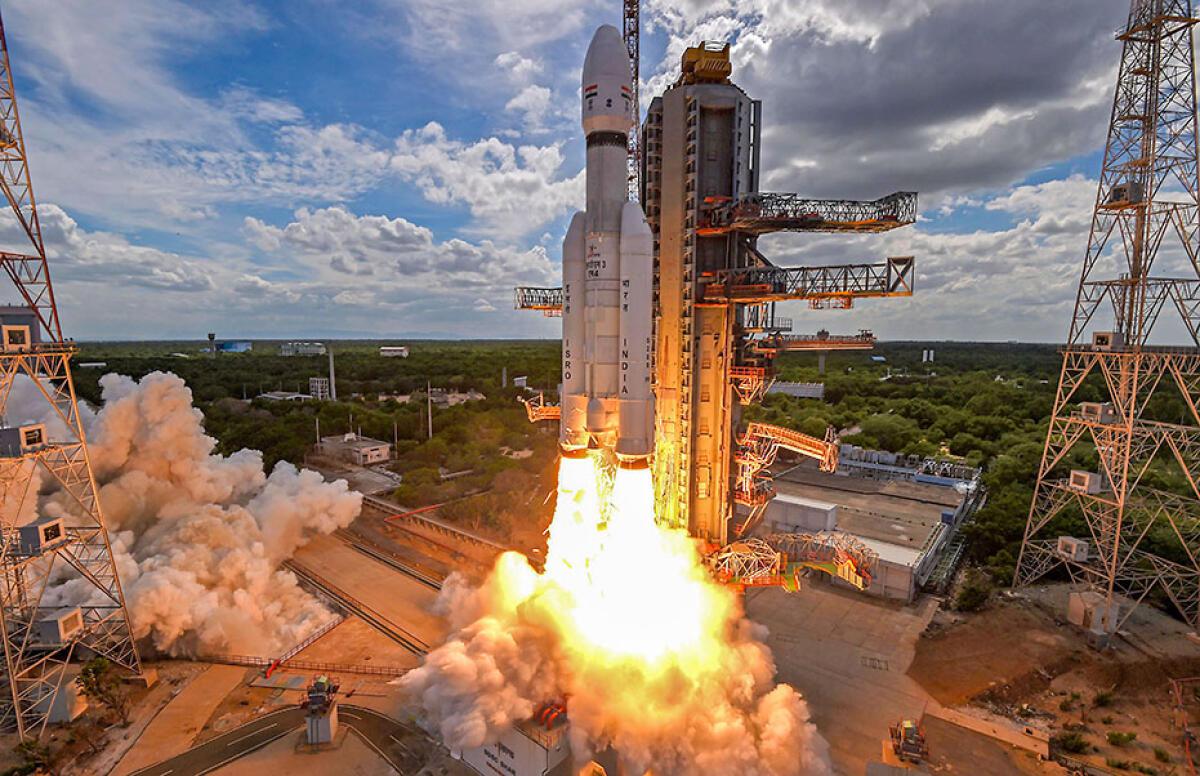
ISRO’s Launch Vehicle Mark-III (LVM3) M4 rocket carrying ‘Chandrayaan-3’ lifts off from the launch pad at Satish Dhawan Space Centre, in Sriharikota, Friday, July 14, 2023
Despite the increased participation of private companies in the Indian space sector, ISRO remains its driving force. As of 2023, ISRO has launched 424 foreign satellites since the 1990s, of which 389 were launched since 2014 generating $174 million from foreign satellite launches and £256 million from European satellite launches. With scheduled missions to moon, sun, mars, deep space explorations and several satellite launches, ISRO will continue to lead the sector – albeit partnering with start-ups for manufacturing smaller subsystems.