


Skip to content
  • Facebook
  • X
  • Linkedin
  • WhatsApp
  • YouTube
  • Associate Journalism
  • About Us
  • Privacy Policy
  • 033-46046046
  • editor@artifex.news
Artifex.News

Artifex.News

Stay Connected. Stay Informed.

  • Breaking News
  • World
  • Nation
  • Sports
  • Business
  • Science
  • Entertainment
  • Lifestyle
  • Toggle search form
  • South Korea prosecutor seeks 10-year jail term for ex-President Yoon
    South Korea prosecutor seeks 10-year jail term for ex-President Yoon World
  • Access Denied World
  • Science Quiz: The role of fasting in metabolic health
    Science Quiz: The role of fasting in metabolic health Science
  • On Prajwal Revanna’s ‘Conspiracy’ Allegation, DK Shivakumar Said…
    On Prajwal Revanna’s ‘Conspiracy’ Allegation, DK Shivakumar Said… Nation
  • “Virat Kohli Watching From Home”: Ex-India Star’s Hilarious Post After Rohit Sharma And Co. Crush England
    “Virat Kohli Watching From Home”: Ex-India Star’s Hilarious Post After Rohit Sharma And Co. Crush England Sports
  • Why Plastic Flowers Not Included In List Of Banned Plastic Items: HC To Centre
    Why Plastic Flowers Not Included In List Of Banned Plastic Items: HC To Centre Nation
  • Access Denied
    Access Denied Nation
  • Access Denied
    Access Denied Nation
Race to global eradication of Guinea worm disease nears finish line

Race to global eradication of Guinea worm disease nears finish line

Posted on February 23, 2024 By admin


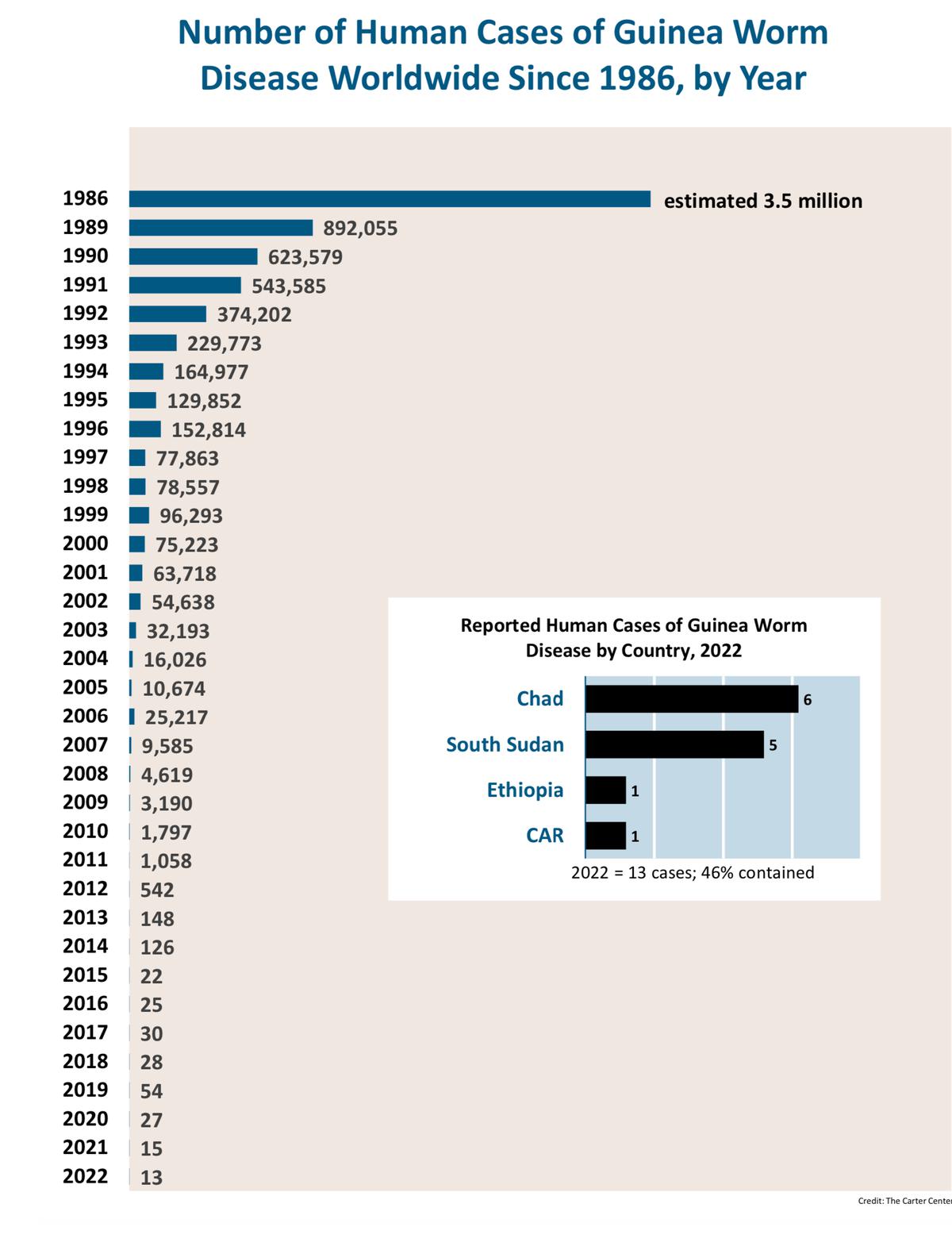
The world is on the brink of a public health triumph as it closes in on eradicating Guinea worm disease. There were more than 3.5 million cases of this disease in the 1980s, but according to the World Health Organization’s (WHO) weekly epidemiological report, they dwindled to 14 cases in 2021, 13 in 2022, and just six in 2023.

At a time when medical advancements often headline with breakthrough vaccines and cures, the battle against Guinea worm disease stands out for its reliance on basic public health principles rather than high-tech interventions. Unlike many of its viral counterparts, this parasitic adversary has offered no chance for immunity, defied prevention by vaccines, and resisted most cures – yet the possibility of its eradication is closer than ever thanks to the triumph of human resilience and ingenuity.

“India eliminated Guinea worm disease in the late 1990s, concluding a commendable chapter in the country’s public health history through a rigorous campaign of surveillance, water safety interventions, and community education.”

Rewind to the 1960s, a period marked by two monumental achievements: humankind’s first steps on the moon and the eradication of smallpox. Fast forward to the present, and space exploration has bounded into new frontiers while smallpox remains the lone entry on the list of diseases (of humans) we have managed to banish entirely. This contrast underscores not a failure of medical science but the complex nature of disease eradication.

Infection cycle

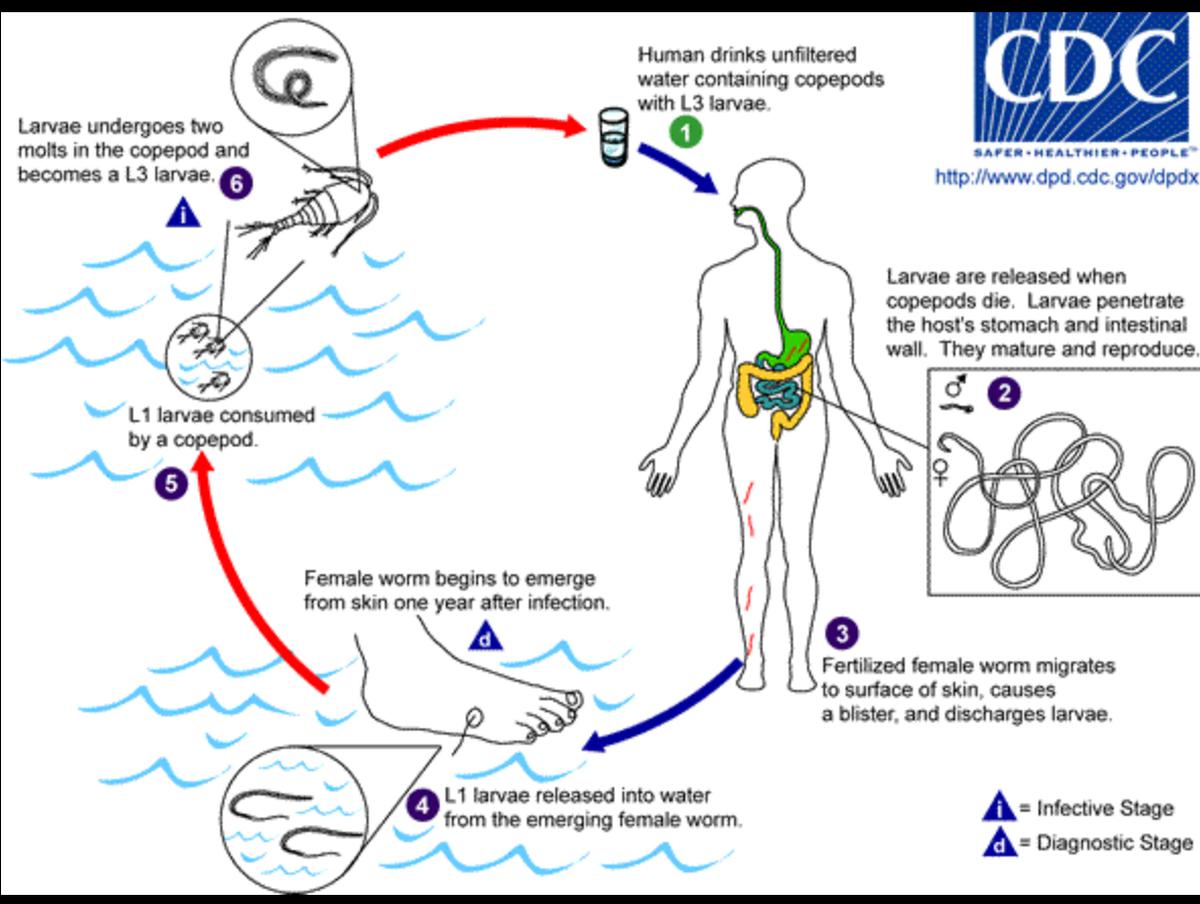
Guinea worm disease, also called dracunculiasis, is the work of the Guinea worm (Dracunculus medinensis), whose infamy dates back to biblical times, when it was called the “fiery serpent” and whose presence researchers have confirmed in Egyptian mummies. Individuals whose bodies the worm has entered first experience a painful blister, usually on a lower limb. When seeking relief, they may immerse the affected area in water, which prompts the worm to emerge and release hundreds of thousands of larvae, potentially contaminating communal water sources and perpetuating the infection cycle.

While a Guinea worm by itself  is not lethal, it debilitates those whom it infects and prevents them from performing daily tasks and earning their livelihoods.

It manifests as a painful skin lesion as the adult worm — sometimes up to a meter long — emerges. This process, which can last weeks, often begins with a blister and develops into an ulcer from which the worm slowly exits the body. The symptoms typically involve intense pain, swelling, and sometimes secondary bacterial infections at the open wound. Sufferers may experience fever, nausea, and vomiting. The pain can incapacitate individuals, hindering daily activities and work.

Legs most susceptible

More than 90% of Guinea worm infections manifest in the legs and feet. The individual has an excruciating experience when the adult female worm emerges through the skin. The open sore left by its exit is also susceptible to secondary infections. The disease affects people of both sexes. The struggle against Guinea worm disease is symbolic of a broader fight against the diseases of poverty and the self-fulfilling relationship between poverty and illness. The disease thrives in areas where access to clean, safe drinking water is a luxury, and health education and resources are scant.

India eliminated Guinea worm disease in the late 1990s, concluding a commendable chapter in the country’s public health history through a rigorous campaign of surveillance, water safety interventions, and community education. The government of India received Guinea worm disease-free certification status from the WHO in 2000.
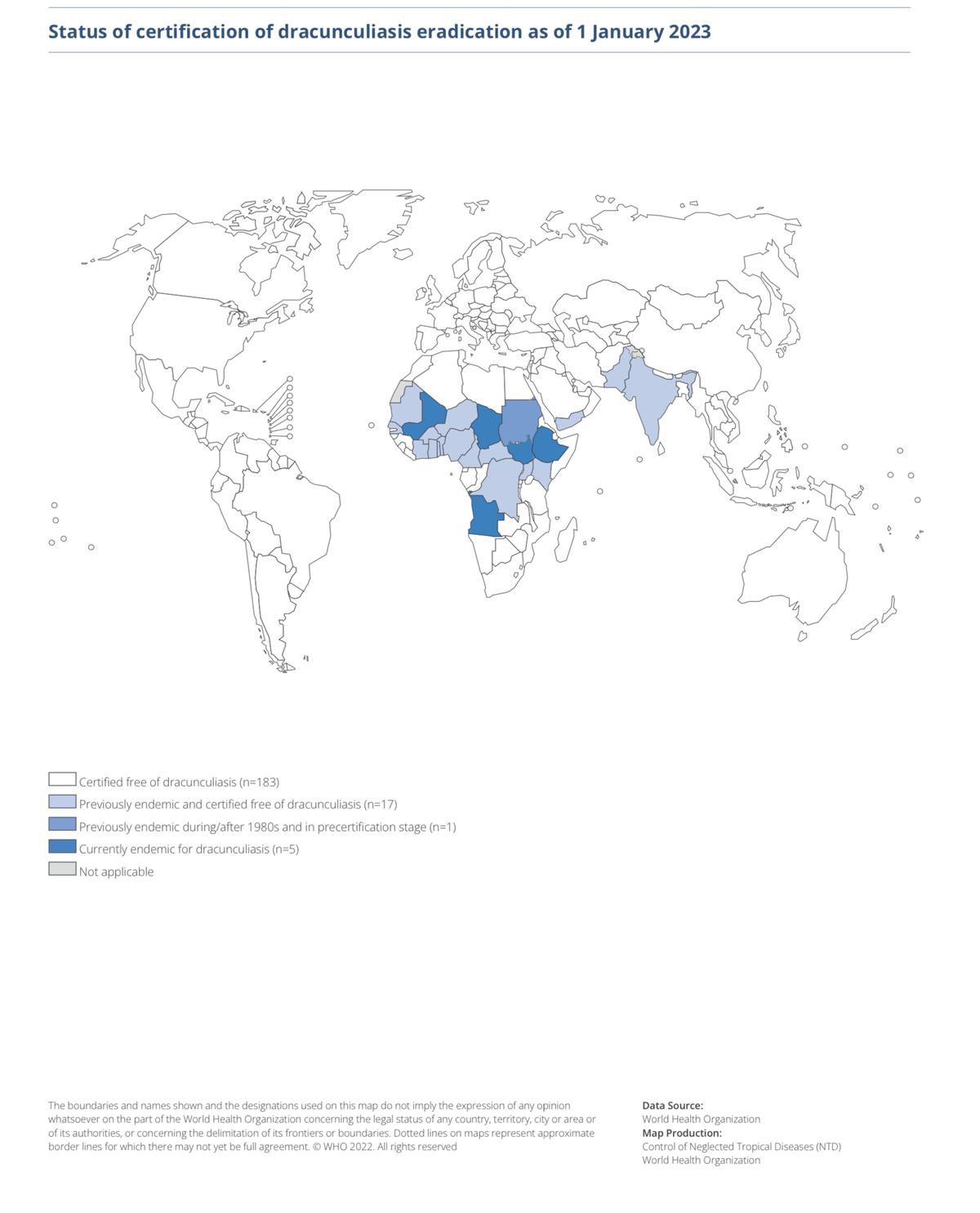
This accomplishment was the result of a collaboration between the Indian government, local health workers, and international partners. The strategy hinged on empowering local communities with the knowledge and tools to prevent the disease — including filtering water before use and reporting cases to health authorities for immediate response.

The strategy that brought us to the brink of eradication was straightforward: intersectoral coordination, community participation, and a sustained focus on prevention through health education. Unlike many diseases that have been cornered by medical interventions, Guinea worm disease was and is being pushed to extinction using the fundamentals of public health: ensuring access to clean water (by applying a larvicide called Temephos), spreading awareness through community workers, and meticulously tracking cases and containing outbreaks.

The WHO recorded only six cases of Guinea worm disease in 2023. Nations like South Sudan and Mali, where the disease was once more common, have made commendable progress, although the fight continues particularly in Chad and the Central African Republic, where the last vestiges of this disease cling on.

Eradication

In 2020, researchers also discovered Guinea worms in animal reservoirs, particularly dogs, in Chad, casting a shadow of complexity over the final stages of eradication. This development is a crucial reminder of the disease’s tenacity and, importantly, signals to countries where the disease was previously endemic, including India, to not let their guard down. If the worm persists in this way, governments must stay vigilant and maintain adaptable public health strategies to ensure they don’t lose the upper hand.
This said, the significant progress made towards eradicating Guinea worm disease is also threatened by human and political factors, notably civil unrest and poverty. These challenges are not merely logistical but deeply entrenched in the socio-political fabric of the affected areas, where poverty exacerbates vulnerability to disease and conflict disrupts the basic infrastructure required to sustain public health campaigns. In fact, were such conflicts not in the picture, the global community may have crossed the finish line in the fight against Guinea worm disease a decade sooner. The interplay between health and peace is starkly evident in this context, where the absence of stability and security directly affects the fruits of eradication efforts.

Finally eradicating Guinea worm disease wouldn’t just represent a victory over a single parasitic adversary but a triumph of humankind at large. It will underscore a collective moral responsibility towards the most vulnerable among us, and demonstrate the profound impact addressing health disparities can have on communities. Getting rid of this disease will also be a much-needed testament to what we can achieve when global efforts converge to uplift communities from preventable afflictions.

(Dr. C. Aravinda is an academic and public health physician. aravindaaiimsjr10@hotmail.com)



Source link

Science Tags:eradicating diseases, Guinea worm disease, health news, medical breakthroughs, science news, World Health Organization

Post navigation

Previous Post: First U.S. moon lander in 52 years touches down but sends weak signal
Next Post: Infosys CEO Salil Parekh Joins US-India Strategic And Partnership Forum Board

Related Posts

  • Watch | How climate change is affecting monsoon forecast and disaster management
    Watch | How climate change is affecting monsoon forecast and disaster management Science
  • India sets up its first diabetes biobank
    India sets up its first diabetes biobank Science
  • New AI model ‘GenCast’ can beat the best traditional weather forecasts
    New AI model ‘GenCast’ can beat the best traditional weather forecasts Science
  • Why do so many contemporary vaccines have low durability? | Explained
    Why do so many contemporary vaccines have low durability? | Explained Science
  • What happens when bees go on strike?
    What happens when bees go on strike? Science
  • Private aviation is releasing more than its ‘fair share’ of emissions
    Private aviation is releasing more than its ‘fair share’ of emissions Science

More Related Articles

Trump is pulling the US out of the UN FCCC. What does it mean? Trump is pulling the US out of the UN FCCC. What does it mean? Science
Bharat Biotech, Alopexx to collaborate for anti-microbial vaccine AV0328 Bharat Biotech, Alopexx to collaborate for anti-microbial vaccine AV0328 Science
Rare and fatal brain-eating amoeba infection | Explained Rare and fatal brain-eating amoeba infection | Explained Science
Dial it up to Category 6? As warming stokes storms, some want a bigger hurricane category Dial it up to Category 6? As warming stokes storms, some want a bigger hurricane category Science
Spin Science: Explaining the Magnus effect Spin Science: Explaining the Magnus effect Science
COVID-19: anosmia as a marker for susceptible brain damage COVID-19: anosmia as a marker for susceptible brain damage Science
SiteLock

Archives

  • May 2026
  • April 2026
  • March 2026
  • February 2026
  • January 2026
  • December 2025
  • November 2025
  • October 2025
  • September 2025
  • August 2025
  • July 2025
  • June 2025
  • May 2025
  • April 2025
  • March 2025
  • February 2025
  • January 2025
  • December 2024
  • November 2024
  • October 2024
  • September 2024
  • August 2024
  • July 2024
  • June 2024
  • May 2024
  • April 2024
  • March 2024
  • February 2024
  • January 2024
  • December 2023
  • November 2023
  • October 2023
  • September 2023
  • August 2023
  • July 2023
  • June 2023
  • May 2023
  • April 2023
  • March 2023
  • February 2023
  • January 2023
  • December 2022
  • November 2022
  • October 2022
  • September 2022
  • August 2022
  • July 2022
  • June 2022
  • May 2022

Categories

  • Business
  • Nation
  • Science
  • Sports
  • World

Recent Posts

  • Congress MLA-elects make a beeline for Indira Bhavan as AICC inches closer to announcing its Chief Minister pick for Kerala
  • Woman gang-raped in sleeper bus in New Delhi
  • Lebanon, Israel to hold new talks in U.S. as ceasefire nears end
  • Lionel Messi has two goals and an assist as Inter Miami rallies for 5-3 victory over Cincinnati
  • Cuba has run out of diesel and fuel oil amid U.S. oil blockade

Recent Comments

  1. Davidcag on UP Teacher Who Asked Students To Slap Muslim Classmate
  2. OrvalMaync on UP Teacher Who Asked Students To Slap Muslim Classmate
  3. Jeffreyroure on UP Teacher Who Asked Students To Slap Muslim Classmate
  4. Stevemonge on UP Teacher Who Asked Students To Slap Muslim Classmate
  5. RichardClage on UP Teacher Who Asked Students To Slap Muslim Classmate
  • France and Germany backed report pushes for EU enlargement, four tier membership
    France and Germany backed report pushes for EU enlargement, four tier membership World
  • Earthquakes shake Taiwan again, weeks after strong one that killed 13
    Earthquakes shake Taiwan again, weeks after strong one that killed 13 World
  • Real Madrid Thrash RB Salzburg 5-1, Eye UEFA Champions League Top 8 Spot
    Real Madrid Thrash RB Salzburg 5-1, Eye UEFA Champions League Top 8 Spot Sports
  • RSS Changes Content, Curriculum And Format Of Training. Details Here
    RSS Changes Content, Curriculum And Format Of Training. Details Here Nation
  • India vs New Zealand LIVE Score, 2nd Test, Day 1: Shubman Gill, Sarfaraz Khan In XI For India As New Zealand Opt To Bat
    India vs New Zealand LIVE Score, 2nd Test, Day 1: Shubman Gill, Sarfaraz Khan In XI For India As New Zealand Opt To Bat Sports
  • Access Denied Sports
  • Access Denied Business
  • England vs Pakistan 2nd T20I Live Score Updates
    England vs Pakistan 2nd T20I Live Score Updates Sports

Editor-in-Chief:
Mohammad Ariff,
MSW, MAJMC, BSW, DTL, CTS, CNM, CCR, CAL, RSL, ASOC.
editor@artifex.news

Associate Editors:
1. Zenellis R. Tuba,
zenelis@artifex.news
2. Haris Daniyel
daniyel@artifex.news

Photograher:
Rohan Das
rohan@artifex.news

Artifex.News offers Online Paid Internships to college students from India and Abroad. Interns will get a PRESS CARD and other online offers.
Send your CV (Subjectline: Paid Internship) to internship@artifex.news

Links:
Associate Journalism
About Us
Privacy Policy

News Links:
Breaking News
World
Nation
Sports
Business
Entertainment
Lifestyle

Registered Office:
72/A, Elliot Road, Kolkata - 700016
Tel: 033-22277777, 033-22172217
Email: office@artifex.news

Editorial Office / News Desk:
No. 13, Mezzanine Floor, Esplanade Metro Rail Station,
12 J. L. Nehru Road, Kolkata - 700069.
(Entry from Gate No. 5)
Tel: 033-46011099, 033-46046046
Email: editor@artifex.news

Copyright © 2023 Artifex.News Newsportal designed by Artifex Infotech.