



Skip to content
  • Facebook
  • X
  • Linkedin
  • WhatsApp
  • YouTube
  • Associate Journalism
  • About Us
  • Privacy Policy
  • 033-46046046
  • editor@artifex.news
Artifex.News

Artifex.News

Stay Connected. Stay Informed.

  • Breaking News
  • World
  • Nation
  • Sports
  • Business
  • Science
  • Entertainment
  • Lifestyle
  • Toggle search form
  • “I Cannot Wait To…”: Sara Tendulkar Begins New Journey, It Has A Sachin Tendulkar Connection
    “I Cannot Wait To…”: Sara Tendulkar Begins New Journey, It Has A Sachin Tendulkar Connection Sports
  • “Shai Pakde Hain”: Delhi Capitals’ Instagram Post Is Viral Amid Sanju Samson Dismissal Row
    “Shai Pakde Hain”: Delhi Capitals’ Instagram Post Is Viral Amid Sanju Samson Dismissal Row Sports
  • Thoothukudi court dismisses bail plea of Vilathikulam DMK MLA Markandayan
    Thoothukudi court dismisses bail plea of Vilathikulam DMK MLA Markandayan Nation
  • Farwiza Farhan | Conservationist from Indonesia, Magsaysay awardee
    Farwiza Farhan | Conservationist from Indonesia, Magsaysay awardee World
  • ISRO tests thrust chamber for LOX-Methane Engine
    ISRO tests thrust chamber for LOX-Methane Engine Science
  • Access Denied
    Access Denied Nation
  • All-round Deepti Sharma grabs maiden T20I fifer to carry India to 14-run win over SA
    All-round Deepti Sharma grabs maiden T20I fifer to carry India to 14-run win over SA Sports
  • No Ambulance, Maharashtra Parents Carry Dead Sons Back Home On Shoulders
    No Ambulance, Maharashtra Parents Carry Dead Sons Back Home On Shoulders Nation
Mystery solved: meteorite caused Tunguska devastation

Mystery solved: meteorite caused Tunguska devastation

Posted on May 22, 2026 By admin


By >Simon Redfern , University of Cambridge 

On the morning of June 30 in 1908, a gigantic fireball devastated hundreds of square kilometres of uninhabited Siberian forest around the Tunguska river. The first scientists to investigate the impact site expected to find a meteorite, but they found nothing.

Because no traces of a meteorite were found, many scientists concluded that the culprit was a comet. Comets, which are essentially muddy ice balls, could cause such a devastation and leave no trace.

But now, 105 years later, scientists have revealed that the Tunguska devastation was indeed caused by a meteorite. A group of Ukrainian, German, and American scientists have identified its microscopic remains. Why it took them so many years makes for a fascinating tale about the limits of science and how we are pushing them.

Big ball of fire 

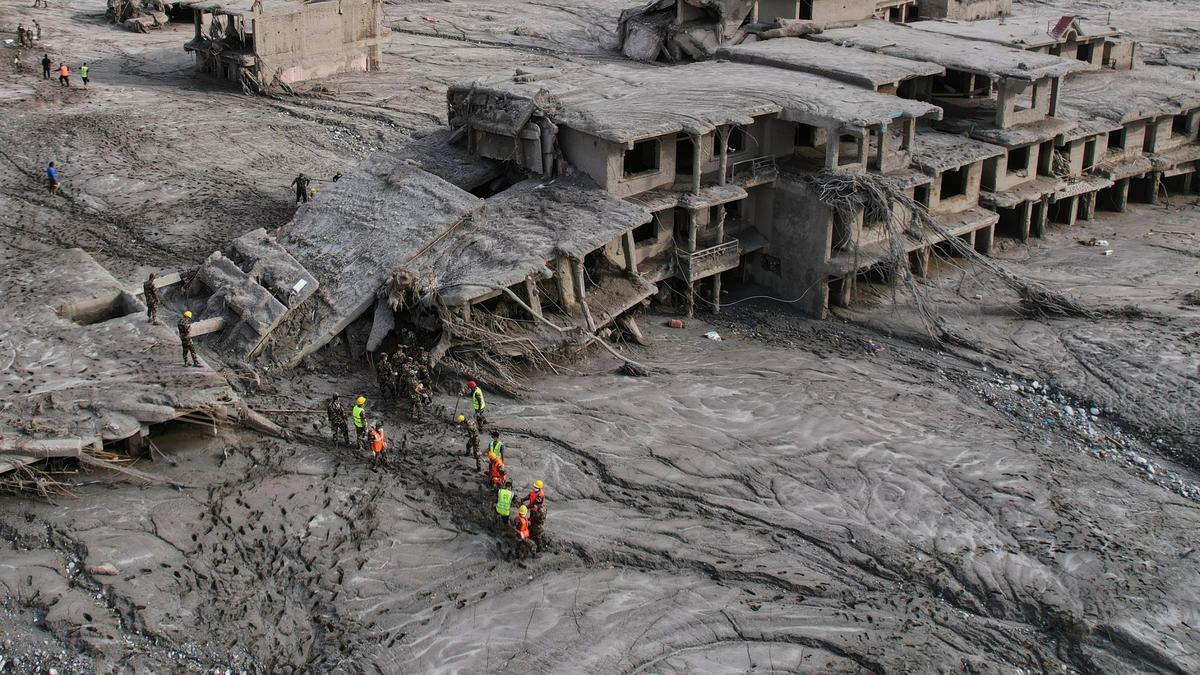
Eyewitness reports of the Tunguska event help paint a partial picture. As the fireball streaked across the sky, a blast of heat scorched everything in its wake, to be followed by a shock wave that threw people off their feet and stripped leaves and branches from trees, laying a large forest flat. Photos reveal the extent and force of the impact, showing trees that look like bare telegraph poles, all pointing away from the impact site.

The inability to find any meteorite, however, led to a century of speculation on the origins of the blast. The Tunguska event has spawned a wealth of science fiction that has fed outrageous theories. But the main question has remained: what was it?

An icy comet would evaporate on impact, which could explain the lack of any observable evidence. But a study in the journal >Planetary and Space Science provides, for the first time, evidence that the impact was not caused by a comet. Researchers collected microscopic fragments recovered from a layer of partially decayed vegetation (peat) that dates from that extraordinary summer. 

Victor Kvasnytsya from the National Academy of Sciences of Ukraine and his colleagues used the latest imaging and spectroscopy techniques to identify aggregates of carbon minerals—diamond, lonsdaleite, and graphite. Lonsdaleite in particular is known to form when carbon-rich material is suddenly exposed to a shock wave created by an explosion, such as that of meteorite hitting Earth. The lonsdaleite fragments contain even smaller inclusions of iron sulphides and iron-nickel alloys, troilite and taenite, which are characteristic minerals found in space-based objects such as meteorites. The precise combination of minerals in these fragments point to a meteorite source. It is near-identical to similar minerals found in an >Arizona impact . 

The samples point to one thing: the Tunguska impact is the largest meteorite impact in recorded history. >US researchers have estimated that the Tunguska blast could have been as much as the equivalent of a five megaton TNT explosion—hundreds of times more powerful than the Hiroshima blast. The meteorite tore apart as it entered the atmosphere at an angle, so that little of it reached the ground intact. That is why all remains are such small specks that have been fossilised in the Siberian peat. 

2013 meteorite impact 

We can compare the Tunguska event with the fireball seen during the impact of the >Chelyabinsk meteor earlier this year. Although much less powerful than Tunguska, the Chelyabinsk event was similar. A low-angle approach broke up the body, leaving fragments that were found over the vast expanse of Eurasia. More than 1,000 people were injured, some drawn to windows by the flash of the fireball and then hit by the shock wave that followed. 

The Tunguska devastation that was not investigated for 19 years, partly because of lack of resources. In contrast, the Chelyabinsk meteorite attracted immediate attention. >Dashboard cameras captured the trajectory and brightness of the fireball, while CCTV networks provided fixed reference points. The US space agency NASA has now been able to identify >the origins of the meteorite . 

The low-frequency rumble of the Chelyabinsk event travelled twice around the globe. The data >demonstrates that the energy of the impact was equivalent to a 460 kiloton (TNT) bomb, which is about 40 times the Hiroshima blast. 

Simon Redfern does not work for, consult to, own shares in or receive funding from any company or organisation that would benefit from this article, and has no relevant affiliations. 

This article was originally published at >The Conversation . Read the >original article . 

Published – June 27, 2013 01:14 pm IST



Source link

Science Tags:Arizona impact, Chelyabinsk meteor, lonsdaleite, National Academy of Sciences of Ukraine, The Conversation, Tunguska event

Post navigation

Previous Post: Silk Road trading helped produce the modern horse
Next Post: Mega-canyon discovered beneath Greenland ice sheet

Related Posts

  • Joel Mokyr’s story of how science becomes technology is incomplete
    Joel Mokyr’s story of how science becomes technology is incomplete Science
  • Bacteria can talk to each other and are multilingual, says biologist
    Bacteria can talk to each other and are multilingual, says biologist Science
  • Polar geoengineering projects could cause severe harm, scientists say
    Polar geoengineering projects could cause severe harm, scientists say Science
  • Mendelian genetics, Darwinian evolution closely linked with chemistry, says expert
    Mendelian genetics, Darwinian evolution closely linked with chemistry, says expert Science
  • SHAR expo at Andhra Loyola College on August 29
    SHAR expo at Andhra Loyola College on August 29 Science
  • From moon’s far side, a satellite to look for the first radio signal
    From moon’s far side, a satellite to look for the first radio signal Science

More Related Articles

How scientists are exploring what extraterrestrial life could look like How scientists are exploring what extraterrestrial life could look like Science
Nobel Prize-winning physicist Tsung-Dao Lee dies at age 97 Nobel Prize-winning physicist Tsung-Dao Lee dies at age 97 Science
UNESCO Ambassador Vishal Sharma visits INCOIS, backs dedicated ocean observation satellite UNESCO Ambassador Vishal Sharma visits INCOIS, backs dedicated ocean observation satellite Science
India’s first analog space mission to simulate extra-terrestrial conditions on Mars and Moon kicks off  India’s first analog space mission to simulate extra-terrestrial conditions on Mars and Moon kicks off  Science
India-Canada uranium deal and India’s nuclear programme | Explained India-Canada uranium deal and India’s nuclear programme | Explained Science
Indian researchers map colonial spider’s venom gland, uncover molecules with potential for future cancer and antimicrobial drug research Indian researchers map colonial spider’s venom gland, uncover molecules with potential for future cancer and antimicrobial drug research Science
SiteLock

Archives

  • September 2026
  • August 2026
  • July 2026
  • June 2026
  • May 2026
  • April 2026
  • March 2026
  • February 2026
  • January 2026
  • December 2025
  • November 2025
  • October 2025
  • September 2025
  • August 2025
  • July 2025
  • June 2025
  • May 2025
  • April 2025
  • March 2025
  • February 2025
  • January 2025
  • December 2024
  • November 2024
  • October 2024
  • September 2024
  • August 2024
  • July 2024
  • June 2024
  • May 2024
  • April 2024
  • March 2024
  • February 2024
  • January 2024
  • December 2023
  • November 2023
  • October 2023
  • September 2023
  • August 2023
  • July 2023
  • June 2023
  • May 2023
  • April 2023
  • March 2023
  • February 2023
  • January 2023
  • December 2022
  • November 2022
  • October 2022
  • September 2022
  • August 2022
  • July 2022
  • June 2022
  • May 2022

Categories

  • Business
  • Nation
  • Science
  • Sports
  • World

Recent Posts

  • Around 20 ‘unauthorised’ homes, farmhouses razed as part of road-widening drive in south Delhi
  • EU scrambles for Russia sanctions deal amid France standoff
  • Rupee rises 15 paise to close at 95.81 against U.S. dollar
  • Over 81,000 Ganesh idols immersed across Cyberabad in six days
  • 17-year-old Naga youth shot dead in Manipur, say police

Recent Comments

  1. MathewTup on UP Teacher Who Asked Students To Slap Muslim Classmate
  2. RichardSpout on UP Teacher Who Asked Students To Slap Muslim Classmate
  3. LarryKef on UP Teacher Who Asked Students To Slap Muslim Classmate
  4. Josephjab on UP Teacher Who Asked Students To Slap Muslim Classmate
  5. LarryKef on UP Teacher Who Asked Students To Slap Muslim Classmate
  • India’s Q1 pharma exports up 6.8% to .1bn; U.S. remains largest export destination
    India’s Q1 pharma exports up 6.8% to $8.1bn; U.S. remains largest export destination Business
  • Access Denied
    Access Denied Nation
  • Access Denied Sports
  • Access Denied Sports
  • Access Denied Sports
  • SC declines to interfere with forest clearances for Adani’s Madhya Pradesh coal block project
    SC declines to interfere with forest clearances for Adani’s Madhya Pradesh coal block project Business
  • Nitin Gadkari says India’s logistics cost will come down to single-digit percentage in two years
    Nitin Gadkari says India’s logistics cost will come down to single-digit percentage in two years Business
  • Change In Travel Plans Cost 20-Year-Old Woman Her Life
    Change In Travel Plans Cost 20-Year-Old Woman Her Life Nation

Editor-in-Chief:
Mohammad Ariff,
MSW, MAJMC, BSW, DTL, CTS, CNM, CCR, CAL, RSL, ASOC.
editor@artifex.news

Associate Editors:
1. Zenellis R. Tuba,
zenelis@artifex.news
2. Haris Daniyel
daniyel@artifex.news

Photograher:
Rohan Das
rohan@artifex.news

Artifex.News offers Online Paid Internships to college students from India and Abroad. Interns will get a PRESS CARD and other online offers.
Send your CV (Subjectline: Paid Internship) to internship@artifex.news

Links:
Associate Journalism
About Us
Privacy Policy

News Links:
Breaking News
World
Nation
Sports
Business
Entertainment
Lifestyle

Registered Office:
72/A, Elliot Road, Kolkata - 700016
Tel: 033-22277777, 033-22172217
Email: office@artifex.news

Editorial Office / News Desk:
No. 13, Mezzanine Floor, Esplanade Metro Rail Station,
12 J. L. Nehru Road, Kolkata - 700069.
(Entry from Gate No. 5)
Tel: 033-46011099, 033-46046046
Email: editor@artifex.news

Copyright © 2023 Artifex.News Newsportal designed by Artifex Infotech.