


Skip to content
  • Facebook
  • X
  • Linkedin
  • WhatsApp
  • YouTube
  • Associate Journalism
  • About Us
  • Privacy Policy
  • 033-46046046
  • editor@artifex.news
Artifex.News

Artifex.News

Stay Connected. Stay Informed.

  • Breaking News
  • World
  • Nation
  • Sports
  • Business
  • Science
  • Entertainment
  • Lifestyle
  • Toggle search form
  • Access Denied
    Access Denied Nation
  • Ronaldinho Ignites Durga Puja Festivities, Casts Spell On Kolkata Football Fans
    Ronaldinho Ignites Durga Puja Festivities, Casts Spell On Kolkata Football Fans Sports
  • Budget 2023 | Cooperative manufacturing units get sops 
    Budget 2023 | Cooperative manufacturing units get sops  Business
  • India vs Sri Lanka, Asia Cup 2023 Final: Jasprit Bumrah Produces Magical Delivery To Leave Sri Lanka Reeling In First Over. Watch
    India vs Sri Lanka, Asia Cup 2023 Final: Jasprit Bumrah Produces Magical Delivery To Leave Sri Lanka Reeling In First Over. Watch Sports
  • Satellites, science, and the new fight for spectrum in space
    Satellites, science, and the new fight for spectrum in space Science
  • Delhi Asked For Status On Policy On Intersex Infants’ Sex-Selective Surgery
    Delhi Asked For Status On Policy On Intersex Infants’ Sex-Selective Surgery Nation
  • Access Denied
    Access Denied Nation
  • Access Denied World
Machine learning can help blood tests have a separate ‘normal’ for each patient

Machine learning can help blood tests have a separate ‘normal’ for each patient

Posted on December 31, 2024 By admin


Currently, blood test readings are based on one-size-fits-all reference intervals that don’t account for individual differences.
| Photo Credit: Getty Images

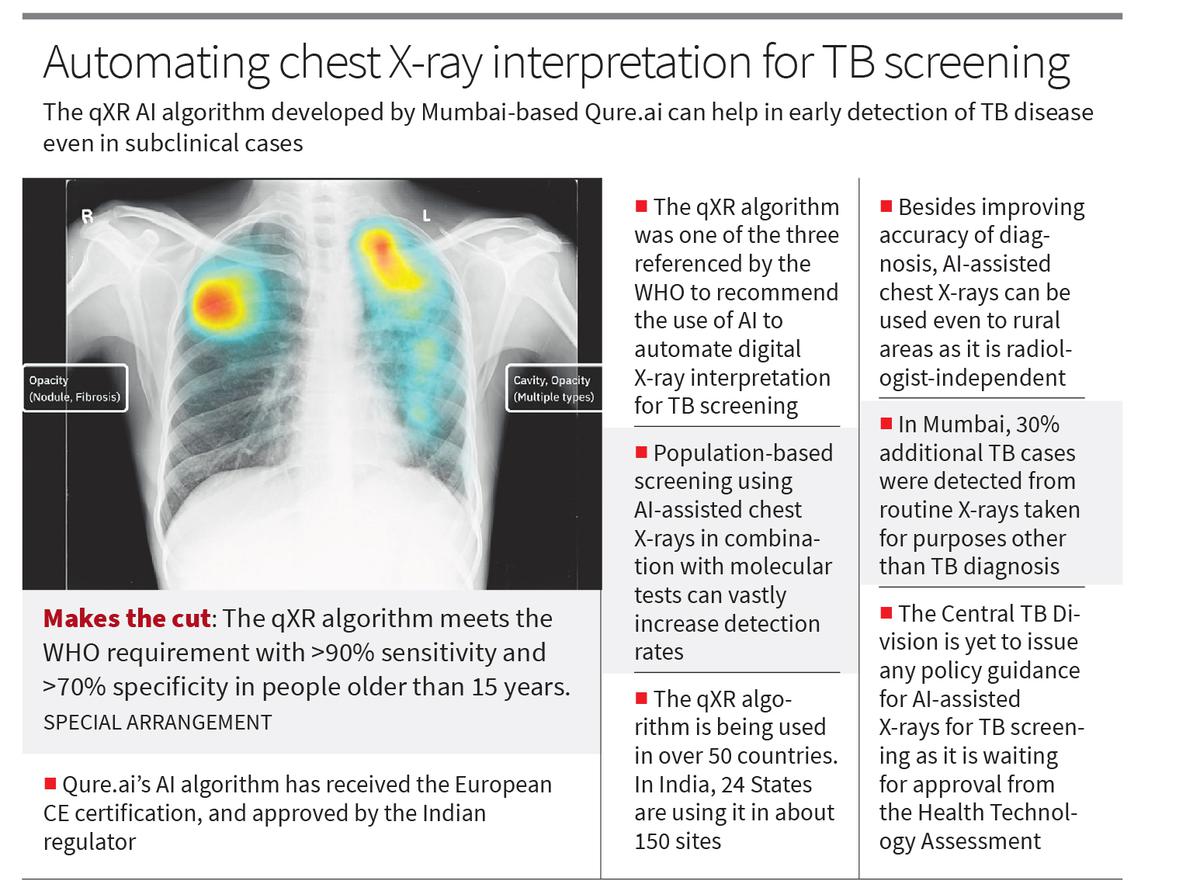
If you’ve ever had a doctor order a blood test for you, chances are that they ran a complete blood count, or CBC. One of the most common blood tests in the world, CBC tests are run billions of times each year to diagnose conditions and monitor patients’ health.

But despite the test’s ubiquity, the way clinicians interpret and use it in the clinic is often less precise than ideal. Currently, blood test readings are based on one-size-fits-all reference intervals that don’t account for individual differences.

I am a mathematician at the University of Washington School of Medicine, and my team studies ways to use computational tools to improve clinical blood testing. To develop better ways to capture individual patient definitions of “normal” lab values, my colleagues and I in the Higgins Lab at Harvard Medical School examined 20 years of blood count tests from tens of thousands of patients from both the East and West coasts.

In our newly published research, we used machine learning to identify healthy blood count ranges for individual patients and predict their risk of future disease.

Clinical tests and complete blood counts

Many people commonly think of clinical tests as purely diagnostic. For example, a COVID-19 or a pregnancy test comes back as either positive or negative, telling you whether you have a particular condition. However, most tests don’t work this way. Instead, they measure a biological trait that your body continuously regulates up and down to stay within certain bounds.

Your complete blood count is also a continuum. The CBC test creates a detailed profile of your blood cells – such as how many red blood cells, platelets and white blood cells are in your blood. These markers are used every day in nearly all areas of medicine.

For example, hemoglobin is an iron-containing protein that allows your red blood cells to carry oxygen. If your hemoglobin levels are low, it might mean you are iron deficient.

Platelets are cells that help form blood clots and stop bleeding. If your platelet count is low, it may mean you have some internal bleeding and your body is using platelets to help form blood clots to plug the wound.

White blood cells are part of your immune system. If your white cell count is high, it might mean you have an infection and your body is producing more of these cells to fight it off.

Normal ranges and reference intervals

But this all raises the question: What actually counts as too high or too low on a blood test?

Traditionally, clinicians determine what are called reference intervals by measuring a blood test in a range of healthy people. They usually take the middle 95% of these healthy values and call that “normal,” with anything above or below being too low or high. These normal ranges are used nearly everywhere in medicine.

But reference intervals face a big challenge: What’s normal for you may not be normal for someone else.

Nearly all blood count markers are heritable, meaning your genetics and environment determine much of what the healthy value for each marker would be for you.

At the population level, for example, a normal platelet count is approximately between 150 and 400 billion cells per liter of blood. But your body may want to maintain a platelet count of 200 – a value called your set point. This means your normal range might only be 150 to 250.

Differences between a patient’s true normal range and the population-based reference interval can create problems for doctors. They may be less likely to diagnose a disease if your set point is far from a cutoff. Conversely, they may run unnecessary tests if your set point is too close to a cutoff.

Defining what’s normal for you

Luckily, many patients get blood counts each year as part of routine checkups. Using machine learning models, my team and I were able to estimate blood count set points for over 50,000 patients based on their history of visits to the clinic. This allowed us to study how the body regulates these set points and to test whether we can build better ways of personalizing lab test readings.

Over multiple decades, we found that individual normal ranges were about three times smaller than at the population level. For example, while the “normal” range for the white blood cell count is around 4.0 to 11.0 billion cells per liter of blood, we found that most people’s individual ranges were much narrower, more like 4.5 to 7, or 7.5 to 10. When we used these set points to interpret new test results, they helped improve diagnosis of diseases such as iron deficiency, chronic kidney disease and hypothyroidism. We could note when someone’s result was outside their smaller personal range, potentially indicating an issue, even if the result was within the normal range for the population overall.

The set points themselves were strong indicators for future risk of developing a disease. For example, patients with high white blood cell set points were more likely to develop Type 2 diabetes in the future. They were also nearly twice as likely to die of any cause compared with similar patients with low white cell counts. Other blood count markers were also strong predictors of future disease and mortality risk.

In the future, doctors could potentially use set points to improve disease screening and how they interpret new test results. This is an exciting avenue for personalized medicine: to use your own medical history to define what exactly healthy means for you.

This article is republished from The Conversation under a Creative Commons license. Read the original article here.

Published – December 31, 2024 04:55 pm IST


Source link

Science Tags:blood tests, clinical blood tests, complete blood counts, Machine learning, medical news, science news

Post navigation

Previous Post: Hospital admission after taking hallucinogens triples risk of schizophrenia: study
Next Post: Astronomers build galaxy-sized ‘detector’ to map universe’s vibrations

Related Posts

  • Chest X-ray interpretation using AI can detect more TB cases
    Chest X-ray interpretation using AI can detect more TB cases Science
  • The many myths about protein deficiency in people in India
    The many myths about protein deficiency in people in India Science
  • Science for all Scientists find bacteria living on fish brains
    Science for all Scientists find bacteria living on fish brains Science
  • Carrot extract can make fake ghee dodge quality test: study
    Carrot extract can make fake ghee dodge quality test: study Science
  • Insurance can better cataract surgery outcomes for India’s elderly: study
    Insurance can better cataract surgery outcomes for India’s elderly: study Science
  • Dung beetles prefer dog poop, but their children pay the price
    Dung beetles prefer dog poop, but their children pay the price Science

More Related Articles

Can datacentres in orbit solve for AI models’ soaring energy demand? Can datacentres in orbit solve for AI models’ soaring energy demand? Science
Indian space programme breaks into 2025 on ‘mission mode’ Indian space programme breaks into 2025 on ‘mission mode’ Science
Science This Week | NASA’s OSIRIS-REx to bring back asteroid fragments, no signals from Vikram and Pragyan and more Science This Week | NASA’s OSIRIS-REx to bring back asteroid fragments, no signals from Vikram and Pragyan and more Science
India was a tree planting laboratory for 200 years – here are the results India was a tree planting laboratory for 200 years – here are the results Science
Conservation in the Global South erases human rights, researchers say Conservation in the Global South erases human rights, researchers say Science
Ganga Hospital Chairman ranked among top 2% of world scientists Ganga Hospital Chairman ranked among top 2% of world scientists Science
SiteLock

Archives

  • October 2026
  • September 2026
  • August 2026
  • July 2026
  • June 2026
  • May 2026
  • April 2026
  • March 2026
  • February 2026
  • January 2026
  • December 2025
  • November 2025
  • October 2025
  • September 2025
  • August 2025
  • July 2025
  • June 2025
  • May 2025
  • April 2025
  • March 2025
  • February 2025
  • January 2025
  • December 2024
  • November 2024
  • October 2024
  • September 2024
  • August 2024
  • July 2024
  • June 2024
  • May 2024
  • April 2024
  • March 2024
  • February 2024
  • January 2024
  • December 2023
  • November 2023
  • October 2023
  • September 2023
  • August 2023
  • July 2023
  • June 2023
  • May 2023
  • April 2023
  • March 2023
  • February 2023
  • January 2023
  • December 2022
  • November 2022
  • October 2022
  • September 2022
  • August 2022
  • July 2022
  • June 2022
  • May 2022

Categories

  • Business
  • Nation
  • Science
  • Sports
  • World

Recent Posts

  • Saudi Supreme Court sets aside Sri Lankan migrant worker’s death penalty
  • Nedumbassery accident: CPI(M) stages protest march to police station over ‘indifference’ in handling of case
  • Why CJI Surya Kant said ‘no’ to Rahul Gandhi’s request to meet | Explained
  • September WPI Inflation rises to 11.39% as food, fuel and manufactured goods prices increase
  • Frankfurt-Delhi Air India flight diverted to Jaipur following bomb threat

Recent Comments

  1. RobertTes on UP Teacher Who Asked Students To Slap Muslim Classmate
  2. Manuelret on UP Teacher Who Asked Students To Slap Muslim Classmate
  3. RobertTes on UP Teacher Who Asked Students To Slap Muslim Classmate
  4. RobertTes on UP Teacher Who Asked Students To Slap Muslim Classmate
  5. BrentWes on UP Teacher Who Asked Students To Slap Muslim Classmate
  • A New Entry In BJP’s Poll Promises
    A New Entry In BJP’s Poll Promises Nation
  • “Mohammed Shami Limped Back To Changing Room…”: Report Provides Training Insight
    “Mohammed Shami Limped Back To Changing Room…”: Report Provides Training Insight Sports
  • England vs South Africa Live Score Updates, World Cup 2023
    England vs South Africa Live Score Updates, World Cup 2023 Sports
  • India’s blind women cricketers still wait for house sites and jobs a year after their World Cup win
    India’s blind women cricketers still wait for house sites and jobs a year after their World Cup win Sports
  • RCB Aiming To Have Two Player Camps Ahead Of WPL 2025 Auction: Assistant Head Coach Malolan Rangarajan
    RCB Aiming To Have Two Player Camps Ahead Of WPL 2025 Auction: Assistant Head Coach Malolan Rangarajan Sports
  • Access Denied Sports
  • Africa mpox resurgence, with deadlier and more transmissable strain, fuels alarm
    Africa mpox resurgence, with deadlier and more transmissable strain, fuels alarm World
  • ‘Not managed or supervised by us’: ONGC clarifies on overturned boat off Gujarat coast
    ‘Not managed or supervised by us’: ONGC clarifies on overturned boat off Gujarat coast Business

Editor-in-Chief:
Mohammad Ariff,
MSW, MAJMC, BSW, DTL, CTS, CNM, CCR, CAL, RSL, ASOC.
editor@artifex.news

Associate Editors:
1. Zenellis R. Tuba,
zenelis@artifex.news
2. Haris Daniyel
daniyel@artifex.news

Photograher:
Rohan Das
rohan@artifex.news

Associate Journalists
1. Subrata Paul - AN/2020/01
2. Quamruz Zaman - AN/2021/22
3. Ahmed Sha - AN/2021/035
4. Ajay Kumar Shaw - AN/2021/39
5. Tahqiqul Hoda - AN/2021/21

Artifex.News offers Online Paid Internships to college students from India and Abroad. Interns will get a PRESS CARD and other online offers.
Send your CV (Subjectline: Paid Internship) to internship@artifex.news

Links:
Associate Journalism
About Us
Privacy Policy

News Links:
Breaking News
World
Nation
Sports
Business
Entertainment
Lifestyle

Registered Office:
72/A, Elliot Road, Kolkata - 700016
Tel: 033-22277777, 033-22172217
Email: office@artifex.news

Editorial Office / News Desk:
No. 13, Mezzanine Floor, Esplanade Metro Rail Station,
12 J. L. Nehru Road, Kolkata - 700069.
(Entry from Gate No. 5)
Tel: 033-46011099, 033-46046046
Email: editor@artifex.news

Copyright © 2023 Artifex.News Newsportal designed by Artifex Infotech.