


Skip to content
  • Facebook
  • X
  • Linkedin
  • WhatsApp
  • Associate Journalism
  • About Us
  • Privacy Policy
  • 033-46046046
  • editor@artifex.news
Artifex.News

Artifex.News

Stay Connected. Stay Informed.

  • Breaking News
  • World
  • Nation
  • Sports
  • Business
  • Science
  • Entertainment
  • Lifestyle
  • Toggle search form
  • 2500 Cops Deployed For India vs Bangladesh T20I Match In Gwalior. Reason Is… Sports
  • ‘Was On Verge Of Saying Goodbye To Sports’: Asian Games 2023 Gold Medalist Annu Rani Sports
  • Mamata Banerjee Says Cooking Gas Cylinder May Cost Rs 2,000 If BJP Returns To Power Nation
  • Supreme Court On Tirupati Laddoo Row Nation
  • With an eye on Indo-Pacific, Germany seeks greater defence ties with India World
  • Who Is Nitesh Kumar: IIT Graduate Who Won Paris Paralympics 2024 Gold For India Sports
  • David Cameron Speaks About Rishi Sunak, Recalls A Prediction He Had Made Nation
  • Israel Defence Forces Strike Kills Deputy Head Of Hamas Intelligence Directorate Shadi Barud World

Preventing malaria using genetically modified malaria parasites

Posted on December 7, 2024 By admin


Two vaccines against malaria have been rolled out in some countries in Africa. Besides vaccines, scientists have been using genetically altered mosquitoes to stop the spread of malaria. One is the release of radiation-sterilised male mosquitoes to prevent eggs from hatching. Another is engineering mosquitoes that slow the growth of malaria-causing parasites in the gut thereby preventing transmission of malaria to humans. The other method is using genetically modified mosquitoes that can spread resistance to malaria-causing parasites by thriving and mating with wild mosquitoes.

Now, in a radical approach, scientists have shifted their focus from genetic modification of malaria-causing mosquitoes to malaria-causing parasites. They have genetically modified malaria-causing parasites so that the parasites do not cause disease. Instead, they prime the immune system during the initial stage of their life cycle in the liver and before they enter the bloodstream. Malaria-causing parasites cause infection and symptoms begin to show only when they move into the bloodstream from the liver stage.

The priming of the immune system, like in the case of vaccines, by the genetically modified malaria parasites shield the individuals when malaria-causing mosquitoes bite them later. While the genetic modification kills the parasites by completely arresting its growth on day six during the liver stage (late-arresting parasite), the parasites have sufficient time to prime the immune system far more effectively than when the parasites are killed on day one (early-arresting parasite) of entering the liver.

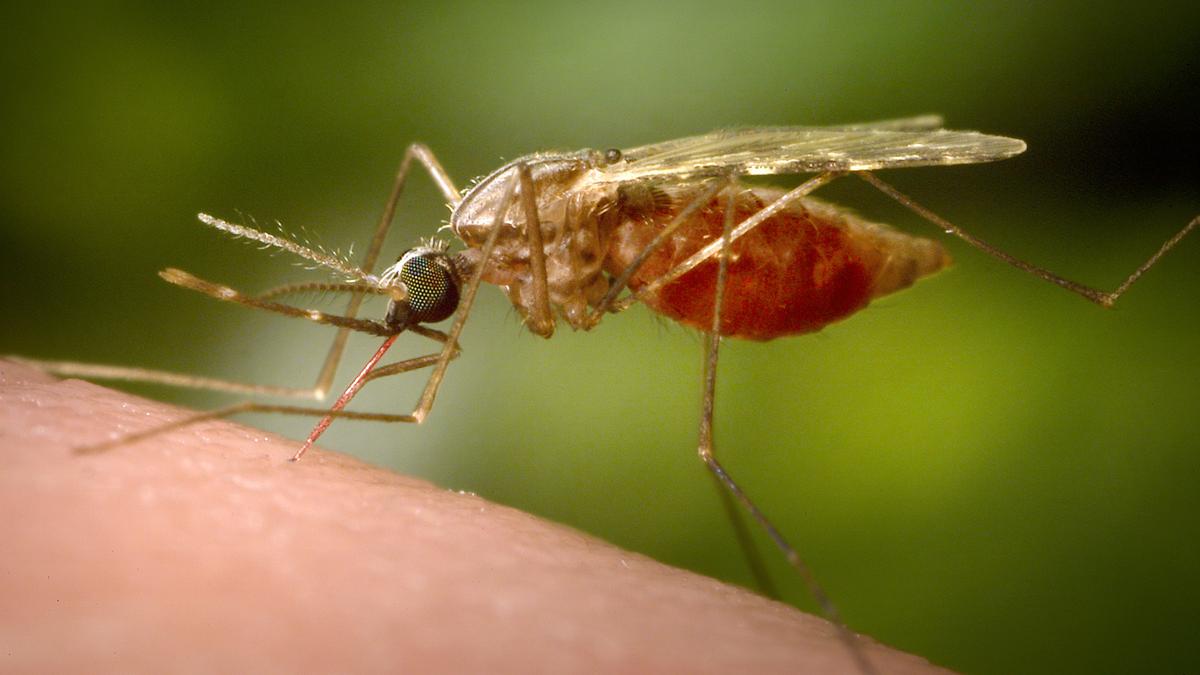
In a small trial, researchers exposed nine healthy adults who had not had malaria to 50 bites by mosquitoes that carried the genetically modified late-arresting parasites that were designed to die on day six of the liver stage, eight healthy adults with the early-arresting parasites, and three adults in the placebo group who were bitten by uninfected mosquitoes. The 50 mosquito bites were considered as one immunisation session, and the participants were exposed to three such sessions in all. Each successive immunisation session was set at 28-day interval.

Three weeks after the third immunisation session, all participants were exposed to controlled human malaria infection by means of five bites from mosquitoes infected with genetically unaltered P. falciparum parasite. This was to test the efficacy of genetically modified malaria parasites in priming the immune system.

As per the results published in the New England Journal of Medicine, the efficacy results were striking. While eight of nine (89%) participants primed by late-arresting parasites were protected from malaria when exposed to mosquitoes carrying unaltered P. falciparum parasite, only one of eight (13%) participants who were primed by early-arresting parasites was protected from malaria. No participants in the placebo arm were protected from malaria.

The titres of antibodies targeting key P. falciparum antigens in both the early-arresting and last-arresting parasite groups were far higher than those observed in the placebo group and did not differ between participants in the two intervention arms. This suggests that the vastly different timings of killing the parasites in the liver did not affect the amount of antibody produced. But there were differences in the cellular immunity in the two intervention groups. Though the overall cellular frequency T-cell lineages remained similar, certain P. falciparum-specific T cells were seen only in participants who were primed by mosquitoes carrying the last-arresting parasites. “This suggests an important independent role of late-liver-stage antigens in inducing gamma delta T-cell responses,” they write.

Sporozoites, which are the infective stage of the malaria parasite, when attenuated by radiation also offers protection against malaria. And in contrast to the genetically modified parasites used in this study, the protection offered by radiation-attenuated sporozoites against malaria ranged between 50% and 90%. However, administration of radiation-attenuated sporozoites by means of mosquito bites requires higher doses (approximately 1,000 mosquito bites) to reach levels of protection similar to the level offered by last-arresting parasites used in this study.

“Our findings suggest that parasites arresting late during the liver stage offer improved protection, as compared with early-arresting sporozoites, and provide a step toward a next-generation malaria vaccine,” they write. However, they also caution that the conclusions from the trial are limited by the small sample size, and urge that studies with greater numbers of participants be done for better understanding of both the efficacy and the safety profile of genetically modified last-arresting parasites. They also note that the “immunologic assessments were exploratory, and the relevance of the variables associated with last-arresting-induced protection needs confirmation”. Also, the durability of immune protection offered by last-arresting parasites needs to be assessed especially against heterologous P. falciparum strains where malaria is endemic.

Published – December 07, 2024 09:14 pm IST



Source link

Science

Post navigation

Previous Post: Mother Tigress Accidentally Kills Her Cub In Bengal Zoo
Next Post: Soap, home insecticides segments hit, GCPL expects flattish volume growth in India sales in Q3

Related Posts

  • Hidden craters suggest earth once had a Saturn-like ring Science
  • Copper becomes unexpectedly hard under extreme strain rate Science
  • Sun bears appear so human-like they are mistaken for people in suits – experts explain Science
  • Sci-Five | The Hindu Science Quiz: On Domesticating Animals Science
  • COVID-19: anosmia as a marker for susceptible brain damage Science
  • Galactic tides: Pushing and pulling the heavens Science

More Related Articles

Attend to | What does Tamil Nadu’s Namakkal district have in ordinary with the moon? Science
Race for Sun heats up: These are various solar missions Science
Why do rain clouds appear grey? Science
Green Humour by Rohan Chakravarty on State of India’s Birds 2023 report Science
Influenza A H5N1 detected in dairy cows in six States in the U.S. Science
Sustainability science for FMCGs – The Hindu Science
SiteLock

Archives

  • December 2024
  • November 2024
  • October 2024
  • September 2024
  • August 2024
  • July 2024
  • June 2024
  • May 2024
  • April 2024
  • March 2024
  • February 2024
  • January 2024
  • December 2023
  • November 2023
  • October 2023
  • September 2023
  • August 2023
  • July 2023
  • June 2023
  • May 2023
  • April 2023
  • March 2023
  • February 2023
  • January 2023
  • December 2022
  • November 2022
  • October 2022
  • September 2022
  • August 2022
  • July 2022
  • June 2022
  • May 2022

Categories

  • Business
  • Nation
  • Science
  • Sports
  • World

Recent Posts

  • Intermittent fasting inhibits hair regeneration in mice: study
  • How do hummingbirds drink nectar at frenetic speed?
  • 10 Bangladeshi Hindus Detained in Tripura For Illegally Entering India
  • Supriya Sule On Mamata Banerjee’s INDIA Leadership Remark
  • Devajit Saikia Appointed Acting Secretary Of BCCI

Recent Comments

  1. dfb{{98991*97996}}xca on UP Teacher Who Asked Students To Slap Muslim Classmate
  2. "dfbzzzzzzzzbbbccccdddeeexca".replace("z","o") on UP Teacher Who Asked Students To Slap Muslim Classmate
  3. 1}}"}}'}}1%>"%>'%> on UP Teacher Who Asked Students To Slap Muslim Classmate
  4. bfg6520<s1﹥s2ʺs3ʹhjl6520 on UP Teacher Who Asked Students To Slap Muslim Classmate
  5. pHqghUme9356321 on UP Teacher Who Asked Students To Slap Muslim Classmate
  • Rs 3 Crore Cash, Gold Worth Lakhs Seized During Raid On Telangana Nizamabad Municipal Corporation Civic Body Officer Nation
  • Israel Orders “Complete Siege” On Gaza, Cuts Off Food, Water: 10 Points World
  • Javed Akhtar Schools Social Media User Who Called Him “Son Of Traitor” Nation
  • Rajasthan Royals End Royal Challengers Bengaluru’s Dream Run In IPL 2024 With Four-Wicket Win Sports
  • Syrian president says efforts to restore ties with Turkey have yielded no results World
  • London’s Office Market Plunged Into ‘Rental Recession’, Meta Pays $181 Million To End Its Lease World
  • 2 Cubs Born To Cheetah Neerva Found Dead At Kuno National Park Nation
  • Malaysian PM Anwar Ibrahim warns of action against rice hoarders as prices soar World

Editor-in-Chief:
Mohammad Ariff,
MSW, MAJMC, BSW, DTL, CTS, CNM, CCR, CAL, RSL, ASOC.
editor@artifex.news

Associate Editors:
1. Zenellis R. Tuba,
zenelis@artifex.news
2. Haris Daniyel
daniyel@artifex.news

Photograher:
Rohan Das
rohan@artifex.news

Artifex.News offers Online Paid Internships to college students from India and Abroad. Interns will get a PRESS CARD and other online offers.
Send your CV (Subjectline: Paid Internship) to internship@artifex.news

Links:
Associate Journalism
About Us
Privacy Policy

News Links:
Breaking News
World
Nation
Sports
Business
Entertainment
Lifestyle

Registered Office:
72/A, Elliot Road, Kolkata - 700016
Tel: 033-22277777, 033-22172217
Email: office@artifex.news

Editorial Office / News Desk:
No. 13, Mezzanine Floor, Esplanade Metro Rail Station,
12 J. L. Nehru Road, Kolkata - 700069.
(Entry from Gate No. 5)
Tel: 033-46011099, 033-46046046
Email: editor@artifex.news

Copyright © 2023 Artifex.News Newsportal designed by Artifex Infotech.