

Skip to content
  • Facebook
  • X
  • Linkedin
  • WhatsApp
  • Associate Journalism
  • About Us
  • Privacy Policy
  • 033-46046046
  • editor@artifex.news
Artifex.News

Artifex.News

Stay Connected. Stay Informed.

  • Breaking News
  • World
  • Nation
  • Sports
  • Business
  • Science
  • Entertainment
  • Lifestyle
  • Toggle search form
  • A 500-Grave Kutch Necropolis Leads To 5,700-Year-Old Harappan Settlement Nation
  • Senior Citizen Arrested For Sexually Abusing 3-Year-Old In Bengal’s Katwa Nation
  • “Extremely Difficult But…”: Travis Head On India Ahead Of Border-Gavaskar Trophy Sports
  • In Donald Trump’s Victory Speech, Borders, Taxes, Wars Take Centrestage World
  • “If PCB Chairman Did This…”: Shahid Afridi Loses Cool As Babar Azam’s WhatsApp Chat Is Leaked Sports
  • Nomination Process Begins For Lok Sabha Elections After Poll Body Notice Nation
  • U.S. and other frustrated mediators call on Israel, Hamas to resume Gaza talks, saying, ’no excuses’ World
  • “Haven’t Spoken A Word”: Crying Hardik Pandya Calls Out His Unfair Treatment Over Last 6 Months Sports

IISc researchers devise a new language for ML models

Posted on November 20, 2024 By admin


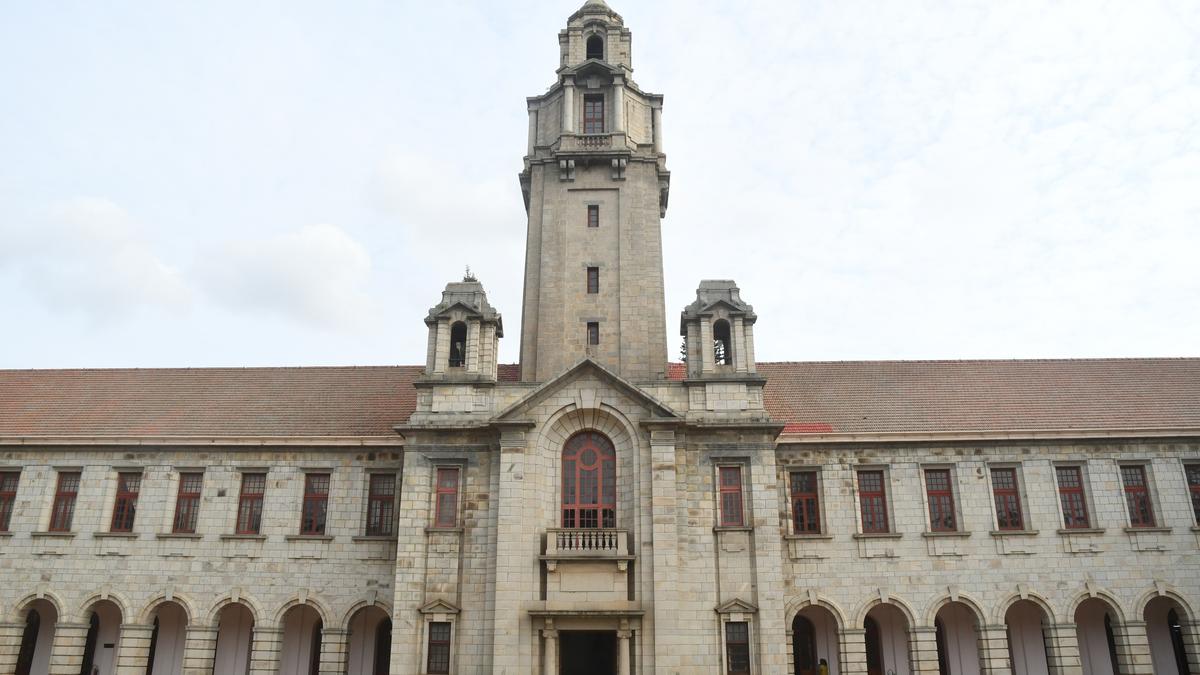
The Indian Institute of Science, Bengaluru.

Indian Institute of Science researchers have devised a new language that encodes the shape and structure of nanopores in the form of a sequence of characters.

This language devised by Ananth Govind Rajan’s lab and the study published in the Journal of the American Chemical Society can be used to train any machine learning model to predict the properties of nanopores in a wide variety of materials.

IISc said the language called STRONG (STring Representation Of Nanopore Geometry) assigns different letters to different atom configurations and creates a sequence of all the atoms on the edge of a nanopore to specify its shape.

“For instance, a fully bonded atom (having three bonds) is represented as ‘F’, and a corner atom (bonded to two atoms) is represented as ‘C’ and so on. Different nanopores have different kinds of atoms at their edge, which dictates their properties,” IISc said.

It added that STRONGs allowed the team to devise fast ways for identifying functionally equivalent nanopores having identical edge atoms, such as those related by rotation or reflection. This drastically cuts down on the amount of data that needs to be analysed for predicting nanopore properties.

Just like how ChatGPT predicts textual data, neural networks (machine learning models) can read the letters in STRONGs to understand what a nanopore will look like and predict what its properties will be, it added.

The team turned to a variant of a neural network used in Natural Language Processing that works well with long sequences and can selectively remember or forget information over time. Unlike traditional programming, in which the computer is given explicit instructions, neural networks can be trained to figure out how to solve a problem they have not encountered so far.

The team took a number of nanopore structures with known properties (like energy of formation or barrier to gas transport) and used them to train the neural network. The neural network uses this training data to figure out an approximate mathematical function, which can then be used to estimate a nanopore’s properties when given its structure in the form of STRONG letters.

It also opens up exciting possibilities for reverse engineering – creating a nanopore structure with specific properties that one is looking for, something that is particularly useful in gas separation.

Published – November 20, 2024 07:57 pm IST


Source link

Science

Post navigation

Previous Post: Xi, Lula meet in Brasilia to ‘enhance ties’
Next Post: WHO lists mpox vaccine by Japan’s KM Biologics for emergency use

Related Posts

  • Is Russia testing a new anti-satellite weapon? | Explained Science
  • Is the shallow pool in Paris really slowing Olympic swimmers down? Science
  • The Science Quiz | Remembering a star that was briefly the brightest… Science
  • Tamil Nadu creates history with India’s second privately developed rocket Science
  • The Science Quiz | Make way for the railway technologies express Science
  • Model by Chennai, Pune team predicts birth weight from routine scans Science

More Related Articles

The Science Quiz | Make way for the railway technologies express Science
Why countries struggle to eliminate fossil fuel subsidies | Explained Science
Daily Quiz | On World Bee Day – May 20, 2024 Science
Is Russia testing a new anti-satellite weapon? | Explained Science
Cashew nutshell marine biofuel causes problems for some ships: testing agency Science
India launches its 1st reusable hybrid rocket ‘RHUMI-1’ Science
SiteLock

Archives

  • November 2024
  • October 2024
  • September 2024
  • August 2024
  • July 2024
  • June 2024
  • May 2024
  • April 2024
  • March 2024
  • February 2024
  • January 2024
  • December 2023
  • November 2023
  • October 2023
  • September 2023
  • August 2023
  • July 2023
  • June 2023
  • May 2023
  • April 2023
  • March 2023
  • February 2023
  • January 2023
  • December 2022
  • November 2022
  • October 2022
  • September 2022
  • August 2022
  • July 2022
  • June 2022
  • May 2022

Categories

  • Business
  • Nation
  • Science
  • Sports
  • World

Recent Posts

  • 100 Off 28 Balls: Ex-Gujarat Titans Star Urvil Patel Surpasses Rishabh Pant For ‘Fastest’ T20 Record
  • Worst November snowstorm in half century hits Seoul, grounds hundreds of airplane flights
  • Joe Biden Proposes Expansion Of Weight Loss Drug Access, Trump Cabinet Differs
  • Hardeep Singh Puri Says Russia Is Now Largest Supplier Of Crude Oil To India
  • As Arctic climate warms, even Santa runs short of snow

Recent Comments

  1. dfb{{98991*97996}}xca on UP Teacher Who Asked Students To Slap Muslim Classmate
  2. "dfbzzzzzzzzbbbccccdddeeexca".replace("z","o") on UP Teacher Who Asked Students To Slap Muslim Classmate
  3. 1}}"}}'}}1%>"%>'%> on UP Teacher Who Asked Students To Slap Muslim Classmate
  4. bfg6520<s1﹥s2ʺs3ʹhjl6520 on UP Teacher Who Asked Students To Slap Muslim Classmate
  5. pHqghUme9356321 on UP Teacher Who Asked Students To Slap Muslim Classmate
  • Rebel group takes key Myanmar border town, rare earth mining hub in setback for military regime World
  • North Korea Says “Will Build Overwhelming Military Power” World
  • Venezuela Opposition Presidential Candidate Leaves For Spain As Diplomatic Tensions Rise World
  • New Video Shows What Virat Kohli Actually Did When Hardik Pandya Was Getting Booed. Watch Sports
  • Dramatic Visuals As Rohit Sharma Faces Security Scare At T20 World Cup Warm-Up, US Police Does This Sports
  • Nirmala Sitharaman Slams Siddaramaiah Over Bengaluru Water Crisis Nation
  • Why are Katchatheevu pacts being questioned? | Explained World
  • Bayern Munich’s Manuel Neuer To Make Comeback After Year Out Sports

Editor-in-Chief:
Mohammad Ariff,
MSW, MAJMC, BSW, DTL, CTS, CNM, CCR, CAL, RSL, ASOC.
editor@artifex.news

Associate Editors:
1. Zenellis R. Tuba,
zenelis@artifex.news
2. Haris Daniyel
daniyel@artifex.news

Photograher:
Rohan Das
rohan@artifex.news

Artifex.News offers Online Paid Internships to college students from India and Abroad. Interns will get a PRESS CARD and other online offers.
Send your CV (Subjectline: Paid Internship) to internship@artifex.news

Links:
Associate Journalism
About Us
Privacy Policy

News Links:
Breaking News
World
Nation
Sports
Business
Entertainment
Lifestyle

Registered Office:
72/A, Elliot Road, Kolkata - 700016
Tel: 033-22277777, 033-22172217
Email: office@artifex.news

Editorial Office / News Desk:
No. 13, Mezzanine Floor, Esplanade Metro Rail Station,
12 J. L. Nehru Road, Kolkata - 700069.
(Entry from Gate No. 5)
Tel: 033-46011099, 033-46046046
Email: editor@artifex.news

Copyright © 2023 Artifex.News Newsportal designed by Artifex Infotech.