


Skip to content
  • Facebook
  • X
  • Linkedin
  • WhatsApp
  • Associate Journalism
  • About Us
  • Privacy Policy
  • 033-46046046
  • editor@artifex.news
Artifex.News

Artifex.News

Stay Connected. Stay Informed.

  • Breaking News
  • World
  • Nation
  • Sports
  • Business
  • Science
  • Entertainment
  • Lifestyle
  • Toggle search form
  • Pakistan’s Problems In Cricket World Cup 2023: Haris Rauf’s Poor Game Awareness, Lack Of Good Spinners Sports
  • Seat-Sharing To Be On Agenda At INDIA’s First Coordination Panel Meet Today Nation
  • Maharashtra Independent MP Navneet Rana Joins BJP Nation
  • Assam Police Sub-Inspector Caught Red-Handed While Accepting Bribe, Arrested Nation
  • India, Ghana Agree To Operationalise UPI Link Within 6 Months Nation
  • BJP MP Writes To Anti-Corruption Watchdog For Probe Against Mahua Moitra Nation
  • Rishi Sunak Flags Interference Concerns To China Premier After Spy Arrest World
  • How the Widal test is clouding India’s sense of its typhoid problem | Explained Science

Stoneflies change colour in response to deforestation, suggesting humans can alter evolution

Posted on October 30, 2024 By admin


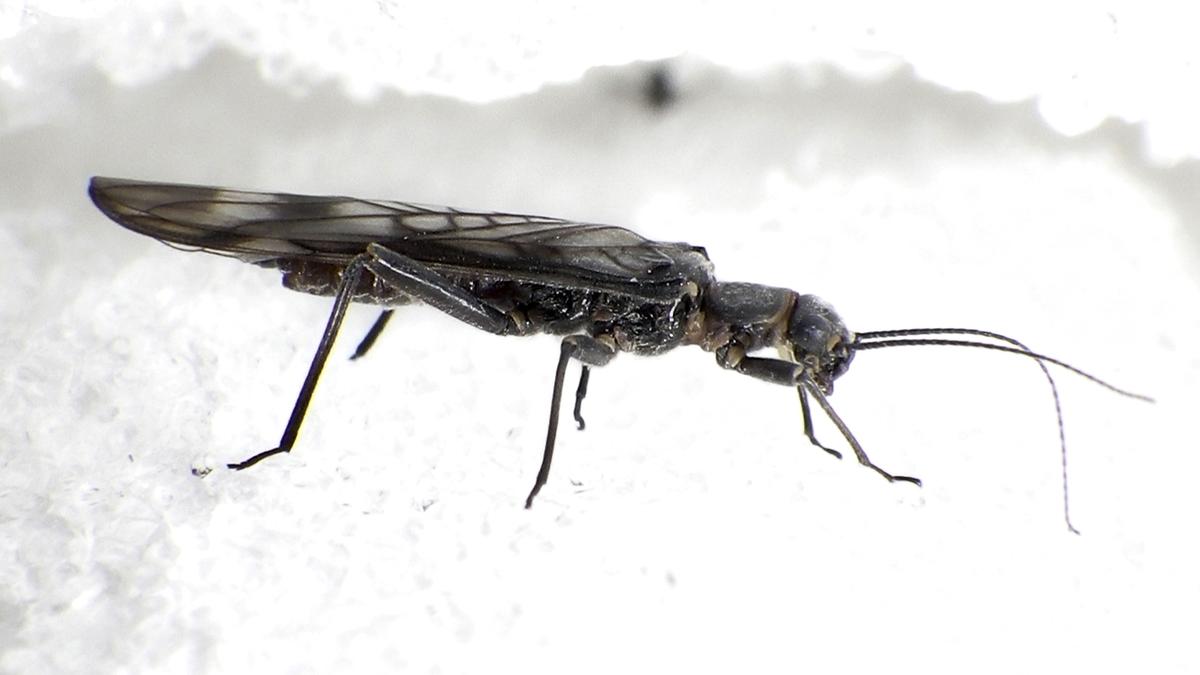
Scientists are worried we might also be altering the evolutionary trajectories of the species that live alongside us, perhaps even including some irreversible shifts.
| Photo Credit: AP

As we continue to change the planet, scientists are worried we might also be altering the evolutionary trajectories of the species that live alongside us, perhaps even including some irreversible shifts.

Certainly, the evidence for change is everywhere. As the planet warms, species’ ranges are shifting and their life cycles are changing. As we harvest the largest fish in the ocean, the species affected are now maturing at smaller sizes.

But are these shifts we observe in wild populations underpinned by genetic changes (mutations in the DNA) or are they simply flexible responses to environmental change? If the changes are genetic, how are they happening?

So far, researchers have observed fewer clear-cut examples of human-induced evolution in the wild than one might imagine. But our new study may provide a new “textbook” case of human-driven evolution in wild insects.

Our findings are centred on an intriguing case of “mimicry” from New Zealand, in which a harmless insect has evolved to mimic the warning colours of a highly toxic species.

Forest removal drives colour shift

Convincingly demonstrating “evolution in action” involves finding the agents of natural selection (environmental factors driving the change) and discovering the genetic mechanism.

Until now, the peppered moth was the “classic” example of human-driven evolution. Dark-coloured specimens of the moth suddenly appeared during the 19th century. It was a likely response to industrial pollution which meant light-coloured individuals were no longer blending in to the increasingly sooty British environment. Despite its broad appeal, some aspects of even this famous case have been criticised as unclear and anecdotal.

We worked on stoneflies and the impact of deforestation.

The black stonefly Austroperla lives in forests. It produces cyanide to deter potential predators, and to advertise its toxicity this species has high-contrast black, white and yellow markings, reminiscent of wasp colouration.

The non-toxic Zelandoperla stonefly has evolved astonishingly similar warning colouration, apparently to trick predators (forest birds) into assuming that it, too, is toxic. The intricate and unique ecological interactions between these insects and their predators have apparently evolved together over millions of years.

Where do humans come into this story? Aotearoa New Zealand was the last major landmass to be colonised by people. In many places the human impacts on its ecosystems have been devastating.

In addition to species extinctions, New Zealand has lost much of its original native forest cover in just a few centuries. This deforestation has wiped out countless populations of forest birds, along with the poisonous, forest-dependent Austroperla.

Our study reveals this widespread deforestation has also proven a game changer for the stonefly “mimic”. As its predators and the poisonous species it mimics have vanished from many regions, there is no longer much point in displaying warning colouration.

In an astonishing about-turn, Zelandoperla populations from deforested habitats have quickly lost their spectacular “mimic” colouration. It turns out that the production of this intricate colouration was costly, and when no longer essential, evolution rapidly removed it – in a case of “use it or lose it”.

Genetic change

In our study, we compared insect populations across several parts of the South Island. We found a remarkably consistent picture. The removal of forest has driven similar colour shifts across different deforested regions.

The finding that evolutionary change can be “predictable” offers hope that scientists can use evolutionary theory to predict future biodiversity shifts.

How do we know birds have played a key role in this rapid colour change? By placing stonefly models of different colours in a variety of habitats, we were able to demonstrate that birds only avoid attacking stoneflies with the “warning” colouration when they are in forests.

Another challenge was to show that this colour change represents evolution at the DNA level rather than a flexible response to environmental change. We looked at genetic variation across the Zelandoperla genome and found that just a single gene – ebony – is almost completely responsible for this colour evolution.

Our study also reveals the pace of evolutionary change. By comparing regions deforested soon after human arrival (for example Central Otago, which was deforested around 600 to 700 years ago) with those cleared much more recently (Otago Peninsula, 150 years ago), we show that evolution has proceeded steadily yet inexorably over this human timeframe.

On the positive side, the finding that at least some of our native species can adapt in the face of rapid environmental change suggests ongoing resilience of our native biodiversity. However, our results also highlight how quickly the intricate interactions that have evolved among native species over millennia can be lost from disturbed ecosystems.

These new findings raise tantalising questions about the potential to reverse the negative impacts of deforestation on our native biodiversity. In particular, our increasing focus on reforestation and ecological restoration provides hope for restoring the complex ecosystems we have inherited.

This article is republished from The Conversation under a Creative Commons license. Read the original article here.

Published – October 30, 2024 03:41 pm IST



Source link

Science Tags:animal science, evolution of animals, evolution of animals altered by humans, science news, stoneflies change colour

Post navigation

Previous Post: Spanish authorities report at least 51 dead from devastating flash floods
Next Post: “Huge Difference”: Ex-Australia Skipper On Mohammed Shami’s Absence From Upcoming Border-Gavaskar Trophy

Related Posts

  • NCBS museum hosts bee species from across India to spur research Science
  • The Science Quiz | Promethium bound… Science
  • Astronomers finally detect a rocky planet with an atmosphere Science
  • Scientists find proof pain-sensing cells are either male or female Science
  • Pentagon study finds no sign of alien life in reported UFO sightings going back decades Science
  • Sun-observing spacecraft sheds light on the solar wind’s origin Science

More Related Articles

When did an uptick in dental cavities in humans begin? Science
Gay penguin Sphen dies in Sydney, leaving behind partner Magic Science
Tiny carbon ‘flowers’ turn light to heat at unrivalled efficiency, IIT team finds Science
Since every King Cobra looks the same, you need microchips Science
ISRO to hold more test Gaganyaan vehicle missions after maiden test flight on Oct 21: Chairman Somanath Science
How an altered protein and fussy neurons conspire to cause microcephaly Science
SiteLock

Archives

  • October 2024
  • September 2024
  • August 2024
  • July 2024
  • June 2024
  • May 2024
  • April 2024
  • March 2024
  • February 2024
  • January 2024
  • December 2023
  • November 2023
  • October 2023
  • September 2023
  • August 2023
  • July 2023
  • June 2023
  • May 2023
  • April 2023
  • March 2023
  • February 2023
  • January 2023
  • December 2022
  • November 2022
  • October 2022
  • September 2022
  • August 2022
  • July 2022
  • June 2022
  • May 2022

Categories

  • Business
  • Nation
  • Science
  • Sports
  • World

Recent Posts

  • KL Rahul Released By LSG, Owner Goenka Brutally Trolled For Saying This
  • Google Wins Trademark Lawsuit Over YouTube Shorts, Court Rules No Confusion
  • Rocket fire from Lebanon kills 5 in deadliest attack on northern Israel since invasion
  • A collection of pictures from across the country of Diwali Celebrations on October 31, 2024.
  • HDFC Bank unit HDB Financial Services files with SEBI for ₹12,500 crore IPO

Recent Comments

  1. dfb{{98991*97996}}xca on UP Teacher Who Asked Students To Slap Muslim Classmate
  2. "dfbzzzzzzzzbbbccccdddeeexca".replace("z","o") on UP Teacher Who Asked Students To Slap Muslim Classmate
  3. 1}}"}}'}}1%>"%>'%> on UP Teacher Who Asked Students To Slap Muslim Classmate
  4. bfg6520<s1﹥s2ʺs3ʹhjl6520 on UP Teacher Who Asked Students To Slap Muslim Classmate
  5. pHqghUme9356321 on UP Teacher Who Asked Students To Slap Muslim Classmate
  • Kohli and Rohit know the formula to earn one final hurrah Sports
  • In a single finger bone, scientists find signs of Britain’s largest flying animal Science
  • After Mukhtar Ansari’s Death, Akhilesh Yadav Demands Supreme Court Probe Over ‘Doubtful’ Cases Nation
  • What are the key details of India’s pact with the European Free Trade Association? Business
  • Don’t Drag Us Into Your Agenda, Supreme Court To Child Rights Body Nation
  • Delhi Cops Crack Kidney Sale Racket Operating Across 5 States Nation
  • Cocaine Worth Rs 21 Crore Found In Woman’s Bags, Footwear At Chennai Airport Nation
  • Expert Praises Joe Biden’s Wife Jill Debate After His Debate With Donald Trump World

Editor-in-Chief:
Mohammad Ariff,
MSW, MAJMC, BSW, DTL, CTS, CNM, CCR, CAL, RSL, ASOC.
editor@artifex.news

Associate Editors:
1. Zenellis R. Tuba,
zenelis@artifex.news
2. Haris Daniyel
daniyel@artifex.news

Photograher:
Rohan Das
rohan@artifex.news

Artifex.News offers Online Paid Internships to college students from India and Abroad. Interns will get a PRESS CARD and other online offers.
Send your CV (Subjectline: Paid Internship) to internship@artifex.news

Links:
Associate Journalism
About Us
Privacy Policy

News Links:
Breaking News
World
Nation
Sports
Business
Entertainment
Lifestyle

Registered Office:
72/A, Elliot Road, Kolkata - 700016
Tel: 033-22277777, 033-22172217
Email: office@artifex.news

Editorial Office / News Desk:
No. 13, Mezzanine Floor, Esplanade Metro Rail Station,
12 J. L. Nehru Road, Kolkata - 700069.
(Entry from Gate No. 5)
Tel: 033-46011099, 033-46046046
Email: editor@artifex.news

Copyright © 2023 Artifex.News Newsportal designed by Artifex Infotech.