



Skip to content
  • Facebook
  • X
  • Linkedin
  • WhatsApp
  • YouTube
  • Associate Journalism
  • About Us
  • Privacy Policy
  • 033-46046046
  • editor@artifex.news
Artifex.News

Artifex.News

Stay Connected. Stay Informed.

  • Breaking News
  • World
  • Nation
  • Sports
  • Business
  • Science
  • Entertainment
  • Lifestyle
  • Toggle search form
  • Is Trump justified in asking EU to buy more oil and gas from the U.S.?
    Is Trump justified in asking EU to buy more oil and gas from the U.S.? World
  • Azerbaijan plane crash: Russian President Vladimir Putin apologises to Azerbaijani leader for ‘tragic incident’
    Azerbaijan plane crash: Russian President Vladimir Putin apologises to Azerbaijani leader for ‘tragic incident’ World
  • Disqualified Himachal Congress MLAs Threaten To “Expose” Sukhvinder Sukhu
    Disqualified Himachal Congress MLAs Threaten To “Expose” Sukhvinder Sukhu Nation
  • How Central Europe’s ’water guardians’ are fighting desertification
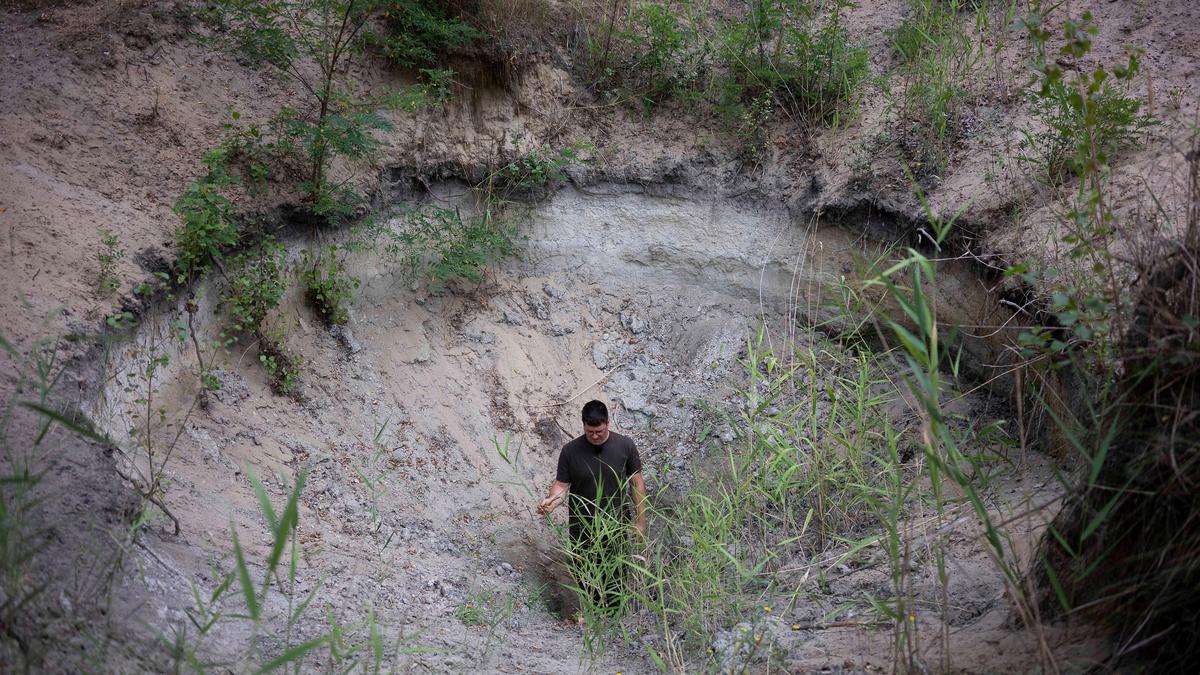
    How Central Europe’s ’water guardians’ are fighting desertification Science
  • RANJI TROPHY | Tripura’s batting wilts after a game fight, Hyderabad a mere 13 behind
    RANJI TROPHY | Tripura’s batting wilts after a game fight, Hyderabad a mere 13 behind Sports
  • “Even MS Dhoni Made Blunders But Rohit Sharma Never Did”: Ex-CSK Star
    “Even MS Dhoni Made Blunders But Rohit Sharma Never Did”: Ex-CSK Star Sports
  • India Lifts Ban On Export Of Non-Basmati White Rice
    India Lifts Ban On Export Of Non-Basmati White Rice Nation
  • Access Denied World
Black holes in Webb data allay threat to cosmology’s standard model

Black holes in Webb data allay threat to cosmology’s standard model

Posted on October 22, 2024 By admin


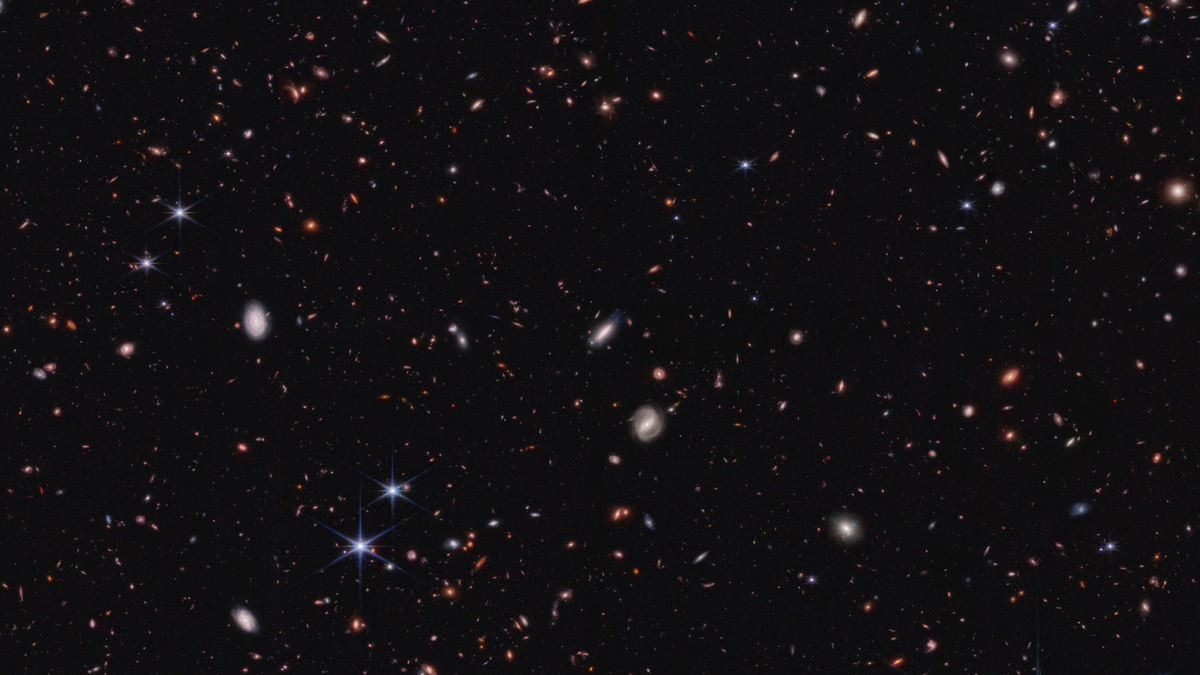
Since NASA launched the James Webb Space Telescope (JWST) almost three years ago, astronomers have been actively searching for clues about how galaxies grew in the early universe. This universe was a dark place: there is no light from this period to tell us how the first stars and galaxies formed, yet uncovering these processes could help answer key questions like the role of dark matter in the early universe.

So when astronomers recently pored through JWST, they were surprised to find monstrous structures when the universe was only a few hundred million years old, instead of infant galaxies.

The universe began with a Big Bang about 13.8 billion years ago as a hot, dense mixture of gases and subatomic particles. Over time, the universe expanded and cooled, allowing the particles to separate from the mixture and become independent clumps of matter. The gradual and continuous cooling of the universe eventually created larger structures such as stars, galaxies, and galaxy clusters.

According to the standard model of cosmology, which attempts to explain the universe’s origins and evolution, the first stars formed around 100-200 million years after the Big Bang and the first galaxies within the first billion years.

But JWST was revealing massive, fully-developed galaxies, that too in greater numbers than expected, only around 400-650 million years after the Big Bang. This mismatch became a source of intrigue among researchers, who had to figure out what was wrong with their standard model.

Now, a study published on August 26 in the Astrophysical Journal by an international team, led by Katherine Chworowsky and Steven Finkelstein at the University of Texas at Austin, offers a promising explanation.

Deep into the universe

Distant galaxies are faint and detecting them requires advanced telescopes, Prerana Biswas, a postdoctoral researcher at the Indian Institute of Astrophysics, Bengaluru, explained. (She wasn’t involved in the new study.)

This means, first, a telescope with a large primary mirror. The Hubble Space Telescope has a 2.4-m-wide primary mirror while JWST’s mirror is 6.5 m wide. Second, the telescope will have to be very sensitive, which relates to its ability to record data at different wavelengths. The Hubble operates in the optical, ultraviolet, and some infrared wavelengths, while JWST is specifically designed for infrared observations with a focus on studying the early universe. This is because visible and ultraviolet light from distant galaxies shift to the infrared wavelengths as the universe expands.

In the new study, researchers analysed data from the JWST’s Cosmic Evolution Early Release Science (CEERS) Survey, which Finkelstein leads. They focused on galaxies that existed when the universe was 650-1,500 million years old.

According to the team, one possible explanation for a larger number of massive galaxies in the early universe is that these galaxies manufactured stars more efficiently than the galaxies of today.

Biman Nath, a professor of astronomy and astrophysics at the Raman Research Institute, Bengaluru, said the higher efficiency of star formation “wouldn’t affect the large-scale structure” of the universe “because the bulk of these large-scale structures is produced by dark matter, so what happens to a tiny fraction of normal matter (whether or not they produce stars at a faster rate) wouldn’t affect it.”

He added that the specifics of whether the modified efficiency contradicts the current understanding of galaxy formation needs to be worked out. Biswas agreed, saying that if this value is found to have been higher in the early universe, existing models of galaxy growth and evolution may need to be reworked.

A secret ingredient

The researchers also examined the black holes at the centres of these ancient galaxies. These objects are also called “little red dots” because of what the light from their direction looks like. These black holes rapidly consume the galaxies’ gas, causing the latter to emit heat and light.

“The fact that massive black holes contribute to the total light emitted by their host galaxies has been known for some time, and there has been research and work done to disentangle light coming from black holes from the light coming from stars to accurately measure” the masses of stars in galaxies, Chworowsky said.

“However, before JWST, we had not seen galaxies that looked specifically like little red dots, therefore it was not known that they often hosted black holes until they had been independently studied,” she added.

In other words, the star mass of galaxies may have been overstated in previous studies thanks to the additional light emitted by their black holes. When the researchers in the new study removed these little red dots from their data for analysis, they found that the galaxies weren’t as massive as previously estimated, thus sparing the standard model of cosmology from revision.

The bottom line

The researchers wrote in their paper that the standard model could explain more efficient star formation in the early universe in the form of the extreme physical conditions and abundant gas. Catastrophic events like supernovae and stellar winds were also less effective then at disrupting star formation.

“The standard model of cosmology remains the most successful framework for describing our universe,” Biswas said. “There are only a handful of studies that contradict this model. It is not surprising that JWST observations align with its predictions. It would be far more surprising if these observations challenged this model.”

Previous JWST observations of massive, well-developed galaxies in the early universe had questioned the standard model, including the universe’s age, the timeline for the formation of the first galaxies, and galaxy formation theories. For example, a recent study used JWST data to say spiral galaxies could have emerged in the universe within 1.5 billion years, much earlier than previously expected. As evidence the researchers pointed to an exceptional star formation rate and larger galaxy sizes — but these conclusions could be overturned now. The authors of this study declined to comment.

Nath, who wasn’t involved with the new study, added that the problem of observations not matching the standard model’s predictions “become acute when the JWST observations of even earlier galaxies are considered, going back to when the universe was around 400 million years old.”

Chworowsky said the team is working on including more data from JWST in addition to CEERS. “This will give us the ability both to push this analysis to higher redshifts and higher masses, as those galaxies are rarer and we’re more likely to be able to find them in larger sets of data.”

Expanding the data set will help researchers get a better sense of the current results and develop a more comprehensive understanding of the formation of massive galaxies in the early universe.

“I am happy to see that astronomers are working towards these problems,” Nath said. “Maybe it is possible, after all, to find some explanation within the current models.”

Shreejaya Karantha is a freelance science writer and a content writer and research specialist at The Secrets of The Universe.

Published – October 22, 2024 05:30 am IST



Source link

Science

Post navigation

Previous Post: 3 Killed, 2 Injured In Road Accident In UP’s Mathura: Cops
Next Post: Over 5,000 Drones To Take Part In Amaravati Drone Summit 2024

Related Posts

  • BrainyBotz STEM Challenge 2026: Young innovators to design cooler homes
    BrainyBotz STEM Challenge 2026: Young innovators to design cooler homes Science
  • How fossil fuels built the modern world | The Scope
    How fossil fuels built the modern world | The Scope Science
  • When welfare met demographic concerns
    When welfare met demographic concerns Science
  • How superfast studies of the photoelectric effect are revealing matter’s secrets
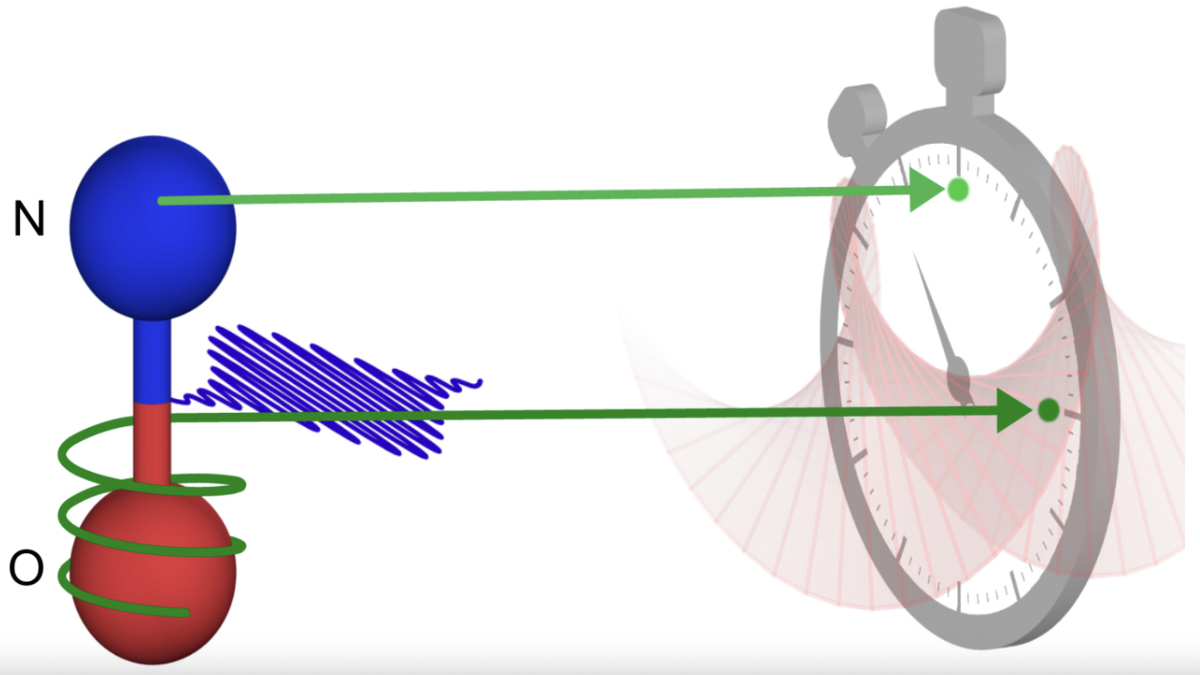
    How superfast studies of the photoelectric effect are revealing matter’s secrets Science
  • China’s spacecraft carrying rocks from the far side of the moon leaves the lunar surface
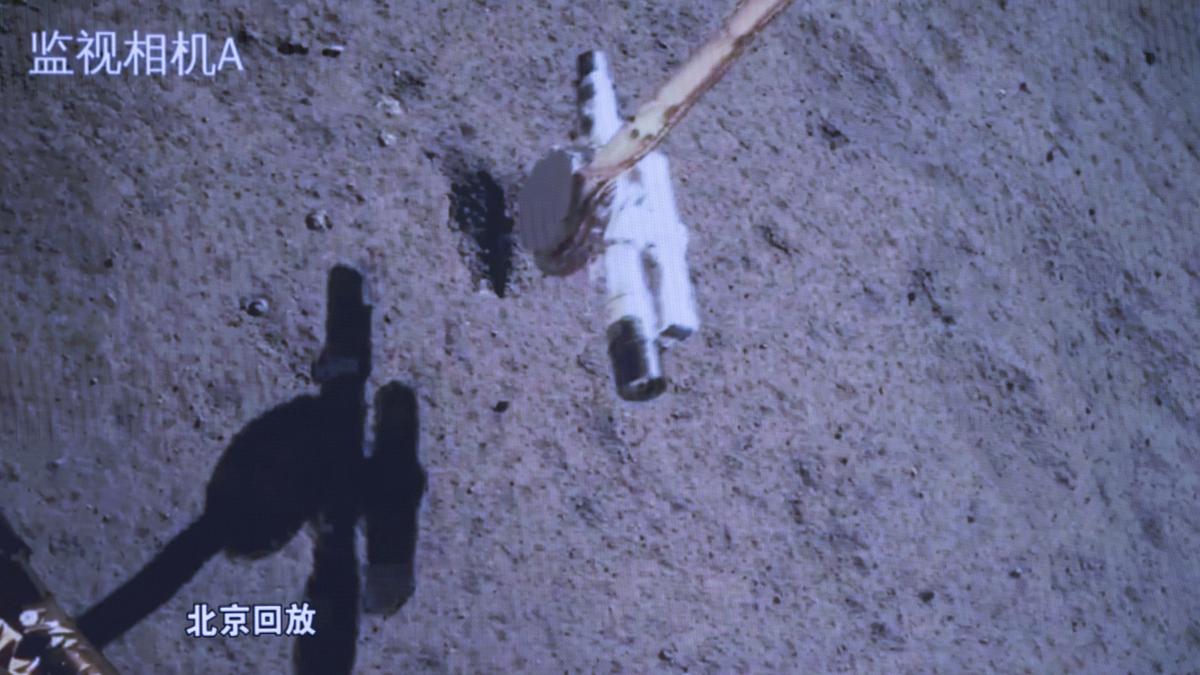
    China’s spacecraft carrying rocks from the far side of the moon leaves the lunar surface Science
  • How does using the AC affect a car’s mileage while driving?
    How does using the AC affect a car’s mileage while driving? Science

More Related Articles

NZ treaty may allow people to sue on ‘behalf of whales’ NZ treaty may allow people to sue on ‘behalf of whales’ Science
What are rare-earth elements and why is everyone looking for them? | Explained What are rare-earth elements and why is everyone looking for them? | Explained Science
International Space Summit gets underway in Paris International Space Summit gets underway in Paris Science
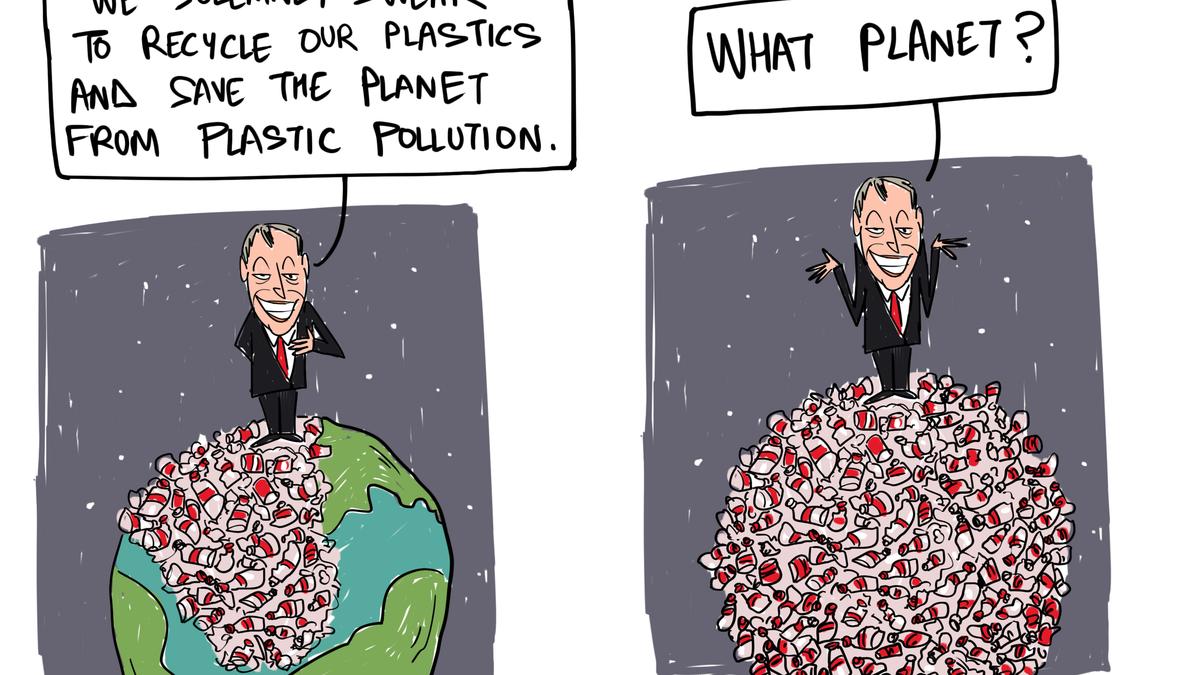
Green Humour by Rohan Chakravarty on Coca Cola going back on their plastic recycling goals Green Humour by Rohan Chakravarty on Coca Cola going back on their plastic recycling goals Science
Scientists found a bacteria tricked a wasp to get rid of its males Scientists found a bacteria tricked a wasp to get rid of its males Science
How are zebrafishes able to repair damaged hearts? How are zebrafishes able to repair damaged hearts? Science
SiteLock

Archives

  • October 2026
  • September 2026
  • August 2026
  • July 2026
  • June 2026
  • May 2026
  • April 2026
  • March 2026
  • February 2026
  • January 2026
  • December 2025
  • November 2025
  • October 2025
  • September 2025
  • August 2025
  • July 2025
  • June 2025
  • May 2025
  • April 2025
  • March 2025
  • February 2025
  • January 2025
  • December 2024
  • November 2024
  • October 2024
  • September 2024
  • August 2024
  • July 2024
  • June 2024
  • May 2024
  • April 2024
  • March 2024
  • February 2024
  • January 2024
  • December 2023
  • November 2023
  • October 2023
  • September 2023
  • August 2023
  • July 2023
  • June 2023
  • May 2023
  • April 2023
  • March 2023
  • February 2023
  • January 2023
  • December 2022
  • November 2022
  • October 2022
  • September 2022
  • August 2022
  • July 2022
  • June 2022
  • May 2022

Categories

  • Business
  • Nation
  • Science
  • Sports
  • World

Recent Posts

  • UN chief says ‘subsidising fossil fuels is subsidising suicide’
  • 150 pairs of buffalos coming to Mysuru for Dasara
  • Aaditya Thackeray to join Pune MPSC protest, backs demand for chairperson’s exit
  • Scientists decode solar eruptions using Aditya-L1, Proba-3
  • Drone strikes in the Black Sea raise fears of Russian escalation to test NATO’s response

Recent Comments

  1. Davidbrurf on UP Teacher Who Asked Students To Slap Muslim Classmate
  2. Danielwhipt on UP Teacher Who Asked Students To Slap Muslim Classmate
  3. Danielwhipt on UP Teacher Who Asked Students To Slap Muslim Classmate
  4. CharlesGah on UP Teacher Who Asked Students To Slap Muslim Classmate
  5. Danielwhipt on UP Teacher Who Asked Students To Slap Muslim Classmate
  • Access Denied Business
  • Access Denied Business
  • Access Denied Sports
  • Need forces DR Congo gold miners to keep working despite Ebola
    Need forces DR Congo gold miners to keep working despite Ebola Science
  • Security Personnel Killed In Encounter With Naxals In Chhattisgarh
    Security Personnel Killed In Encounter With Naxals In Chhattisgarh Nation
  • Virat Kohli Gives A Mouthful To Rachin Ravindra After CSK Star’s Dismissal, Gesture Viral. Watch
    Virat Kohli Gives A Mouthful To Rachin Ravindra After CSK Star’s Dismissal, Gesture Viral. Watch Sports
  • China evacuates 20,000 people as Typhoon Noul nears
    China evacuates 20,000 people as Typhoon Noul nears World
  • India and EU to give each other Most Favoured Nation status for 5 years, draft trade deal shows
    India and EU to give each other Most Favoured Nation status for 5 years, draft trade deal shows Nation

Editor-in-Chief:
Mohammad Ariff,
MSW, MAJMC, BSW, DTL, CTS, CNM, CCR, CAL, RSL, ASOC.
editor@artifex.news

Associate Editors:
1. Zenellis R. Tuba,
zenelis@artifex.news
2. Haris Daniyel
daniyel@artifex.news

Photograher:
Rohan Das
rohan@artifex.news

Associate Journalists
1. Subrata Paul - AN/2020/01
2. Quamruz Zaman - AN/2021/22
3. Ahmed Sha - AN/2021/035
4. Ajay Kumar Shaw - AN/2021/39
5. Tahqiqul Hoda - AN/2021/21

Artifex.News offers Online Paid Internships to college students from India and Abroad. Interns will get a PRESS CARD and other online offers.
Send your CV (Subjectline: Paid Internship) to internship@artifex.news

Links:
Associate Journalism
About Us
Privacy Policy

News Links:
Breaking News
World
Nation
Sports
Business
Entertainment
Lifestyle

Registered Office:
72/A, Elliot Road, Kolkata - 700016
Tel: 033-22277777, 033-22172217
Email: office@artifex.news

Editorial Office / News Desk:
No. 13, Mezzanine Floor, Esplanade Metro Rail Station,
12 J. L. Nehru Road, Kolkata - 700069.
(Entry from Gate No. 5)
Tel: 033-46011099, 033-46046046
Email: editor@artifex.news

Copyright © 2023 Artifex.News Newsportal designed by Artifex Infotech.