
A few days ago, Sujatha Rao, former Union Secretary of the Health Ministry, quit the Lancet Citizens’ Commission on Reimagining India’s Health System. In 2020, the Union government intensified its efforts to privatise health care in India when NITI Aayog proposed and Finance Minister Nirmala Sitharaman announced in her budget speech that district hospitals will be attached with private medical colleges in a public-private partnership (PPP) mode. This came a year after the Health Ministry issued guidelines for setting up private medical colleges in a PPP mode.
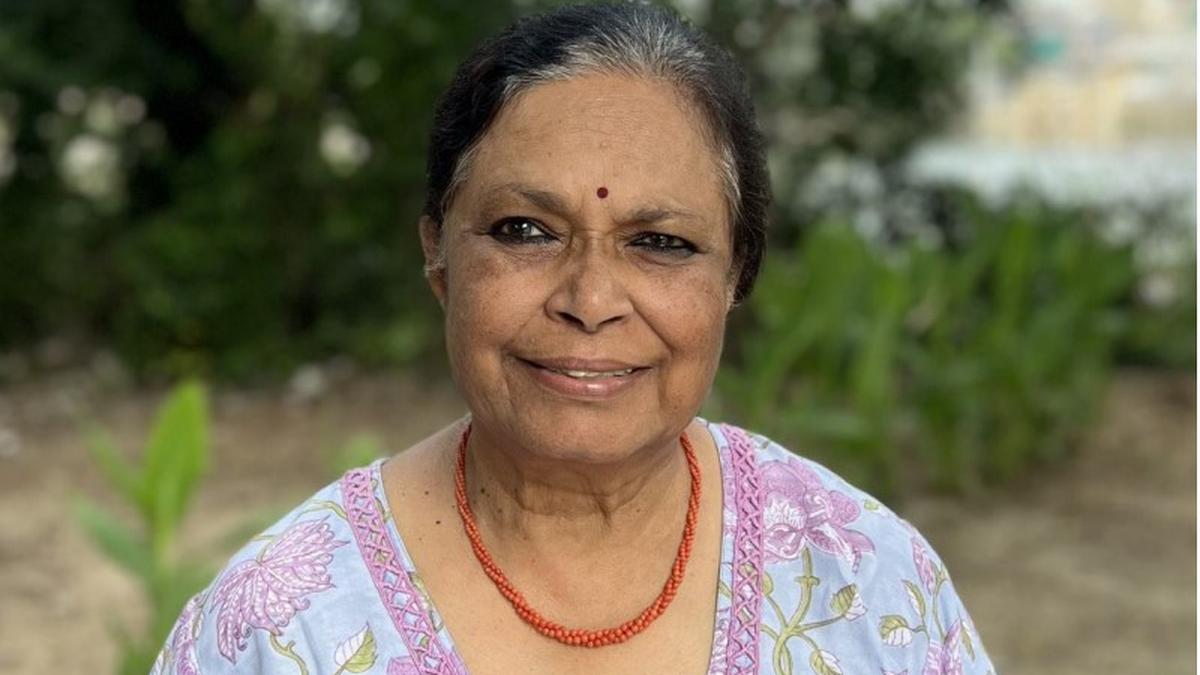
In an email, Ms. Rao shares her views on the perils of increased privatisation of health care in the country.
In July 2024, Madhya Pradesh government issued a notification to privatise 10 district hospitals with 25% of beds reserved for paying patients. Can privatisation of district hospitals in PPP mode “improve health infrastructure” while making healthcare freely accessible to poor people?

For Madhya Pradesh this is the fourth attempt to hand over public facilities to private parties. I am told that each hospital is proposed to be “leased” out for 30 years against a down payment of about Rs.260 crores. Apparently, this is being executed by the Finance department under the 2019 Central government scheme that consists of providing 60% of the total project cost as viability gap funding, land and other assets and allowing100% operational cost recovery in lieu of keeping 75% of the beds for free treatment. The private sector cannot provide free care unless it establishes a medical college charging hefty capitation to cross subsidise. Even then it is difficult. And with weak capacity to enforce conditions this too will go down as the old scheme of giving land and custom duty exemptions in lieu of 10% free beds and 50% free outpatient (OP).
 What challenges can arise when district hospitals are attached with private medical colleges in PPP mode?
This hybrid model is unworkable as can be seen in Chittoor in Andhra Pradesh and elsewhere where the private party was allowed to establish a medical college by attaching the 300-bed district hospital. The private party has its own staff and uses the hospital for its own requirements, while the hospital is run by the government staff, creating dual control, confusion, and much bitterness. Instead, the private party could have had an MOU with the government and paid fees for using the hospital for training purposes. The government hospital would have earned revenues, and improved the infrastructure while being in command of the hospital’s functioning. Since it will be impossible for our weak/soft State to dislodge the private party that has access to prime property and assets worth several crores free, over time, the government will withdraw and the poor in that district will lose access to good care. If contract management is weak, PPPs can end up with public assets going into private hands, and the government abdicating its responsibility to provide cost effective affordable/free care to its citizens.
Will privatisation lead to a situation where relatively healthier patients who pay for services are selected, as seen in some developed countries?
It is not privatisation that selects, but insurance. Insurance can be viable only if there is a large basis of young, healthy males as opposed to old, sick, or women in the reproductive age group. Again, private for profit prefer those with ability to pay — for example, see the differential care provided to high-paying medical tourists and Indian patients.
Can the U.S. model of Managed Care be appropriate for India, considering the large population of poor people?
While all health systems try to follow the principles of Managed Care — keeping people healthy, preventing illness, reducing hospital services and ensuring continuum of care in case of chronic disease — the U.S. model of managed care is based on an insurance model where a person becomes a member of the network based on his ability to pay the premium. Such systems are seen to have a selection bias, deny critical and timely care, and create several such barriers and do not help contain cost of care. Instead, they exacerbate inequality. Given that India’s primary care is chaotic with different systems of medicine, varied levels of competencies of providers and so on, a U.S. style of managed care model can not only further exacerbate the existing inequalities but also make health care costly, more so as we lack the regulatory capacity to manage contradictions and redress grievances.
In absence of any social security, will privatisation of health care in India be a recipe for disaster?
India’s health system is the most privatised but it is unregulated and makes access to good quality care a privilege. In neglecting health by allocating measly budgets, refusing to put a strong regulatory system to reduce the adverse effects of market failures, allowing brazen profiteering as seen during the COVID-19 pandemic, and virtually abdicating the obligatory duty of providing universal access to comprehensive primary health care services free at point of service, by taking the easy and lazy route of expanding insurance or selling public hospitals to investors, the Indian State has become unfair and unjust as a fifth of its citizens are unable to avail medical care due to their inability to pay. Nearly 60 million people are driven to penury paying medical bills. So yes, an unregulated for-profit commercialisation of health services can be a recipe for disaster.
Published – September 21, 2024 09:09 pm IST