






Skip to content
  • Facebook
  • X
  • Linkedin
  • WhatsApp
  • Associate Journalism
  • About Us
  • Privacy Policy
  • 033-46046046
  • editor@artifex.news
Artifex.News

Artifex.News

Stay Connected. Stay Informed.

  • Breaking News
  • World
  • Nation
  • Sports
  • Business
  • Science
  • Entertainment
  • Lifestyle
  • Toggle search form
  • Rupee falls 1 paisa to 83.50 against U.S. dollar Business
  • Bangladesh’s Yunus meets Indian High Commissioner Pranay Verma; ‘normal call’ says India World
  • “Looking forward to productive discussions…”: Maldives Foreign Minister Moosa Zameer arrives in India World
  • India Secure Best-Ever Medal Tally In Asian Games Hangzhou, PM Modi Reacts Sports
  • Mohammed Siraj Reclaims No. 1 Spot In ICC ODI Rankings After Asia Cup 2023 Final Heroics Sports
  • Mohammed Shami Likely To play First Couple Of Ranji Trophy Games For Bengal Sports
  • Pakistan Volleyball Federation Invites India For Tournament In Islamabad Sports
  • 2 Helicopters Collide Shortly After Take-Off In Australia World

Ancient viral genomes preserved in glaciers reveal the history of the earth’s climate

Posted on August 29, 2024 By admin


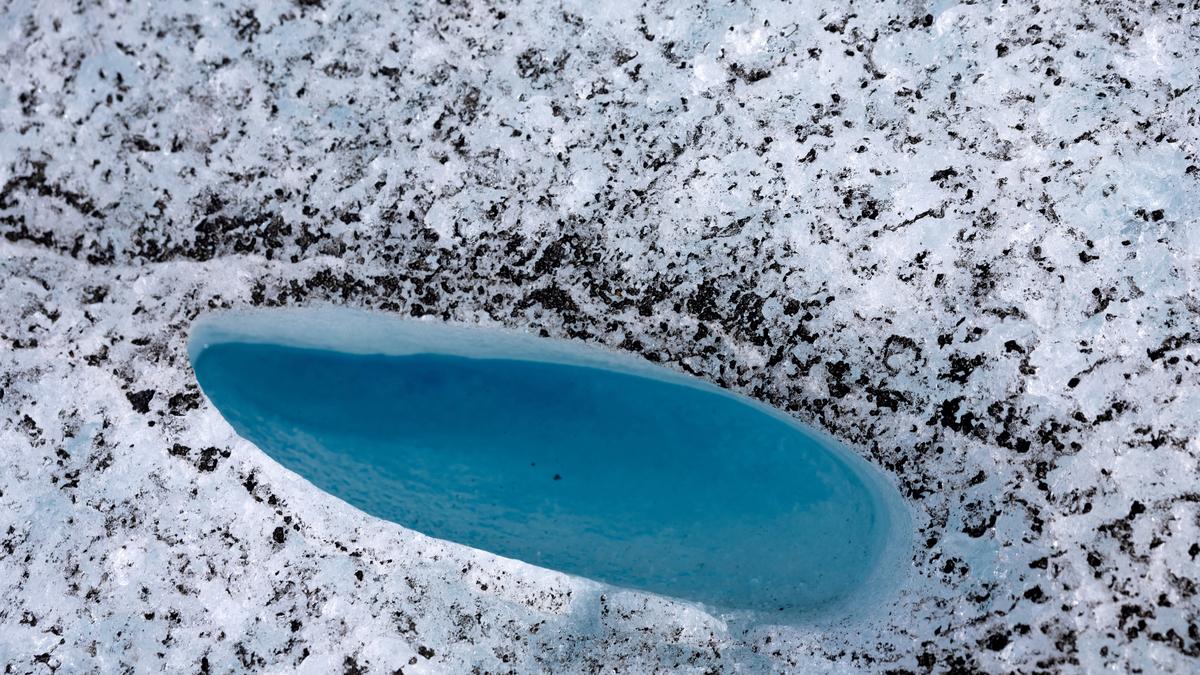
A hole filled with water from melted ice is seen among black rock and ice on the Rhone glacier amid climate change in Obergoms, Switzerland, August 27, 2024.
| Photo Credit: Reuters

As humans alter the planet’s climate and ecosystems, scientists are looking to Earth’s history to help predict what may unfold from climate change. To this end, massive ice structures like glaciers serve as nature’s freezers, archiving detailed records of past climates and ecosystems – including viruses.

We are a team of microbiologists and palaeoclimatologists that studies ancient microorganisms, including viruses preserved within glacier ice. Along with our colleagues Lonnie Thompson, Virginia Rich and other researchers at the Ice Core Paleoclimatology group at The Ohio State University, we investigate interactions between viruses and their environment archived in ice cores from the Guliya Glacier on the Tibetan Plateau.

By linking the genomes of ancient viral communities to specific climate conditions preserved in glacier ice, our newly published research offers insights into how these viruses have adapted to Earth’s shifting climate over the past 41,000 years.

Reading history in viral genes

We primarily used metagenomes – collections of genomes that capture the total genetic content of all microorganisms present in environmental samples – to reconstruct viral genomes from nine distinct time intervals within the Guliya ice core. These time horizons span three major cold-to-warm cycles, providing a unique opportunity to observe how viral communities have changed in response to different climatic conditions.

Through our analyses, we recovered the genomes of the equivalent of 1,705 virus species, expanding known glacier-preserved ancient viruses more than fiftyfold.

Only about one-fourth of the viral species we found shared species-level similarities with any of the viruses identified in nearly 1,000 metagenomes previously captured in global datasets. Most of these overlapping species were also from the Tibetan Plateau. This suggests that at least some viruses preserved in the Guliya Glacier originated locally in the region, but it also spoke to the relative lack of glacial viruses in available databases.

Using these new reference genomes, we attempted to “read” their stories.

One key finding was that viral communities varied significantly between cold and warm climatic periods. The most distinct community of viral species on the glacier appeared about 11,500 years ago, coinciding with the major transition from the Last Glacial Stage to the Holocene. This suggests that the unique climate conditions during cold and warm periods profoundly influenced the composition of viral communities. We hypothesize that these influences were likely due to viruses from other places being blown in by changing wind patterns and subject to selection pressures from changing temperatures on the glacier.

Digging deeper, we next determined how viruses interacted with their hosts. To do this, we used computer models to compare viral genomes with the genomes of other microbes also found in this environment. We found that viruses consistently infected Flavobacterium, a lineage of bacteria commonly found in glacier environments.

We also learned that viruses on the Guliya Glacier must “steal” genes from their hosts to manipulate their metabolisms. Encoded within the viral genomes were 50 auxiliary metabolic genes related to metabolism, including the synthesis and breakdown of vitamins, amino acids and carbohydrates. Some of these genes were abundant across all nine time intervals studied, suggesting that they help microbial hosts cope with the harsh conditions on glacier surfaces and thereby improve viral fitness.

Thus, viruses not only infect and kill cells, but they likely also alter the fitness of their hosts during infection, in turn influencing their capacity to survive in the extreme conditions of glacier environments.

Climate change over time

Our findings offer a novel perspective on how life, in the form of viruses, has responded to climatic changes over tens of thousands of years.

Understanding these ancient interactions provides a unique opportunity for future research in both virology and climate science. By studying how ancient viruses responded to past climate changes, researchers can gain valuable insights into how viruses adapt to ongoing global climate change.

We believe that glacier ice, by capturing information on microorganisms and their ecosystems over time in each layer, remains a critical resource for unraveling the history of Earth’s climate and the life it has supported – especially as glacier ice reserves rapidly diminish.

This article is republished from The Conversation under a Creative Commons license. Read the original article.


Source link

Science Tags:Climate change, climate news, Earth’s climate, science news, viral genomes, viral genomes in glaciers

Post navigation

Previous Post: Gautam Adani surpasses Mukesh Ambani to become richest Indian according to 2024 Hurun India Rich List
Next Post: Root stands firm for England as Sri Lanka strike at Lord’s

Related Posts

  • India’s private space sector | History, start-up boom, policy liberalisation & ISRO’s role explained Science
  • Study finds gene mutation that turns familiar faces into strangers Science
  • India-specific model to give accurate gestational age of foetus Science
  • Chilling out instead of blowing off steam better to manage anger, review of 154 studies says Science
  • Paper-based platform for rapid detection of antibiotic-resistant bacteria Science
  • Why 32 European countries are facing the largest climate action lawsuit till date | Explained Science

More Related Articles

As the summer sun cranks up the temperature, it increases the risk of heatstroke. It’s not just about feeling uncomfortable; it’s about staying safe. Heatstroke can sneak up on anyone, but it poses a particular threat to kids and parents hustling through their summer adventures. Science
Sci-Five | The Hindu Science Quiz: On Planetary Nebula Science
Scientists propose warming up Mars using heat-trapping ‘glitter’ Science
ISRO prefers woman fighter test pilots for its manned mission, possible in future, says Somanath Science
Avian influenza viruses undergo major evolutionary changes Science
Say cheese: Japanese scientists make robot face ‘smile’ with living skin Science
SiteLock

Archives

  • September 2024
  • August 2024
  • July 2024
  • June 2024
  • May 2024
  • April 2024
  • March 2024
  • February 2024
  • January 2024
  • December 2023
  • November 2023
  • October 2023
  • September 2023
  • August 2023
  • July 2023
  • June 2023
  • May 2023
  • April 2023
  • March 2023
  • February 2023
  • January 2023
  • December 2022
  • November 2022
  • October 2022
  • September 2022
  • August 2022
  • July 2022
  • June 2022
  • May 2022

Categories

  • Business
  • Nation
  • Science
  • Sports
  • World

Recent Posts

  • Digital Bharat Nidhi to fund provisioning of telecom services in urban areas now
  • Germany’s Scholz worried by far-right surge in regional elections
  • Explained: Controversy Surrounding Netflix’s ‘IC 814: The Kandahar Hijack’
  • Top Court Forms Committee To Settle Grievances Of Protesting Farmers
  • Yuvraj Singh’s Father Yograj Attacks Kapil Dev, Says “Told Him, World Would Spit On You”

Recent Comments

  1. TpeEoPQa on UP Teacher Who Asked Students To Slap Muslim Classmate
  2. xULDsgPuBe on UP Teacher Who Asked Students To Slap Muslim Classmate
  3. KyJtkhneiLmcq on UP Teacher Who Asked Students To Slap Muslim Classmate
  4. mOyehudovB on UP Teacher Who Asked Students To Slap Muslim Classmate
  5. GFBvgSrWPcsp on UP Teacher Who Asked Students To Slap Muslim Classmate
  • Skipper Rohit Sharms walked the talk in T20Is Sports
  • Rishi Sunak calls U.K. national election for July 4 World
  • Cricket World Cup 2023 AFG vs SL | The Afghanistan faithful have the time of their lives!!! Sports
  • Veteran Sports Journalist Harpal Singh Bedi Dies Sports
  • Asian Games, Athletics: Kartik Kumar Wins Silver, Gulveer Singh Claims Bronze For India In 10000m Sports
  • Russia-Ukraine war: In Kyiv, Blinken says U.S. military aid will make a difference World
  • Lok Sabha Elections 2024. Phase 5: Rahul Gandhi, Jailed Leader, 2 Ex Chief Ministers: Key Poll Battles Today Nation
  • Neeraj Chopra’s Family Delivers ‘Rivalry Verdict’ As Arshad Clinches Javelin Gold Sports

Editor-in-Chief:
Mohammad Ariff,
MSW, MAJMC, BSW, DTL, CTS, CNM, CCR, CAL, RSL, ASOC.
editor@artifex.news

Associate Editors:
1. Zenellis R. Tuba,
zenelis@artifex.news
2. Haris Daniyel
daniyel@artifex.news

Photograher:
Rohan Das
rohan@artifex.news

Artifex.News offers Online Paid Internships to college students from India and Abroad. Interns will get a PRESS CARD and other online offers.
Send your CV (Subjectline: Paid Internship) to internship@artifex.news

Links:
Associate Journalism
About Us
Privacy Policy

News Links:
Breaking News
World
Nation
Sports
Business
Entertainment
Lifestyle

Registered Office:
72/A, Elliot Road, Kolkata - 700016
Tel: 033-22277777, 033-22172217
Email: office@artifex.news

Editorial Office / News Desk:
No. 13, Mezzanine Floor, Esplanade Metro Rail Station,
12 J. L. Nehru Road, Kolkata - 700069.
(Entry from Gate No. 5)
Tel: 033-46011099, 033-46046046
Email: editor@artifex.news

Copyright © 2023 Artifex.News Newsportal designed by Artifex Infotech.