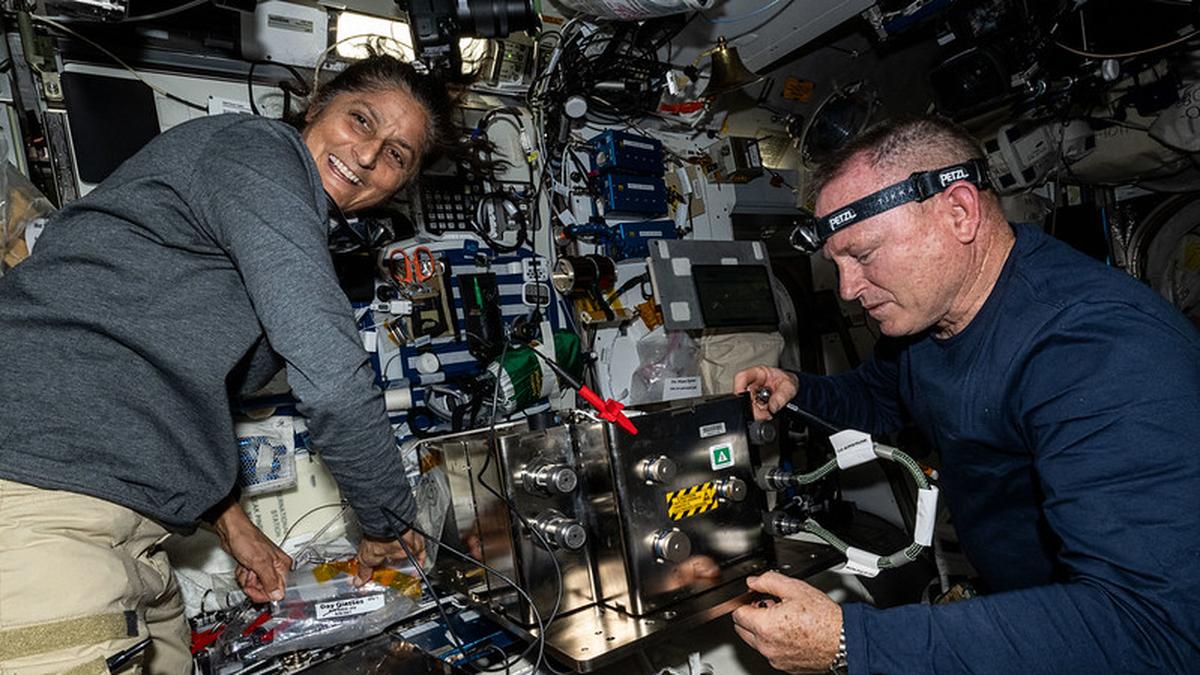
The story so far: On August 24, NASA said Boeing’s Starliner crew capsule that took astronauts Sunita Williams and Barry Wilmore to the International Space Station (ISS), as part of its first crewed test flight, wasn’t safe enough to transport them back. Instead, NASA extended Williams’s and Wilmore’s stay onboard the ISS until February 2025, when they will return in a SpaceX crew capsule to be launched in September 2024. Boeing’s Starliner will have to undock and return uncrewed.
What is space?
It’s easier to identify ‘space’ millions of kilometres away from the earth than it is near the planet because the conditions transition from ‘earth-like’ to ‘space-like’ gradually. In aeronautic and astronautic circles, space begins from the Karman line, which is 100 km above sea level. Similarly, the force of gravity can be said to be approaching zero several billion kilometres from a massive body but is nonetheless present. This is why the astronauts onboard the ISS experience microgravity, not zero gravity.
Thus, space may be a vast expanse but different parts of space can confront astronauts with wildly different ambient conditions. The Van Allen radiation belts around the earth are a good example. They lie above the Karman line, from 640 km to 58,000 km up. They consist of charged particles from outer space that have become trapped in the earth’s magnetic field. Researchers worked out the amount of radiation these belts expose astronauts to during the U.S. Apollo programme (not harmful) and thereon also determined astronauts’ exposure in outer space, where the belts won’t protect them. In this article, ‘space’ means above the Karman line and in microgravity conditions.
What are space’s effects on the human body?
While hundreds of astronauts have flown to space, they don’t make up a cohort large enough for researchers to study them and reliably elucidate all the effects of spaceflight on their bodies. They have also spent very different amounts of time there and have reported different symptoms after different trips. However, some broad trends have emerged centred on the body’s bones, digestion, eyes, heart, muscles and nerves. All these organs and systems in response to environmental conditions on the earth.
For example, in microgravity, bones become weaker, which might force the body to deposit the ‘excess’ mineral content in the kidneys, leading to renal stones. Food may move more slowly through the gut and lead to weight gain. Around 20% of all astronauts and 70% of those involved in long-duration spaceflight develop a disease called spaceflight-associated neuro-ocular syndrome (SANS): more fluids enter the head and build up at the back of the eye, affecting eyesight.
Because of the body’s weightless experience, the heart is required to do less work and could shrink. Similarly, other parts of the musculature could shed muscle mass and strength. The blood loses more red blood cells per day than it does on the ground (a 2022 study in Nature Medicine quantified the loss rate but couldn’t discern the cause), which means astronauts’ diets need to be adjusted to deliver more energy for their bodies to make more of these cells. The brain works constantly on the earth to help the body maintain its balance, sense of orientation, and positional stability using signals from various parts of the body, including the eyes and the inner ear. These signals deviate from ‘normal’ in space and force the brain to work harder to determine proper balance.
If these are the symptoms, researchers have identified some important shared causes: radiation exposure, confined and hostile environments, distance from the earth, and gravitation, among others. The second among them also speaks to psychological factors like fatigue, loss of morale, and a sense of helplessness vis-à-vis the astronauts’ family’s needs on the earth.
Can we counter these effects?
The more time astronauts spend in space, the more pronounced the symptoms. But whether missions are short or long, space agencies require their astronauts to adhere to a strict exercise regime and maintain predictable routines while in orbit in order to work the body without incurring stress. Agencies have also developed communication and work-management protocols that keep astronauts engaged, able to take ownership of their work, and relax.
Researchers are also studying whether various nutrients and drugs are metabolised differently in space. They have already identified some changes in metabolic pathways involved in synthesising DNA, amino acids, and phospholipids, and a condition in which excess iron in the body presents along with low urinary magnesium and potentially lower DNA stability. In a 2022 report, researchers suggested developing a more portable optical coherence tomography machine to check for SANS onboard spacecraft. If it is present, they recommended studying countermeasures to reduce the “headward fluid shift”, including applying “lower body negative pressure”, exposure to artificial gravity through “human centrifugation”, and taking drugs that lower the intracranial pressure.

This said, our understanding of the effects of spaceflight on humans is fraught with many uncertainties. A June 2024 paper in Nature Communications said researchers still need to understand which effects of spaceflight are or aren’t of “health-related importance”, avoid over-interpreting data “given the small sample sizes and the small number of studies”, establish “suitable ground controls”, and find alternative ways to replicate their findings.
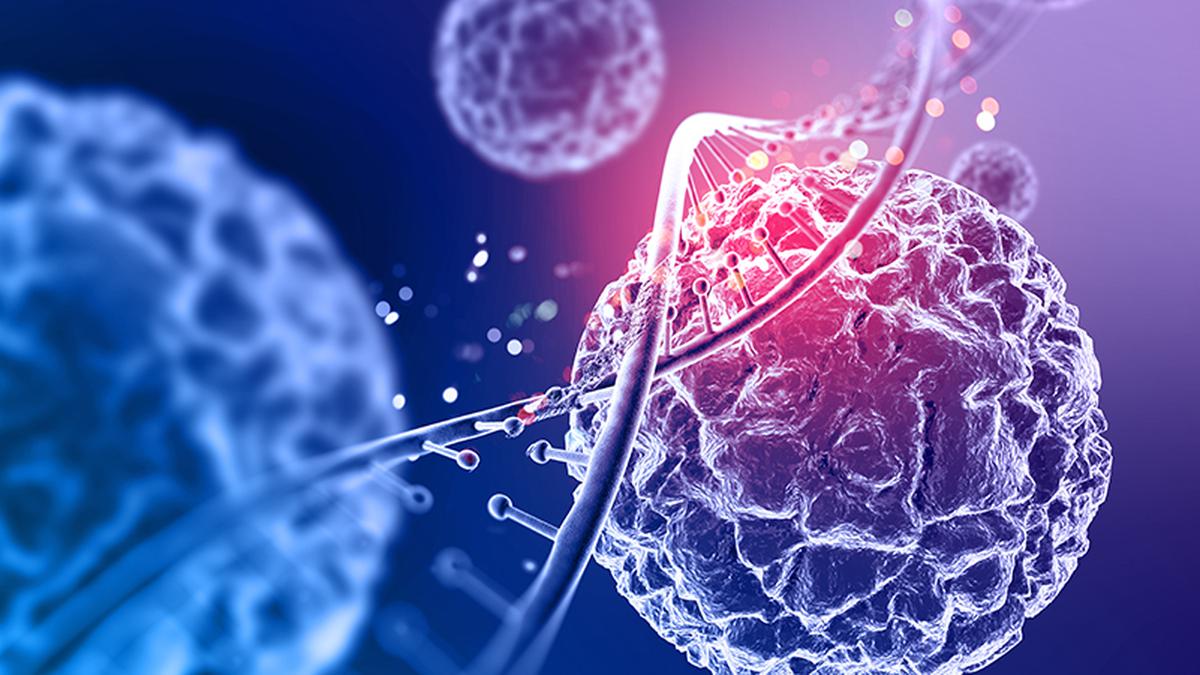
One important set of studies called “space omics” involves understanding all the ways in which the body can be affected by the space environment. A famous example is NASA’s Twins Study, where scientists examined differences in the bodies of two identical twins — astronauts Mark Kelly and Scott Kelly — after the latter spent a year in space. It identified around 8,600 genes that were expressed differently between them. The June 2024 paper noted that “any permutation of [these genes] could uncover biochemical pathways that hold keys to the development of therapeutic supplements and lifestyle recommendations that better protect health in space”.

The “cell space atlas” of space omics.
| Photo Credit:
Nature Communications volume 15, Article number: 4952 (2024) (CC BY 4.0)
Japan’s KAKENHI programme is studying biological responses to various parts of the space environment. Europe’s Space Omics Topical Team is developing space omics tools and methods. In the U.S., the ‘Complement of Integrated Protocols for Human Exploration Research’ project allows astronauts to sign up for experiments in space that will study their health in standardised ways. Scientists from around the world, including India, are part of the International Standards for Space Omics Processing to develop research and ethics guidelines.
How much time are humans spending in space?
The average maximum time an astronaut spends in space has increased from one month in the 1960s to six months in the 2020s. Each expedition to the ISS can also be up to six months long.
Assuming arbitrarily that their current trip ends on February 15, 2025, Williams and Wilmore will spend 256 days in orbit. Thus far 11 individuals have spent more than 300 days in space in a single mission. The record holder is Russia’s Valeri Polyakov (437 days from January 8, 1994) and the American record-holder is Frank Rubio (370 days from September 21, 2022). The cosmonaut Oleg Kononenko is currently the only astronaut to have spent more than 1,000 days in space across missions. The second active spacefarer on this list is the U.S.’s Peggy Whitson with 675 days.
Less than a century ago going to the moon was considered a long-duration space mission. Today the space agencies of China, India, Japan, Russia, and the U.S., among others, are contemplating permanent stations on the moon and human missions to Mars. They are the new long-duration missions and they will pose newer safety challenges.