



Skip to content
  • Facebook
  • X
  • Linkedin
  • WhatsApp
  • YouTube
  • Associate Journalism
  • About Us
  • Privacy Policy
  • 033-46046046
  • editor@artifex.news
Artifex.News

Artifex.News

Stay Connected. Stay Informed.

  • Breaking News
  • World
  • Nation
  • Sports
  • Business
  • Science
  • Entertainment
  • Lifestyle
  • Toggle search form
  • Congo announces three Ebola treatment centres in Ituri region amid outbreak
    Congo announces three Ebola treatment centres in Ituri region amid outbreak World
  • “I Saw Her Again After…”: Mohammed Shami’s Post For ‘Bebo’ Is Emotional
    “I Saw Her Again After…”: Mohammed Shami’s Post For ‘Bebo’ Is Emotional Sports
  • Rupee gains 3 paise to 95.42 against U.S. dollar
    Rupee gains 3 paise to 95.42 against U.S. dollar Business
  • Chimps imbibe two cocktails’ worth of ethanol daily from ripe fruits
    Chimps imbibe two cocktails’ worth of ethanol daily from ripe fruits Science
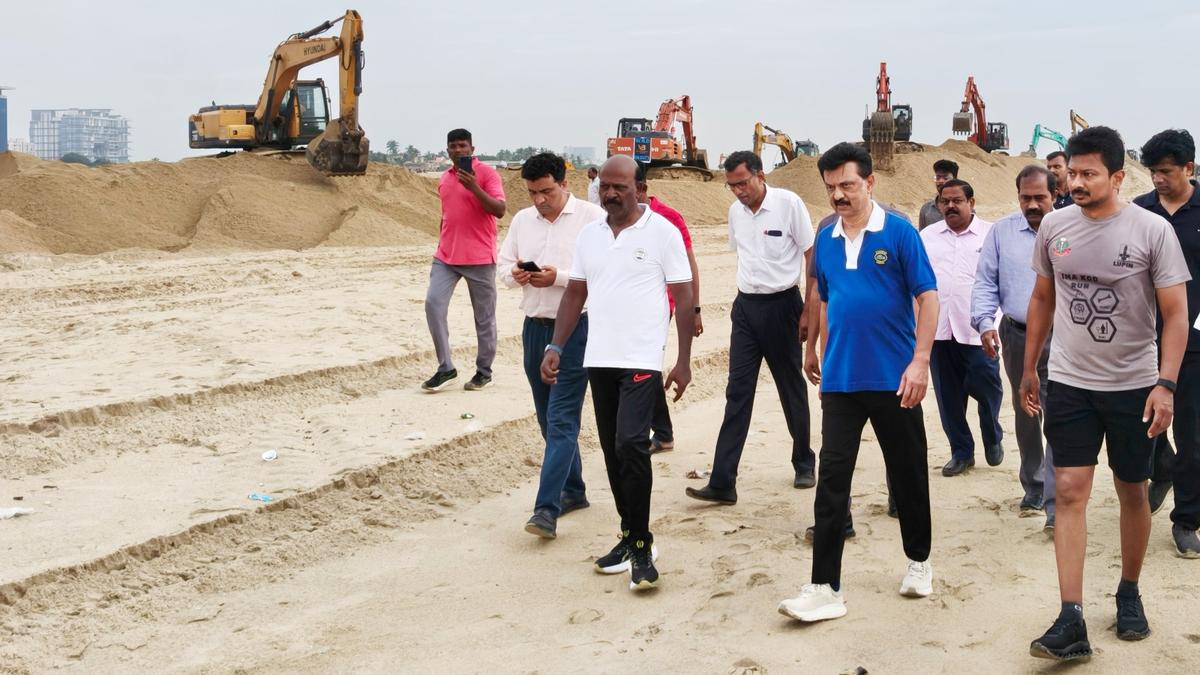
  • Briefly-CM reviews works in Adyar estuary
    Briefly-CM reviews works in Adyar estuary Nation
  • Donald Trump claims Pakistan PM said he saved lives of 10 million by stopping India-Pakistan conflict
    Donald Trump claims Pakistan PM said he saved lives of 10 million by stopping India-Pakistan conflict World
  • What Shaped Tibet’s Modern History? New Book Delves Into Its Complex Dynamics
    What Shaped Tibet’s Modern History? New Book Delves Into Its Complex Dynamics Nation
  • Key Battles In 3rd Phase
    Key Battles In 3rd Phase Nation
Surprising ‘dark oxygen’ discovery could ensnarl deep-sea mining | Explained

Surprising ‘dark oxygen’ discovery could ensnarl deep-sea mining | Explained

Posted on July 27, 2024 By admin


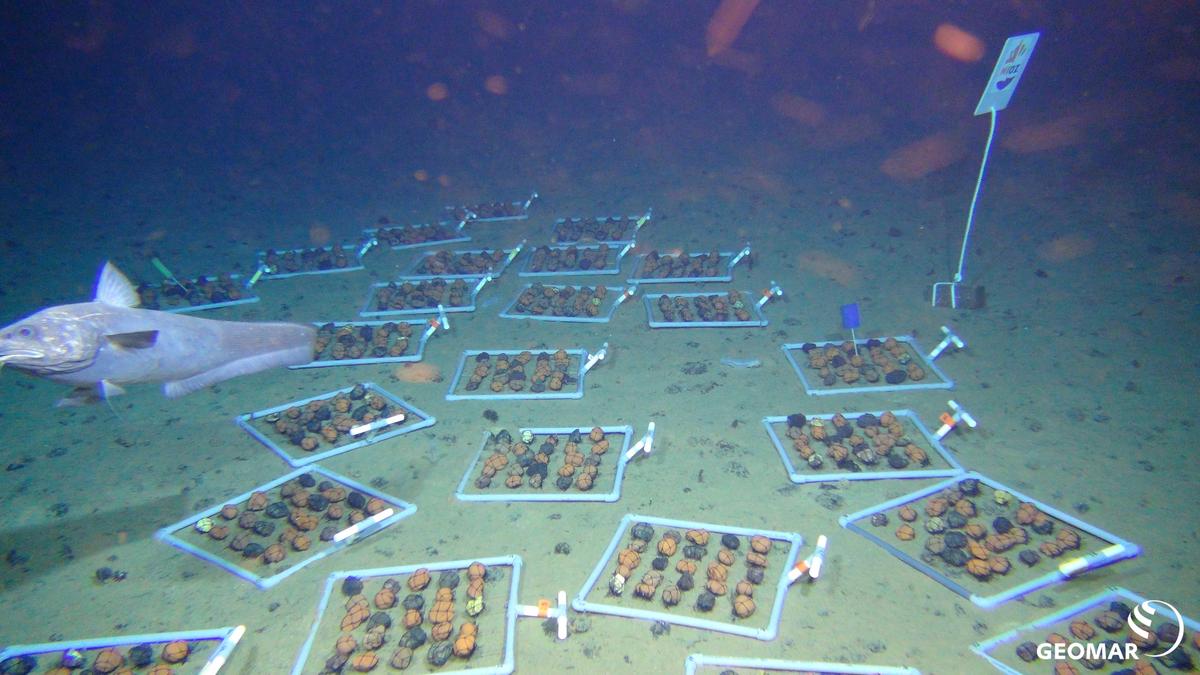
This photo taken on March 8, 2019, shows a study underway on the seafloor of the Clarion-Clipperton Zone to investigate the impact that potential manganese nodule mining in the deep sea would have on ecosystems there.
| Photo Credit: ROV-Team/GEOMAR

An unknown process is producing oxygen deep in the world’s oceans, where it is too dark for photosynthesis, scientists reported on July 22 in the journal Nature Geoscience. The finding has important implications because oxygen helps support life and the discovery implies the existence of previously unknown ecosystems.

Many governments are also bound to take notice since one explanation for the oxygen is that polymetallic nodules are transporting electric charges that split water molecules around them, releasing oxygen. Polymetallic nodules are lumps of iron, manganese hydroxides, and rock partially submerged in many parts of the ocean floor. If their concentration exceeds 10 kg per sq. m, mining them is considered to be economically feasible — and many countries are planning to do so as a new resource.

On July 22, Reuters reported an unnamed “top government scientist” saying India is planning to “apply for licences to explore for deep-sea minerals in the Pacific Ocean”. India’s Ministry of Earth Sciences is also currently building a submersible vehicle that will look for and mine similar resources in the Indian Ocean as part of its ‘Deep Ocean Mission’.

Where was the study conducted?

The oxygen discovery raises questions about how deep-sea mining to extract polymetallic nodules will affect marine ecosystems.

The scientists behind the study, from Germany, the U.K., and the U.S., were studying the Clarion-Clipperton Zone, a part of the ocean floor off Mexico’s west coast. Covering an area larger than India, the Zone is considered to have the world’s highest concentration of polymetallic nodules, including 6 billion tonnes of manganese and more than 200 million tonnes each of copper and nickel.

When the scientists were conducting experiments at a depth of 4 km, they noticed the oxygen concentration in some places rapidly increased instead of decreasing. They conducted follow-up studies in 2020 and 2021. In each case, they released a device from the surface that would land on the ocean floor, where it would isolate a small volume of the floor along with some sea water and measure the oxygen levels.

This underwater region is called the abyssal zone. It receives too little sunlight for photosynthesis to be feasible. Instead, life-forms here get oxygen from water carried in by a global circulation called the ‘Great Conveyor Belt’. Still, the amount of oxygen is low and without any local production, the device should have measured the oxygen levels dropping as small animals consumed it. But the scientists found the opposite: it increased, sometimes tripling in just two days.

They double-checked the finding by recreating the conditions on the ocean floor in their lab, and found the oxygen levels to increase up to a point before dropping.

What is the source of the oxygen?

When they measured the physical characteristics of the nodules, they found their surfaces to have a voltage of up to 0.95 V. Splitting one water molecule requires 1.5 V, but the researchers have suspected the voltage could build up if many nodules are close together, like the cells of a battery.

Andrew Sweetman, an ecologist with the Scottish Association for Marine Science in the U.K. and a coauthor of the study, told Nature, “We have another source of oxygen on the planet, other than photosynthesis.” His team is calling it ‘dark oxygen’.

Oxygen sources are valuable because they allow life to survive. But as the lab experiment indicated, the nodules could only produce oxygen as long as they could muster a sufficient voltage. The nodules’ own energy source is also not clear.

What is deep-sea mining?

Given the quantity of metals polymetallic nodules on the ocean floor hold, deep-sea mining is expected to be a major marine resource extraction activity in the coming decades. The International Seabed Authority has established 15-year contracts with at least 22 contractors — including the Government of India — to look for polymetallic nodules, polymetallic sulphides, and cobalt-rich ferromanganese crusts in the deep seabed. China alone is expected to mine 17% of the Clarion-Clipperton Zone.

The new finding raises the possibility of such mining damaging ecosystems that require ‘dark oxygen’ to survive. Experts have found deep-sea mining itself could be harmful to the marine environment, ‘dark oxygen’ or not.

In 1989-1996, scientists from Germany conducted the Disturbance and Recolonisation (DISCOL) Experiment in the Peru Basin as the world’s “first large-scale impact assessment” to assess the “environmental impacts originating from the mining of polymetallic nodules”. They built a device that disturbed the sea floor like a deep-sea mining exercise might have and collected data about how the disturbances changed local oceanographic and sedimentological profiles, among other things.

A 2019 study in the journal Scientific Reports reported that “the effects of simulated mining impacts induced during the DISCOL [Experiment] were still evident in the megabenthos of the Peru Basin after 26 years.”

How will deep-sea mining be affected?

The same study also reported “significantly lower heterogeneity diversity in disturbed areas” and added that “if the results of this experiment … can be extrapolated to the Clarion-Clipperton Zone, the impacts of polymetallic nodule mining there may be greater than expected, and could potentially lead to an irreversible loss of some ecosystem functions”.

In November 2023, Nature reported based on a paper published then that deep-sea mining “for minerals could harm deep-sea jellyfish, according to the first study of mining impacts on animals living in the water column.”

Scientists also know less about ecosystems in the abyssal zone than they do about many of those aboveground, which means the models scientists use to predict their fate and their role in global climate processes could be unreliable. With these and other issues in mind, on July 20, three major European insurance companies said they would exclude deep-sea mining from their underwriting portfolios.

‘Dark oxygen’ adds to these challenges. If deep-sea mining doesn’t find sustainable ways to respond to them, it may be rendered altogether infeasible.


Source link

Science Tags:Clarion Clipperton Zone, cobalt-rich ferromanganese crusts, deep sea mining, DISCOL experiment, Ministry of Earth Sciences, polymetallic nodules, polymetallic sulphides

Post navigation

Previous Post: Paris Olympics Day 1 Live Streaming: Schedule, Time In IST As Shooters Eye Country’s First Medal
Next Post: Wealth Of World’s Top 1% Grew By $42 Trillion Over The Past Decade: Oxfam

Related Posts

  • ISRO successfully conducts ‘Pushpak’ Reusable Landing Vehicle landing experiment 
    ISRO successfully conducts ‘Pushpak’ Reusable Landing Vehicle landing experiment  Science
  • Decolonising and de-Nobelising science – The Hindu
    Decolonising and de-Nobelising science – The Hindu Science
  • Warning: Your satellite is about to be hit by debris in space
    Warning: Your satellite is about to be hit by debris in space Science
  • Experts flag ecological, privacy concerns over drone deployment for wildlife monitoring
    Experts flag ecological, privacy concerns over drone deployment for wildlife monitoring Science
  • Zoopharmacognosy — when animals medicate themselves
    Zoopharmacognosy — when animals medicate themselves Science
  • Study documents headaches experienced by astronauts in space
    Study documents headaches experienced by astronauts in space Science

More Related Articles

Earth’s orbits are filling up because governance hasn’t kept pace Earth’s orbits are filling up because governance hasn’t kept pace Science
Science for all newsletter Scientists cause one beam of light to cast a shadow against another Science for all newsletter Scientists cause one beam of light to cast a shadow against another Science
Somatic genetic variants: A genomic revolution hiding inside our cells Somatic genetic variants: A genomic revolution hiding inside our cells Science
Understanding insect societies with Bengaluru-based Raghavendra Gadagkar Understanding insect societies with Bengaluru-based Raghavendra Gadagkar Science
Using science to address India’s dog crisis Using science to address India’s dog crisis Science
IMD unveils weather model to provide ‘block level’ forecast of monsoon journey IMD unveils weather model to provide ‘block level’ forecast of monsoon journey Science
SiteLock

Archives

  • October 2026
  • September 2026
  • August 2026
  • July 2026
  • June 2026
  • May 2026
  • April 2026
  • March 2026
  • February 2026
  • January 2026
  • December 2025
  • November 2025
  • October 2025
  • September 2025
  • August 2025
  • July 2025
  • June 2025
  • May 2025
  • April 2025
  • March 2025
  • February 2025
  • January 2025
  • December 2024
  • November 2024
  • October 2024
  • September 2024
  • August 2024
  • July 2024
  • June 2024
  • May 2024
  • April 2024
  • March 2024
  • February 2024
  • January 2024
  • December 2023
  • November 2023
  • October 2023
  • September 2023
  • August 2023
  • July 2023
  • June 2023
  • May 2023
  • April 2023
  • March 2023
  • February 2023
  • January 2023
  • December 2022
  • November 2022
  • October 2022
  • September 2022
  • August 2022
  • July 2022
  • June 2022
  • May 2022

Categories

  • Business
  • Nation
  • Science
  • Sports
  • World

Recent Posts

  • AIADMK, BJP leaders slam TVK-led Tamil Nadu government over electricity purchase at high rate
  • Two arrested for attacking security guard with knife in Besant Nagar
  • Women stage silent demonstration at Kathipara against police action on anti-CEC protesters in Delhi
  • DGCA bans specific power banks on flights
  • Saudi Supreme Court sets aside Sri Lankan migrant worker’s death penalty

Recent Comments

  1. RobertTes on UP Teacher Who Asked Students To Slap Muslim Classmate
  2. Manuelret on UP Teacher Who Asked Students To Slap Muslim Classmate
  3. RobertTes on UP Teacher Who Asked Students To Slap Muslim Classmate
  4. RobertTes on UP Teacher Who Asked Students To Slap Muslim Classmate
  5. BrentWes on UP Teacher Who Asked Students To Slap Muslim Classmate
  • Access Denied
    Access Denied Nation
  • BOXING | Asiad medallists to book berths in LA28 qualifier Worlds
    BOXING | Asiad medallists to book berths in LA28 qualifier Worlds Sports
  • Karnataka On Row Over ‘Dog Meat’ Meant For Bengaluru Restaurants
    Karnataka On Row Over ‘Dog Meat’ Meant For Bengaluru Restaurants Nation
  • Japanese AI tool predicts when recruits will quit jobs
    Japanese AI tool predicts when recruits will quit jobs World
  • P.V. Sindhu, Lakshya Sen enter Thailand Open quarterfinals, Srikanth out
    P.V. Sindhu, Lakshya Sen enter Thailand Open quarterfinals, Srikanth out Sports
  • Rupee slips 6 paise to 96.31 against U.S. dollar in early trade
    Rupee slips 6 paise to 96.31 against U.S. dollar in early trade Business
  • Report says world’s biggest arms producers increased revenue by 5.9% last year to record level
    Report says world’s biggest arms producers increased revenue by 5.9% last year to record level World
  • Access Denied Sports

Editor-in-Chief:
Mohammad Ariff,
MSW, MAJMC, BSW, DTL, CTS, CNM, CCR, CAL, RSL, ASOC.
editor@artifex.news

Associate Editors:
1. Zenellis R. Tuba,
zenelis@artifex.news
2. Haris Daniyel
daniyel@artifex.news

Photograher:
Rohan Das
rohan@artifex.news

Associate Journalists
1. Subrata Paul - AN/2020/01
2. Quamruz Zaman - AN/2021/22
3. Ahmed Sha - AN/2021/035
4. Ajay Kumar Shaw - AN/2021/39
5. Tahqiqul Hoda - AN/2021/21

Artifex.News offers Online Paid Internships to college students from India and Abroad. Interns will get a PRESS CARD and other online offers.
Send your CV (Subjectline: Paid Internship) to internship@artifex.news

Links:
Associate Journalism
About Us
Privacy Policy

News Links:
Breaking News
World
Nation
Sports
Business
Entertainment
Lifestyle

Registered Office:
72/A, Elliot Road, Kolkata - 700016
Tel: 033-22277777, 033-22172217
Email: office@artifex.news

Editorial Office / News Desk:
No. 13, Mezzanine Floor, Esplanade Metro Rail Station,
12 J. L. Nehru Road, Kolkata - 700069.
(Entry from Gate No. 5)
Tel: 033-46011099, 033-46046046
Email: editor@artifex.news

Copyright © 2023 Artifex.News Newsportal designed by Artifex Infotech.