





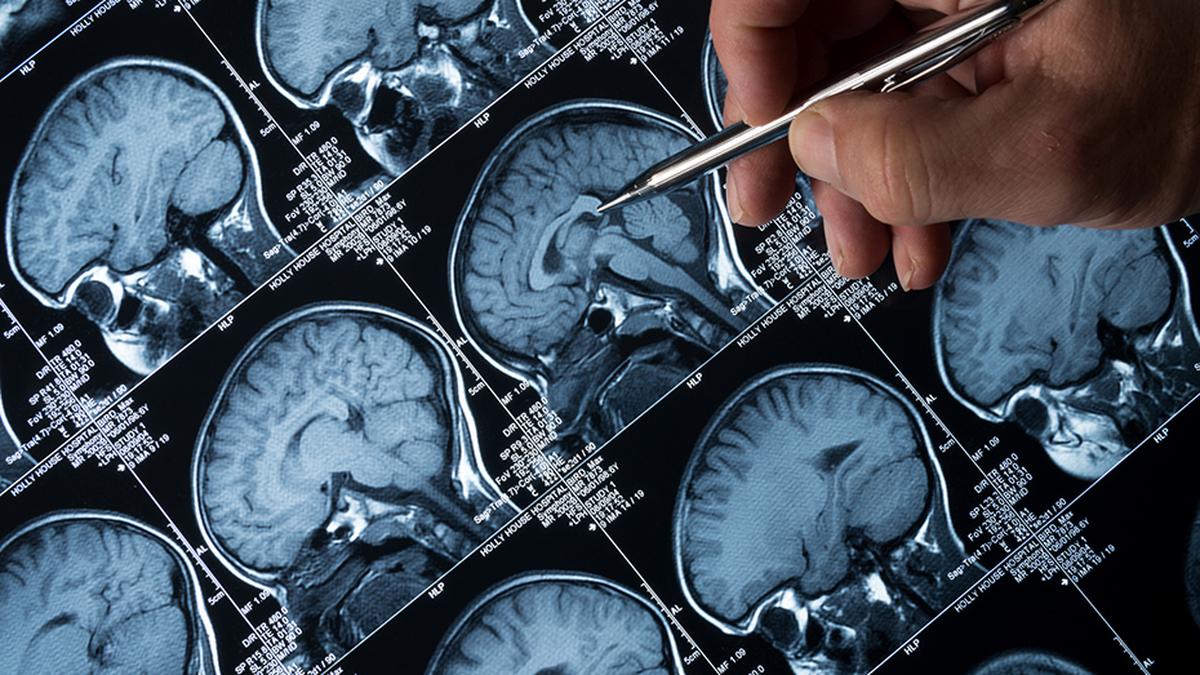
Scientists have designed a magnetic resonance imaging (MRI) scanner that costs a fraction of existing machines, setting the stage for improving access to this widely used diagnostic tool.
A MRI helps visualise minute details in the human body, with which doctors can diagnose disorders and select treatments for the brain, the heart, various cancers, and orthopaedic conditions.
These scanners work by using strong magnetic fields, measured in units called tesla (T), and radio waves to generate images of internal organs. The strength of these magnetic fields in clinical MRI setups range between 1.5 T and 3 T — or 4-8-times stronger than the typical magnetic field in a sunspot on the Sun.
Around 50-times cheaper
This potentially life-saving medical technology remains inaccessible to most of the population, especially in low- and middle-income countries like India, largely because of the scanner’s high cost and the infrastructure required to handle such a powerful instrument. This includes shielding the room that houses the machine to contain the effects of strong magnets; liquid helium to cool the magnets when they heat up during operation; and the electric power required to operate the scanner.
“A 3-T MRI machine can cost anywhere between 9 and 13 crore rupees,” Mukul Mutatkar, an interventional radiology consultant with several hospitals in Pune, including Deenanath Mangeshkar Hospital and Ruby Hall Clinic, said. “And that’s just the machine. There are additional infrastructure costs.”
To address this problem, a team led by Ed Wu at the University of Hong Kong designed and built an MRI machine using low strength magnets and store-bought hardware. This simplified machine costs around $22,000, or about Rs 18.4 lakh. The machine uses 0.05 T magnets and doesn’t need a shielded room or helium coolant to operate. It can be plugged into standard wall-power outlets.
Prototype of a low-cost, low-power, compact, and shielding-free imaging system using an open 0.05-T permanent magnet. It incorporates active sensing and deep learning to address electromagnetic interference signals.
| Photo Credit:
DOI: 10.1126/science.adm7168
“This will usher in an entirely new class of MRI scanners that are affordable, low-power, and compact,” Dr. Wu wrote in an email.
A paper describing the design and its working was published in the journal Science on May 10.
Test with 30 volunteers
Using low-strength magnets in MRI is not novel: researchers used 0.05 T machines to generate images during initial work on MRI in the 1970s. But they abandoned this option in favour of 1.5 T magnets in the 1980s. The stronger the magnetic field strength, the better the image produced. A 1.5-T scanner can detect tissue damage as small as 1 mm whereas the smallest damage detectable at 0.05 T is 4 mm.
“A 0.05-T MRI machine won’t give you the exact image quality as a 3 T machine,” said Jyoti Narayan, a clinical associate in the imaging department at Mumbai’s Jaslok Hospital. “There are anatomical areas from which information needs to be extracted, which will not show up.”
To compensate for lower detail in images, Dr. Wu & co. used an artificial intelligence (AI)-based deep-learning algorithm. This algorithm — trained on data from high-resolution images of human organs — helped reduce background noise and obtain sharper images.
They tested their setup with 30 healthy adult volunteers, and obtained clear images for brain tissue, spinal cord, cerebrospinal fluid, and abdominal organs like the liver, kidneys, and the spleen. They could also visualise details in the lungs and the heart, and knee structures such as cartilage. They found that the image quality the 0.05-T machine coupled with AI produced was comparable to that of images obtained from a 3-T MRI machine.
The research group wrote that their machine was also less noisy during operation, meaning it could be used in paediatric settings as well. The lower-strength magnets could also be set up in an open scanning environment, alleviating the claustrophobia that sometimes arises when an individual slides into a conventional MRI machine.
Good for access and emergencies
Dr. Narayan said such a machine offered several advantages, including the possibility of being lighter, more portable, and not requiring specialised power sources (instead of a wall socket). As a result, she continued, MRIs can be more accessible to patients who live far from specialised hospitals that currently offer this diagnostic facility.
Such a machine could be practical in places where it is hard for people to access high power MRIs. Dr. Mutatkar agreed — but also said “the ultra-low field magnets cannot replace standard high-field magnets in MRI machines” due to the resolution advantage the latter offered.
Dr. Wu said the scanner could nonetheless complement the high-field scanners in radiology departments.
Neither Dr. Narayan nor Dr. Mutatkar was aware of any centres in India that used a 0.05-T machine. That could change with the cost advantage the new design offered. “Conventional MRI [scans] can cost anywhere between Rs 7,000 and Rs 15,000,” Dr. Narayan said. Some facilities may offer scans for as low as Rs 2,000 but the waiting period will be in the order of months, she added.
Both doctors also said such scanners could be useful during emergencies, without making patients wait for an appointment, and help first responders make more informed medical decisions.
Aside from acute interventions to help stroke patients, such scanners could help in traumatic accidents to assess a patient’s injury at the accident site. Healthcare providers can then decide whether the patient can be safely transferred to a hospital and/or which mode of transport would be most suitable. Such a scanner could also serve as the first level of imaging in case of emergencies in hospitals with otherwise occupied MRI machines, Dr. Mutatkar added.
‘Get basic things done’
According to both Dr. Narayan and Dr. Mutatkar, using a lower power magnet also has the advantage of preventing metal items such as oxygen cylinders, wheelchairs, and stethoscopes from being pulled into the MRI machine. This is a persistent risk around conventional machines. Although such events are rare, they do take place, and can harm both the patient and the machine.
An MRI machine with low strength magnets may generate fewer artefacts due to implants or prosthetics in the final image; such artefacts have been known to mislead doctors about the original anatomy of the tissue, Dr. Narayan said. (Many of these objects are made of titanium, which is paramagnetic, i.e. weakly affected by a magnetic field.)
Dr. Mutatkar added that pacemakers can’t be scanned in current MRI machines. And “what happens to pacemakers [in the low strength machine] still remains to be seen.”
He added that the new design will need to be tested in other centres; the data in the current study was from only one. “Even if the image quality is not very good,” he added, “if we can manage this in small places and get basic things done, then this will make a difference.”
Sneha Khedkar is a biologist turned freelance science journalist.