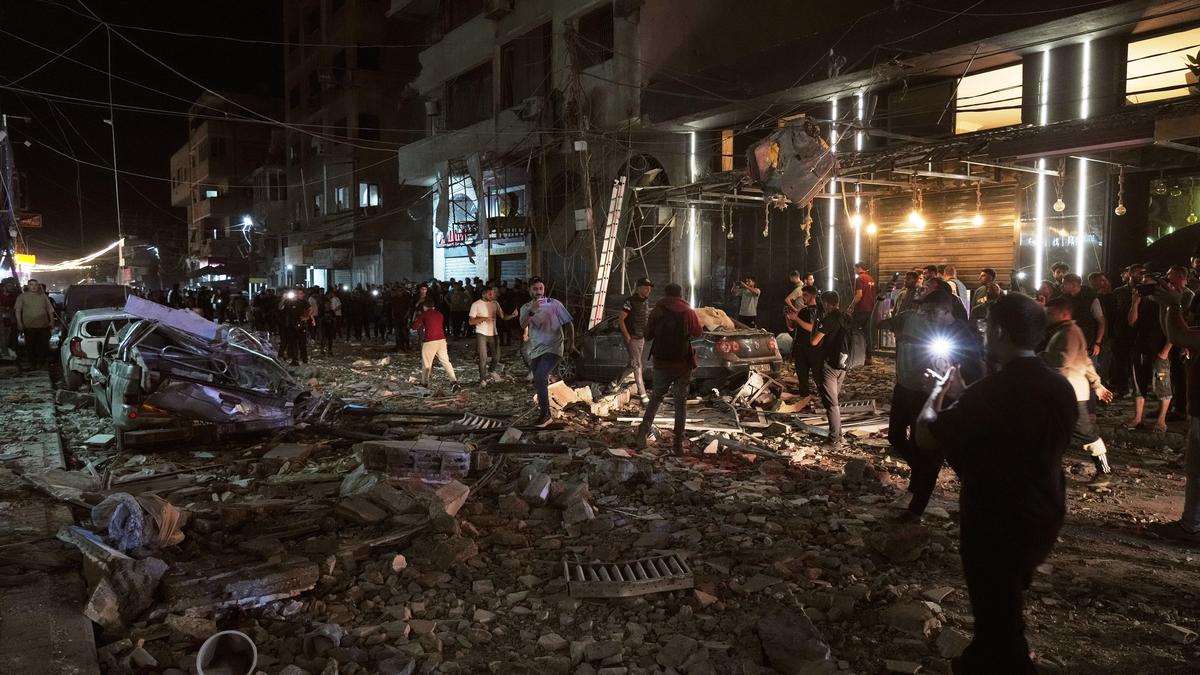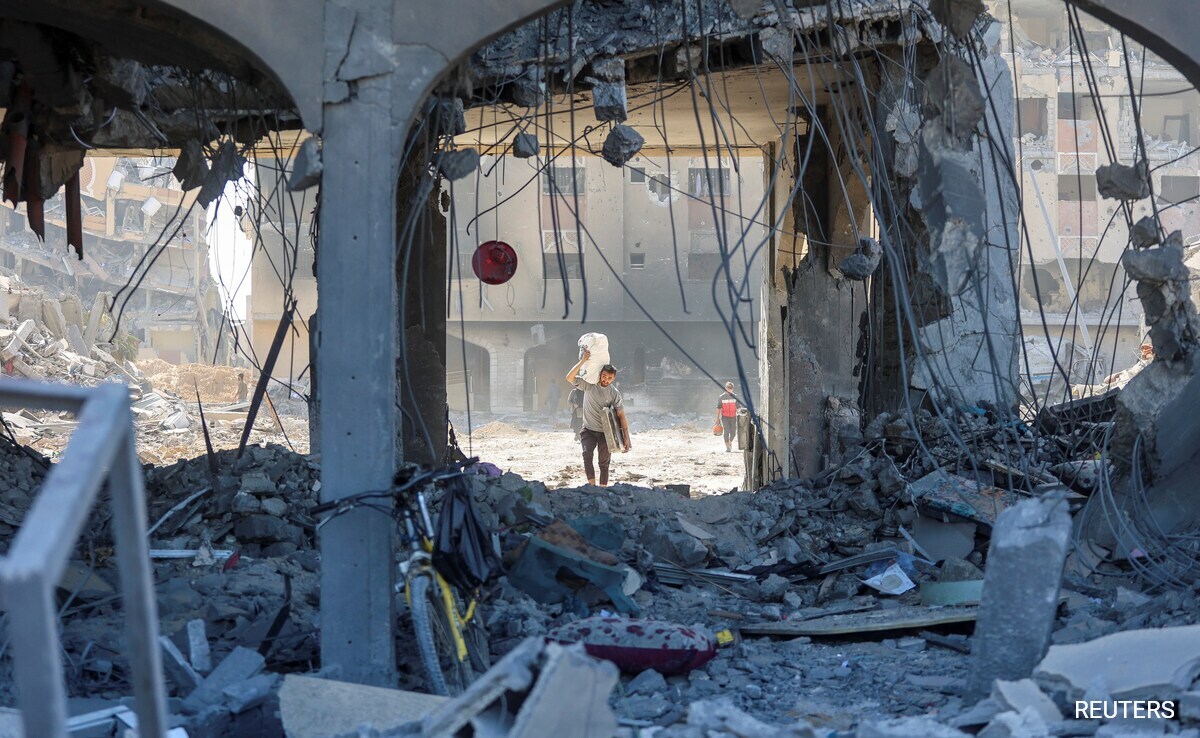


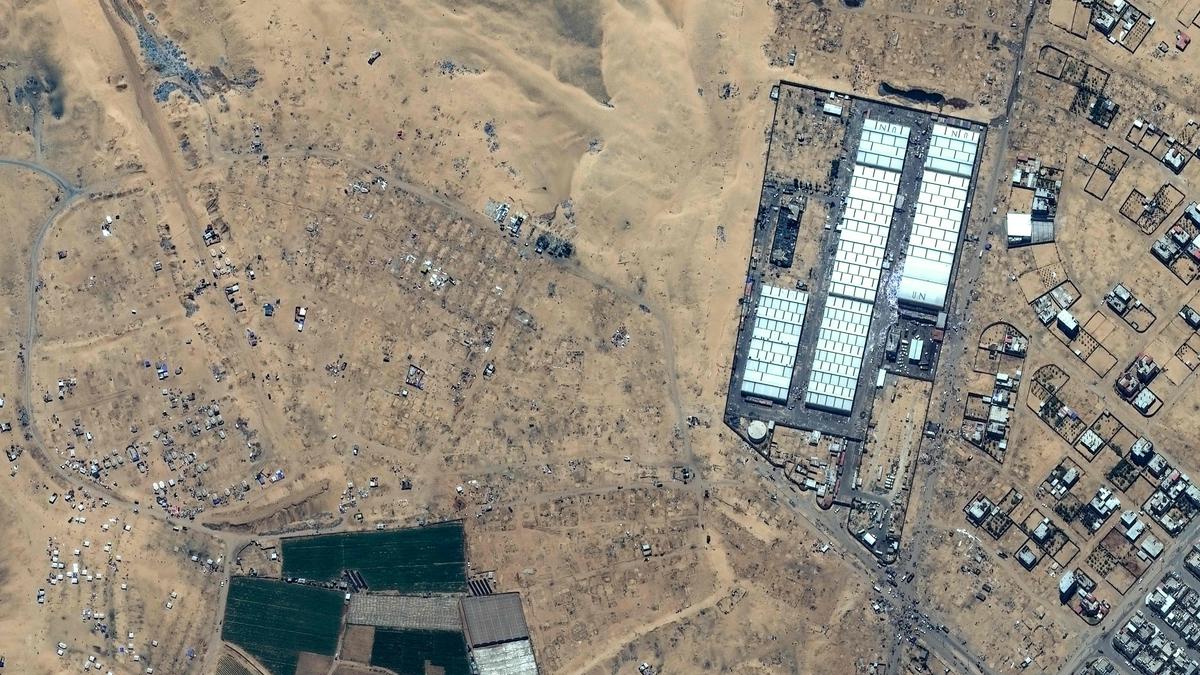
This handout satellite image courtesy of Maxar Technologies shows a view of the displacement camp in the Tal al-Sultan area of Rafah in the southern Gaza Strip, near a UN Relief and Works Agency (UNRWA) facility, on May 29, 2024. A strike on Tal Al-Sultan late on May 26 that Israel said targeted Hamas militants killed 45 people, according to Palestinian officials.
| Photo Credit: AFP
The loss of Palestinian lives in the recent Israeli bombing of Rafah is “heartbreaking”, India said on Thursday.
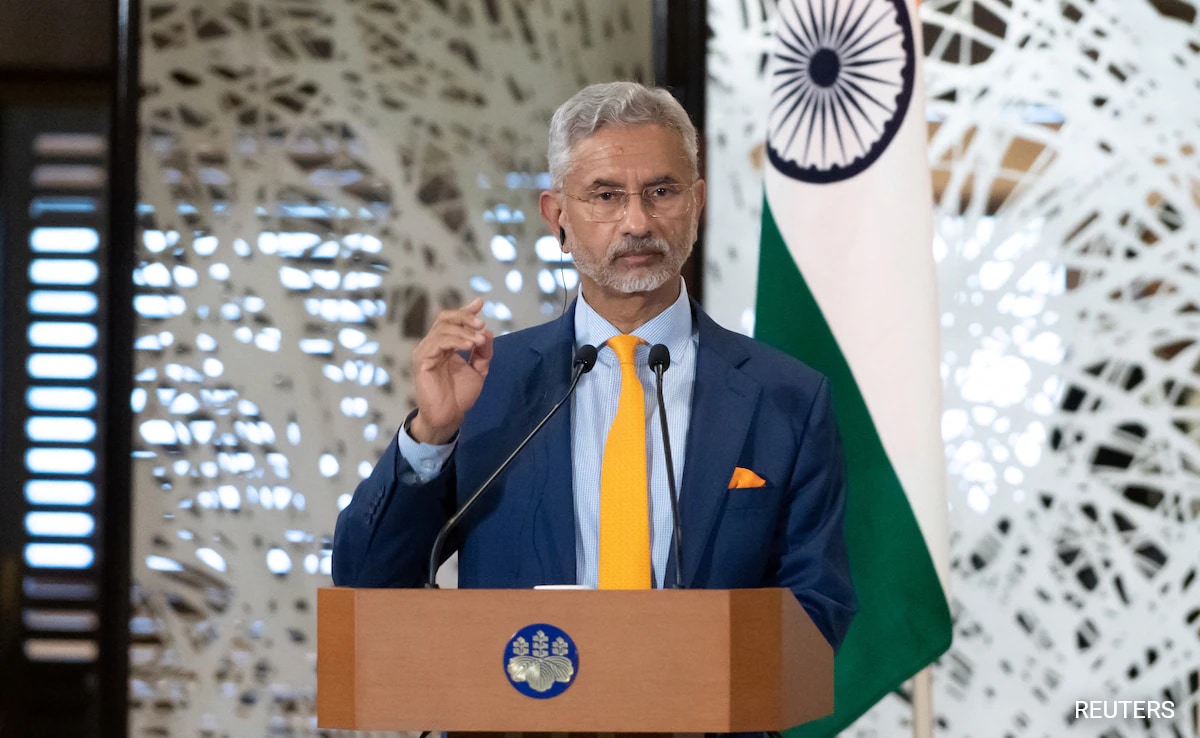
Nearly 45 Palestinians, including children, were killed when Israeli bombs hit tents housing displaced persons in Rafah on May 26. The Indian stand on the carnage was shared by the official spokesperson of the Ministry of External Affairs, Randhir Jaiswal, during the weekly press briefing.
He also highlighted that India had recognised the Palestinian state way back in the late 1980s.
“The heartbreaking loss of civilian lives in the displacement camp in Rafah is a matter of deep concern. We have consistently called for protection of civilian population and respect for international humanitarian law in the ongoing conflict. We also note that the Israeli side has already accepted responsibility for it as a tragic accident and announced an investigation into the incident,” said Mr. Jaiswal.

Two-state solution
The bombing of the tents that housed displaced Gazans heightened the global outrage against the ongoing Israeli campaign in the Gaza Strip that has so far killed more than 36,000 people. This incident coincided with Spain, Ireland and Norway granting recognition to the Palestinian state. In response to a question, Mr. Jaiswal reiterated India’s support for a “two-state solution” to the Israel-Palestinian crisis.
“We have long supported a two-state solution, which entails the establishment of a sovereign, viable, and independent state of Palestine within recognised and mutually agreed borders, living side by side with Israel in peace,” said Mr. Jaiswal when asked about the move by Ireland, Norway and Spain.

‘Objective view’ in Pakistan
The official spokesperson also took note of the remarks by former Pakistan Prime Minister Nawaz Sharif that Islamabad had violated the 1999 Lahore pact signed by Prime Minister Atal Bihari Vajpayee and Mr. Sharif on February 21, 1999, However, months later, the Kargil war broke out.
“You are aware of our position on the issue. I need not have to reiterate that. We note that there is an objective view emerging in Pakistan as well on this matter,” Mr. Jaiswal said to a question during the interaction.

Earlier acknowledging that Pakistani missteps in 1999 that hurt the prospects of peace between India and Pakistan, Mr. Sharif said on Wednesday, “On May 28, 1998, Pakistan carried out five nuclear tests. After that Vajpayee saheb came here and we made an agreement. But we violated that agreement….it was our fault,” Mr. Sharif said, after he became the president of the PML-N for six years.
After taking charge, the former PM, who also participated in the “mini SAARC summit” of May 2014 in Delhi, presented his version of the events that took place in Pakistan over the past three decades. He said the U.S. government under President Bill Clinton tried to stop Pakistan from going nuclear and offered $5 billion for ensuring that, but he had rejected the offer and went ahead with nuclear tests at Chagai range in Balochistan on May 28, 1998, after the Pokhran nuclear blasts by India on May 11, 1998.
India-Pakistan ties have been frozen in animosity since 2016 after India blamed Pakistan-based terror outfits for attacking military installations in Pathankot and Uri, following which India carried out a “surgical strike” along the Line of Control.