




Since 2017, the Indian government has been using the Employees Provident Fund (EPF) scheme’s data as a measure of payroll employment and formal job creation in the country. The monthly data released as part of this initiative has generally shown net increases in the number of contributors and this has been portrayed as evidence of employment creation in the country. However, this is in stark variance with ground reports of unemployment and a dearth of jobs from various parts of the country. So, how does one square these divergent narratives and understand what’s happening to formal jobs in the country? If we move past the basic scheme enrolment numbers, the EPF data, in fact, provide important insights into what’s happening to formal employment in the country. It also reveals why official claims of job creation based on EPF enrolment numbers can be misleading.
Unlike the EPF monthly enrolment data, which generally depicts increases in contributors, the EPF Organisation’s (EPFO) annual reports reveal that the number of regular contributors to the scheme has remained relatively stagnant or even declined in recent years, as shown in Chart 1. Regular contributors to the EPF scheme are those enrolled employees whose PF contributions are made on a regular basis during the year. This is in contrast to those employees who are merely enrolled into the scheme at some point, but whose contributions are irregular or stop shortly after.
Chart appears incomplete? Click to remove AMP mode
Between 2012 and 2022, the number of regular contributors to the EPF increased from 30.9 million to 46.3 million. A significant increase occurred in 2016-17, when the Indian government encouraged firms with private PFs to join the government’s EPF and introduced other incentive schemes that paid the employer’s share of PF contributions. However, in the past five years, when the effects of such incentives and firm enrolments somewhat stabilised, growth in regular contributors slowed down significantly. Between 2017 and 2022, the number of regular contributors increased only from 45.11 million to 46.33 million. Strikingly, this occurred during a time when overall enrolments in the EPF increased from 210.8 million to 277.4 million as shown in Chart 2.
In other words, though the total number of EPF enrolments increased by around 67 million, the corresponding increase in regular contributors within that was only 1.2 million. The number of people enrolled in the EPF can generally be expected to be higher than regular contributors due to issues of duplication and old membership data, but it is concerning that in recent years, the gap between them has been noticeably widening. If the EPF data are to be considered as an indication of formal employment, then there appears to have been a net creation of only 1.2 million formal jobs in the past five years. For perspective, at current participation rates, there were an estimated 20-25 million new entrants into the Indian labour market.
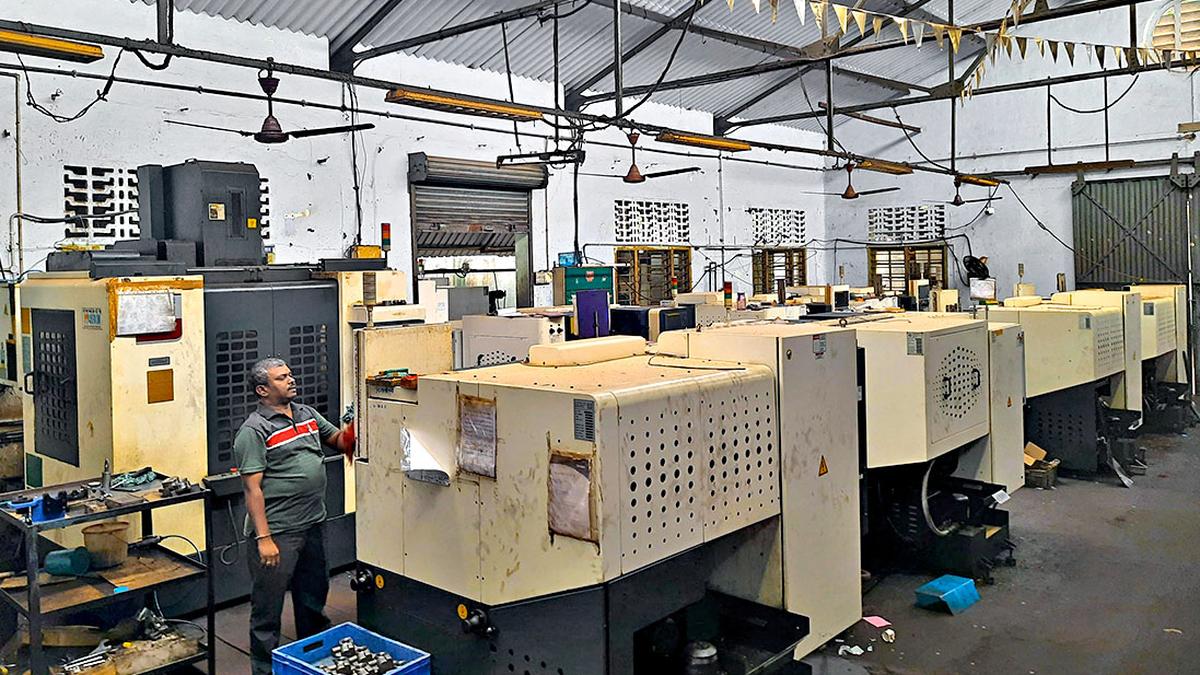
The divergence between EPF enrolments and regular contributors indicates that the majority of enrolments into the EPF are linked to jobs that are of a temporary, subcontracted or casual variety — where PF contributions are irregular or cease shortly. Thus, though the Indian economy appears to be creating jobs – these are not formal, regular well-paid jobs that can provide good quality, long-term employment.
The EPF numbers are broadly in line with longer employment trends of the country, thus indicating that formal employment in India has become increasingly standardised in terms of EPF enrolment, rather than the creation of new formal jobs per se. With the government paying the employer’s share of PF contribution, smaller firms and employers have been enrolling their employees into the EPF scheme in order to avail of its benefits and reduce their wage expenditures. However, many of these incentives are applicable only to employees earning Rs 15,000 or less per month. Preliminary accounts suggest stagnation around this wage level, possibly or at least in part due to such schemes.
Middle-class’s woes
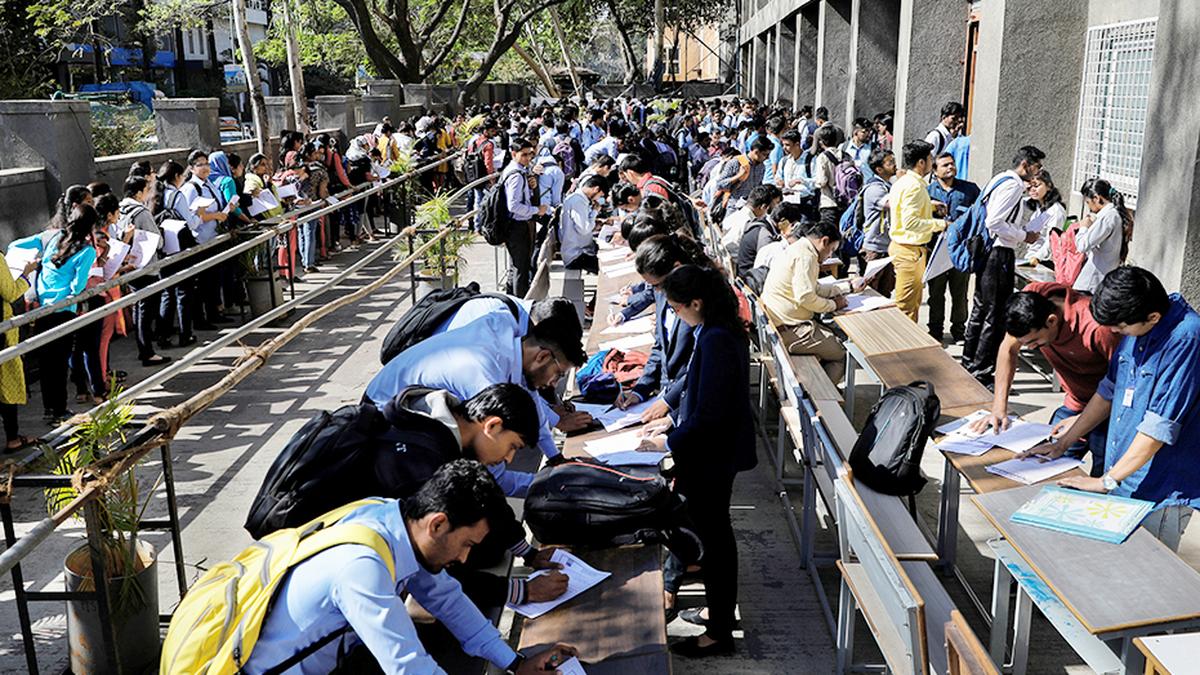
As India overtakes China as the most populous country in the world, it faces an increasingly educated and growing working-age population that requires good-quality employment. However, the relative absence of formal, well-paid, regular employment in the country is striking. This inhibits the expansion of its middle class — a factor that was central to China’s economic growth — but which has largely been missing in India. The lack of quality jobs in the Indian economy gets revealed in instances of large numbers of over-qualified youth applying for a few public or private sector job openings, showing a dissonance with claims of strong economic growth. Despite the Indian government’s outward rhetoric of a strong economy, there are indications that it is cognisant of the lack of job creation in the economy. This is revealed in its promotion of Rozgar Melas (employment fairs), public sector recruitment drives, factory incentives as well as attempts to internationalise skills transferability and worker mobility.
The stagnation in formal employment in India can be partially attributed to the pandemic. In fact, the number of EPF contributors declined (somewhat predictably) during the COVID pandemic. At the time, the EPFO used to publish information on regular contributors on a monthly basis. However, after the decline in EPF contributors was noticed by news media, the EPFO subsequently disputed its own numbers and stopped publishing this monthly data series altogether.
Unfortunately, over time the Indian government has neglected other sources of formal employment and labour data that could have been used to verify these numbers and trends. For instance, the employment market information collected by the Directorate General of Employment and Training (DGET) has not been published since 2013. The DGET data were historically the original source of formal sector payroll employment data in India (since the 1950s). The Reserve Bank of India utilised it as the main source for formal sector employment numbers and related calculations in the country. However, this data are no longer available, even to the country’s central bank.
The EPF scheme is potentially a good alternative source to gauge payroll employment, but it requires significant standardisation and de-duplication. Moreover, it should be recognised that a single data source is insufficient to understand formal employment and jobs in the country. Understanding and addressing issues of job creation or job quality cannot be achieved without a wide range of standardised, stable and publicly available labour statistics. Despite their importance, recent Indian governments have neglected several of the country’s labour and employment statistical sources leading to questionable decision-making, making national labour and employment policies appear inchoate, lacking both, clarity and direction.
Secki P. Jose teaches at the University of the West of England, Bristol, U.K.
Source: EPFO Annual reports
Also read: Keep it simple: On opting for higher pension