

Skip to content
  • Facebook
  • X
  • Linkedin
  • WhatsApp
  • YouTube
  • Associate Journalism
  • About Us
  • Privacy Policy
  • 033-46046046
  • editor@artifex.news
Artifex.News

Artifex.News

Stay Connected. Stay Informed.

  • Breaking News
  • World
  • Nation
  • Sports
  • Business
  • Science
  • Entertainment
  • Lifestyle
  • Toggle search form
  • Access Denied
    Access Denied Nation
  • Access Denied World
  • Access Denied
    Access Denied Nation
  • Now it’s Typhoon Nolo after Pacific hurricane crosses international dateline
    Now it’s Typhoon Nolo after Pacific hurricane crosses international dateline World
  • Elon Musk backs AfD party in German newspaper opinion piece
    Elon Musk backs AfD party in German newspaper opinion piece World
  • We have to produce the best in every match we play: Molina
    We have to produce the best in every match we play: Molina Sports
  • Have every bat that I scored an international ton with: Ponting
    Have every bat that I scored an international ton with: Ponting Sports
  • Nirav Modi’s Bank of India trial adjourned over U.K. prison paperwork delays
    Nirav Modi’s Bank of India trial adjourned over U.K. prison paperwork delays World
Sahara space rock 4.5 billion years old upends assumptions about the early Solar System

Sahara space rock 4.5 billion years old upends assumptions about the early Solar System

Posted on September 5, 2023 By admin


In May 2020, some unusual rocks containing distinctive greenish crystals were found in the Erg Chech sand sea, a dune-filled region of the Sahara Desert in southern Algeria. On close inspection, the rocks turned out to be from outer space: lumps of rubble billions of years old, left over from the dawn of the Solar System. Image for Representation.
| Photo Credit: Getty Images/iStockphoto

In May 2020, some unusual rocks containing distinctive greenish crystals were found in the Erg Chech sand sea, a dune-filled region of the Sahara Desert in southern Algeria.

On close inspection, the rocks turned out to be from outer space: lumps of rubble billions of years old, left over from the dawn of the Solar System.

They were all pieces of a meteorite known as Erg Chech 002, which is the oldest volcanic rock ever found, having melted long ago in the fires of some now-vanished ancient protoplanet.

In new research published in Nature Communications, we analysed lead and uranium isotopes in Erg Chech 002 and calculated it is some 4.56556 billion years old, give or take 120,000 years. This is one of the most precise ages ever calculated for an object from space – and our results also cast doubt on some common assumptions about the early Solar System.

Also Read | Unique, ancient space rock may have diversified life on Earth

The secret life of aluminium

Around 4.567 billion years ago, our Solar System formed from a vast cloud of gas and dust. Among the many elements in this cloud was aluminium, which came in two forms.

First is the stable form, aluminium-27. Second is aluminium-26, a radioactive isotope mainly produced by exploding stars, which decays over time into magnesium-26.

Aluminium-26 is very useful stuff for scientists who want to understand how the Solar System formed and developed. Because it decays over time, we can use it to date events – particularly within the first four or five million years of the Solar System’s life.

Also Read | How three dust specks reveal an asteroid’s secrets

The decay of aluminium-26 is also important for another reason: we think it was the main source of heat in the early Solar System. This decay influenced the melting of the small, primitive rocks that later clumped together to form the planets.

Uranium, lead and age

However, to use aluminium-26 to understand the past, we need to know whether it was spread around evenly or clumped together more densely in some places than in others.

To figure that out, we will need to calculate the absolute ages of some ancient space rocks more precisely.

Looking at aluminium-26 alone won’t let us do that, because it decays relatively quickly (after around 705,000 years, half of a sample of aluminium-26 will have decayed into magnesium-26). It’s useful for determining the relative ages of different objects, but not their absolute age in years.

But if we combine aluminium-26 data with data about uranium and lead, we can make some headway.

There are two important isotopes of uranium (uranium-235 and uranium-238), which decay into different isotopes of lead (lead-207 and lead-206, respectively).

The uranium isotopes have much longer half-lives (710 million years and 4.47 billion years, respectively), which means we can use them to directly figure out how long ago an event happened.

Meteorite groups

Erg Chech 002 is what is known as an “ungrouped achondrite”.

Achondrites are rocks formed from melted planetesimals, which is what we call solid lumps in the cloud of gas and debris that formed the Solar System. The sources of many achondrites found on Earth have been identified.

Most belong to the so-called Howardite-Eucrite-Diogenite clan, which are believed to have originated from Vesta 4, one of the largest asteroids in the Solar System. Another group of achondrites is called angrites, which all share an unidentified parent body.

Still other achondrites, including Erg Chech 002, are “ungrouped”: their parent bodies and family relationships are unknown.

A clumpy spread of aluminium

In our study of Erg Chech 002, we found it contains a high abundance of lead-206 and lead-207, as well as relatively large amounts of undecayed uranium-238 and uranium-235.

Also Read | Asteroid’s sudden flyby shows blind spot in planetary threat detection

Measuring the ratios of all the lead and uranium isotopes was what helped us to estimate the age of the rock with such unprecedented accuracy.

We also compared our calculated age with previously published aluminium-26 data for Erg Chech 002, as well as data for various other achondrites.

The comparison with a group of achondrites called volcanic angrites was particularly interesting. We found that the parent body of Erg Chech 002 must have formed from material containing three or four times as much aluminium-26 as the source of the angrites’ parent body.

This shows aluminium-26 was indeed distributed quite unevenly throughout the cloud of dust and gas which formed the solar system.

Our results contribute to a better understanding of the Solar System’s earliest developmental stages, and the geological history of burgeoning planets. Further studies of diverse achondrite groups will undoubtedly continue to refine our understanding and enhance our ability to reconstruct the early history of our Solar System.

The Conversation

Evgenii Krestianinov, PhD candidate, Research School of Earth Sciences, Australian National University

This article is republished from The Conversation under a Creative Commons license. Read the original article.


Source link

Science Tags:how did the solar system come into existence, Sahara space rock, science news, solar system, space news, space rock

Post navigation

Previous Post: China sends ‘deliberate signals’ to India, West as Xi Jinping skips G-20
Next Post: Daily Quiz | On scales that measure hurricanes

Related Posts

  • Sky Teamwork: Why do birds fly in V formation?
    Sky Teamwork: Why do birds fly in V formation? Science
  • Chandrayaan-3 | With moon now in India’s orbit, focus shifts to Pragyan rover
    Chandrayaan-3 | With moon now in India’s orbit, focus shifts to Pragyan rover Science
  • What is the technology behind manufacturing a semiconductor chip? | Explained
    What is the technology behind manufacturing a semiconductor chip? | Explained Science
  • Extreme heat threatens global food systems, UN agencies warn
    Extreme heat threatens global food systems, UN agencies warn Science
  • Ways to conquer plastic waste and produce useful materials
    Ways to conquer plastic waste and produce useful materials Science
  • Why do mosquitoes love some people more than others?
    Why do mosquitoes love some people more than others? Science

More Related Articles

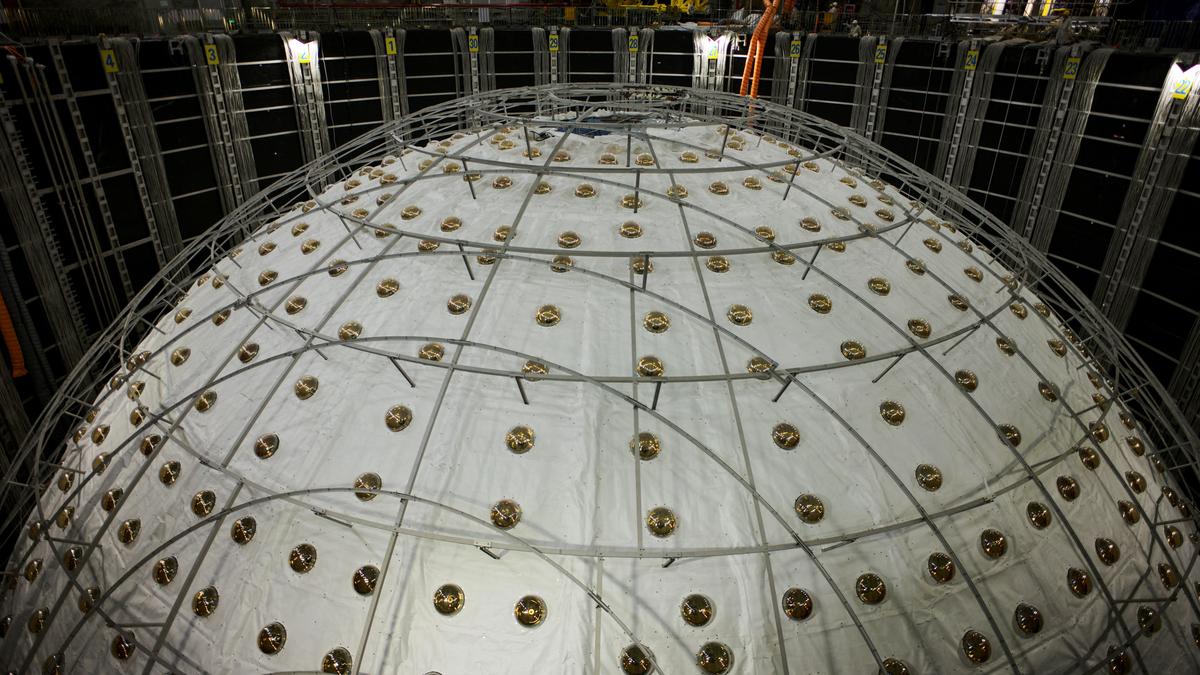
The INO that wasn’t and the JUNO that is The INO that wasn’t and the JUNO that is Science
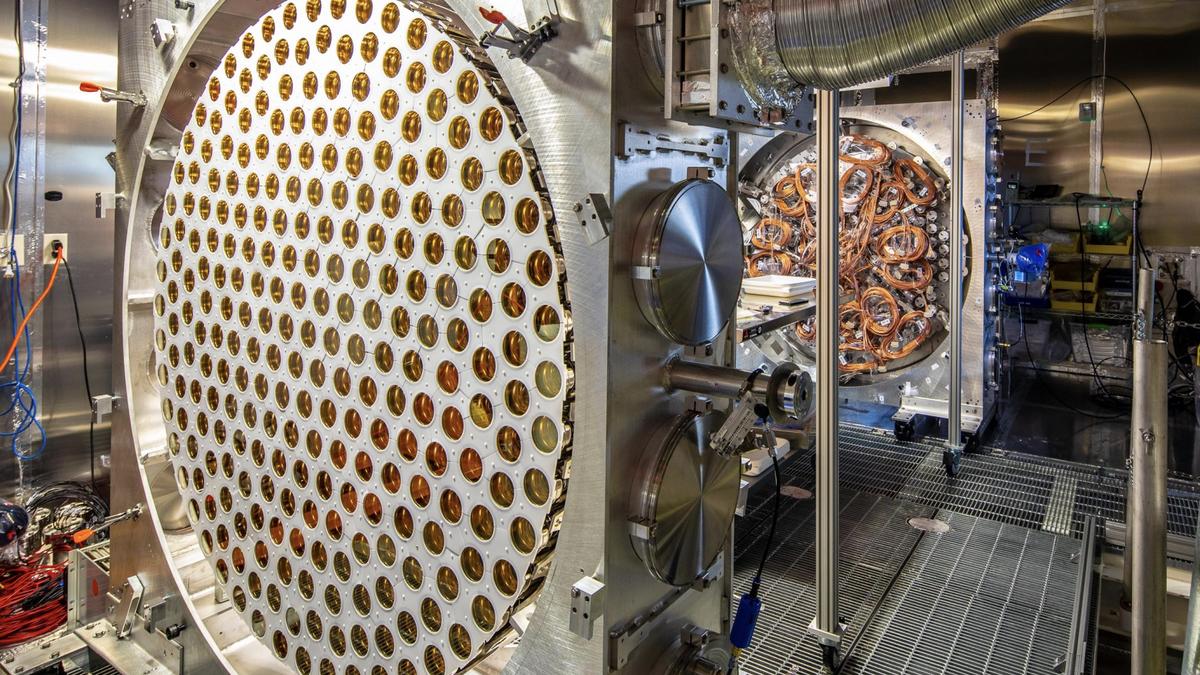
Not just nothing, dark matter quests close in on dire ‘neutrino fog’ Not just nothing, dark matter quests close in on dire ‘neutrino fog’ Science
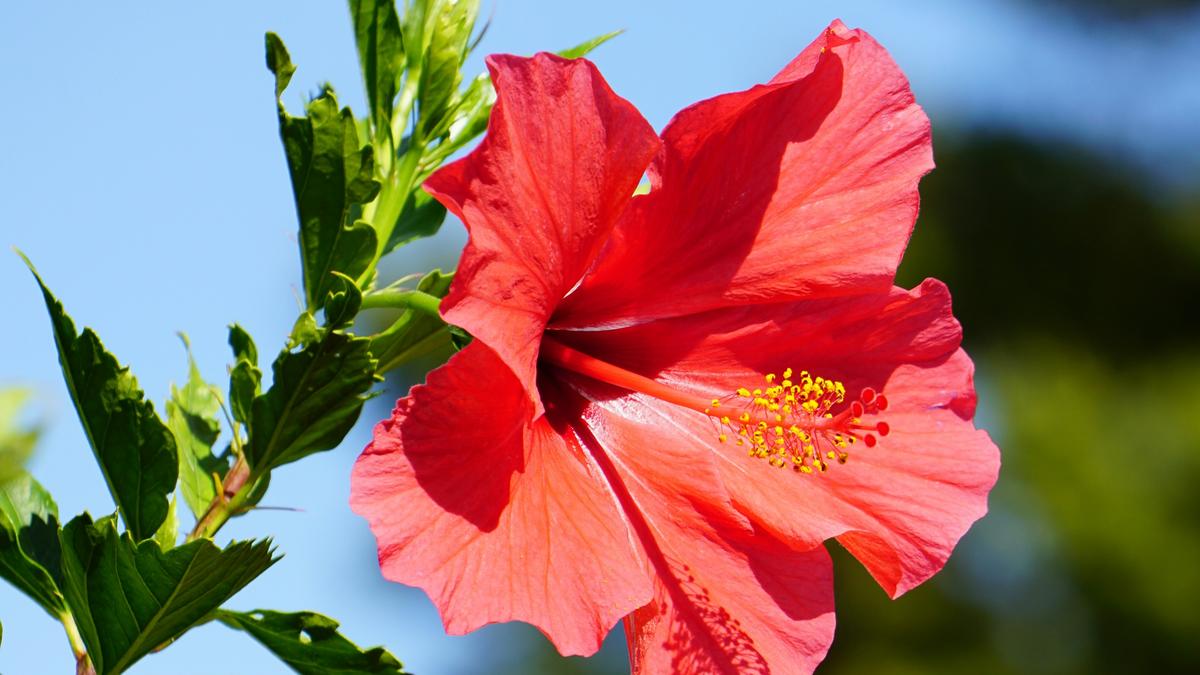
Why do shrubs like hibiscus flower/fruit profusely only on the sunlit side? Why do shrubs like hibiscus flower/fruit profusely only on the sunlit side? Science
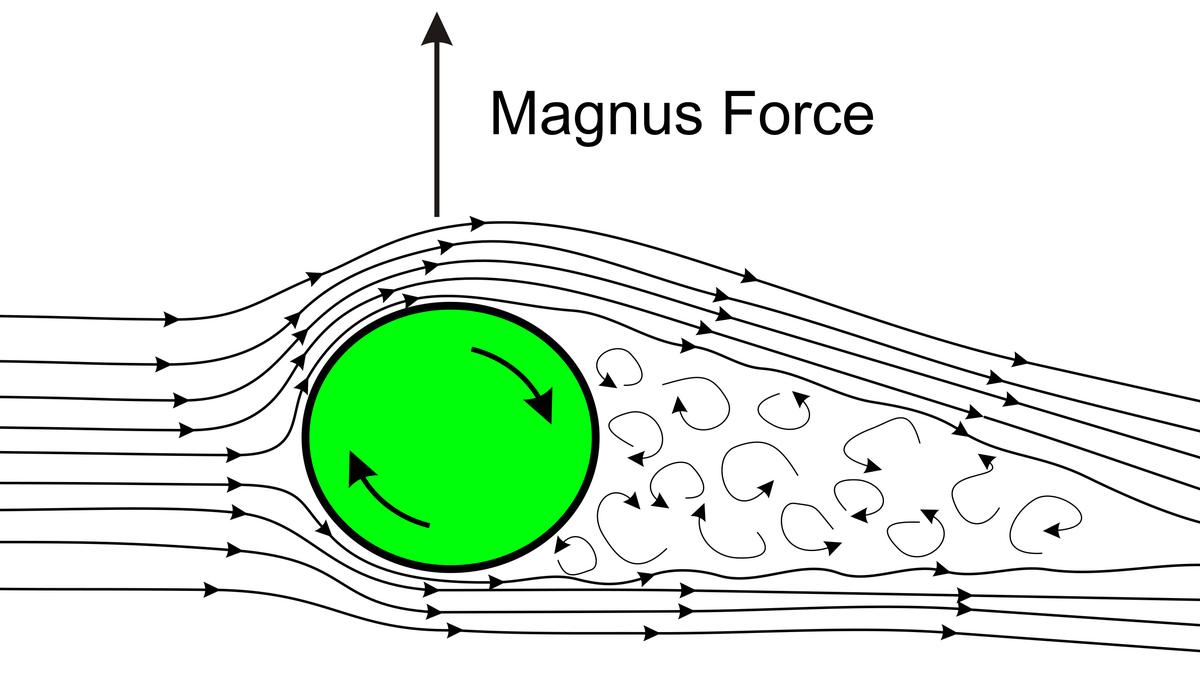
Spin Science: Explaining the Magnus effect Spin Science: Explaining the Magnus effect Science
Japan retrieves rare earth mud from deep seabed in test mission Japan retrieves rare earth mud from deep seabed in test mission Science
Rain may have helped form the first cells, kick-starting life as we know it Rain may have helped form the first cells, kick-starting life as we know it Science
SiteLock

Archives

  • October 2026
  • September 2026
  • August 2026
  • July 2026
  • June 2026
  • May 2026
  • April 2026
  • March 2026
  • February 2026
  • January 2026
  • December 2025
  • November 2025
  • October 2025
  • September 2025
  • August 2025
  • July 2025
  • June 2025
  • May 2025
  • April 2025
  • March 2025
  • February 2025
  • January 2025
  • December 2024
  • November 2024
  • October 2024
  • September 2024
  • August 2024
  • July 2024
  • June 2024
  • May 2024
  • April 2024
  • March 2024
  • February 2024
  • January 2024
  • December 2023
  • November 2023
  • October 2023
  • September 2023
  • August 2023
  • July 2023
  • June 2023
  • May 2023
  • April 2023
  • March 2023
  • February 2023
  • January 2023
  • December 2022
  • November 2022
  • October 2022
  • September 2022
  • August 2022
  • July 2022
  • June 2022
  • May 2022

Categories

  • Business
  • Nation
  • Science
  • Sports
  • World

Recent Posts

  • Man killed as lorry rams two-wheeler in Tiruvannamalai
  • Koder House fire under fresh scrutiny amid probe into synagogue arson
  • Govt proposes BS-VII emission norms from April 2029; adds brake, tyre, battery-durability rules
  • Kochi Mayor elected to global climate alliance’s board
  • Centre sets up panel to study problems of sugarcane farmers

Recent Comments

  1. RobertTes on UP Teacher Who Asked Students To Slap Muslim Classmate
  2. HermanTwito on UP Teacher Who Asked Students To Slap Muslim Classmate
  3. WalterBoumn on UP Teacher Who Asked Students To Slap Muslim Classmate
  4. HermanTwito on UP Teacher Who Asked Students To Slap Muslim Classmate
  5. JamesWhazy on UP Teacher Who Asked Students To Slap Muslim Classmate
  • Access Denied Sports
  • Access Denied Business
  • Access Denied
    Access Denied Nation
  • Officials found guilty of negligence or collusion to be held personally accountable in cases of loss of life or property: Minister; MCD Commissioner directed to seal all ongoing construction work beyond the permissible ground-plus-four floors, he adds
    Officials found guilty of negligence or collusion to be held personally accountable in cases of loss of life or property: Minister; MCD Commissioner directed to seal all ongoing construction work beyond the permissible ground-plus-four floors, he adds Nation
  • Ex-Kerala CM Pinarayi’s daughter T. Veena seeks postponement of ED questioning in CMRL pay-off case
    Ex-Kerala CM Pinarayi’s daughter T. Veena seeks postponement of ED questioning in CMRL pay-off case Nation
  • Science for All: Chocolate flavour is affected by microbes, scientists find
    Science for All: Chocolate flavour is affected by microbes, scientists find Science
  • The View from India newsletter: Blood on the hands of Trump and Netanyahu
    The View from India newsletter: Blood on the hands of Trump and Netanyahu World
  • AP Reporter Barred From Trump-Musk Event Over “Gulf Of America” Flap
    AP Reporter Barred From Trump-Musk Event Over “Gulf Of America” Flap World

Editor-in-Chief:
Mohammad Ariff,
MSW, MAJMC, BSW, DTL, CTS, CNM, CCR, CAL, RSL, ASOC.
editor@artifex.news

Associate Editors:
1. Zenellis R. Tuba,
zenelis@artifex.news
2. Haris Daniyel
daniyel@artifex.news

Photograher:
Rohan Das
rohan@artifex.news

Associate Journalists
1. Subrata Paul - AN/2020/01
2. Quamruz Zaman - AN/2021/22
3. Ahmed Sha - AN/2021/035
4. Ajay Kumar Shaw - AN/2021/39
5. Tahqiqul Hoda - AN/2021/21

Artifex.News offers Online Paid Internships to college students from India and Abroad. Interns will get a PRESS CARD and other online offers.
Send your CV (Subjectline: Paid Internship) to internship@artifex.news

Links:
Associate Journalism
About Us
Privacy Policy

News Links:
Breaking News
World
Nation
Sports
Business
Entertainment
Lifestyle

Registered Office:
72/A, Elliot Road, Kolkata - 700016
Tel: 033-22277777, 033-22172217
Email: office@artifex.news

Editorial Office / News Desk:
No. 13, Mezzanine Floor, Esplanade Metro Rail Station,
12 J. L. Nehru Road, Kolkata - 700069.
(Entry from Gate No. 5)
Tel: 033-46011099, 033-46046046
Email: editor@artifex.news

Copyright © 2023 Artifex.News Newsportal designed by Artifex Infotech.