



Skip to content
  • Facebook
  • X
  • Linkedin
  • WhatsApp
  • YouTube
  • Associate Journalism
  • About Us
  • Privacy Policy
  • 033-46046046
  • editor@artifex.news
Artifex.News

Artifex.News

Stay Connected. Stay Informed.

  • Breaking News
  • World
  • Nation
  • Sports
  • Business
  • Science
  • Entertainment
  • Lifestyle
  • Toggle search form
  • Ranji Trophy semifinal | Confident Vidarbha takes on Pandit’s MP for a spot in the final
    Ranji Trophy semifinal | Confident Vidarbha takes on Pandit’s MP for a spot in the final Sports
  • S Jaishankar On China’s ‘Questionable Intent’
    S Jaishankar On China’s ‘Questionable Intent’ World
  • Woman Found Engulfed In Flames In Ambala, Rushed To Hospital: Cops
    Woman Found Engulfed In Flames In Ambala, Rushed To Hospital: Cops Nation
  • Who Is Thomas Draca? First Player From Italy To Register For IPL 2025 Auction Already On MI’s Radar
    Who Is Thomas Draca? First Player From Italy To Register For IPL 2025 Auction Already On MI’s Radar Sports
  • Rajnath Singh arrives in Moscow, to hold talks with Putin
    Rajnath Singh arrives in Moscow, to hold talks with Putin Nation
  • Access Denied
    Access Denied Nation
  • Around 240 Indians claiming descent from biblical tribe arrive at Israel’s Tel Aviv
    Around 240 Indians claiming descent from biblical tribe arrive at Israel’s Tel Aviv World
  • Will “Most Likely” Give TikTok 90-Day Reprieve From Potential Ban: Trump
    Will “Most Likely” Give TikTok 90-Day Reprieve From Potential Ban: Trump World
Russia’s war is weakening scientists’ ability to track the climate

Russia’s war is weakening scientists’ ability to track the climate

Posted on March 31, 2024 By admin


Human activities have caused the earth to slowly heat up, and now it looks like war – another very human phenomenon – is preventing scientists from accurately measuring how rapidly our climate is changing.

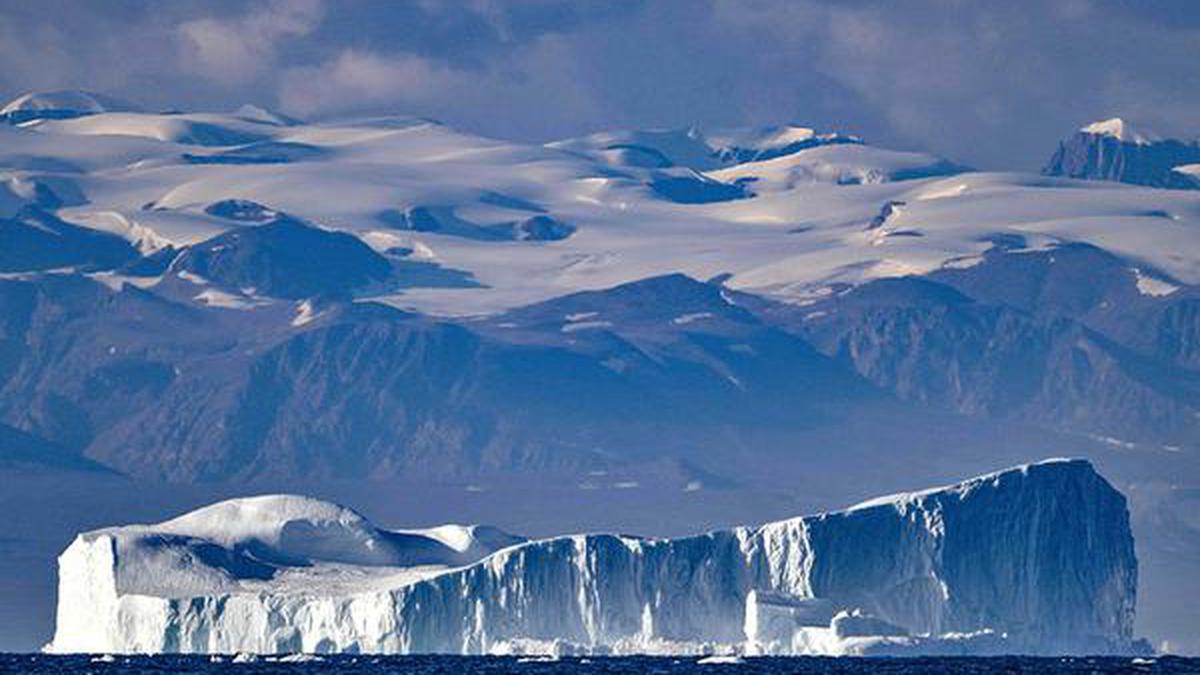
Global temperatures are rising, but temperatures in the Arctic region are rising even faster. Studies suggest a grim reality: that the Arctic is warming nearly four-times faster than the rest of the world. The consequences of this go way beyond just the Arctic. The melting permafrost and rising sea-levels can have devastating effects on local ecosystems as well as the climate.

Collaborations have collapsed

Many research stations in the Arctic are part of the International Network for Terrestrial Research and Monitoring in the Arctic (INTERACT). They continuously monitor environmental conditions in the different countries in the region. One country that makes up almost half of it is Russia – but since it invaded Ukraine, foreign scientists haven’t had access to data from Russian field stations.

Global collaborations with Russia have collapsed since the invasion and scientists from outside Russia who were earlier able to travel to field sites in the country to collect data can’t do so anymore. Climate projects that run on European funding also don’t allow them to officially collaborate with Russian partners, for now.

“We have to deal with this invisible wall, where there is no flow of data from the Russian side to our side. It is kind of like a blind spot,” said Efrén López-Blanco, an Arctic researcher at Aarhus University in Denmark. “And I want to believe that it is a temporary blind spot.”

Dr. López-Blanco and his colleagues recently reported that excluding data from Russia has heavily biased climate data. “When there is an increase in bias, there is a decrease in our ability to either describe or track Arctic changes,” he said.

A hidden difference

The researchers used multiple earth-system models (ESMs) to understand ecosystem conditions across the Arctic region. They focused on eight “essential variables” of the Arctic ecosystem, including temperature, vegetation, precipitation, and snow depth. ESMs are fully coupled climate, land, and ocean computational models that can be used to generate data for the entire planet. Those used in the study were the same ones the U.N. Intergovernmental Panel on Climate Change uses to assess the world’s changing climate.

First, the researchers wanted to use the models to find out if INTERACT stations in the Arctic, including the Russian ones, are able to potentially collect data representative of the pan-Arctic region. They examined 60 of the 94 INTERACT stations, including only those above 59 degrees N latitude. “Monitoring across the Arctic is not standardised,” Dr. López-Blanco said. So he and his colleagues primarily used model-generated data.

When they compared all the INTERACT stations’ data with the pan-Arctic data on the eight ecosystem variables, they realised there was already a difference in what INTERACT sites could estimate about the changes in the pan-Arctic region. These differences lead to a bias in the representation of ecosystem conditions in the Arctic.

Problem with excluding Russia

It so happens that INTERACT sites are located in warmer and wetter parts of the Arctic and regions of lesser biomass and soil carbon, which could be contributing to this bias.

Once the 17 Russian stations in Siberia were excluded, they found the differences – and thus the biases – increased further, and the ability to accurately describe changes in the Arctic decreased further.

Specifically, when the researchers used the ESMs to predict the state of ecosystem variables in 2100, they found current biases in the estimation of ecosystem variables after excluding Russian data showed a change similar to what is expected after 80 years of climate change.

Countering the bias

The result, Dr. López-Blanco said, is a decline in “our ability to inform management and conservation strategies and … our chances to properly mitigate the negative consequences of climate change”.

With Russian data continuing to stay out of reach, Dr. López-Blanco suggested looking for other regions in the Arctic with similar environments to Siberia – such as parts of northern Scandinavia and Canada – and collecting data from there to partially counter the bias, “at least in the short term until the war is over”. 

“In the climate change research field, there is already a very good tendency to share data, as we are working together on something that affects us all,” according to Dr. López-Blanco. “We still need more coordination between the stations, standardisation in terms of using similar sensors and methods, and more open-source data sharing. These elements are key to gain a better understanding of current Arctic conditions and prepare effectively for the future changes.”

‘Already an uphill battle’

Hrishikesh Chandanpurkar, a fellow at the Centre for Sustainability, Environment, and Climate Change at FLAME University, Pune, and a World Bank consultant, said research stations should be as well distributed across a region as possible. Bearing in mind the spatial variability of the data and not just the logistical ease of setting up and maintaining the stations will help mitigate biases.

“‘Don’t stop sharing critical scientific data’ is also something that could be worked into the protocols of activities that are permitted to go on even during a war,” Dr. Chandanpurkar said. “Each country is co-dependent on other countries because of the causes and the impacts of climate change. So it makes sense to have a system in place where we are safeguarding a continuous observation network and its sharing.”

Scientists collecting data in the Arctic already face an uphill battle, with the unforgiving weather and polar bears that sometimes accidentally destroy instruments. But lack of data because of war is an additional, and exacerbating, variable. “We people of science care about collecting our data, filling knowledge gaps, and understanding the ecosystem processes that we are interested in,” Dr. López-Blanco said. What they quantified in the paper “is collateral damage of something that is happening elsewhere”.

Rohini Subrahmanyam is a freelance journalist.


Source link

Science

Post navigation

Previous Post: Popular Odia Actor And Former BJD MLA Akash Das Nayak Joins BJP
Next Post: O Panneerselvam Gets ‘Jackfruit’ As Symbol To Contest Lok Sabha Polls

Related Posts

  • The world needs to stop taking water for granted
    The world needs to stop taking water for granted Science
  • Endemic dengue may have helped stem severity of early COVID wave in India: study
    Endemic dengue may have helped stem severity of early COVID wave in India: study Science
  • ISRO Chairman S. Somanath receives IAF World Space Award for Chandrayaan-3’s remarkable achievement
    ISRO Chairman S. Somanath receives IAF World Space Award for Chandrayaan-3’s remarkable achievement Science
  • What are IN-SPACe re-entry guidelines | Explained
    What are IN-SPACe re-entry guidelines | Explained Science
  • Genome study reveals prehistoric Ethiopian origins of coffee
    Genome study reveals prehistoric Ethiopian origins of coffee Science
  • IIT Guwahati team finds blue-green algae can remove lead from water
    IIT Guwahati team finds blue-green algae can remove lead from water Science

More Related Articles

What does World Thrift Day have to do with physics? What does World Thrift Day have to do with physics? Science
The INO that wasn’t and the JUNO that is The INO that wasn’t and the JUNO that is Science
Scientists find spaceflight affects immune genes, deforms the brain Scientists find spaceflight affects immune genes, deforms the brain Science
What are IN-SPACe re-entry guidelines | Explained What are IN-SPACe re-entry guidelines | Explained Science
Anxiety is faced by 58 genetic variants, not single gene, says study Anxiety is faced by 58 genetic variants, not single gene, says study Science
Unlocking the potential India’s research in medicine Unlocking the potential India’s research in medicine Science
SiteLock

Archives

  • October 2026
  • September 2026
  • August 2026
  • July 2026
  • June 2026
  • May 2026
  • April 2026
  • March 2026
  • February 2026
  • January 2026
  • December 2025
  • November 2025
  • October 2025
  • September 2025
  • August 2025
  • July 2025
  • June 2025
  • May 2025
  • April 2025
  • March 2025
  • February 2025
  • January 2025
  • December 2024
  • November 2024
  • October 2024
  • September 2024
  • August 2024
  • July 2024
  • June 2024
  • May 2024
  • April 2024
  • March 2024
  • February 2024
  • January 2024
  • December 2023
  • November 2023
  • October 2023
  • September 2023
  • August 2023
  • July 2023
  • June 2023
  • May 2023
  • April 2023
  • March 2023
  • February 2023
  • January 2023
  • December 2022
  • November 2022
  • October 2022
  • September 2022
  • August 2022
  • July 2022
  • June 2022
  • May 2022

Categories

  • Business
  • Nation
  • Science
  • Sports
  • World

Recent Posts

  • Ranji Trophy: Lower order’s lack of application cost us: Sai Kishore
  • Boat that capsized in Bihar had a hole and was overloaded, say police
  • Delhi journalist who accused ACP of sexual harassment slapped with SC/ST Act over ‘casteist remarks’
  • Three Indians killed in Germany building fire: reports
  • Govt. to roll out National Electricity Data Sharing framework in October: Power Secretary

Recent Comments

  1. WilliamNek on UP Teacher Who Asked Students To Slap Muslim Classmate
  2. RobertTes on UP Teacher Who Asked Students To Slap Muslim Classmate
  3. Manuelret on UP Teacher Who Asked Students To Slap Muslim Classmate
  4. RobertTes on UP Teacher Who Asked Students To Slap Muslim Classmate
  5. RobertTes on UP Teacher Who Asked Students To Slap Muslim Classmate
  • Access Denied World
  • Cathay Pacific Passenger, 76, Hospitalised After Hand Baggage Falls On Her Head
    Cathay Pacific Passenger, 76, Hospitalised After Hand Baggage Falls On Her Head World
  • ODI World Cup | England’s Ben Stokes unlikely to play against Bangladesh
    ODI World Cup | England’s Ben Stokes unlikely to play against Bangladesh Sports
  • Bangladesh batsmen struggle against West Indies
    Bangladesh batsmen struggle against West Indies Sports
  • Former BBC news presenter Huw Edwards given suspended sentence for indecent child images
    Former BBC news presenter Huw Edwards given suspended sentence for indecent child images World
  • How do cyclones form? How are they measured? | Explained
    How do cyclones form? How are they measured? | Explained Science
  • Tata Electronics, Taiwan’s PSMC complete technology transfer pact for India’s first semiconductor fab 
    Tata Electronics, Taiwan’s PSMC complete technology transfer pact for India’s first semiconductor fab  Business
  • Israel Army Says Two Thai Hostages Held In Gaza Are Dead
    Israel Army Says Two Thai Hostages Held In Gaza Are Dead World

Editor-in-Chief:
Mohammad Ariff,
MSW, MAJMC, BSW, DTL, CTS, CNM, CCR, CAL, RSL, ASOC.
editor@artifex.news

Associate Editors:
1. Zenellis R. Tuba,
zenelis@artifex.news
2. Haris Daniyel
daniyel@artifex.news

Photograher:
Rohan Das
rohan@artifex.news

Associate Journalists
1. Subrata Paul - AN/2020/01
2. Quamruz Zaman - AN/2021/22
3. Ahmed Sha - AN/2021/035
4. Ajay Kumar Shaw - AN/2021/39
5. Tahqiqul Hoda - AN/2021/21

Artifex.News offers Online Paid Internships to college students from India and Abroad. Interns will get a PRESS CARD and other online offers.
Send your CV (Subjectline: Paid Internship) to internship@artifex.news

Links:
Associate Journalism
About Us
Privacy Policy

News Links:
Breaking News
World
Nation
Sports
Business
Entertainment
Lifestyle

Registered Office:
72/A, Elliot Road, Kolkata - 700016
Tel: 033-22277777, 033-22172217
Email: office@artifex.news

Editorial Office / News Desk:
No. 13, Mezzanine Floor, Esplanade Metro Rail Station,
12 J. L. Nehru Road, Kolkata - 700069.
(Entry from Gate No. 5)
Tel: 033-46011099, 033-46046046
Email: editor@artifex.news

Copyright © 2023 Artifex.News Newsportal designed by Artifex Infotech.