



Image used for representation purpose only.
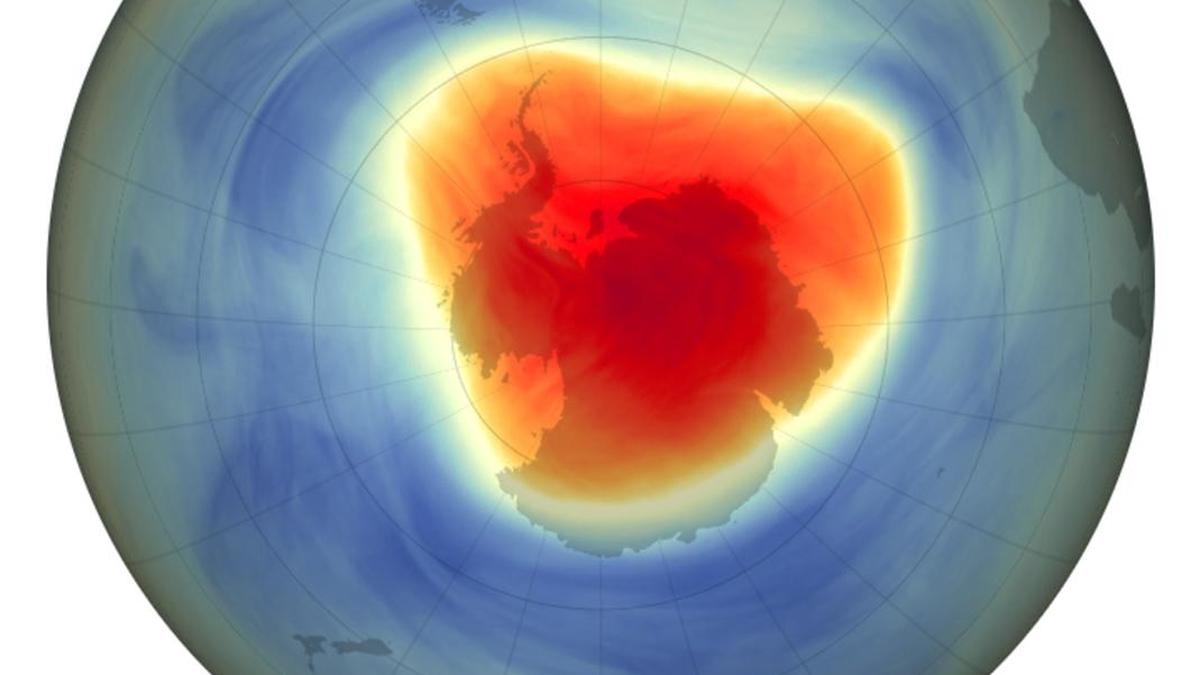
The European Space Agency (ESA) has said that the ozone hole over Antarctica this year is among the largest since scientists began monitoring it from space nearly five decades ago. The announcement, reported on November 26, is a reversal of fortune from 2025 — when the ozone hole was among the smallest in more than three decades. However, scientists reiterated that the hole naturally changes in size every year and that the world is still on course to shrinking it.
According to data from Copernicus — the European Union programme that monitors environmental conditions using satellites and ground-based instruments — the ozone hole covered 27.3 million sq. km on September 20, around 31% larger than the average for this time of year in the last two decades. On November 4, NASA and the U.S. National Oceanic and Atmospheric Administration (NOAA) had also reported that the hole was the seventh largest it has been on record between September 7 and October 13, at 25 million sq. km on average.
The ozone layer is around 15-35 km above the earth’s surface, in the stratosphere. The layer is named for its relatively high concentration of ozone, a molecule consisting of three oxygen atoms. This molecule absorbs much of the ultraviolet radiation coming from the sun, shielding organisms on the surface from its harmful effects.
In 1985, British Antarctic Survey scientists reported that the amount of ozone in the atmosphere above Antarctica declined seasonally. Scientists subsequently found the culprit to be compounds called chlorofluorocarbons (CFCs), then widely used in refrigerators and industrial processes. When CFCs reach the stratosphere, ultraviolet radiation in sunlight breaks them apart and releases chlorine atoms. These atoms participate in chemical reactions that destroy ozone while also regenerating the chlorine atoms. In other words, once these reactions begin with a few chlorine atoms, they can destroy thousands of ozone molecules.
During winter in the southern hemisphere, strong winds circulating around Antarctica form the so-called polar vortex, which prevents the relatively warmer air between the continent and the equator from pushing in. Below certain temperatures, chemical reactions on the surfaces of particles in clouds convert chlorine compounds into forms that can rapidly destroy ozone when sunlight returns in the spring, i.e. September to November.
Published – November 28, 2026 12:16 pm IST