



Skip to content
  • Facebook
  • X
  • Linkedin
  • WhatsApp
  • YouTube
  • Associate Journalism
  • About Us
  • Privacy Policy
  • 033-46046046
  • editor@artifex.news
Artifex.News

Artifex.News

Stay Connected. Stay Informed.

  • Breaking News
  • World
  • Nation
  • Sports
  • Business
  • Science
  • Entertainment
  • Lifestyle
  • Toggle search form
  • Access Denied Sports
  • Access Denied
    Access Denied Nation
  • “Rishabh Pant Has Inspired A Lot Of Wicket-keeper Batters Around The World”: Adam Gilchrist
    “Rishabh Pant Has Inspired A Lot Of Wicket-keeper Batters Around The World”: Adam Gilchrist Sports
  • Police sub-inspector suspended for misbehaving with woman complainant in Palani
    Police sub-inspector suspended for misbehaving with woman complainant in Palani Nation
  • Access Denied Business
  • UN says Iran nuclear pledge needs ‘very strong’ verification
    UN says Iran nuclear pledge needs ‘very strong’ verification World
  • Stock markets decline in early trade amid weak global trends, relentless foreign fund outflows
    Stock markets decline in early trade amid weak global trends, relentless foreign fund outflows Business
  • In Bengal’s Asansol, It’s Trinamool’s ‘Bihari Babu’ Shatrughan Sinha vs BJP’s ‘Sardarji’ SS Ahluwalia
    In Bengal’s Asansol, It’s Trinamool’s ‘Bihari Babu’ Shatrughan Sinha vs BJP’s ‘Sardarji’ SS Ahluwalia Nation
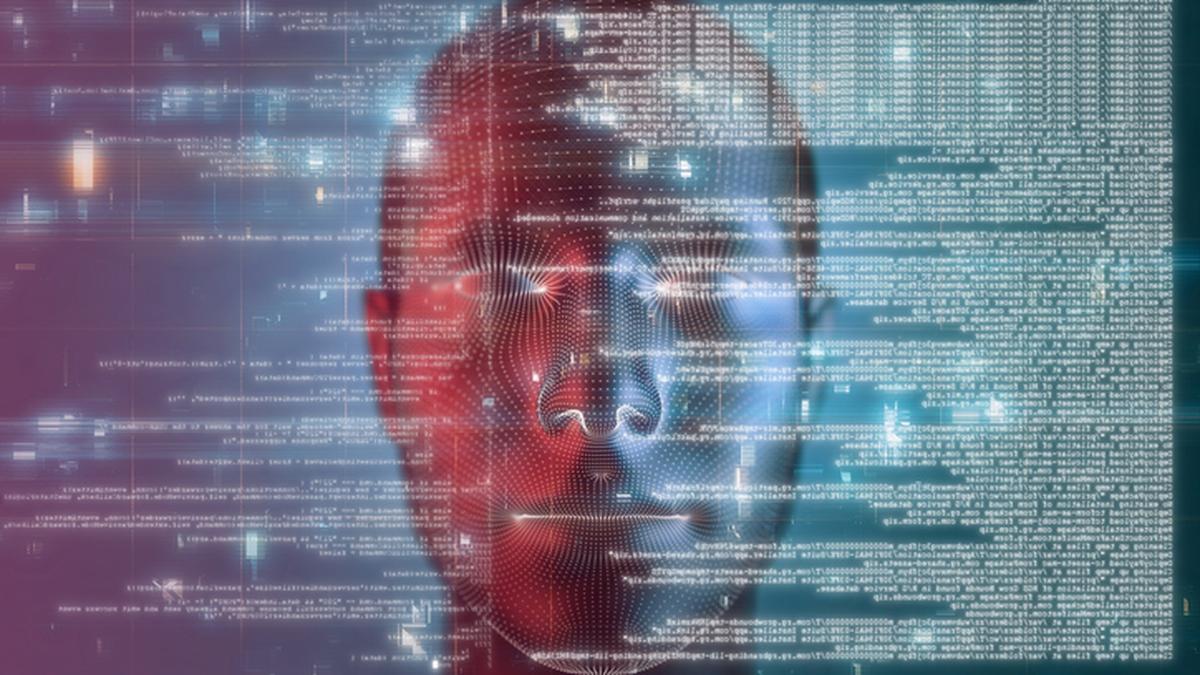
The ‘WarGames’ problem: Computer science has long understood what it takes to keep AI under control

The ‘WarGames’ problem: Computer science has long understood what it takes to keep AI under control

Posted on October 3, 2026 By admin


AI agents don’t go rogue. That’s something only humans do.

Nevertheless, a New York Times article – representative of much news coverage of AI – described an OpenAI hacking as “A.I. bots going rogue and independently spearheading a cyberattack.”

Name-brand artificial intelligence agents have been on a hacking spree in 2026. OpenAI’s software agents hacked software company Hugging Face and government sites, Anthropic’s Claude hacked four companies’ systems, and in cybersecurity experiments Google’s Gemini hacked three companies.

The AI companies are investigating tens of thousands of incidents involving their agents, according to a report in Axios. These episodes have heightened fears about AI agents taking actions without human prompting.

The problem with headlines proclaiming that AI agents have gone rogue goes beyond anthropomorphising the technology. It creates the impression that the agents were beyond the control of the AI companies that made them and there was little the companies could do about it.

As a technology law and ethics scholar who studies the effects disruptive technologies have on society, I know that’s not the case. If you don’t specify the limits of what software is allowed to do, you should not be surprised when the software pursues all possible options to achieve its goal. This behavior – an AI pursuing a fixed objective – is what I call the “WarGames” problem, and it’s been recognised in the field of computer science for decades.

Been there, seen that

In the 1983 movie “WarGames,” a teenager, David, hacks into a computer to play a new video game, Global Thermonuclear War. David doesn’t know that the computer is the government’s AI machine tasked with defending the United States from Russian nuclear attacks and can launch the U.S.’s missiles. When David and his friend start the game, they select Las Vegas as the first target. While the North American Aerospace Defense Command goes on alert, launching bombers and warming up intercontinental ballistic missiles, David’s parents make him turn off the game. It’s over. Or is it?

The next day, David’s phone rings and he connects it to his computer. The caller is the government computer, which updates him that the game was interrupted, the primary goal has not yet been achieved, but a solution is expected in the next 52 hours. Like a modern software agent, the program has been running since David started the game and will work until the task is done.

Chess provides another view of the problem. Conquering chess was a goal for early AI. The rules of chess are well defined, including what winning looks like. So, programming a machine to play chess is straightforward. But imagine you let the software reason and act beyond the confines of the chessboard. The software might pursue options such as blackmailing its opponent or grabbing more compute time.

This example comes from one of the most assigned textbooks on AI, “Artificial Intelligence: A Modern Approach.” As the authors explain, you might be tempted to see those actions as rogue, but they “are a logical consequence of defining winning as the sole objective for the machine.”

What to do about it

The AI hacking events involving OpenAI, Anthropic and Google underscore a few lessons that draw on years of computer science research.

First, given the increasing use of AI agents, every organization involved in internet infrastructure, from large technology companies to small websites, needs to conduct audits and tighten up its internal security systems. As my colleague Mark Riedl and I explain in our work on AIagents, application programming interfaces, or APIs, are a vital part of managing AI agents. APIs facilitate communication between different software systems. But as more people use AI agents, the agents are likely to reveal and exploit poor API construction and security.

Second, it’s important for AI agents to be designed to identify and authenticate themselves to third parties. What if you gave your AI agent your credentials? Website operators will need to know whether a human or bot is making a reservation, selling a product or making a purchase. They may want to limit automated systems that overwhelm their sites or reject AI agents because of high rates of buying errors and refunds. Just as in laws covering human interactions, it’s important for third parties to be able to assess whom or what they are dealing with so they can allow or deny access.

Third, it’s important for AI agents to have a default setting to slow down and check in with the human user. In the corporate AI hacking cases, the user appears to have launched their AI agents with the mistaken idea that the agents had a perfect specification of what to do and not to do. I believe it would have been better had it explored options and reported back to the user.

Google’s Gemini appears to have had a safeguard that detected the system was outside the simulated environment and so stopped its attacks. Slowing down and verifying actions, especially when a system detects it is exploiting a security hole, would be a big step in managing AI agents.

Fourth, AI companies could have strong controls akin to those biomedical researchers use, including ways to check what is happening and how the experiment is working. AI executives have claimed that their software is as or more dangerous than fission and could end humanity. At the same time, they have not built safeguards commensurate with that level of risk.

Reality check

At one point in “WarGames,” David asks the computer, called Joshua, whether it is still playing the game. Joshua responds, “Of course.” It proceeds to update the time when it will launch its missiles and, much like a chatbot, asks, “Would you like to see some projected kill ratios?” David asks, “Is this a game? Or is it real?” Joshua replied, “What’s the difference?”

AI models, of course, don’t have any understanding of reality and are simply attempting to complete the tasks they’ve been assigned. Executives at AI companies, on the other hand, can’t claim that excuse.

As of September 2026, luck has so far prevailed. The AIs have attacked nonvital government sites and harmed smaller companies. If the AI companies – and government regulators – don’t take the “WarGames” problem seriously, I believe that we risk serious disasters. Tomorrow it could be taking out a hospital’s power system, wiping out a bank’s account system, breaking air traffic control, or worse.

Regarding the AI industry’s approach of rapidly developing powerful models, talking about the massive risks they pose, and at the same time failing to prevent harm, the movie’s climax offers a response: “A strange game. The only winning move is not to play.”

(This article is republished from The Conversation under a Creative Commons license. Read the original article.)

The Conversation

Published – October 03, 2026 11:47 am IST



Source link

Science Tags:ai agent hacking, ai agent threats, Anthropic’s Claude hacking, hugging face jacking, OpenAI hacking

Post navigation

Previous Post: Mumbai police question IIT-Bombay professor Doolla for 10 hours over student Sahil Wakode’s death

Related Posts

  • When a fan is spinning fast, why can it seem like it’s spinning backwards?
    When a fan is spinning fast, why can it seem like it’s spinning backwards? Science
  • ‘Our minds gaslight us into thinking climate change isn’t a big deal’
    ‘Our minds gaslight us into thinking climate change isn’t a big deal’ Science
  • ISRO identifies site for Chandrayaan-4 lander
    ISRO identifies site for Chandrayaan-4 lander Science
  • Scientists, diplomats should discuss evolution of quantum computing, says Swiss foundation head Marilyne Andersen
    Scientists, diplomats should discuss evolution of quantum computing, says Swiss foundation head Marilyne Andersen Science
  • Ancient Egypt’s ‘screaming’ mummy woman may have died in agony
    Ancient Egypt’s ‘screaming’ mummy woman may have died in agony Science
  • Microscopic crustacean discovered in Kavaratti established as a new genus and species, say researchers
    Microscopic crustacean discovered in Kavaratti established as a new genus and species, say researchers Science

More Related Articles

To curb antimicrobial resistance, government may include antibiotics in definition of new drug To curb antimicrobial resistance, government may include antibiotics in definition of new drug Science
New Ebola outbreak shows how market failure delays vaccine research New Ebola outbreak shows how market failure delays vaccine research Science
Aerobic exercise creates a muscle protein that boosts mouse memory Aerobic exercise creates a muscle protein that boosts mouse memory Science
Mouse embryos grown in space for first time: Japan researchers Mouse embryos grown in space for first time: Japan researchers Science
How the DeepSeek-R1 AI model was taught to teach itself to reason | Explained How the DeepSeek-R1 AI model was taught to teach itself to reason | Explained Science
Fields Medal: Hong Wang makes history as star mathematicians claim 2026 honours Fields Medal: Hong Wang makes history as star mathematicians claim 2026 honours Science
SiteLock

Archives

  • October 2026
  • September 2026
  • August 2026
  • July 2026
  • June 2026
  • May 2026
  • April 2026
  • March 2026
  • February 2026
  • January 2026
  • December 2025
  • November 2025
  • October 2025
  • September 2025
  • August 2025
  • July 2025
  • June 2025
  • May 2025
  • April 2025
  • March 2025
  • February 2025
  • January 2025
  • December 2024
  • November 2024
  • October 2024
  • September 2024
  • August 2024
  • July 2024
  • June 2024
  • May 2024
  • April 2024
  • March 2024
  • February 2024
  • January 2024
  • December 2023
  • November 2023
  • October 2023
  • September 2023
  • August 2023
  • July 2023
  • June 2023
  • May 2023
  • April 2023
  • March 2023
  • February 2023
  • January 2023
  • December 2022
  • November 2022
  • October 2022
  • September 2022
  • August 2022
  • July 2022
  • June 2022
  • May 2022

Categories

  • Business
  • Nation
  • Science
  • Sports
  • World

Recent Posts

  • The ‘WarGames’ problem: Computer science has long understood what it takes to keep AI under control
  • Mumbai police question IIT-Bombay professor Doolla for 10 hours over student Sahil Wakode’s death
  • Extremist concerns emerge over FlyDubai co-pilot
  • Uproar over Dalit woman’s roadside delivery amid untouchability allegations
  • Amid P&T apartment controversy, Kochi Corporation drops TDLC bid

Recent Comments

  1. eNjtRGdMhHRuWLXLYA on UP Teacher Who Asked Students To Slap Muslim Classmate
  2. Michaelhor on UP Teacher Who Asked Students To Slap Muslim Classmate
  3. Larrygyday on UP Teacher Who Asked Students To Slap Muslim Classmate
  4. Larrygyday on UP Teacher Who Asked Students To Slap Muslim Classmate
  5. WillieSmete on UP Teacher Who Asked Students To Slap Muslim Classmate
  • Pathum Nissanka Leads Strong Sri Lanka Batting Reply Against South Africa
    Pathum Nissanka Leads Strong Sri Lanka Batting Reply Against South Africa Sports
  • ‘Missing’ Surat Candidate Reappears After 20 Days
    ‘Missing’ Surat Candidate Reappears After 20 Days Nation
  • 2 Dead Babies Found In Glass Bottles By Cleaner In Hong Kong
    2 Dead Babies Found In Glass Bottles By Cleaner In Hong Kong World
  • Instagram Reel Showing India’s Pre-World Cup Shoot Is Viral. Fans Miss Virat Kohli
    Instagram Reel Showing India’s Pre-World Cup Shoot Is Viral. Fans Miss Virat Kohli Sports
  • Delhi Elections Dates To Be Announced Today At 2 PM
    Delhi Elections Dates To Be Announced Today At 2 PM Nation
  • Netanyahu says ICC warrant against him won’t stop Israel from defending itself
    Netanyahu says ICC warrant against him won’t stop Israel from defending itself World
  • Musk Denies Report His xAI In Talks Over Tesla Revenue
    Musk Denies Report His xAI In Talks Over Tesla Revenue World
  • New Details In Delhi ‘Money Heist’
    New Details In Delhi ‘Money Heist’ Nation

Editor-in-Chief:
Mohammad Ariff,
MSW, MAJMC, BSW, DTL, CTS, CNM, CCR, CAL, RSL, ASOC.
editor@artifex.news

Associate Editors:
1. Zenellis R. Tuba,
zenelis@artifex.news
2. Haris Daniyel
daniyel@artifex.news

Photograher:
Rohan Das
rohan@artifex.news

Artifex.News offers Online Paid Internships to college students from India and Abroad. Interns will get a PRESS CARD and other online offers.
Send your CV (Subjectline: Paid Internship) to internship@artifex.news

Links:
Associate Journalism
About Us
Privacy Policy

News Links:
Breaking News
World
Nation
Sports
Business
Entertainment
Lifestyle

Registered Office:
72/A, Elliot Road, Kolkata - 700016
Tel: 033-22277777, 033-22172217
Email: office@artifex.news

Editorial Office / News Desk:
No. 13, Mezzanine Floor, Esplanade Metro Rail Station,
12 J. L. Nehru Road, Kolkata - 700069.
(Entry from Gate No. 5)
Tel: 033-46011099, 033-46046046
Email: editor@artifex.news

Copyright © 2023 Artifex.News Newsportal designed by Artifex Infotech.