



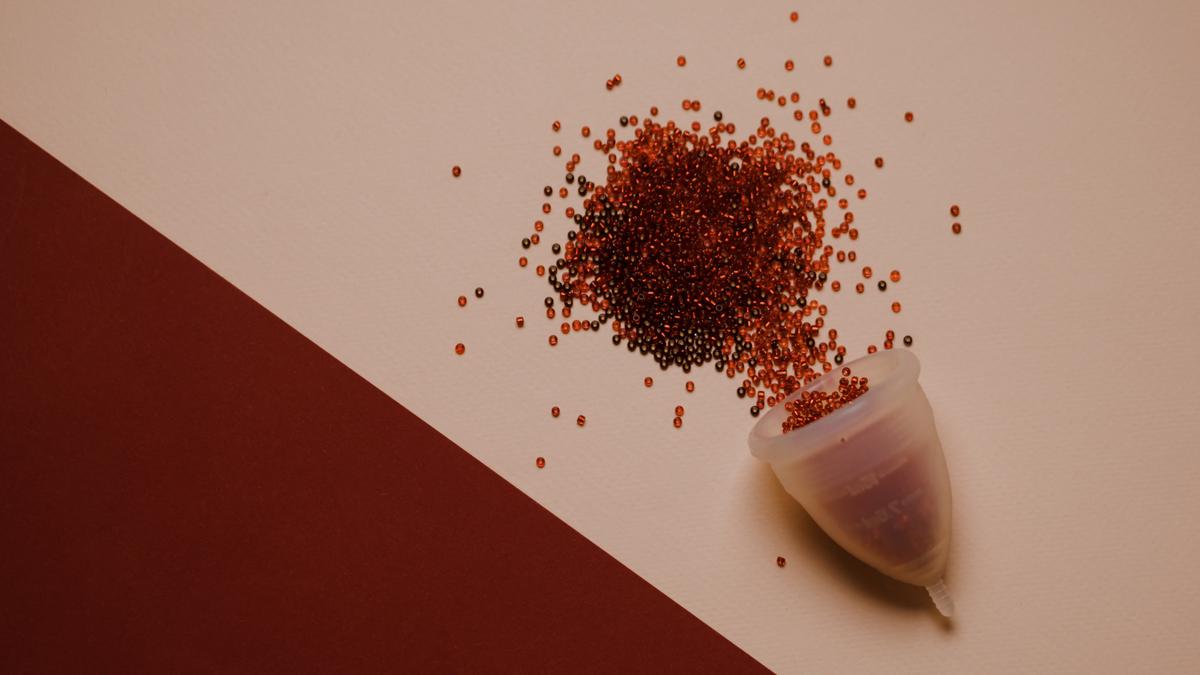
Blood really is thicker than water – yet makers of menstrual products have traditionally used saline to estimate how much liquid they can hold.
The capacity to absorb of traditional menstrual products is a common way to measure the amount of blood lost. Clinicians use it to diagnose heavy menstrual bleeding, which affects roughly a third of menstruating individuals worldwide (from 18.2% in China to 37.9% in Turkey) and could be a sign of more worrying ailments, such as fibroids.
But diagnosis is complicated when individuals use non-traditional products like discs and cups and when products’ advertised abilities are imprecise.
‘No data with blood’
Now, researchers from the Oregon Health & Science University (OHSU) have reported, in a study published in the journal BMJ Sexual & Reproductive Health on August 7, the absorbency of both traditional and non-traditional period products using not saline or other fluids but with human blood.
They found the advertised capacities of many products to be misleading.
Supriya Kamath, an MS in obstetrics and gynaecology from Mumbai’s K.E.M. Hospital whose residency starts in November, noted the importance of using blood to test menstrual products, “since it is blood and not urine which has to be absorbed”. (Saline is akin to urine.)
Bethany Samuelson Bannow, a coauthor of the published paper and an assistant professor of medicine at OHSU, said the increasing fraction of their patient population using menstrual cups motivated her team to assess the absorbency of non-traditional products as well.
“We decided to pursue information around how much alternative period products absorb,” Dr. Bannow told this writer in an email. “While reviewing testing methods for disposable products, [we] realised that there are no data on maximum absorption of these products with blood.”
From underwear to discs
Her team used packed red blood cells (RBCs) separated from whole blood to assess the capacity of 21 common products, including discs, cups, tampons, sanitary pads, and underwear. The brands they chose are commercially available in the U.S. and Europe; some are available online in India.
For their tests, the team chose pads of two brands with different reported absorbencies, tampons from one brand, and three pairs of period underwear with the same reported absorbency. They also tested menstrual cups of different sizes from one brand and discs of two sizes from different brands.
To measure the absorbency of pads and period underwear, the team poured RBCs over the central upper third until the RBCs pooled below or the product stopped absorbing them.
To assess the capacity of tampons, the researchers placed each tampon in a cup with 50 ml of RBCs for 30 minutes or until the blood reached the wick, and recorded how much the tampon had absorbed. They also filled cups and discs with RBCs to the brim and measured the volume.
They found that menstrual underwear products, regardless of size, soaked the least amount of blood – only 2 ml on average, which Dr. Bannow said was surprising. Menstrual discs held the most: 61 ml on average, with one brand holding about 80 ml. Tampons, sanitary pads, and menstrual cups held 20-50 ml.
What is heavy bleeding?
To Dr. Bannow, the principal conclusion was that menstrual cups and discs can hold a large amount of blood. So people who saturate or fill these products multiple times per cycle are likely to have heavy menstrual bleeding.
“The bottomline is we want every person who menstruates to know whether their periods are truly ‘normal,’ and to have access to evaluations and treatments if their periods are heavy.”
The researchers also found their measurements to disagree with advertisements.
“We were not terribly surprised that pads and tampons absorbed more blood than saline,” said Dr. Bannow, adding that this had been reported but not published before. While a product holding more blood can be interpreted as a good thing, the elevated absorbency could hide heavy bleeding.
“Being aware of what’s normal and what’s heavy is important since heavy menstrual bleeding can cause health complications,” Dr. Kamath said.
“The viscosities and composition of blood and water are very different and we can’t expect a product to have similar holding capacities for the two liquids,” said Ananya Petkar, an independent gynaecologist. “This study is a great attempt to check the absorbing capacity of different products.”
The authors, including Dr. Bannow, acknowledged in their paper that while RBCs are more viscous than saline, they are still not a perfect proxy for menstrual blood, which also includes endometrial cells and vaginal secretions. The consistency of menstrual blood also differs between individuals and on different days.
Dr. Bannow & co. are now studying menstrual cups and period underwear in individuals with heavy menstrual bleeding.
Too little research on menstruation
Dr. Petker also noted that the researchers measured the amount of blood that products could hold by filling each item. But in reality, women may not wait until a pad is completely soaked or a cup filled to change it. This also creates variance between the study’s findings and the products’ actual use and their clinical implications.
Another limitation of the application of this study in India, according to both Dr. Kamath and Dr. Petkar, is that not all products tested are just as available in India as they are elsewhere. Dr. Kamath singled out cups and discs for their relatively lower use in India because that requires “practice and a little knowledge of the female anatomy”.
“If we know the correct method to measure blood loss, only then can we educate others and catch and treat heavy menstrual bleeding,” Dr. Kamath said. “To do so, we need more research on this topic.”
Research on menstruation remains limited. A 2020 review found 400 papers in 2011-2018 mentioning “menstrual blood” in the PubMed database while more than 10,000 mentioned semen.
“I think people in general need to feel more comfortable discussing periods,” said Dr. Bannow. She expressed delight at the attention her recent study has received. It “is pushing a discussion around menstruation to the forefront.”
Sneha Khedkar is a biologist-turned freelance science journalist based out of Bengaluru.