

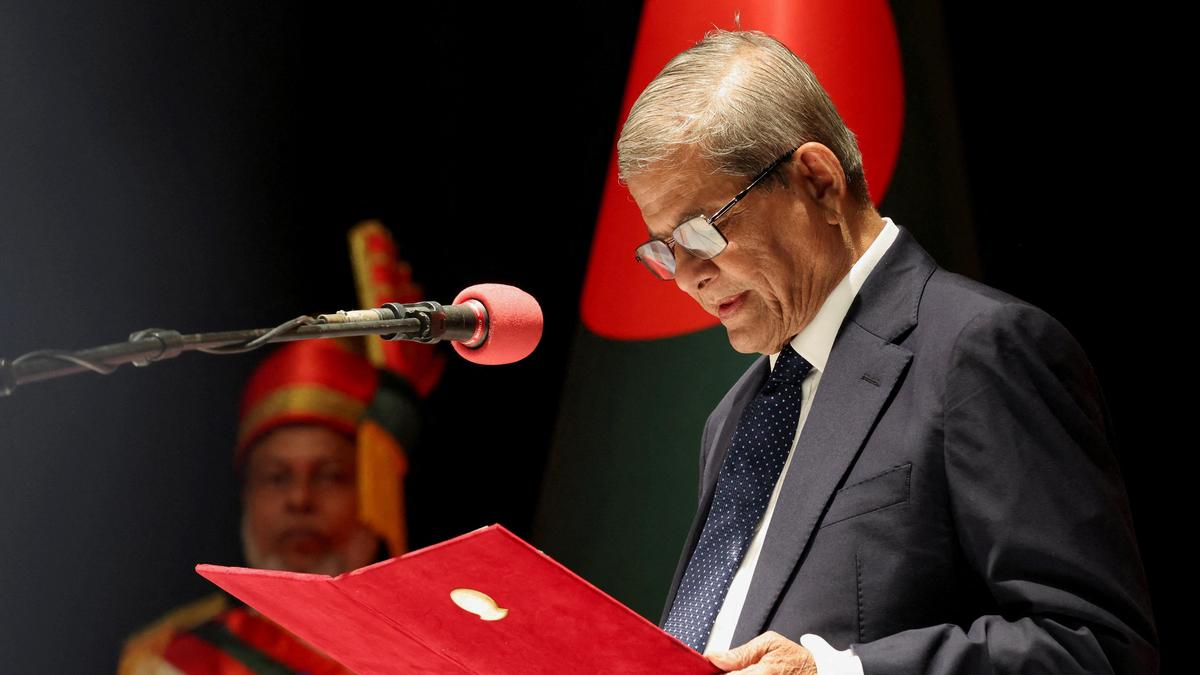
Mirza Fakhrul Islam Alamgir takes the oath of office as the president of Bangladesh, at Bangabhaban in Dhaka, Bangladesh, August 21, 2026. REUTERS/Mohammad Ponir Hossain TPX IMAGES OF THE DAY
| Photo Credit: MOHAMMAD PONIR HOSSAIN
(This article is part of the View From India newsletter curated by The Hindu’s foreign affairs experts. To get the newsletter in your inbox every Monday, subscribe here.)
Veteran Bangladeshi politician Mirza Fakhrul Islam Alamgir was sworn in as the country’s 23rd President on Friday (August 21, 2026), following a parliamentary vote — the first in 35 years. The top office fell vacant after Mohammed Shahabuddin, who was in 2023 elected unopposed as the nominee of ousted Prime Minister Sheikh Hasina’s Awami League (AL), resigned last month. It was halfway into his five-year term and about two years after Ms. Hasina was ousted.
The political churn that Bangladesh began witnessing two years ago continues . While more than one country in South Asia witnessed dramatic youth-led protests and subsequent regime changes, collapsing these varied political and economic contexts may not be helpful. The leaders and parties that replaced the old political order in Sri Lanka, Nepal, and Bangladesh, bring specific characteristics, as well as baggage, to governance, shaped by the complex political histories of each of these countries. Each story is different, and distinct.
President Alamgir is no new entrant to politics. He was a university student at a time of tumult and nationalist consciousness and later joined the Bangladesh Nationalist Party (BNP), and rose to become its General Secretary. Do read Kallol Bhattacherjee’s engaging profile of ‘The man who steadied the ship’ to understand Mr. Alamgir’s political journey. He also shares little nuggets about the leader, known to be “a master of marathon meetings, sustained simply by cups of tea”.
In an interview with The Hindu in February this year, Mr. Alamgir, who was then in charge of the Ministry of Local Governance, Rural Development and Cooperatives, described the period under Ms. Hasina as “very difficult”. Sharing his views on PM Hasina’s return, he said: “There is a popular demand to punish her, and we believe that India should hand her over to us. But not handing over Sheikh Hasina to Bangladesh will not be a deterrent to build trade and commercial ties. We want to build even better ties.”
In this context, the speculation over the possible visit of Bangladesh Prime Minister Tarique Rahman to India merits attention. The likelihood of PM Rahman’s visit to India next month for the BRICS Summit “remains slim” unless an appropriate environment based on “mutual trust” is created, along with a “dignified invitation” from New Delhi, his Foreign Affairs Adviser Humaiun Kobir has said. Dhaka is in “no hurry” to arrange a top-level visit without clearly defined national interests, he said.
New Delhi could not make up its mind with the messaging, it appeared. An email to the media by the Rashtrapati Bhavan on Friday (August 21, 2026) briefly created the impression that the long-under-discussion visit of Bangladesh Prime Minister Tarique Rahman would take place soon. However, soon another release came from the Rashtrapati Bhavan negating the previous note, saying, “A press release issued on the subject ‘No change of guard ceremony this Saturday’, which was issued on August 21, 2026, stands withdrawn,” Kallol Bhattacherjee reported.
Bangladesh, on the other hand, has been unambiguous in articulating its expectations, demanding that India create “propitious” circumstances for the visit by extraditing deposed Prime Minister Sheikh Hasina and the suspected killers of radical student leader Osman Hadi.
Can India really extradite Sheikh Hasina under the 2013 treaty with Bangladesh? Kallol Bhattacherjee takes us through the legal implications in this explainer.
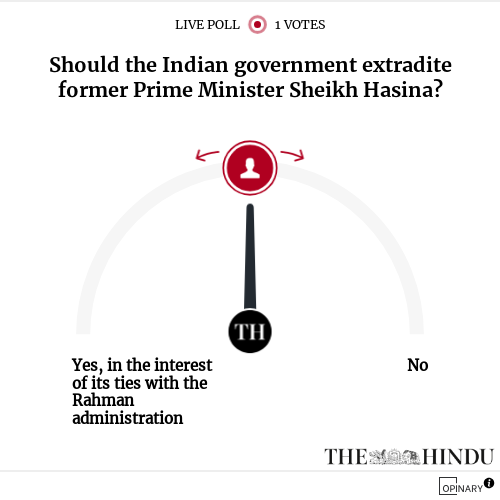
As we wait to see how New Delhi navigates this sensitive concern with Bangladesh, tell us what you think.
Published – August 24, 2026 04:05 pm IST