

Citizens opposing the Congress government’s ambitious tunnel road project have termed it “a real estate project in disguise.” The citizens’ group Bengaluru Praja Vedike (BPV), which is at the forefront of the campaign against the project, has written to all the city’s MLAs and MPs, urging them to reject it.
In a letter addressed to them, the group has termed it a “vanity infrastructure that repeats flyover failures” and urged them to embrace “evidence-based planning”. They have alleged that ancillary revenue in the form of real estate is being given “free” to the concessionaire, which they estimate could be as high as ₹30,000 crore for the entire concession period.
Coming ahead of the Monsoon Session of the Karnataka legislature, starting on August 13, this is expected to give the Opposition further ammunition, keen to put Chief Minister D.K. Shivakumar in a tight spot.
Intermodal hubs
The draft concession agreement shows that the concessionaire is required to build intermodal hubs at the vertical shaft points to create parking spaces. These will come up at five key junctions: Hebbal, Palace Grounds/Mehkri Circle, Race Course, Lalbagh and Silk Board. A total of 6.13 acres of land at these locations will be handed over by the government to the concessionaire.
Documents show that the intermodal hubs will be five-floor plazas, comprising a platform level, a services floor, a car parking floor, and two floors for retail space. Bengaluru Smart Infrastructure Ltd. (B-SMILE) estimates that these hubs could generate annual revenues of ₹250 crore to ₹300 crore for the concessionaire. The draft concession agreement states that this revenue, termed “ancillary revenue”, “will not be included in the calculations for review of the concession period”. The concession period is 30 years, extendable up to 40 years.
Contentions in three PILs challenging tunnel road project in High Court of Karnataka
On July 16, the HC directed that any contract entered into for the tunnel road project will be subject to the outcome of the three PIL petitions challenging the project. The court stated that the government should inform the contractors in writing that the contract would be subject to the final outcome of the petitions. Next hearing is on August 20.
Statutory non-compliance
Violation of Bengaluru Metropolitan Transport Authority Act, 2022 – BMLTA not formed at all. Act mandates all urban mobility projects have to get its approval. Act insists all projects to be part of CMP, DULT’s technical review
Project neither part of the Revised Master Plan – 2015 nor planned as a part of the master plan preparation process, violating Karnataka Town and Country Planning Act, 1961
No scrutiny of the project by Bengaluru Metropolitan Planning Committee (BMPC) violating Article 243ZE of the Constitution of India
Environmental concerns
No Environment Impact Assessment (EIA) done – State Environment Impact Assessment Authority-Karnataka exempted the project from EIA despite Ministry of Road Transport and Highways mandating EIA for tunnels longer than 1.5 km
The tunnel alignment cuts through billion-year-old Peninsular Gneiss at Lalbagh, a National Geological Monument as declared by Geological Survey of India
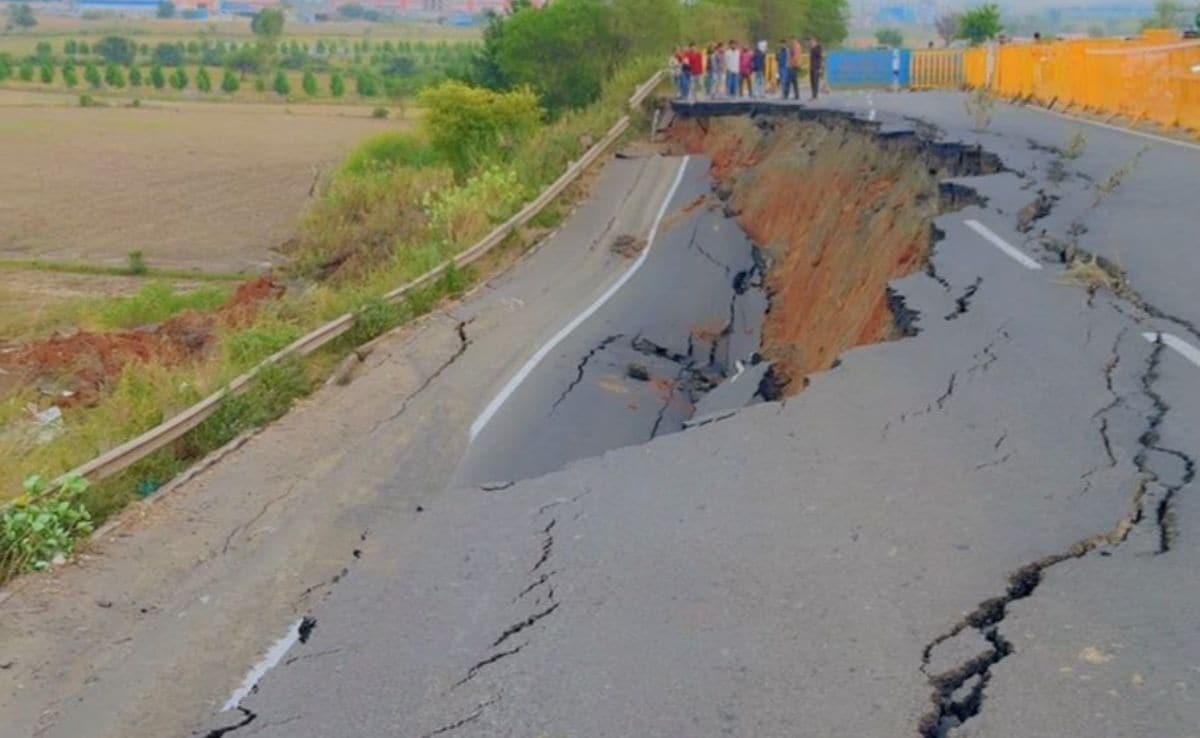
Disrupts groundwater flow in hard rock terrain affecting hundreds of borewells in Bengaluru and aquifers; damaging storm water valley of Habbal Lake and overflow canal to Nagawara Lakes and risks urban flooding. DULT Technical Review and Expert Committee warnings on these issues ignored.
Economic apartheid
The proposed tunnel will be open to four-wheelers but not two-wheelers (82% of city’s vehicles) and auto-rickshaws, creating economic apartheid in public infrastructure funded by all taxpayers. The project’s costs are arbitrarily high while benefiting only 2.7% population (car owners)
FSI 5
However, the ancillary revenue will be much higher, contend citizen groups. The same draft concession agreement also noted, “With respect to the retail spaces, a maximum FSI of 5 is permitted for development for the Intermodal Hubs above the surface (being Transit Oriented Development).”
This means the intermodal hubs need not be limited to five-floor buildings, but could also be developed as high-rises, creating greater commercial real estate opportunities, they contend.
“This is nothing but a free gift to private real estate developers to build on valuable prime central Bengaluru locations up to FSI 5. Conservative estimates put the real estate revenues upwards of ₹30,000 Crore during the concession period,” the letter argued.
“If the ancillary revenue is considered in calculating Total Concession Value (TCV) of the project, we can probably have the tunnel roads not tolled at all. The tunnel road project clearly has a big, but hidden real estate component, and may go down the road of NICE Road, embroiled in similar controversies over the years,” said Satya Arikutharam, an independent urban mobility expert.
‘Incentive’
B.S. Parhlad, Technical Director, B-SMILE, said ancillary revenue was an incentive provided by the government to attract firms to build the tunnel roads and was not illegal. B-SMILE documents show that the arrangement is modelled on similar agreements with concessionaires by the Port Authority of New York and New Jersey and the New York State Thruway Authority. The State government has already raised a ₹19,000-crore loan for Viability Gap Funding (VGF), amounting to 40% of the project cost of the Hebbal-Silk Board North-South Tunnel Road. Incentives in the form of ancillary revenue will be over and above this.
Published – August 10, 2026 06:01 am IST