




On May 1, the U.S. Food and Drug Administration (FDA) approved the drug vepdegestrant for patients with ESR1-mutated, ER-positive, and HER2-negative advanced breast cancer. It is the world’s first therapy that the FDA — whose lead many drug regulators worldwide follow — has approved that is based on PROTAC technology.
The approval paves the way for drugs designed to remove harmful proteins from cells, rather than simply block them. This is an advance because PROTACs can sidestep the barriers to treating diseases that involve hitherto ‘undruggable’ proteins. Researchers have been developing this technology for more than two decades.
How PROTACs work
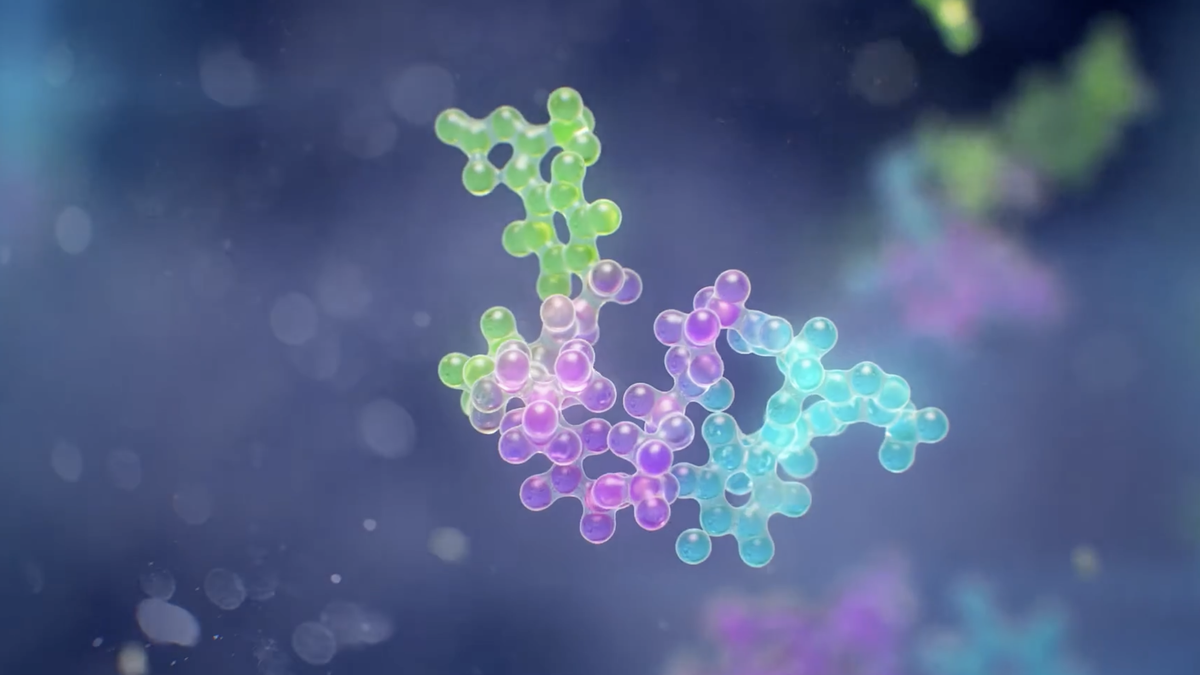
‘PROTAC’ stands for proteolysis-targeting chimaera, which is a kind of molecule. These molecules are designed to remove specific proteins from a cell. A PROTAC has two ends: one binds to the target protein and the other binds to an E3 ligase, an enzyme involved in the cell’s protein degradation process. By bringing these components together, the PROTAC causes the target protein to be degraded by the cell. This is called targeted protein degradation.
Conventional drugs work by binding to a protein in a way that prevents it from performing certain roles in the body. This means the drugs or antibodies often need to be present for long periods in the body. PROTACs however act like catalysts: while the proteins they target end up being degraded, they themselves are not degraded. After triggering one degradation process, the PROTAC can detach itself and repeat it with another instance of the same protein.
This mechanism allows a single PROTAC molecule to act multiple times. Because PROTACs remove the entire protein from the cell, they may also disrupt other roles the protein plays, such as controlling the activity of other proteins. Conventional drugs, however, usually block only one specific activity of a protein.
Early research to trials
In 2001, two research groups, at Yale University and Caltech, first demonstrated targeted protein degradation. They showed that a particular molecule was capable of recruiting a target protein to the cell’s degradation machinery. This molecule was a precursor to PROTACs. In 2003, a follow-up study by the same groups found that the same molecule could work inside cells to degrade proteins related to breast and prostate cancer.
At this stage, these molecules were mainly research tools and not suitable for use as drugs. Among other properties, they were large, unstable, and had poor pharmacological properties. But researchers made rapid progress in the 2010s: they improved the molecules’ designs and stabilised the interaction between the PROTAC, the target protein, and the E3 ligase, among other changes. The advances yielded molecules with better selectivity and other properties suited to a good drug.
In 2019, bavdegalutamide, a PROTAC developed by the U.S.-based biotechnology company Arvinas, became the first drug of its kind to enter human trials. Bavdegalutamide was designed for patients with metastatic, castration-resistant prostate cancer.
Around the same time, researchers were developing vepdegestrant — developed by Arvinas and Pfizer — as an oestrogen receptor degrader. Vepdegestrant progressed through early-phase trials and began phase 3 trials involving patients with advanced breast cancer. By 2025, the drug had completed late-stage testing as well, with its developers submitting the data to the FDA for regulatory review.
The FDA approval brings the drug’s development timeline from initial concept to approval to just over two decades.

Potential and limits
The approval for vepdegestrant was based on results from a phase 3 trial that enrolled 624 patients who had previously been treated with CDK4/6 inhibitors and endocrine therapy — the current standard-of-care.
Among 270 patients with ESR1-mutated tumours, the typical length of time the treatment kept the cancer under control was five months for those treated with vepdegestrant versus 2.1 months for patients receiving fulvestrant, an established standard treatment.
Most side effects reported with vepdegestrant were low grade, including musculoskeletal pain, fatigue, nausea, constipation, and lower appetite, plus changes in liver-related enzymes (that resolve on their own) and heart rhythm (e.g. minor abnormalities in an ECG).
Vepdegestrant works by targeting the oestrogen receptor, an important driver of many breast cancers. In patients with mutations in the ESR1 gene, the receptor can remain active despite hormone therapy, leading to the cancer resisting the treatment. Vepdegestrant destroys the receptor altogether, giving patients with some advanced forms of breast cancer a new hope. The drug is taken orally once a day, which is more convenient than fulvestrant, which requires intramuscular injections.
Many proteins associated with diseases lack suitable points on their surface where a traditional inhibitor can bind, rendering the protein dysfunctional. PROTACs however need to bind to a protein just enough to bring it into contact with an E3 ligase. Thus, PROTACs may also be able to target proteins previously considered difficult to treat. And because one PROTAC molecule can degrade multiple copies of a protein, these drugs may work effectively at lower doses than conventional inhibitors.
These potential abilities are why the PROTAC development pipeline is so wide today. Thus far, more than 40 PROTAC candidates have entered clinical trials, targeting more than 200 proteins across different disease areas. While the main focus is still cancer, researchers are also paying more attention to neurodegenerative diseases, inflammatory conditions, and muscle disorders, where abnormal or misfolded proteins contribute to disease.

Challenges to overcome
There are still several challenges to overcome. The PROTAC molecules are generally larger and more structurally complex than traditional small-molecule drugs, which are usually designed to be compact enough to pass through the gut wall and into the bloodstream after a patient swallows a pill. But because PROTACs are bulkier, they can be harder for the body to absorb and distribute efficiently to different tissues.
Their activity can also vary with concentration. At very high levels, PROTACs may begin binding separately to either the target protein or the E3 ligase instead of bringing the two together in the same complex. As a result, fewer productive interactions occur and the drug can paradoxically become less effective.
Most current PROTACs also rely mainly on just two E3 ligases while human cells are known to have more than 600. Scientists are therefore trying to expand the number of ligases that can be recruited, which could improve tissue specificity and reduce side effects.
Resistance mechanisms may also emerge over time. For example, cancer cells could develop mutations that alter the cellular machinery that PROTACs rely on to destroy proteins, or reduce the availability of E3 ligases themselves, making the drugs less effective.
The FDA approval for vepdegestrant augurs targeted protein degradation as a viable clinical approach. At the same time, the field is still developing, and most PROTAC-based drugs are still going through clinical trials. Further study will determine how widely this new therapeutic pathway can be applied and how it will perform relative to existing treatments across different diseases, including long-term safety and real-world effectiveness across various patient populations.
Manjeera Gowravaram has a PhD in RNA biochemistry and works as a freelance science writer.
Published – July 07, 2026 09:00 am IST