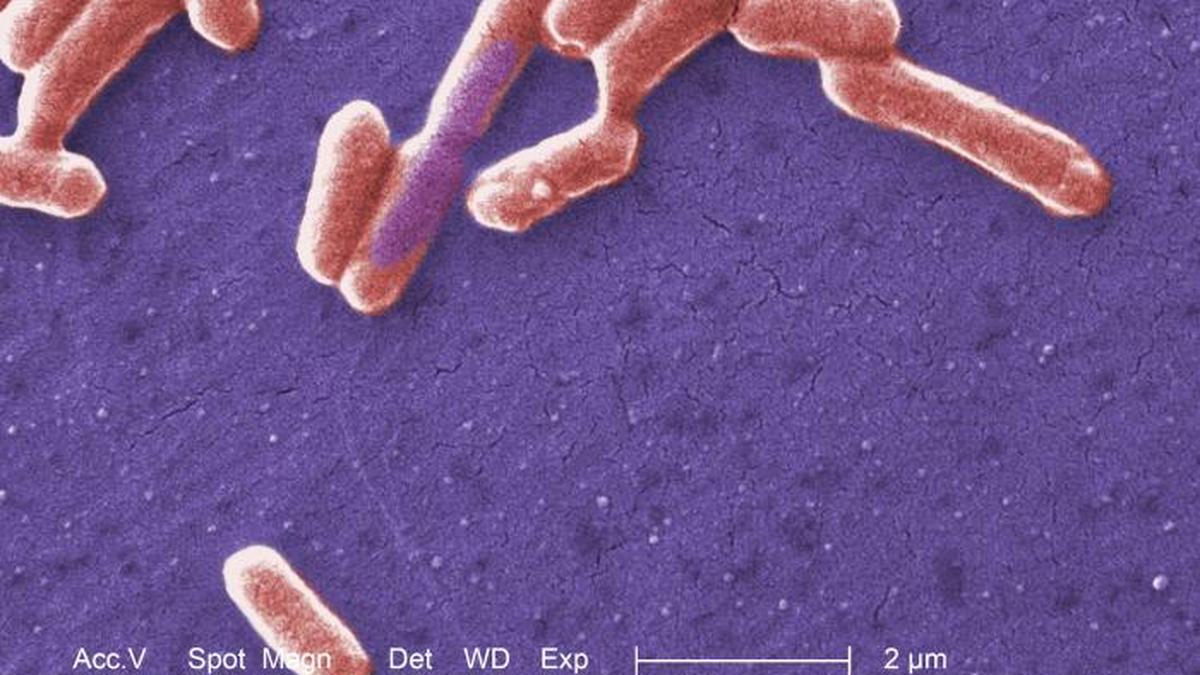







Just over five years ago, on 22 February 2019, an unmanned space probe was placed in orbit around the Moon. Named Beresheet and built by SpaceIL and Israel Aerospace Industries, it was intended to be the first private spacecraft to perform a soft landing. Among the probe’s payload were tardigrades, renowed for their ability to survive in even the harshest climates.
| Photo Credit: The Hindu
Just over five years ago, on 22 February 2019, an unmanned space probe was placed in orbit around the Moon. Named Beresheet and built by SpaceIL and Israel Aerospace Industries, it was intended to be the first private spacecraft to perform a soft landing. Among the probe’s payload were tardigrades, renowed for their ability to survive in even the harshest climates.
The mission ran into trouble from the start, with the failure of “star tracker” cameras intended to determine the spacecraft’s orientation and thus properly control its motors. Budgetary limitations had imposed a pared-down design, and while the command center was able to work around some problems, things got even trickier on 11 April, the day of the landing.
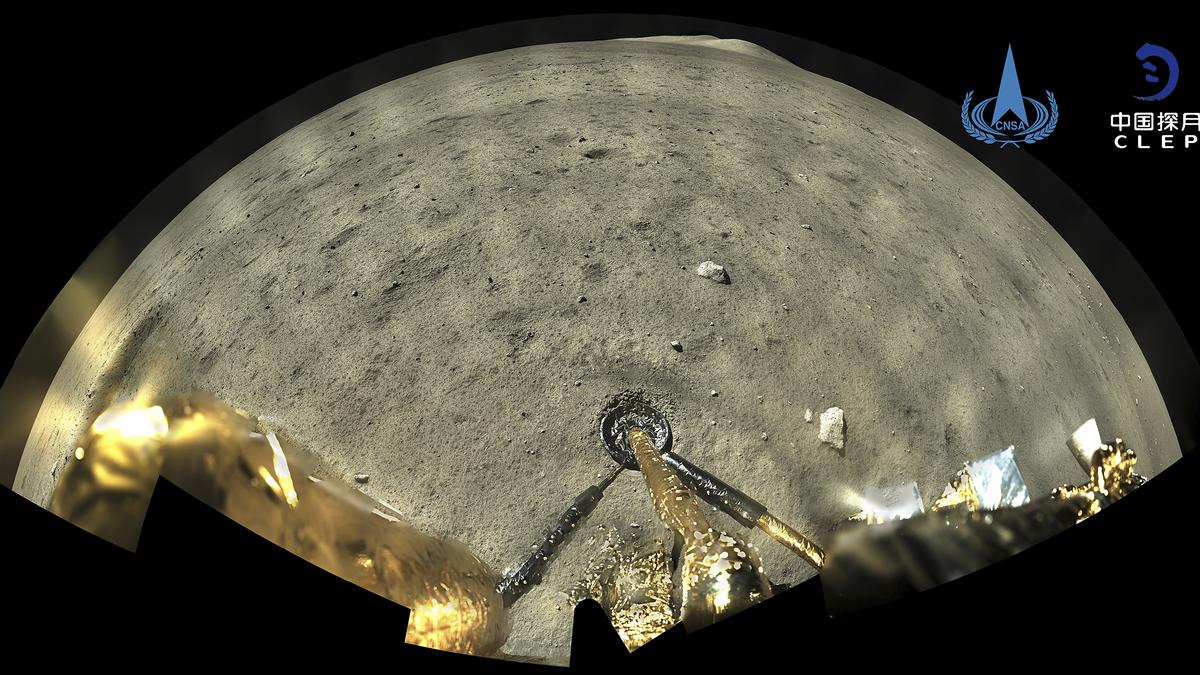
On the way to the Moon the spacecraft had been travelling at high speed, and it needed to be slowed way down to make a soft landing. Unfortunately during the braking manoeuvre a gyroscope failed, blocking the primary engine. At an altitude of 150 m, Beresheet was still moving at 500 km/h, far too fast to be stopped in time. The impact was violent – the probe shattered and its remains were scattered over a distance of around a hundred metres. We know this because the site was photographed by NASA’s LRO (Lunar Reconnaissance Orbiter) satellite on 22 April.
Animals that can withstand (almost) anything
So what happened to the tardigrades that were travelling on the probe? Given their remarkable abilities to survive situations that would kill pretty much any other animal, could they have contaminated the Moon? Worse, might they be able to reproduce and colonize it?
Tardigrades are microscopic animals that measure less than a millimetre in length. All have neurons, a mouth opening at the end of a retractable proboscis, an intestine containing a microbiota and four pairs of non-articulated legs ending in claws, and most have two eyes. As small as they are, they share a common ancestor with arthropods such as insects and arachnids.
Most tardigrades live in aquatic environments, but they can be found in any environment, even urban ones. Emmanuelle Delagoutte, a researcher at the CNRS, collects them in the mosses and lichens of the Jardin des Plantes in Paris. To be active, feed on microalgae such as chlorella, and move, grow and reproduce, tardigrades need to be surrounded by a film of water. They reproduce sexually or asexually via parthenogenesis (from an unfertilised egg) or even hermaphroditism, when an individual (which possesses both male and female gametes) self-fertilises. Once the egg has hatched, the active life of a tardigrade lasts from 3 to 30 months. A total of 1,265 species have been described, including two fossils.
Also Read | How water bears survive lethal UV radiation
Otherworldly powers
Tardigrades are famous for their resistance to conditions that exist neither on Earth nor on the Moon. They can shut down their metabolism by losing up to 95% of their body water. Some species synthesise a sugar, trehalose, that acts as an antifreeze, while others synthesise proteins that are thought to incorporate cellular constituents into an amorphous “glassy” network that offers resistance and protection to each cell.
During dehydration, the tardigrade’s body can shrink to half its normal size. The legs disappear, with only the claws still visible. This state, known as cryptobiosis, persists until conditions for active life become favourable again.
Depending on the species of tardigrade, individuals need more or less time to dehydrate and not all specimens of the same species manage to return to active life. Dehydrated adults survive for a few minutes at temperatures as low as -272°C or as high as 150°C, and over the long term at high doses of gamma rays of 1,000 or 4,400 Gray (Gy). By way of comparison, a dose of 10 Gy is fatal for humans, and 40-50,000 Gy sterilises all types of material. However, whatever the dose, radiation kills tardigrade eggs. What’s more, the protection afforded by cryptobiosis is not always clear-cut, as in the case of Milnesium tardigradum, where radiation affects both active and dehydrated animals in the same way.
Lunar life?
So what happened to the tardigrades after they crashed on the Moon? Are any of them still viable, buried under the moon’s regolith, the dust that varies in depth from a few metres to several dozen metres?
First of all, they have to have survived the impact. Laboratory tests have shown that frozen specimens of the Hypsibius dujardini species travelling at 3,000 km/h in a vacuum were fatally damaged when they smashed into sand. However, they survived impacts of 2,600 km/h or less – and their “hard landing” on the Moon, unwanted or not, was far slower.
The Moon’s surface is not protected from solar particles and cosmic rays, particularly gamma rays, but here too, the tardigrades would be able to resist. In fact, Robert Wimmer-Schweingruber, professor at the University of Kiel in Germany, and his team have shown that the doses of gamma rays hitting the lunar surface were permanent but low compared with the doses mentioned above – 10 years’ exposure to Lunar gamma rays would correspond to a total dose of around 1 Gy.
But then there’s the question of “life” on the Moon. The tardigrades would have to withstand a lack of water as well as temperatures ranging from -170 to -190°C during the lunar night and 100 to 120°C during the day. A lunar day or night lasts a long time, just under 15 Earth days. The probe itself wasn’t designed to withstand such extremes and even if it hadn’t crashed, it would have ceased all activity after just a few Earth days.
Unfortunately for the tardigrades, they can’t overcome the lack of liquid water, oxygen and microalgae – they would never be able to reactivate, much less reproduce. Their colonising the Moon is thus impossible. Still, inactive specimens are on lunar soil and their presence raises ethical questions, as Matthew Silk, an ecologist at the University of Edinburgh, points out. Moreover, at a time when space exploration is taking off in all directions, contaminating other planets could mean that we would lose the opportunity to detect extraterrestrial life.

Laurent Palka, Maître de conférences, Muséum national d’histoire naturelle (MNHN)
This article is republished from The Conversation under a Creative Commons license. Read the original article.