
Skip to content
  • Facebook
  • X
  • Linkedin
  • WhatsApp
  • YouTube
  • Associate Journalism
  • About Us
  • Privacy Policy
  • 033-46046046
  • editor@artifex.news
Artifex.News

Artifex.News

Stay Connected. Stay Informed.

  • Breaking News
  • World
  • Nation
  • Sports
  • Business
  • Science
  • Entertainment
  • Lifestyle
  • Toggle search form
  • ‘Indian IT firms set for “washout” year, focus now on 2025’
    ‘Indian IT firms set for “washout” year, focus now on 2025’ Business
  • Access Denied
    Access Denied Nation
  • 4 Madhya Pradesh Booths To See Repolling After Bus With EVMs Catches Fire
    4 Madhya Pradesh Booths To See Repolling After Bus With EVMs Catches Fire Nation
  • Doctors’ Group Urges Centre To Review All Covid Vaccines
    Doctors’ Group Urges Centre To Review All Covid Vaccines Nation
  • PM Modi US visit LIVE: U.S. approves extradition of 26/11 terror attack accused Tahawwur Rana to India
    PM Modi US visit LIVE: U.S. approves extradition of 26/11 terror attack accused Tahawwur Rana to India World
  • Mohammed Shami Comments On World Cup Final Loss, Blames ‘Luck Factor’ Against India
    Mohammed Shami Comments On World Cup Final Loss, Blames ‘Luck Factor’ Against India Sports
  • Woman Strangles 8-Year-Old Son To Death In Gurugram, Arrested
    Woman Strangles 8-Year-Old Son To Death In Gurugram, Arrested Nation
  • Maine mass shooting | At least 22 killed in U.S. city, dozens wounded 
    Maine mass shooting | At least 22 killed in U.S. city, dozens wounded  World
Is climate research being held back by local instrumentation? | Explained

Is climate research being held back by local instrumentation? | Explained

Posted on June 4, 2026 By admin


Although renewable energy seems to be the right solution to replace polluting sources, the report cautions that studies are needed to assess the long-term effects of uncontrolled tapping of natural resources. 

The story so far:

A Mega Science Vision-2035 report on Climate Research is a roadmap prepared by the Indian climate research community with the Indian Institute of Science (IISc), Bengaluru, as the nodal institution, and submitted to the Office of the Principal Scientific Adviser (PSA) to the Government of India, was made public this week.

What is its central message?

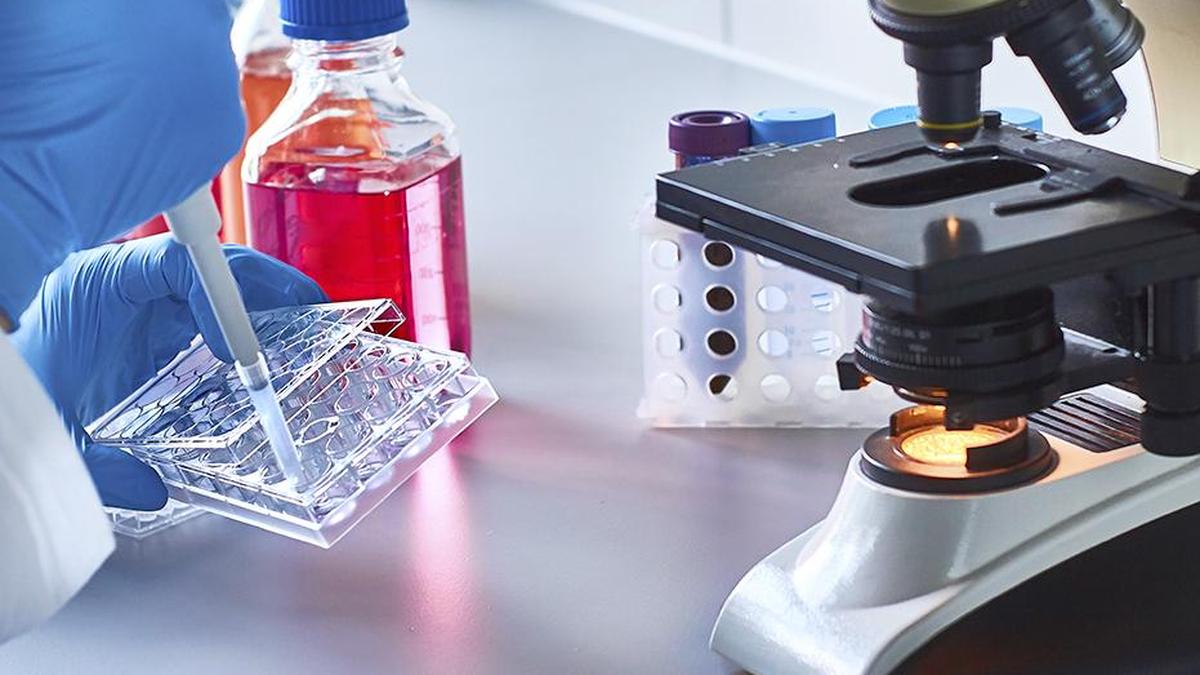
The central message of the report is that India has effectively lost the ability to build its own scientific instruments. “Today, virtually no company in India manufactures quality scientific instruments for climate research,” it states, adding that “billions of rupees have been spent and continue to be spent on procuring instruments manufactured elsewhere.” Worse, imported instruments are often used “without knowing the principle of operation, the built-in assumptions… and their limitations,” and left uncalibrated for years — producing, in the report’s words, “incorrect data being reported in national and international journals, often leading to questions on the credibility of Indian science.”

What is the Mega Science Vision exercise?

The Mega Science Vision exercise, historically used to plan large, long-horizon projects in nuclear and high-energy physics, was for the first time extended to climate research, ecology and astronomy, and facilitated by the PSA’s office under Prof. Ajay K. Sood. A working group chaired by Prof. S.K. Satheesh, with former Indian National Centre for Ocean Information Services (INCOIS) director Dr. S.S.C. Shenoi, as member-secretary, drew on consultations with over 3,000 researchers. Crucially, the document calls itself “a Climate Research community document” of “hopes and aspirations” whose projects are “indicative” — it is neither a mandatory prescription nor a statement of government policy or funding.

Hasn’t India built any of its own climate instruments?

It has built prototypes, but rarely products. The report notes that Indian engineers can design and demonstrate instruments, “some of which have already been demonstrated successfully,” yet “they are not often translated into final industrial products.” Examples include automatic profiling floats developed at the National Institute of Ocean Technology for ocean observation, and automatic weather stations by the India Meteorological Department and ISRO. Although transferred to industry, “most of them have not reached the market yet.” Tellingly, the first phase of the proposed sensor programme is an audit to identify why such technologies fail to scale to production. The suggested remedy — mandating that most instruments be made in India, backed by assured procurement and pricing — sits uneasily with recent experience: the Government e-Marketplace (GeM) portal, made mandatory to support domestic vendors, was rolled back for scientific institutions in June 2025 after scientists found it hindered access to customised, high-quality equipment.

Why study uncontrolled renewables?

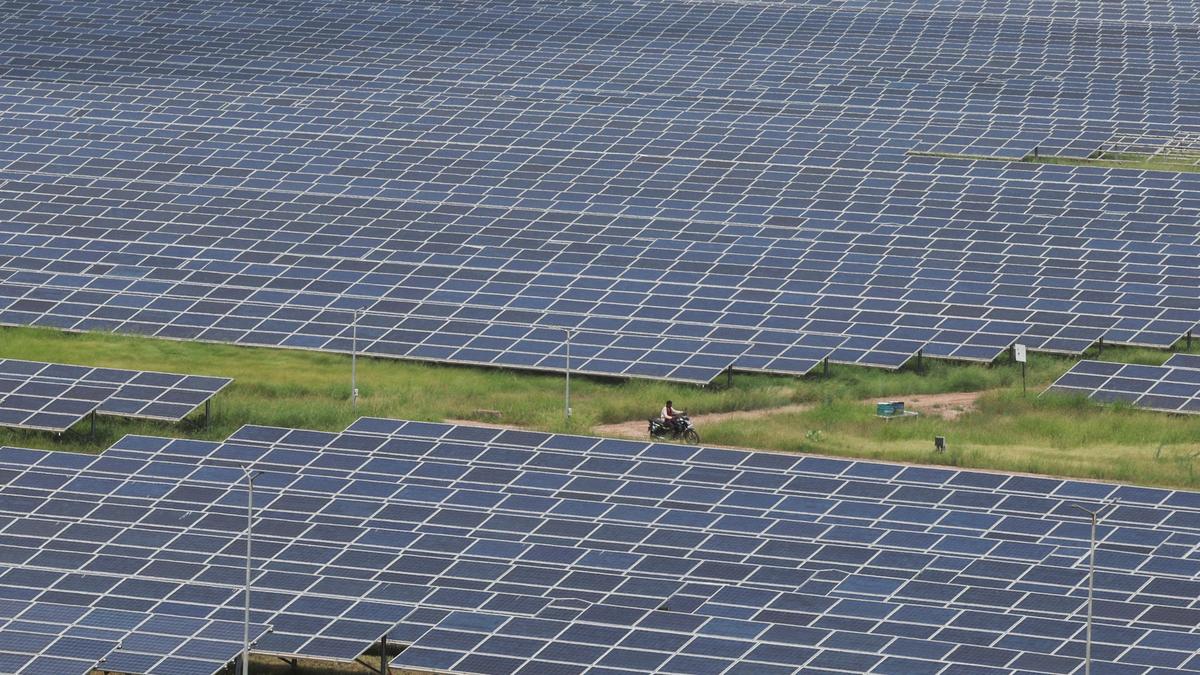
Although renewable energy seems to be the right solution to replace polluting sources, the report cautions that studies are needed to assess the long-term effects of uncontrolled tapping of natural resources — even as it insists renewables must remain a priority to sustain recent momentum. India, which has pledged 500 GW of non-fossil capacity by 2030, crossed the halfway mark in installed capacity in 2025. The report also calls for scientific methods to estimate the social cost of carbon, a “polluter pays” mechanism to prevent the atmosphere from becoming a dumping ground, and measures to offset the burden of carbon taxation on the poor.

What else in the report is of importance?

The report proposes a pan-India Climate and Health Observatory under a mega project on adaptation and resilience, reflecting how thinly India tracks climate-related health impacts. It outlines eight mega projects spanning observational networks, indigenous sensors, satellites, two strands of climate modelling, field campaigns, carbon-neutrality research and adaptation science, to be overseen by a high-level apex committee. On science, it enters contested ground, backing a dense Black Carbon observatory network despite disputed claims about its relative role in global warming. It flags India’s thin paleoclimate networks as a gap in understanding the monsoon’s deep past, and the risk of crossing tipping points such as ice-sheet collapse and shifts in ocean circulation. It also warns of limited trained manpower, including in environmental epidemiology.

Published – June 04, 2026 08:30 am IST



Source link

Science

Post navigation

Previous Post: Daily quiz: On June 4 events
Next Post: K-Pop, K-Beauty and matcha: Look East edition returns to Hyderabad

Related Posts

  • Facts alone fall short in correcting science misinformation
    Facts alone fall short in correcting science misinformation Science
  • China launches 3-member crew to its space station as it seeks to put astronauts on the moon by 2030
    China launches 3-member crew to its space station as it seeks to put astronauts on the moon by 2030 Science
  • ‘It’s like writing a poem’: prize winner Rajula Srivastava on doing maths
    ‘It’s like writing a poem’: prize winner Rajula Srivastava on doing maths Science
  • Venture capitalists back ‘steroid Olympics’ where drug-testing is legal
    Venture capitalists back ‘steroid Olympics’ where drug-testing is legal Science
  • New cat species identified in Bolivia, first in over a century
    New cat species identified in Bolivia, first in over a century Science
  • Earth is getting a new mini-moon, and it won’t be the first or the last
    Earth is getting a new mini-moon, and it won’t be the first or the last Science

More Related Articles

How the next major breakthrough in cancer could come from India How the next major breakthrough in cancer could come from India Science
A liver protein triggered by exercise reversed memory loss in mice A liver protein triggered by exercise reversed memory loss in mice Science
Scientists detect early brain response to rhythm in preterm babies Scientists detect early brain response to rhythm in preterm babies Science
China becomes AI’s biggest testing ground China becomes AI’s biggest testing ground Science
How does the brain turn light waves into experiences of colour? How does the brain turn light waves into experiences of colour? Science
What causes the seas to foam? What causes the seas to foam? Science
SiteLock

Archives

  • September 2026
  • August 2026
  • July 2026
  • June 2026
  • May 2026
  • April 2026
  • March 2026
  • February 2026
  • January 2026
  • December 2025
  • November 2025
  • October 2025
  • September 2025
  • August 2025
  • July 2025
  • June 2025
  • May 2025
  • April 2025
  • March 2025
  • February 2025
  • January 2025
  • December 2024
  • November 2024
  • October 2024
  • September 2024
  • August 2024
  • July 2024
  • June 2024
  • May 2024
  • April 2024
  • March 2024
  • February 2024
  • January 2024
  • December 2023
  • November 2023
  • October 2023
  • September 2023
  • August 2023
  • July 2023
  • June 2023
  • May 2023
  • April 2023
  • March 2023
  • February 2023
  • January 2023
  • December 2022
  • November 2022
  • October 2022
  • September 2022
  • August 2022
  • July 2022
  • June 2022
  • May 2022

Categories

  • Business
  • Nation
  • Science
  • Sports
  • World

Recent Posts

  • 86,489 stray dogs vaccinated against rabies in Chennai
  • Yashbardhan slams another ton as India u-19 clinches series
  • Collector inspects dengue prevention measures in Cuddalore
  • Paramount reaches deal with states to settle their case challenging Warner buyout, AP source say
  • Delegation from Ghana visits crime records bureau in T.N. to study digital policing initiatives

Recent Comments

  1. Jerrylaw on UP Teacher Who Asked Students To Slap Muslim Classmate
  2. BrandonDib on UP Teacher Who Asked Students To Slap Muslim Classmate
  3. Daviddrire on UP Teacher Who Asked Students To Slap Muslim Classmate
  4. JesseHaf on UP Teacher Who Asked Students To Slap Muslim Classmate
  5. JustinPet on UP Teacher Who Asked Students To Slap Muslim Classmate
  • Delhi Court Orders AAP MP Sanjay Singh Not To Tamper With Evidence
    Delhi Court Orders AAP MP Sanjay Singh Not To Tamper With Evidence Nation
  • Did Injury Hamper Neeraj Chopra’s Paris Olympics 2024 Show? Star’s Father Makes Big Claim
    Did Injury Hamper Neeraj Chopra’s Paris Olympics 2024 Show? Star’s Father Makes Big Claim Sports
  • Access Denied
    Access Denied Nation
  • Modi, Meloni review progress of India-Italy strategic partnership at G7 Summit
    Modi, Meloni review progress of India-Italy strategic partnership at G7 Summit World
  • Stock markets rebound in early trade
    Stock markets rebound in early trade Business
  • Revanth Reddy Slams KCR, BJP On K Kavitha’s Arrest
    Revanth Reddy Slams KCR, BJP On K Kavitha’s Arrest Nation
  • Sept. 30 set as deadline to clear debris from Cooum
    Sept. 30 set as deadline to clear debris from Cooum Nation
  • Access Denied Sports

Editor-in-Chief:
Mohammad Ariff,
MSW, MAJMC, BSW, DTL, CTS, CNM, CCR, CAL, RSL, ASOC.
editor@artifex.news

Associate Editors:
1. Zenellis R. Tuba,
zenelis@artifex.news
2. Haris Daniyel
daniyel@artifex.news

Photograher:
Rohan Das
rohan@artifex.news

Artifex.News offers Online Paid Internships to college students from India and Abroad. Interns will get a PRESS CARD and other online offers.
Send your CV (Subjectline: Paid Internship) to internship@artifex.news

Links:
Associate Journalism
About Us
Privacy Policy

News Links:
Breaking News
World
Nation
Sports
Business
Entertainment
Lifestyle

Registered Office:
72/A, Elliot Road, Kolkata - 700016
Tel: 033-22277777, 033-22172217
Email: office@artifex.news

Editorial Office / News Desk:
No. 13, Mezzanine Floor, Esplanade Metro Rail Station,
12 J. L. Nehru Road, Kolkata - 700069.
(Entry from Gate No. 5)
Tel: 033-46011099, 033-46046046
Email: editor@artifex.news

Copyright © 2023 Artifex.News Newsportal designed by Artifex Infotech.