

Skip to content
  • Facebook
  • X
  • Linkedin
  • WhatsApp
  • YouTube
  • Associate Journalism
  • About Us
  • Privacy Policy
  • 033-46046046
  • editor@artifex.news
Artifex.News

Artifex.News

Stay Connected. Stay Informed.

  • Breaking News
  • World
  • Nation
  • Sports
  • Business
  • Science
  • Entertainment
  • Lifestyle
  • Toggle search form
  • Access Denied
    Access Denied Nation
  • Sensex Soars 1,359 Points To Settle Above Historic 84,000 Mark
    Sensex Soars 1,359 Points To Settle Above Historic 84,000 Mark Nation
  • Indian team’s defence needs to display more coordination: Sreejesh Sports
  • Danish military evacuates U.S. submariner who needed urgent medical care off Greenland
    Danish military evacuates U.S. submariner who needed urgent medical care off Greenland World
  • “Need Someone To Raise Finger…”: Sanju Samson Doesn’t Mince Words After RR’s 4-Game Losing Streak
    “Need Someone To Raise Finger…”: Sanju Samson Doesn’t Mince Words After RR’s 4-Game Losing Streak Sports
  • Rupee rises 63 paise to close at 95.73 against U.S. dollar
    Rupee rises 63 paise to close at 95.73 against U.S. dollar Business
  • U.K. Prime Minister Keir Starmer calls English Channel incident involving Russian warship ‘reckless’
    U.K. Prime Minister Keir Starmer calls English Channel incident involving Russian warship ‘reckless’ World
  • Kohli and Rohit in focus as Indian cricket’s creme de la creme take guard for the Hazare Trophy
    Kohli and Rohit in focus as Indian cricket’s creme de la creme take guard for the Hazare Trophy Sports
Fake memory implanted in mice with a beam of light

Fake memory implanted in mice with a beam of light

Posted on May 22, 2026 By admin


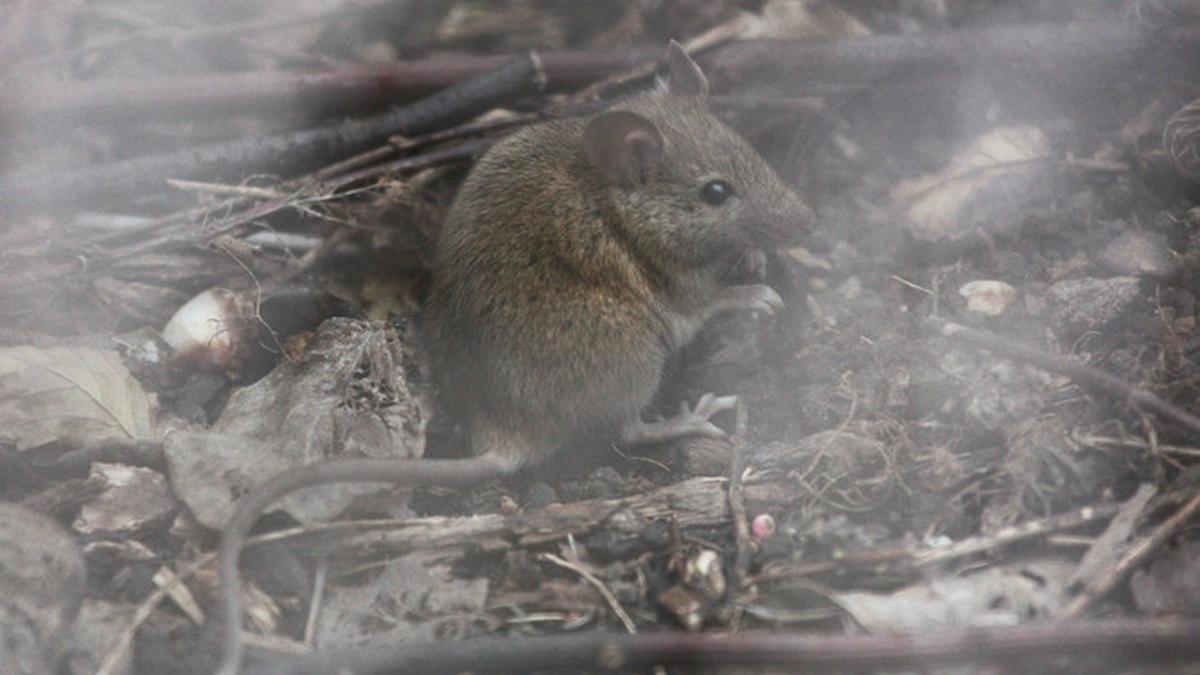
If you’ve ever been frustrated by erratic memories, spare a thought for the mice involved in a study published in the journal >Science . Researchers have been able to consistently create a “false memory”, making a mouse fearful of a place it has no reason to fear. The memory was implanted by shining blue light into the mouse’s brain, which triggered a carefully chosen group of neurons. 

The researchers used >optogenetics , a technique that allows precise control of brain circuits. The control is achieved by expressing proteins that act as switches in particular types of brain cell. These switches are channels that, when struck by a particular colour of light, allow charged particles into or out of the neurons, which will either activate or silence them. 

Susumu Tonegawa of the Massachusetts Institute of Technology and his colleagues wanted to find out whether they could create a new, negative association by flipping the switch on an old, neutral memory while giving the mouse a negative experience. Would this lead the mouse to be scared of the old memory?

To find out, Tonegawa’s group needed to identify the scattered set of neurons storing the first memory and install an optogenetic on-switch. They figured out how to do that >last year . 

The neurons that record new information are located in a particular corner of the hippocampus, the coiled brain structure that we know is crucial for memory formation. That area, the dentate gyrus, can be targeted with a virus, which acts as a courier that delivers genes that encode the protein switch. The difficult part is to deliver the virus only to cells that are storing the memory of choice. Tonegawa and his colleagues found that they could target those neurons that are busier than usual.

Armed with this discovery, they installed the optogenetic trigger in the neurons that were especially busy while a mouse got to know a new environment (we’ll call that Place A). The next day, in a different environment, they gave the mouse small electric shocks while triggering the memory of Place A using light. After that, even though it never had a negative experience in Place A itself, the mouse froze when it was returned there.

In another experiment, mice were given the same memory-shock treatment and then offered a choice between Place A and somewhere else. The mice avoided Place A. A group of mice that had the same virus inserted into a different part of the hippocampus was unaffected and just as happy in Place A as anywhere else. The artificial fear specifically required an alteration of the dentate gyrus.

Admittedly, “Uh-oh, Place A!” is not on the same level as the elaborate, special effects-laden falsehoods that featured in Christopher Nolan’s >Inception . We cannot script new memories. The best recent fictional analogy for these experiments is one for fans of the >Hunger Games trilogy: in the “hijacking” process, the Capitol authorities render existing memories traumatic by pairing them with doses of hallucinogenic poison. 

Of course, we will never know exactly what the mouse remembers. The artificial firing of those selected cells is unlikely to conjure the full experience of being back in Place A, though it is certainly enough to influence behaviour. The mice returned to Place A after the “hijacking” spent about a third of their time frozen; other mice only froze for about 10% of the time.

Hapless laboratory animals have been enduring this type of behavioural testing for >nearly a century . It is no surprise that we can train a mouse to dislike a room. But to do so while the mouse is in another room entirely, by triggering a memory with light? Science like this was impossible a decade ago. 

When Francis Crick, famous for revealing the structure of DNA, floated the notion of light-activated neurons >in 1999 he called it “far-fetched”. Now, just over a decade later, we see new experiments every week that drive or silence different circuits with light, affecting cognition and mimicking or mending the processes underlying mental illness. 

This paper offers a relatively modest advance on previous work from >Tonegawa’s own team , and other studies in >mice and >fruit flies . But it illustrates the power of a technique that has the global neuroscience community enthralled. 

Optogenetics has brought surprising technical advances and changed the way many neuroscientists work. For me, however, there remains inherent wonder in the fact that we can control brain cells – if not create memories – with light.

Jonathan Webb does not work for, consult to, own shares in or receive funding from any company or organisation that would benefit from this article, and has no relevant affiliations. 

This article was originally published at >The Conversation . Read the >original article . 

Published – July 26, 2013 01:01 pm IST


Source link

Science Tags:false memories, light-activated neurons, mice, Neurobiology

Post navigation

Previous Post: Language learning begins in the womb
Next Post: Guppies lie about mate choice to trick rivals

Related Posts

  • Science Snapshots: February 22, 2026
    Science Snapshots: February 22, 2026 Science
  • Warning: Your satellite is about to be hit by debris in space
    Warning: Your satellite is about to be hit by debris in space Science
  • ISRO’s SpaDex mission advances lunar exploration, sample return missions and other objectives: ATL
    ISRO’s SpaDex mission advances lunar exploration, sample return missions and other objectives: ATL Science
  • Why does our body scent change distinctly as we age? Are there ways to manage it?
    Why does our body scent change distinctly as we age? Are there ways to manage it? Science
  • Dinosaur-killing asteroid impact fouled Earth’s atmosphere with dust
    Dinosaur-killing asteroid impact fouled Earth’s atmosphere with dust Science
  • Budget 2024: Finance Minister Nirmala Sitharaman announces exemption of custom duties on critical minerals
    Budget 2024: Finance Minister Nirmala Sitharaman announces exemption of custom duties on critical minerals Science

More Related Articles

Samples of India’s only active mud volcano in Andaman date back to 23 million years: GSI Samples of India’s only active mud volcano in Andaman date back to 23 million years: GSI Science
Infosys Science Foundation announces prize winners for 2024 Infosys Science Foundation announces prize winners for 2024 Science
Breast cancer cases in India have more than doubled in three decades, experts say Breast cancer cases in India have more than doubled in three decades, experts say Science
Avian influenza viruses undergo major evolutionary changes Avian influenza viruses undergo major evolutionary changes Science
Air pollution harms pollinators more than pests, study finds Air pollution harms pollinators more than pests, study finds Science
More solar storms brewing after last week’s aurorae as Sun ‘wakes up’ More solar storms brewing after last week’s aurorae as Sun ‘wakes up’ Science
SiteLock

Archives

  • September 2026
  • August 2026
  • July 2026
  • June 2026
  • May 2026
  • April 2026
  • March 2026
  • February 2026
  • January 2026
  • December 2025
  • November 2025
  • October 2025
  • September 2025
  • August 2025
  • July 2025
  • June 2025
  • May 2025
  • April 2025
  • March 2025
  • February 2025
  • January 2025
  • December 2024
  • November 2024
  • October 2024
  • September 2024
  • August 2024
  • July 2024
  • June 2024
  • May 2024
  • April 2024
  • March 2024
  • February 2024
  • January 2024
  • December 2023
  • November 2023
  • October 2023
  • September 2023
  • August 2023
  • July 2023
  • June 2023
  • May 2023
  • April 2023
  • March 2023
  • February 2023
  • January 2023
  • December 2022
  • November 2022
  • October 2022
  • September 2022
  • August 2022
  • July 2022
  • June 2022
  • May 2022

Categories

  • Business
  • Nation
  • Science
  • Sports
  • World

Recent Posts

  • Caste Hindu candidate claims reservation through bogus community certificate, Madras High Court refuses to order release of terminal benefits
  • Girl dies, brother and father hospitalised after their attempt to end lives
  • Tiruppur yarn producers seek support from garment units to modify role of CCI
  • Act if there are any violations: KTR
  • Councillors complain about a rise in dengue cases

Recent Comments

  1. AlvinNet on UP Teacher Who Asked Students To Slap Muslim Classmate
  2. AlvinNet on UP Teacher Who Asked Students To Slap Muslim Classmate
  3. Jamesslits on UP Teacher Who Asked Students To Slap Muslim Classmate
  4. MichaelClear on UP Teacher Who Asked Students To Slap Muslim Classmate
  5. Jamesslits on UP Teacher Who Asked Students To Slap Muslim Classmate
  • Asian Games 2023: Up To 200 Athletes Tested For Doping So Far
    Asian Games 2023: Up To 200 Athletes Tested For Doping So Far Sports
  • Russia extends diesel, gasoline export bans until end of January 2027
    Russia extends diesel, gasoline export bans until end of January 2027 World
  • ‘Where’s Rinku Singh, He’s Disappeared…’: England Great’s Epic “In Two Years” Comment On Misfiring India Star
    ‘Where’s Rinku Singh, He’s Disappeared…’: England Great’s Epic “In Two Years” Comment On Misfiring India Star Sports
  • Dense Haze Covers Delhi As Air Quality Remains Very Poor For Fourth Day
    Dense Haze Covers Delhi As Air Quality Remains Very Poor For Fourth Day Nation
  • Dominican Republic President Abinader re-elected to 2nd term
    Dominican Republic President Abinader re-elected to 2nd term World
  • Fadnavis asks officials to fast-track water conservation works amid El Niño concerns
    Fadnavis asks officials to fast-track water conservation works amid El Niño concerns Nation
  • Countries tighten research security as China’s dominance grows
    Countries tighten research security as China’s dominance grows Science
  • Not Against Bangladesh And New Zealand, Virat Kohli Backed “To Start” Performing Against This Team
    Not Against Bangladesh And New Zealand, Virat Kohli Backed “To Start” Performing Against This Team Sports

Editor-in-Chief:
Mohammad Ariff,
MSW, MAJMC, BSW, DTL, CTS, CNM, CCR, CAL, RSL, ASOC.
editor@artifex.news

Associate Editors:
1. Zenellis R. Tuba,
zenelis@artifex.news
2. Haris Daniyel
daniyel@artifex.news

Photograher:
Rohan Das
rohan@artifex.news

Artifex.News offers Online Paid Internships to college students from India and Abroad. Interns will get a PRESS CARD and other online offers.
Send your CV (Subjectline: Paid Internship) to internship@artifex.news

Links:
Associate Journalism
About Us
Privacy Policy

News Links:
Breaking News
World
Nation
Sports
Business
Entertainment
Lifestyle

Registered Office:
72/A, Elliot Road, Kolkata - 700016
Tel: 033-22277777, 033-22172217
Email: office@artifex.news

Editorial Office / News Desk:
No. 13, Mezzanine Floor, Esplanade Metro Rail Station,
12 J. L. Nehru Road, Kolkata - 700069.
(Entry from Gate No. 5)
Tel: 033-46011099, 033-46046046
Email: editor@artifex.news

Copyright © 2023 Artifex.News Newsportal designed by Artifex Infotech.