Skip to content
  • Facebook
  • X
  • Linkedin
  • WhatsApp
  • YouTube
  • Associate Journalism
  • About Us
  • Privacy Policy
  • 033-46046046
  • editor@artifex.news
Artifex.News

Artifex.News

Stay Connected. Stay Informed.

  • Breaking News
  • World
  • Nation
  • Sports
  • Business
  • Science
  • Entertainment
  • Lifestyle
  • Toggle search form
  • Out On Morning Walk, Delhi Businessman Shot Dead By 2 Bike-Borne Men
    Out On Morning Walk, Delhi Businessman Shot Dead By 2 Bike-Borne Men Nation
  • Kavya Maran’s Reaction Viral After SRH Beat RR To Enter First IPL Final In Six Years. Watch
    Kavya Maran’s Reaction Viral After SRH Beat RR To Enter First IPL Final In Six Years. Watch Sports
  • Access Denied Business
  • Access Denied
    Access Denied Nation
  • Access Denied Sports
  • Criminal Probe Launched Into Israel PM Benjamin Netanyahu’s Wife: State Attorney’s Office
    Criminal Probe Launched Into Israel PM Benjamin Netanyahu’s Wife: State Attorney’s Office World
  • Access Denied Sports
  • Access Denied
    Access Denied Nation
Mythos | Double-edged sword – The Hindu

Mythos | Double-edged sword – The Hindu

Posted on May 10, 2026 By admin


In cybersecurity, speed is everything. The faster a vulnerability is found and rectified, the safer the data is. For years, human expertise was needed to do this. Now, Artificial Intelligence can identify hidden vulnerabilities and write the code to patch them in hours, compressing a process that once took teams of experts days or weeks. But what happens when the same AI increases the risk?

The International Monetary Fund (IMF) has warned that while AI could strengthen cyber defence, it could also make cyberattacks faster, cheaper, and accessible even to non-experts. The risks are particularly serious for the financial sector, which relies heavily on shared digital infrastructure like software, cloud services, payment networks, and interconnected databases.

Also Read: Has Anthropic’s Mythos made the Cure worse than the disease?

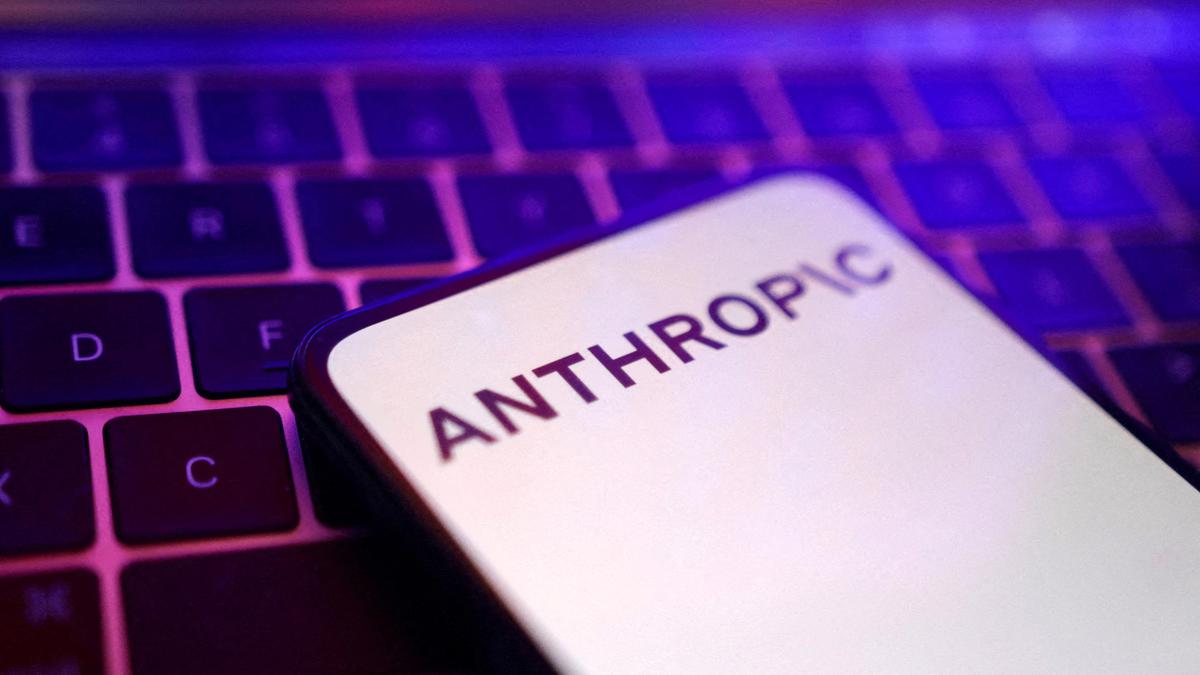
In a new report, the IMF singled out Anthropic’s Claude Mythos Preview to show how quickly risks are rising. Mythos is a large language model developed with general-purpose reasoning, coding, and autonomous tasks.

This makes it great at identifying security vulnerabilities, but experts and the tech company itself are worried about its potential risks.

In April, Anthropic announced that Mythos would not be released publicly because of its ability to identify unknown flaws in IT systems, which could potentially be exploited by hackers. But on April 22, it confirmed it was investigating reports that unauthorised users had gained access to Mythos.

Mythos can find ‘zero-day’ or undiscovered vulnerabilities in real open-source codebases. It has also demonstrated capabilities to reverse-engineer exploits in closed-source software and turn N-day, or known but not yet widely patched, vulnerabilities into exploits. In short, Mythos can not only identify vulnerabilities that humans may have missed, but also generate ways to exploit them, potentially even for non-experts.

“The vulnerabilities it finds are often subtle or difficult to detect. Many of them are ten or twenty years old, with the oldest we have found so far being a now-patched 27-year-old bug in OpenBSD — an operating system known primarily for its security,” Anthropic said in a blog.

Also Read: Should the Mythos AI model raise cybersecurity alarms?

The company also revealed how quickly these capabilities emerged. Anthropic said its engineers were able to ask Mythos to find vulnerabilities and produce a complete, working exploit in just one night. “In other cases, we’ve had researchers develop scaffolds that allow Mythos Preview to turn vulnerabilities into exploits without any human intervention,” the company wrote.

Fears of cyberattacks

More worryingly, the company revealed that these capabilities were not intentionally trained into the system. The blog noted that Mythos was able to develop these capabilities “very quickly”, even though the AI was not trained specifically for them. “Rather, they emerged as a downstream consequence of general improvements in code, reasoning, and autonomy.”

The challenge is that AI is already deeply embedded within the financial system. Banks and financial institutions use AI for several banking activities, customer service, and risk management. AI-supported systems are increasingly being used to identify suspicious activity, detect vulnerabilities, and respond to cyber threats faster than traditional systems. Powerful systems like Mythos raise fears that cyberattacks could become more scalable, automated, and accessible. This threat is more real because many financial institutions still rely on interconnected legacy infrastructure that is difficult to patch or upgrade quickly, making the risks systemic.

The IMF has urged governments and regulators not to treat AI “as a purely technical or operational issue” and instead build resilience through supervision, coordination, and preparedness. Governments are beginning to respond. Regulators and financial authorities across the world are increasingly warning that AI could amplify cyber risks in critical sectors.

In India, after reports emerged that unauthorised users may have gained access to Mythos, Finance Minister Nirmala Sitharaman convened a meeting with Electronics and IT Minister Ashwini Vaishnaw, bankers, and other stakeholders to assess the risks posed by AI and its implications for financial data security.

Banks were advised to establish mechanisms for real-time threat intelligence sharing with other banks, the Indian Computer Emergency Response Team (CERT-In), and relevant agencies. Banks were also asked to report suspicious activity and cyber incidents more proactively. The government also set up a committee under C.S. Setty, chairman of State Bank of India, to assess the risks posed by Mythos and recommend safeguards.

Separately, the Reserve Bank of India introduced a framework in 2025 to promote the responsible and ethical adoption of AI in the financial sector.

Still, Mythos reveals a deeper problem in the system. The IMF points out that the risks are not limited to the financial sector alone. Sectors like energy, telecommunications, and public services are also vulnerable. Dependence on a small number of software platforms, cloud providers, and AI models could further increase the impact because many sectors rely on the same infrastructure.

Published – May 10, 2026 01:45 am IST



Source link

Science Tags:anthropic mythos, Anthropic Mythos AI model, Anthropic Mythos AI model cybersecurity risks, anthropic security issues, Mythos cyber risks

Post navigation

Previous Post: Shashi Bhushan Kumar moves to Water Resources, Kantilal Dande gets FAC of Panchayat Raj
Next Post: Prohibitory orders clamped in Kadapa after clashes over Almaspet junction naming

Related Posts

  • Is climate change making tropical storms more frequent? Scientists say it’s unclear
    Is climate change making tropical storms more frequent? Scientists say it’s unclear Science
  • Digital tools are changing how we remember and forget information
    Digital tools are changing how we remember and forget information Science
  • Govt. approves four semiconductor plants in Odisha, Punjab, Andhra Pradesh
    Govt. approves four semiconductor plants in Odisha, Punjab, Andhra Pradesh Science
  • Insulin’s new upgrade: Can it truly prevent blood sugar lows?
    Insulin’s new upgrade: Can it truly prevent blood sugar lows? Science
  • Cows can use tools, and one Austrian cow has now shown it clearly
    Cows can use tools, and one Austrian cow has now shown it clearly Science
  • Early prediction of preeclampsia using a blood-derived biomarker
    Early prediction of preeclampsia using a blood-derived biomarker Science

More Related Articles

The ‘genomic accordion’ mpox viruses use to evolve, infect humans The ‘genomic accordion’ mpox viruses use to evolve, infect humans Science
General relativity survives its most rigorous single-event test yet General relativity survives its most rigorous single-event test yet Science
IIT Guwahati team develops energy-efficient bricks IIT Guwahati team develops energy-efficient bricks Science
How much do dark matter particles weigh? How much do dark matter particles weigh? Science
World breached 1.5° Celsius limit for entire year for first time: European climate agency World breached 1.5° Celsius limit for entire year for first time: European climate agency Science
New study unravels why chronic pain, depression go hand in hand New study unravels why chronic pain, depression go hand in hand Science
SiteLock

Archives

  • May 2026
  • April 2026
  • March 2026
  • February 2026
  • January 2026
  • December 2025
  • November 2025
  • October 2025
  • September 2025
  • August 2025
  • July 2025
  • June 2025
  • May 2025
  • April 2025
  • March 2025
  • February 2025
  • January 2025
  • December 2024
  • November 2024
  • October 2024
  • September 2024
  • August 2024
  • July 2024
  • June 2024
  • May 2024
  • April 2024
  • March 2024
  • February 2024
  • January 2024
  • December 2023
  • November 2023
  • October 2023
  • September 2023
  • August 2023
  • July 2023
  • June 2023
  • May 2023
  • April 2023
  • March 2023
  • February 2023
  • January 2023
  • December 2022
  • November 2022
  • October 2022
  • September 2022
  • August 2022
  • July 2022
  • June 2022
  • May 2022

Categories

  • Business
  • Nation
  • Science
  • Sports
  • World

Recent Posts

  • Mahesh Narayanan on ‘Patriot’: I didn’t have to make compromises as a filmmaker because of the star power
  • Ukraine reports Russian attacks and battlefield clashes despite ceasefire
  • Husband held for alleged dowry harassment in Visakhapatnam; wife dies 45 days after marriage
  • Scientists trigger ‘controlled’ earthquakes under Swiss Alps
  • Bandi Bhagirath’s case takes serious turn with Telangana CM ordering special team for comprehensive probe

Recent Comments

  1. JamesTruff on UP Teacher Who Asked Students To Slap Muslim Classmate
  2. CliftonInese on UP Teacher Who Asked Students To Slap Muslim Classmate
  3. DonaldStype on UP Teacher Who Asked Students To Slap Muslim Classmate
  4. EnriqueExins on UP Teacher Who Asked Students To Slap Muslim Classmate
  5. EnriqueExins on UP Teacher Who Asked Students To Slap Muslim Classmate
  • India At BRICS And The Curious Case Of Iran
    India At BRICS And The Curious Case Of Iran World
  • 16 Nobel Prize-winning economists say Trump policies will fuel inflation
    16 Nobel Prize-winning economists say Trump policies will fuel inflation Business
  • Access Denied Sports
  • Israel issues ‘last’ warning for Gazans to flee main city
    Israel issues ‘last’ warning for Gazans to flee main city World
  • Access Denied Sports
  • Access Denied World
  • Jaipur Gets A Brand New Airport Terminal For International Travellers
    Jaipur Gets A Brand New Airport Terminal For International Travellers Nation
  • What Are Reciprocal Tariffs And Who Might Be Affected?
    What Are Reciprocal Tariffs And Who Might Be Affected? World

Editor-in-Chief:
Mohammad Ariff,
MSW, MAJMC, BSW, DTL, CTS, CNM, CCR, CAL, RSL, ASOC.
editor@artifex.news

Associate Editors:
1. Zenellis R. Tuba,
zenelis@artifex.news
2. Haris Daniyel
daniyel@artifex.news

Photograher:
Rohan Das
rohan@artifex.news

Artifex.News offers Online Paid Internships to college students from India and Abroad. Interns will get a PRESS CARD and other online offers.
Send your CV (Subjectline: Paid Internship) to internship@artifex.news

Links:
Associate Journalism
About Us
Privacy Policy

News Links:
Breaking News
World
Nation
Sports
Business
Entertainment
Lifestyle

Registered Office:
72/A, Elliot Road, Kolkata - 700016
Tel: 033-22277777, 033-22172217
Email: office@artifex.news

Editorial Office / News Desk:
No. 13, Mezzanine Floor, Esplanade Metro Rail Station,
12 J. L. Nehru Road, Kolkata - 700069.
(Entry from Gate No. 5)
Tel: 033-46011099, 033-46046046
Email: editor@artifex.news

Copyright © 2023 Artifex.News Newsportal designed by Artifex Infotech.