




Skip to content
  • Facebook
  • X
  • Linkedin
  • WhatsApp
  • YouTube
  • Associate Journalism
  • About Us
  • Privacy Policy
  • 033-46046046
  • editor@artifex.news
Artifex.News

Artifex.News

Stay Connected. Stay Informed.

  • Breaking News
  • World
  • Nation
  • Sports
  • Business
  • Science
  • Entertainment
  • Lifestyle
  • Toggle search form
  • India Look To Make Most Of Pink-Ball Warm-Up
    India Look To Make Most Of Pink-Ball Warm-Up Sports
  • Access Denied
    Access Denied Nation
  • Access Denied
    Access Denied Nation
  • Private US moon lander still working after breaking leg and falling, but not for long
    Private US moon lander still working after breaking leg and falling, but not for long Science
  • Britain’s BBC boss Tim Davie resigns following criticism over Trump documentary edit
    Britain’s BBC boss Tim Davie resigns following criticism over Trump documentary edit World
  • CBI Court Sentences 11 People To 7 Years In Prison In Vyapam Case
    CBI Court Sentences 11 People To 7 Years In Prison In Vyapam Case Nation
  • Los Angeles Fires: Entire neighbourhoods burnt in the two major fires
    Los Angeles Fires: Entire neighbourhoods burnt in the two major fires World
  • Thai King Cuts Ex-PM Thaksin’s Jail Term To One Year
    Thai King Cuts Ex-PM Thaksin’s Jail Term To One Year World
Union Budget 2026-27: What the new fiscal rule means for growth and spending

Union Budget 2026-27: What the new fiscal rule means for growth and spending

Posted on February 2, 2026 By admin


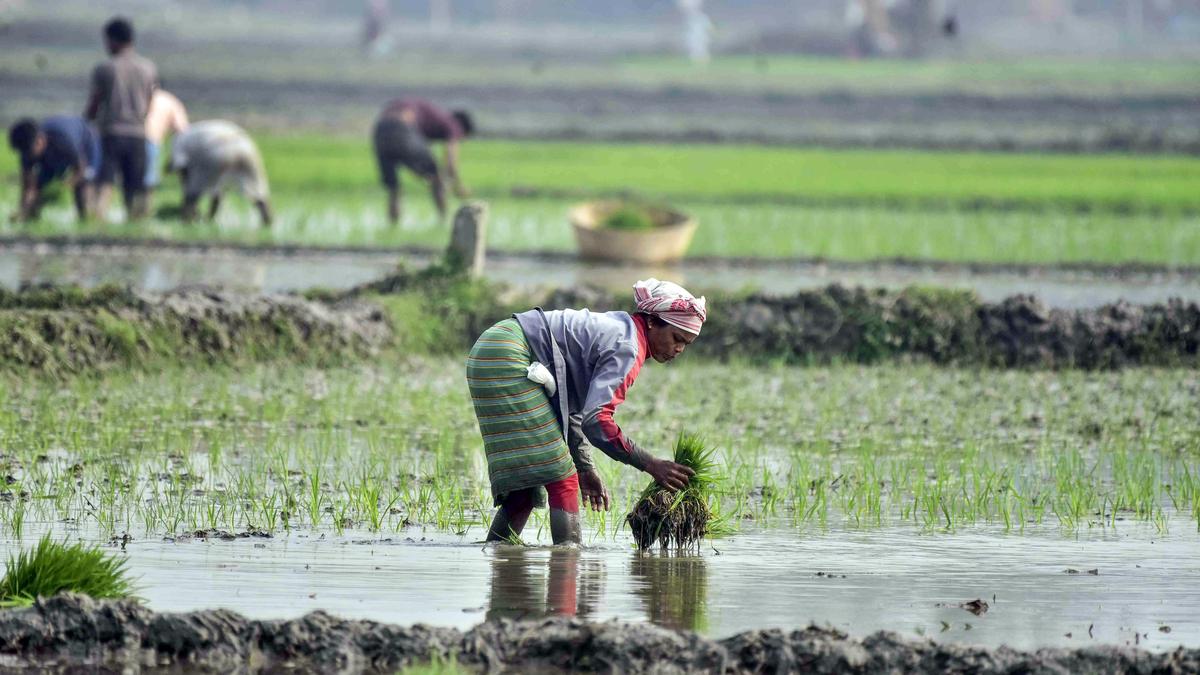
A woman plants rice saplings in a paddy field in Nagaon on February 1, 2026.
| Photo Credit: ANI

The direction of fiscal policy is influenced by the nature of fiscal policy rules. The present fiscal policy rule of the Union government is informed by what can be termed as sound finance rules, where the government typically aims to meet a given borrowing target. While India has been largely following sound finance rules since the implementation of the Fiscal Responsibility and Budget Management (FRBM) Act, 2003, there have been two modifications since the last year.

First, in contrast to the FRBM Act, where the fiscal deficit-GDP ratio acted as the primary policy target, it is the debt-GDP ratio which appears as the primary policy target in the new policy rule. Second, the targeted level of debt-GDP ratio in the new rule stands at around 50%, which the government proposes to meet by 2031. The new rule allows the government to sustain higher debt-GDP ratio as compared to the level suggested in the FRBM Act (40%).

There are at least two implications of the present variant of sound finance rule for this year’s Budget. First, since the present level of debt-GDP ratio stands above the targeted level, the government has aimed to reduce its debt-ratio by reducing the primary deficits and fiscal deficits from 0.8% and 4.4% in FY 2026 to 0.7% and 4.3% respectively in FY 2027. The fiscal consolidation strategy is similar to one pursued since FY 2022.

Second, the new target of debt-GDP ratio has provided greater fiscal space to the government as compared to the FRBM Act. While both the primary and the fiscal deficits have been reduced for FY27, the magnitude by which they have been reduced is less severe compared to the period since FY22.

Meeting the fiscal target

Any reduction in primary deficits and fiscal deficits requires the government to reduce its expenditures as compared to the non-debt receipts. The Budget Estimate (BE) of FY27 indicates a fall in the government’s share of non-debt receipts in GDP to 9.3% as compared to 9.5% in FY26. This is largely on account of the fall in the share of indirect taxes and GST, both of which indicate a decline by 0.3% points in FY27 as compared to FY26.

Amid lower non-debt receipts, the reduction in deficits in FY27 is brought about by a more than proportionate fall in the share of total expenditure in GDP. As compared to 13.9% in FY26, the BE of expenditure-GDP ratio indicates a decline in FY27 to 13.6%. While the capital expenditure-GDP ratio remains roughly at the same level (3.1%), the reduction in expenditure ratio is brought about by the reduction in revenue expenditure. This trend is similar to the previous years, where the government has aimed to change the composition of expenditures in favour of capital expenditure on account of its high multiplier value.

The burden of adjustment of this reduction in total expenditures has fallen on development expenditures. The latter is the sum of government expenditures on the social sector and economic services. The Annual Financial Statement indicates a reduction in the BE of the share of development expenditures in GDP to 5.7% in FY27 as compared to 6.1% in FY26. The reduction in the share of development expenditures is largely on account of a similar fall in the expenditures on rural development and agriculture and allied activities, the share of which indicates a decline to 1.2% in FY27 as compared to 1.5% in FY 26. The fall in rural development expenditures was on account of sharp fall in the expenditures in the revenue account of rural employment.

In short, the stimulating positive effect of the reduction in the GST and the indirect taxes on demand has been completely nullified by the adverse demand effect from the reduction in the agricultural and rural expenditures.

While the recent changes in the fiscal rules by the government are welcome, the continuity of fiscal consolidation strategy brings about at least two key concerns.

Two concerns

The first concern relates to stimulus for investments in an uncertain global economy. The investment-capital ratio of the corporate sector in the recent period has remained low in the midst of low global demand and exports. The present fiscal strategy hardly provides any stimulating role to corporate investments.

The second concern involves the distribution question in India’s growth process. The burden of adjustment of the fiscal consolidation strategy of the government has been largely borne by the development and agricultural expenditures in the recent period. This is in contrast to the corporate tax-GDP ratio, the level of which remains largely the same as the pre-covid level. While meeting its debt targets, the present fiscal strategy has largely bypassed these two challenges.

Zico Dasgupta teaches economics at Azim Premji University

Published – February 02, 2026 01:08 am IST



Source link

Business Tags:union budget 2026-27

Post navigation

Previous Post: Access Denied
Next Post: New schemes to provide livelihood and assistive devices for persons with disabilities

Related Posts

  • Govt. imposes 20% export duty on parboiled rice
    Govt. imposes 20% export duty on parboiled rice Business
  • Access Denied Business
  • Techno Paints to file DRHP for ₹500 crore IPO in FY27
    Techno Paints to file DRHP for ₹500 crore IPO in FY27 Business
  • RBI unlikely to re-introduce fixed-rate liquidity operations
    RBI unlikely to re-introduce fixed-rate liquidity operations Business
  • Access Denied Business
  • Access Denied Business

More Related Articles

Access Denied Business
More than half of Indian enterprises faced ransomware attacks: survey More than half of Indian enterprises faced ransomware attacks: survey Business
NTPC, ONGC green arms form 50:50 JV for renewable energy play NTPC, ONGC green arms form 50:50 JV for renewable energy play Business
Access Denied Business
SiteLock

Archives

  • May 2026
  • April 2026
  • March 2026
  • February 2026
  • January 2026
  • December 2025
  • November 2025
  • October 2025
  • September 2025
  • August 2025
  • July 2025
  • June 2025
  • May 2025
  • April 2025
  • March 2025
  • February 2025
  • January 2025
  • December 2024
  • November 2024
  • October 2024
  • September 2024
  • August 2024
  • July 2024
  • June 2024
  • May 2024
  • April 2024
  • March 2024
  • February 2024
  • January 2024
  • December 2023
  • November 2023
  • October 2023
  • September 2023
  • August 2023
  • July 2023
  • June 2023
  • May 2023
  • April 2023
  • March 2023
  • February 2023
  • January 2023
  • December 2022
  • November 2022
  • October 2022
  • September 2022
  • August 2022
  • July 2022
  • June 2022
  • May 2022

Categories

  • Business
  • Nation
  • Science
  • Sports
  • World

Recent Posts

  • PM Modi, leaders pays homage to Tagore on Rabindra Jayanti
  • Handwriting on new Epstein note matches one found after his death, say experts
  • ‘Aakhri Sawal’: Sanjay Dutt’s political-drama gets new release date; trailer unveiled
  • IPL 2026: Axar Patel shifts focus to next season after KKR crushes DC’s playoff hopes
  • ‘Think before you throw’: This event will teach you how to use scraps in your kitchen for zero waste cooking

Recent Comments

  1. Alvinadubs on UP Teacher Who Asked Students To Slap Muslim Classmate
  2. CharlesVOX on UP Teacher Who Asked Students To Slap Muslim Classmate
  3. Robertgop on UP Teacher Who Asked Students To Slap Muslim Classmate
  4. ShaneElden on UP Teacher Who Asked Students To Slap Muslim Classmate
  5. DonaldGlymn on UP Teacher Who Asked Students To Slap Muslim Classmate
  • Giant Python Gets Into Power House In Lucknow, Causes Outage
    Giant Python Gets Into Power House In Lucknow, Causes Outage Nation
  • “In Congress There Is No Leadership”: Padmaja Venugopal Joins BJP
    “In Congress There Is No Leadership”: Padmaja Venugopal Joins BJP Nation
  • India vs South Africa 3rd T20I: India eye batting revival against SA at Centurion
    India vs South Africa 3rd T20I: India eye batting revival against SA at Centurion Sports
  • Access Denied
    Access Denied Nation
  • Centre projects record production of rice
    Centre projects record production of rice Business
  • Access Denied
    Access Denied Nation
  • 2 Wickets In 2 Balls! Jasprit Bumrah Rattles England In Cricket World Cup 2023 Thriller – Watch
    2 Wickets In 2 Balls! Jasprit Bumrah Rattles England In Cricket World Cup 2023 Thriller – Watch Sports
  • “Zakir Hussain Revolutionised World Of Indian Classical Music”: PM Modi
    “Zakir Hussain Revolutionised World Of Indian Classical Music”: PM Modi Nation

Editor-in-Chief:
Mohammad Ariff,
MSW, MAJMC, BSW, DTL, CTS, CNM, CCR, CAL, RSL, ASOC.
editor@artifex.news

Associate Editors:
1. Zenellis R. Tuba,
zenelis@artifex.news
2. Haris Daniyel
daniyel@artifex.news

Photograher:
Rohan Das
rohan@artifex.news

Artifex.News offers Online Paid Internships to college students from India and Abroad. Interns will get a PRESS CARD and other online offers.
Send your CV (Subjectline: Paid Internship) to internship@artifex.news

Links:
Associate Journalism
About Us
Privacy Policy

News Links:
Breaking News
World
Nation
Sports
Business
Entertainment
Lifestyle

Registered Office:
72/A, Elliot Road, Kolkata - 700016
Tel: 033-22277777, 033-22172217
Email: office@artifex.news

Editorial Office / News Desk:
No. 13, Mezzanine Floor, Esplanade Metro Rail Station,
12 J. L. Nehru Road, Kolkata - 700069.
(Entry from Gate No. 5)
Tel: 033-46011099, 033-46046046
Email: editor@artifex.news

Copyright © 2023 Artifex.News Newsportal designed by Artifex Infotech.