

Skip to content
  • Facebook
  • X
  • Linkedin
  • WhatsApp
  • YouTube
  • Associate Journalism
  • About Us
  • Privacy Policy
  • 033-46046046
  • editor@artifex.news
Artifex.News

Artifex.News

Stay Connected. Stay Informed.

  • Breaking News
  • World
  • Nation
  • Sports
  • Business
  • Science
  • Entertainment
  • Lifestyle
  • Toggle search form
  • Access Denied World
  • India Aims To Train 175 Civil Servants From Maldives This Year
    India Aims To Train 175 Civil Servants From Maldives This Year Nation
  • Biden leads condemnation after Trump wounded at rally shooting
    Biden leads condemnation after Trump wounded at rally shooting World
  • Access Denied
    Access Denied Nation
  • Access Denied Business
  • 28 Indians onboard Mozambique-flagged vessel safe after attack in Iranian territorial waters
    28 Indians onboard Mozambique-flagged vessel safe after attack in Iranian territorial waters World
  • Champions Trophy 2025 Live: Focus On Playing XI As India Take On Bangladesh
    Champions Trophy 2025 Live: Focus On Playing XI As India Take On Bangladesh Sports
  • Afghanistan set to begin work on TAPI pipeline
    Afghanistan set to begin work on TAPI pipeline World
Union Budget 2026-27: What the new fiscal rule means for growth and spending

Union Budget 2026-27: What the new fiscal rule means for growth and spending

Posted on February 2, 2026 By admin


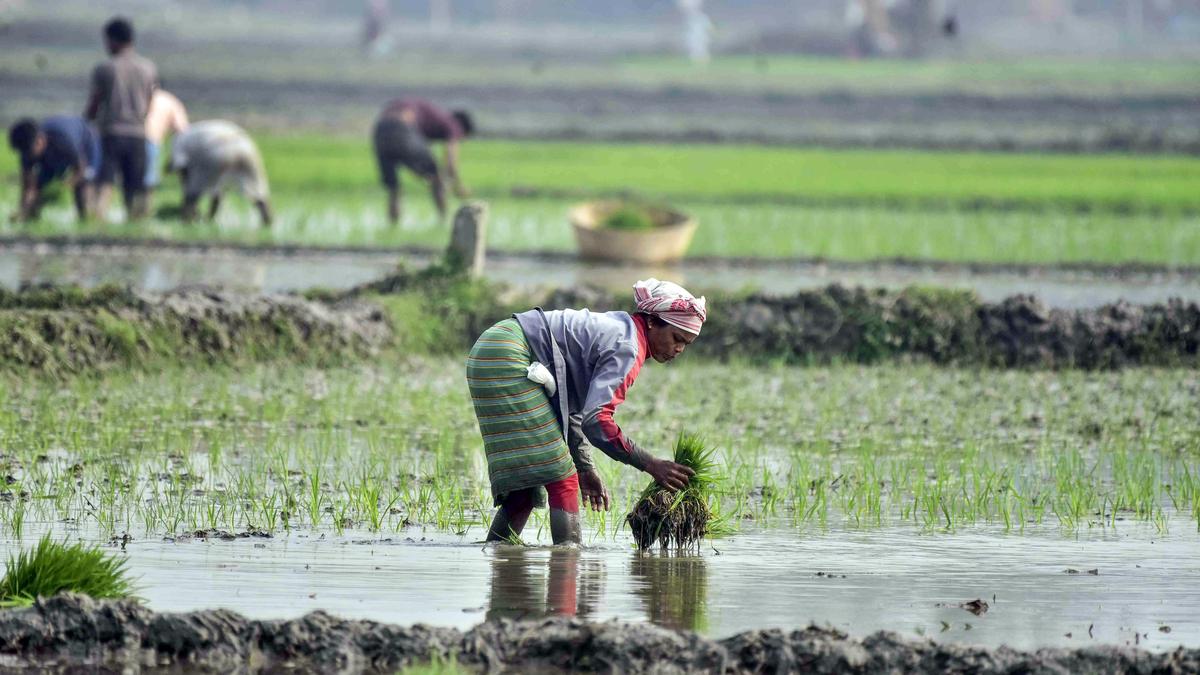
A woman plants rice saplings in a paddy field in Nagaon on February 1, 2026.
| Photo Credit: ANI

The direction of fiscal policy is influenced by the nature of fiscal policy rules. The present fiscal policy rule of the Union government is informed by what can be termed as sound finance rules, where the government typically aims to meet a given borrowing target. While India has been largely following sound finance rules since the implementation of the Fiscal Responsibility and Budget Management (FRBM) Act, 2003, there have been two modifications since the last year.

First, in contrast to the FRBM Act, where the fiscal deficit-GDP ratio acted as the primary policy target, it is the debt-GDP ratio which appears as the primary policy target in the new policy rule. Second, the targeted level of debt-GDP ratio in the new rule stands at around 50%, which the government proposes to meet by 2031. The new rule allows the government to sustain higher debt-GDP ratio as compared to the level suggested in the FRBM Act (40%).

There are at least two implications of the present variant of sound finance rule for this year’s Budget. First, since the present level of debt-GDP ratio stands above the targeted level, the government has aimed to reduce its debt-ratio by reducing the primary deficits and fiscal deficits from 0.8% and 4.4% in FY 2026 to 0.7% and 4.3% respectively in FY 2027. The fiscal consolidation strategy is similar to one pursued since FY 2022.

Second, the new target of debt-GDP ratio has provided greater fiscal space to the government as compared to the FRBM Act. While both the primary and the fiscal deficits have been reduced for FY27, the magnitude by which they have been reduced is less severe compared to the period since FY22.

Meeting the fiscal target

Any reduction in primary deficits and fiscal deficits requires the government to reduce its expenditures as compared to the non-debt receipts. The Budget Estimate (BE) of FY27 indicates a fall in the government’s share of non-debt receipts in GDP to 9.3% as compared to 9.5% in FY26. This is largely on account of the fall in the share of indirect taxes and GST, both of which indicate a decline by 0.3% points in FY27 as compared to FY26.

Amid lower non-debt receipts, the reduction in deficits in FY27 is brought about by a more than proportionate fall in the share of total expenditure in GDP. As compared to 13.9% in FY26, the BE of expenditure-GDP ratio indicates a decline in FY27 to 13.6%. While the capital expenditure-GDP ratio remains roughly at the same level (3.1%), the reduction in expenditure ratio is brought about by the reduction in revenue expenditure. This trend is similar to the previous years, where the government has aimed to change the composition of expenditures in favour of capital expenditure on account of its high multiplier value.

The burden of adjustment of this reduction in total expenditures has fallen on development expenditures. The latter is the sum of government expenditures on the social sector and economic services. The Annual Financial Statement indicates a reduction in the BE of the share of development expenditures in GDP to 5.7% in FY27 as compared to 6.1% in FY26. The reduction in the share of development expenditures is largely on account of a similar fall in the expenditures on rural development and agriculture and allied activities, the share of which indicates a decline to 1.2% in FY27 as compared to 1.5% in FY 26. The fall in rural development expenditures was on account of sharp fall in the expenditures in the revenue account of rural employment.

In short, the stimulating positive effect of the reduction in the GST and the indirect taxes on demand has been completely nullified by the adverse demand effect from the reduction in the agricultural and rural expenditures.

While the recent changes in the fiscal rules by the government are welcome, the continuity of fiscal consolidation strategy brings about at least two key concerns.

Two concerns

The first concern relates to stimulus for investments in an uncertain global economy. The investment-capital ratio of the corporate sector in the recent period has remained low in the midst of low global demand and exports. The present fiscal strategy hardly provides any stimulating role to corporate investments.

The second concern involves the distribution question in India’s growth process. The burden of adjustment of the fiscal consolidation strategy of the government has been largely borne by the development and agricultural expenditures in the recent period. This is in contrast to the corporate tax-GDP ratio, the level of which remains largely the same as the pre-covid level. While meeting its debt targets, the present fiscal strategy has largely bypassed these two challenges.

Zico Dasgupta teaches economics at Azim Premji University

Published – February 02, 2026 01:08 am IST


Source link

Business Tags:union budget 2026-27

Post navigation

Previous Post: Access Denied
Next Post: New schemes to provide livelihood and assistive devices for persons with disabilities

Related Posts

  • Sensex, Nifty scale fresh record highs; rise for fourth day in a row
    Sensex, Nifty scale fresh record highs; rise for fourth day in a row Business
  • DIPAM gives nod for NLC’s arm listing; ₹4,000 crore IPO in FY27
    DIPAM gives nod for NLC’s arm listing; ₹4,000 crore IPO in FY27 Business
  • Access Denied Business
  • Access Denied Business
  • Rupee opens on flat note at 84.08 against U.S. dollar
    Rupee opens on flat note at 84.08 against U.S. dollar Business
  • Union Budget 2025: Facts related to the Budget as FM Nirmala Sitharaman aims to make history with 8th consecutive presentation
    Union Budget 2025: Facts related to the Budget as FM Nirmala Sitharaman aims to make history with 8th consecutive presentation Business

More Related Articles

Ford Motors to re-enter Tamil Nadu Ford Motors to re-enter Tamil Nadu Business
For MSMEs, GST is a concern that parties must address this election season For MSMEs, GST is a concern that parties must address this election season Business
Rupee rises 11 paise to 95.63 against U.S. dollar ahead of RBI policy decision Rupee rises 11 paise to 95.63 against U.S. dollar ahead of RBI policy decision Business
Indian garment exporters hope for tariff-rate quota from the U.S. Indian garment exporters hope for tariff-rate quota from the U.S. Business
Rupee recovers from record low to settle 8 paise higher at 86.62 against U.S. dollar Rupee recovers from record low to settle 8 paise higher at 86.62 against U.S. dollar Business
Watch: Budget 2025 round-up: Bonanza for the middle class Watch: Budget 2025 round-up: Bonanza for the middle class Business
SiteLock

Archives

  • September 2026
  • August 2026
  • July 2026
  • June 2026
  • May 2026
  • April 2026
  • March 2026
  • February 2026
  • January 2026
  • December 2025
  • November 2025
  • October 2025
  • September 2025
  • August 2025
  • July 2025
  • June 2025
  • May 2025
  • April 2025
  • March 2025
  • February 2025
  • January 2025
  • December 2024
  • November 2024
  • October 2024
  • September 2024
  • August 2024
  • July 2024
  • June 2024
  • May 2024
  • April 2024
  • March 2024
  • February 2024
  • January 2024
  • December 2023
  • November 2023
  • October 2023
  • September 2023
  • August 2023
  • July 2023
  • June 2023
  • May 2023
  • April 2023
  • March 2023
  • February 2023
  • January 2023
  • December 2022
  • November 2022
  • October 2022
  • September 2022
  • August 2022
  • July 2022
  • June 2022
  • May 2022

Categories

  • Business
  • Nation
  • Science
  • Sports
  • World

Recent Posts

  • Premier League: Man City outgun Sunderland despite Brobbey hat-trick, Liverpool marks Iraola’s winning return
  • Iran shuts language centre linked to French embassy
  • Police arrest 12 bus drivers for ‘vandalism’ as DTC drivers’ protest over higher wages enters Day 6
  • ‘Stop Vizag Data Centers’ Instagram account blocked in India
  • Once described as BIMARU, U.P. transformed as country’s growth engine, says CM Yogi

Recent Comments

  1. LarryKef on UP Teacher Who Asked Students To Slap Muslim Classmate
  2. Josephjab on UP Teacher Who Asked Students To Slap Muslim Classmate
  3. LarryKef on UP Teacher Who Asked Students To Slap Muslim Classmate
  4. Jasonnekly on UP Teacher Who Asked Students To Slap Muslim Classmate
  5. Jasonnekly on UP Teacher Who Asked Students To Slap Muslim Classmate
  • “No Ground” For Indirect Talks With US, Says Iran Amid West Asia Tensions
    “No Ground” For Indirect Talks With US, Says Iran Amid West Asia Tensions World
  • Landslides Triggered By Rains Block Jammu-Srinagar National Highway
    Landslides Triggered By Rains Block Jammu-Srinagar National Highway Nation
  • Lalit Modi, Dawood Ibrahim: “Left India Because Of Death Threats From Dawood Ibrahim”: Lalit Modi
    Lalit Modi, Dawood Ibrahim: “Left India Because Of Death Threats From Dawood Ibrahim”: Lalit Modi Nation
  • U.S. military says it destroyed three Iranian oil tankers
    U.S. military says it destroyed three Iranian oil tankers World
  • Report warns that cybercriminals are exploiting Cockroach Janta Party’s popularity to con GenZ
    Report warns that cybercriminals are exploiting Cockroach Janta Party’s popularity to con GenZ Nation
  • ULFA-I Planning An Attack Before Independence Day: Assam Top Cop
    ULFA-I Planning An Attack Before Independence Day: Assam Top Cop Nation
  • Rupee falls 7 paise to settle at 89.43 against U.S. dollar
    Rupee falls 7 paise to settle at 89.43 against U.S. dollar Business
  • Women’s T20 World Cup: Gardner and Mooney carry Australia into final with ease
    Women’s T20 World Cup: Gardner and Mooney carry Australia into final with ease Sports

Editor-in-Chief:
Mohammad Ariff,
MSW, MAJMC, BSW, DTL, CTS, CNM, CCR, CAL, RSL, ASOC.
editor@artifex.news

Associate Editors:
1. Zenellis R. Tuba,
zenelis@artifex.news
2. Haris Daniyel
daniyel@artifex.news

Photograher:
Rohan Das
rohan@artifex.news

Artifex.News offers Online Paid Internships to college students from India and Abroad. Interns will get a PRESS CARD and other online offers.
Send your CV (Subjectline: Paid Internship) to internship@artifex.news

Links:
Associate Journalism
About Us
Privacy Policy

News Links:
Breaking News
World
Nation
Sports
Business
Entertainment
Lifestyle

Registered Office:
72/A, Elliot Road, Kolkata - 700016
Tel: 033-22277777, 033-22172217
Email: office@artifex.news

Editorial Office / News Desk:
No. 13, Mezzanine Floor, Esplanade Metro Rail Station,
12 J. L. Nehru Road, Kolkata - 700069.
(Entry from Gate No. 5)
Tel: 033-46011099, 033-46046046
Email: editor@artifex.news

Copyright © 2023 Artifex.News Newsportal designed by Artifex Infotech.