


Skip to content
  • Facebook
  • X
  • Linkedin
  • WhatsApp
  • Associate Journalism
  • About Us
  • Privacy Policy
  • 033-46046046
  • editor@artifex.news
Artifex.News

Artifex.News

Stay Connected. Stay Informed.

  • Breaking News
  • World
  • Nation
  • Sports
  • Business
  • Science
  • Entertainment
  • Lifestyle
  • Toggle search form
  • Digital Afterlife Industry Rapidly Evolving, Know How To Navigate Its Risks World
  • Mallikarjun Kharge, Rahul Gandhi Meet To Discuss Amethi, Raebareli Nation
  • How will AlphaFold 3 change life sciences research? Science
  • Virat Kohli Will Score 100, India Will Win T20 World Cup 2024: Ex-England Star’s Massive Prediction Sports
  • Aditya-L1 embarks on 110-day journey to L1 point Science
  • US Parents Arrested For Raping Teen Daughter, Claiming It Was “Safer Than Sex With Strangers” World
  • Punjab CM announces hike in sugarcane price to ₹380 per quintal Business
  • US Health Body Issues Alert For H5N1 Bird Flu Infection World

India’s first solar observatory mission Aditya-L1 to be launched at 11.50 a.m. on September 2, 2023

Posted on September 1, 2023 By admin


Aditya L1 onboard the PSLV-C57 the Satish Dhawan Space Centre in Sriharikota on September 1, 2023 on the eve of its launch. Photo: X/@ISRO via PTI

India’s first solar observatory mission, named Aditya-L1, will be launched onboard the Polar Satellite Launch Vehicle (PSLV) from the Satish Dhawan Space Centre in Sriharikota at 11.50 am on Saturday.

On Friday, the Indian Space Research Organisation (ISRO) commenced the 23-hour 40-minute countdown for the launch of the Aditya-L1 mission.

PSLV-C57/Aditya-L1 Mission:
The countdown leading to the launch at 11:50 Hrs. IST on Septermber 2, 2023 has commended.

The launch can be watched LIVE
on ISRO Website https://t.co/osrHMk7MZL
Facebook https://t.co/zugXQAYy1y
YouTube https://t.co/NzOCSnp2Zv
DD National TV…

— ISRO (@isro) September 1, 2023

Approximately sixty-three minutes after liftoff, the satellite separation is expected to take place as the PSLV will launch the Aditya-L1 spacecraft into a highly eccentric earth-bound orbit at around 12.53 pm.

This PSLV-C57/Aditya-L1 mission can be counted as one of the longest missions involving ISRO’s workhorse launch vehicle. However, the longest of the PSLV missions is still the 2016 PSLV-C35 mission which was completed two hours, 15 minutes and 33 seconds after lift-off.

Long journey

Following the launch, Aditya-L1 will stay in earth-bound orbits for 16 days, during which it will undergo five manoeuvres to gain the necessary velocity for its journey.

“Subsequently, Aditya-L1 undergoes a Trans-Lagrangian1 insertion manoeuvre, marking the beginning of its 110-day trajectory to the destination around the L1 Lagrange point. Upon arrival at the L1 point, another manoeuvre binds Aditya-L1 to an orbit around L1, a balanced gravitational location between the Earth and the Sun,” ISRO said.

Aditya-L1 will stay approximately 1.5 million km away from the earth, directed towards the sun; this is about 1% of the distance between the earth and the sun.

Studying the solar corona

The Aditya L-1 payloads are expected to provide crucial information to understand the problem of coronal heating, coronal mass ejection, pre-flare and flare activities and their characteristics, dynamics of space weather, propagation of particles and fields etc.

The seven payloads onboard the satellite are: Visible Emission Line Coronagraph (VELC), Solar Ultraviolet Imaging Telescope (SUIT), Solar Low Energy X-ray Spectrometer (SoLEXS), High Energy L1 Orbiting x-ray Spectrometer (HEL1OS), Aditya Solar wind Particle Experiment (ASPEX), Plasma Analyser Package for Aditya (PAPA), and Advanced Tri-axial High Resolution Digital Magnetometers.

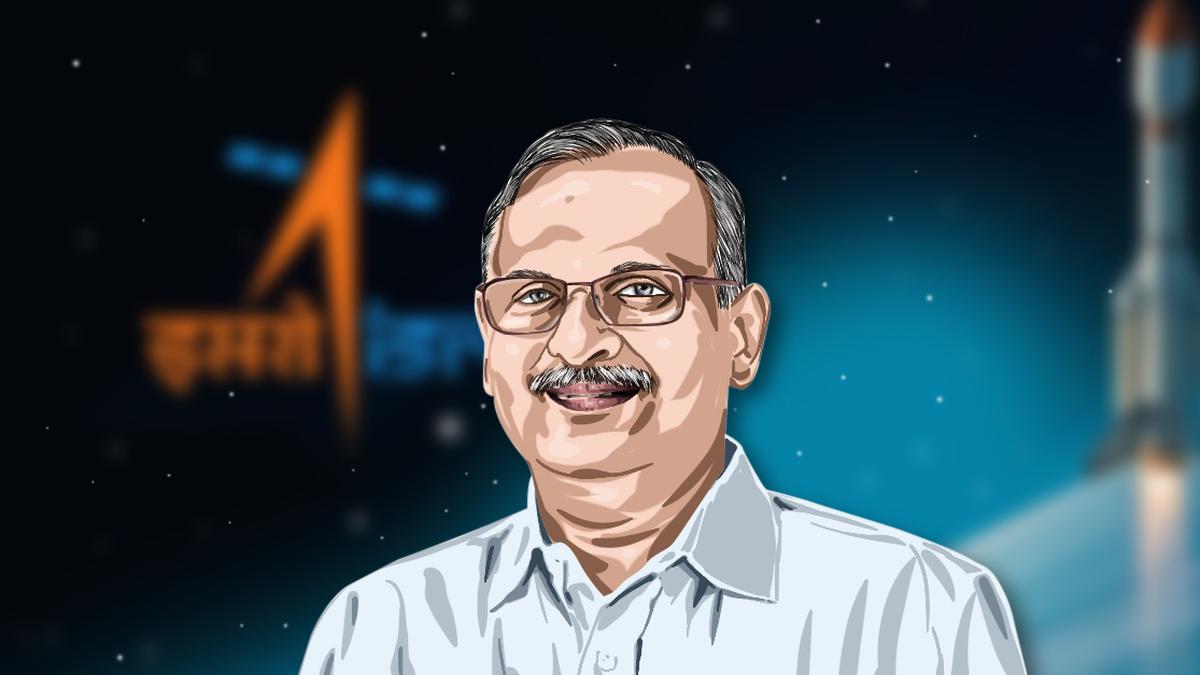
The primary payload is VELC, which was developed by the Indian Institute of Astrophysics (IIA), Bengaluru and is designed to study the solar corona and the dynamics of coronal mass ejections.

The Aditya-L1 satellite placed in the halo orbit around the L1 point has a major advantage of continuously viewing the sun without any occultation or eclipse. It is expected to provide a greater advantage in observing the solar activities continuously.

Tracking solar quakes

“There are certain activities which take place around the sun which we call solar quakes. In the aftermath of these solar quakes, a lot of energetic material from the sun is thrown out. Some of them can be directed towards the earth and they can travel at a maximum speed of 3,000 km per hour and reach the near-earth space within 15 hours,” Ramesh R., the principal investigator of the VELC payload, told The Hindu.

Prof. Ramesh added that once the energetic material reaches the earth, it may not cause any physical damage, but it does have the capability to cripple life on earth.

“Our present-day life scenario depends very much on the stationary satellites which are parked in space be it for our internet connectivity, cell phone or TV connectivity. These charged particle clouds can engulf the satellites and damage all the electronics on board the satellites. Hence, we do not know when the solar quakes will happen, it can happen any time of the day so it is very essential to observe the sun on a 24-hour basis and carry out observations,” Prof. Ramesh added.





Source link

Science Tags:Aditya L1, aditya l1 launch date and time, aditya l1 rocket, Aditya-L1 launch, Aditya-L1 mission, ISRO aditya l1, isro future projects, isro mission aditya l1, ISRO news, next space mission of isro, Polar Satellite Launch Vehicle, Satish Dhawan Space Centre, solar observatory mission in india

Post navigation

Previous Post: ISRO Chief Offers Prayers At Chengalamma Temple Ahead Of Aditya-L1 Launch
Next Post: Polio-Infected Man Has Survived Living Inside Iron Lung For 70 Years. Read His Story

Related Posts

  • Now a more efficacious, inexpensive malaria vaccine Science
  • Chang’e 6 | From the Moon’s far side Science
  • Space data fuels India’s farming innovation drive Science
  • Fossils of massive prehistoric snake found in lignite mine in Gujarat Science
  • Bottleneck in human evolution explained using a novel genomic analysis technique Science
  • World’s oldest termite mounds found in South Africa, storing carbon for millennia Science

More Related Articles

Science This Week | India becomes the first country to land on Moon’s south pole and more Science
Balancing two forms of SNCA protein could help manage Parkinson’s, study finds Science
President Murmu congratulates ISRO for successful deployment of Pragyan Rover Science
Does a specific bacteria subtype drive colorectal cancer progression? Science
‘We look forward to work with ISRO and get the Indian astronaut into space’ Science
The power of choice: a case for life-saving modern contraception Science
SiteLock

Archives

  • July 2024
  • June 2024
  • May 2024
  • April 2024
  • March 2024
  • February 2024
  • January 2024
  • December 2023
  • November 2023
  • October 2023
  • September 2023
  • August 2023
  • July 2023
  • June 2023
  • May 2023
  • April 2023
  • March 2023
  • February 2023
  • January 2023
  • December 2022
  • November 2022
  • October 2022
  • September 2022
  • August 2022
  • July 2022
  • June 2022
  • May 2022

Categories

  • Business
  • Nation
  • Science
  • Sports
  • World

Recent Posts

  • Heavy Rain In Early July Bridges India’s Monsoon Deficit But Causes Flooding
  • Chang’e 6 | From the Moon’s far side
  • 4 Killed In Mass Shooting At Birthday Pool Party In US, Suspect Kills Self
  • Joe Biden “Staying In The Race” But His US Presidential Reelection Bid Against Donald Trump Hangs In Balance
  • Can the uber-rich worldwide be taxed better? | Explained

Recent Comments

  1. GkJwRWEAbS on UP Teacher Who Asked Students To Slap Muslim Classmate
  2. xreDavBVnbGqQA on UP Teacher Who Asked Students To Slap Muslim Classmate
  3. aANVRzfUdmyb on UP Teacher Who Asked Students To Slap Muslim Classmate
  4. YQCyszVBmIP on UP Teacher Who Asked Students To Slap Muslim Classmate
  5. aiXothgwe on UP Teacher Who Asked Students To Slap Muslim Classmate
  • RBI’s latest recommendations to regulate payment aggregators in offline spaces | Explained Business
  • Israel forces kill at least 14 people waiting to receive aid in Gaza: health ministry World
  • Legendary James Anderson To Retire During England’s Home Summer Sports
  • Man With “Samurai-Type Sword” Arrested In London After Several Attacked World
  • Dog Mauls 5-Month-Old Baby To Death In Telangana Home Nation
  • The Hindu Morning Digest, March 08, 2024 Science
  • Spirited Zimbabwe Shock Shubman Gill-Led India By 13 Runs In 1st T20I Sports
  • Gautam Adani’s Big Praise For Chess Prodigy Nation

Editor-in-Chief:
Mohammad Ariff,
MSW, MAJMC, BSW, DTL, CTS, CNM, CCR, CAL, RSL, ASOC.
editor@artifex.news

Associate Editors:
1. Zenellis R. Tuba,
zenelis@artifex.news
2. Haris Daniyel
daniyel@artifex.news

Photograher:
Rohan Das
rohan@artifex.news

Artifex.News offers Online Paid Internships to college students from India and Abroad. Interns will get a PRESS CARD and other online offers.
Send your CV (Subjectline: Paid Internship) to internship@artifex.news

Links:
Associate Journalism
About Us
Privacy Policy

News Links:
Breaking News
World
Nation
Sports
Business
Entertainment
Lifestyle

Registered Office:
72/A, Elliot Road, Kolkata - 700016
Tel: 033-22277777, 033-22172217
Email: office@artifex.news

Editorial Office / News Desk:
No. 13, Mezzanine Floor, Esplanade Metro Rail Station,
12 J. L. Nehru Road, Kolkata - 700069.
(Entry from Gate No. 5)
Tel: 033-46011099, 033-46046046
Email: editor@artifex.news

Copyright © 2023 Artifex.News Newsportal designed by Artifex Infotech.