





As per a key finding of the Global Tax Evasion Report 2024, prepared by researchers at the EU Tax Observatory, global billionaires benefit from very low effective tax rates, which range between 0% and 0.5% of their wealth.
| Photo Credit: Getty Images/iStockphoto
The story so far: French economist Gabriel Zucman has in a recent report commissioned by Brazil’s G-20 presidency recommended an annual 2% tax on individuals holding wealth exceeding $1 billion a suggestion intended to serve as the starting point for a global discussion on ensuring under-taxed billionaires are made to contribute more to reduce inequality worldwide. Finance Ministers of the G-20 group are set to meet in Rio de Janeiro on July 25-26, and the proposal is expected to be discussed at the meeting.
What exactly is the proposal?
Mr. Zucman, an economist who has extensively researched the accumulation, distribution and taxation of global income and wealth, has proposed the adoption of an internationally coordinated minimum tax standard for ensuring effective taxation of ultra-high-net-worth individuals. This he argues would be the basic requirement to safeguard global tax progressivity. At the minimum, he recommends that individuals possessing more than $1 billion in total wealth (assets, equity shares in both listed and unlisted companies, other ownership structures that enable participating in companies’ ownership, etc.) would be required to pay a minimum amount of tax annually that would be equal to 2% of their wealth.
Such a minimum tax on billionaires could potentially raise $200-$250 billion a year globally from about 3,000 individuals, and were it to be extended to cover those with a net worth exceeding $100 million, would add $100-$140 billion annually in global tax revenue.
What is the rationale for such a tax?
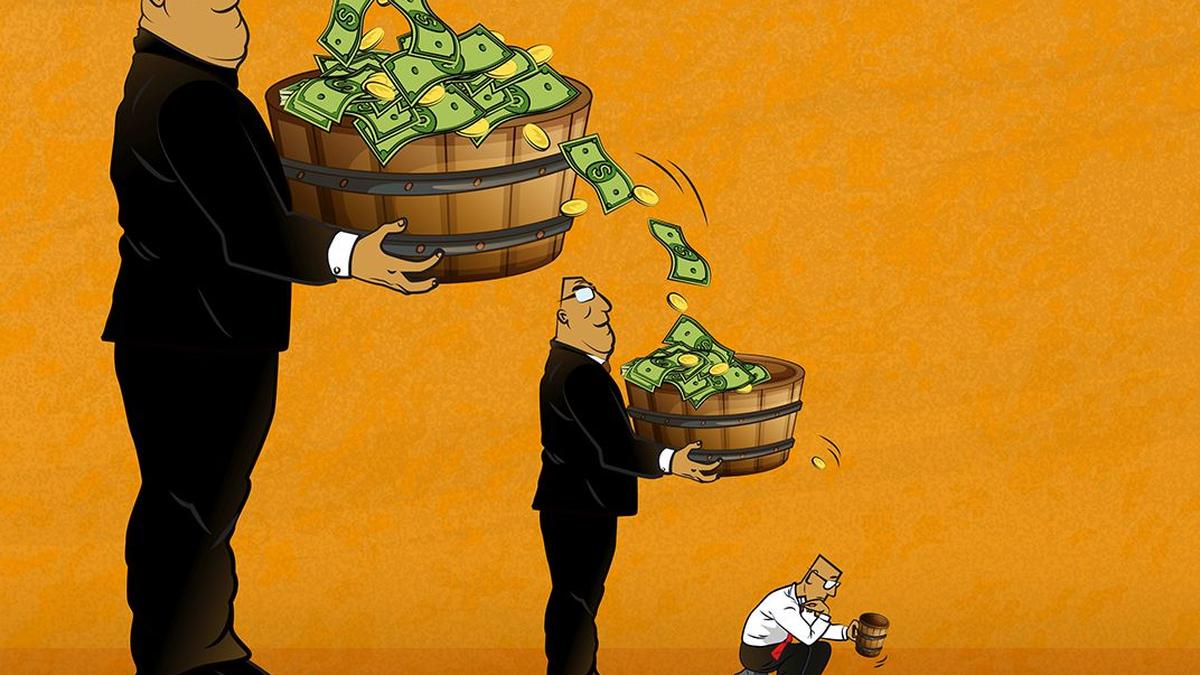
As per a key finding of the Global Tax Evasion Report 2024, prepared by researchers at the EU Tax Observatory, global billionaires benefit from very low effective tax rates, which range between 0% and 0.5% of their wealth. “When expressed as a fraction of income and considering all taxes paid at all levels of government (including corporate taxes, consumption taxes, payroll taxes, etc.), the effective tax rates of billionaires appear significantly lower than those of all other groups of the population,” the researchers write.

Mr. Zucman in his report to the G-20 presidency posits that the wealth of the top 0.0001% households, expressed as a fraction of world GDP, has surged more than fourfold since the mid-1980s. “In 1987, the top 0.0001% owned the equivalent of 3% of world GDP in wealth. This wealth gradually rose to 8% of world GDP on the eve of the global financial crisis of 2008-2009. It briefly fell during the crisis, and then rose fast to exceed 13% of world GDP in 2024.” The average annual growth rate of this population group’s wealth is 7.1% net of inflation. In contrast, over the same almost four-decade period, the average income of an adult grew annually by 1.3% net of inflation, and average wealth increased by 3.2% a year.
“As long as ultra-high-net-worth individuals keep having higher net-of-tax returns than the rest of the population, their share of global wealth will keep rising — an unsustainable path,” argues Mr. Zucman. Emphasising that “progressive taxation is a key pillar of democratic societies” that helps strengthen social cohesion and trust in governments to work for the common good, the French economist stresses that it is needed to help fund public goods and services. Better tax revenues are also crucial to meet the investments required to address the climate crisis.
Why moot such a tax now?
The French economist cites research that shows contemporary tax systems worldwide are not effectively taxing the wealthiest individuals. As a result ultra-high-net-worth individuals tend to pay less in tax relative to their income than other social groups, regardless of the specific tax design choices and enforcement practices of countries. Income taxes, which in principle constitute the main instrument of progressive taxation, fail to effectively tax ultra-high-net-worth individuals. This in turn deprives governments of substantial tax revenues and contributes to concentrating the gains of globalisation into relatively few hands, undermining the social sustainability of economic globalisation, he argues.
Also, the global social and political environment, and in some ways the regulatory climate too, are more conducive now to successfully implement such a proposal. He specifically cites the progress made in curtailing bank secrecy over the last 15 years through increased information exchange between countries, which according to the EU Tax Observatory has led to a decline in offshore tax evasion by an estimated factor of about three in less than 10 years.
What can we do to get MNCs and billionaires to pay their fair share in taxes? | In Focus podcast
The other major enabling factor is the ‘historic decision’ in 2021, when more than 130 countries and territories agreed to a common minimum corporate tax of 15% for large multinational companies (MNCs). The willingness on the part of countries worldwide to tax MNCs in a manner so as to prevent them from seeking to operate out of low or zero tax jurisdictions is, in the French economist’s opinion, a template that can be built upon now for taxing billionaires.
How much support does the proposal have?
Brazil, Latin America’s largest economy, is the main backer. France, Spain, Colombia, Belgium, the African Union and South Africa, which will assume the G-20 presidency next year, have also backed the idea.
Also, while U.S. Treasury Secretary Janet Yellen is reported to have said the U.S. could not support a global wealth levy, Mr. Zucman has cited President Joe Biden’s proposed minimum income tax targetting individuals with more than $100 million in wealth as yet another approach to tax the uber-rich. Mr. Biden’s proposal entails taxing the entire pre-tax return on wealth for ultra-high-net-worth Americans to a minimum individual tax rate of 25%, irrespective of whether the return comes from dividends, realised capital gains or unrealised gains, according to a Reuters report.
What is its relevance to India?
India has seen a disproportionately sharper increase in wealth at the top of the pyramid over the nine-year period to 2023, according to a study titled ‘Income and Wealth Inequality in India, 1922-2023: The Rise of the Billionaire Raj’ by Nitin Kumar Bharti, Lucas Chancel, Thomas Piketty and Anmol Somanchi. The authors of this working paper posit that “by 2022-23, top 1% income and wealth shares (22.6% and 40.1%) are at their highest historical levels and India’s top 1% income share is among the very highest in the world”. The authors of this study on inequality go on to suggest: “a ‘super tax’ on the very wealthy might be a good place to start. Not only would it serve as a tool for fighting the growing inequalities we are observing today, but it would also provide additional fiscal space for the Indian government to enhance spending on essential social expenditures (health, education, nutrition) which have historically been low compared to global standards, including other countries at similar income levels”.

“A tax of just 2% on the total net wealth of the 162 wealthiest Indian families in 2022 would yield revenue to the tune of 0.5% of national income (more than twice the central government’s budget expenditures on the National Rural Employment Guarantee Act in recent years),” they add.