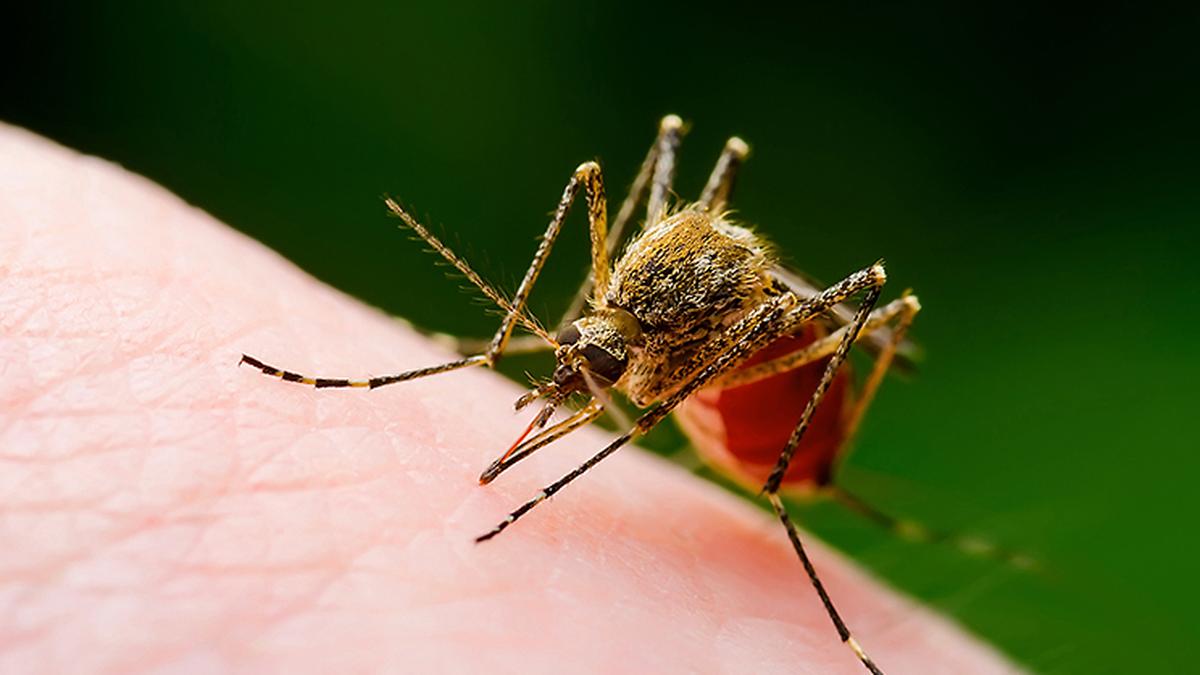





Mosquitoes have followed humanity to every corner of the world, acquiring a reputation for being one of our least welcome companions. They are carriers of some of the deadliest diseases on the planet, including malaria, dengue, Zika, yellow fever, and West Nile virus, which together claim over a million lives each year.
For their ubiquity, however, a fundamental question has lingered: when did mosquitoes first appear?
Scientists have believed for decades that mosquitoes were ancient, older than most mammals and perhaps some dinosaurs, already being around 220 million years ago.
But recent findings have challenged this view. In October, a team led by Tommy Lam at the University of Hong Kong published a paper in Proceedings of the National Academy of Sciences (PNAS) that concluded mosquitoes originated only around 106 million years ago. Their analysis also hinted that the evolution of mosquitoes paralleled that of Plasmodium, the malaria parasite.
“The study is quite interesting and is generating a buzz in the mosquito world,” said John Soghigian, an evolutionary biologist at the University of Calgary.
North Carolina State University professor Brian Wiegmann added: “This study is likely to be the source of considerable debate and counterargument in the mosquito evolution community.”
Neither expert was involved in the study.
Fossil puzzle
The mosquito family Culicidae includes more than 3,500 known species divided into two main subfamilies: Anophelinae (malaria carriers) and Culicinae. These subfamilies were thought to have diverged between 180 and 200 million years ago.
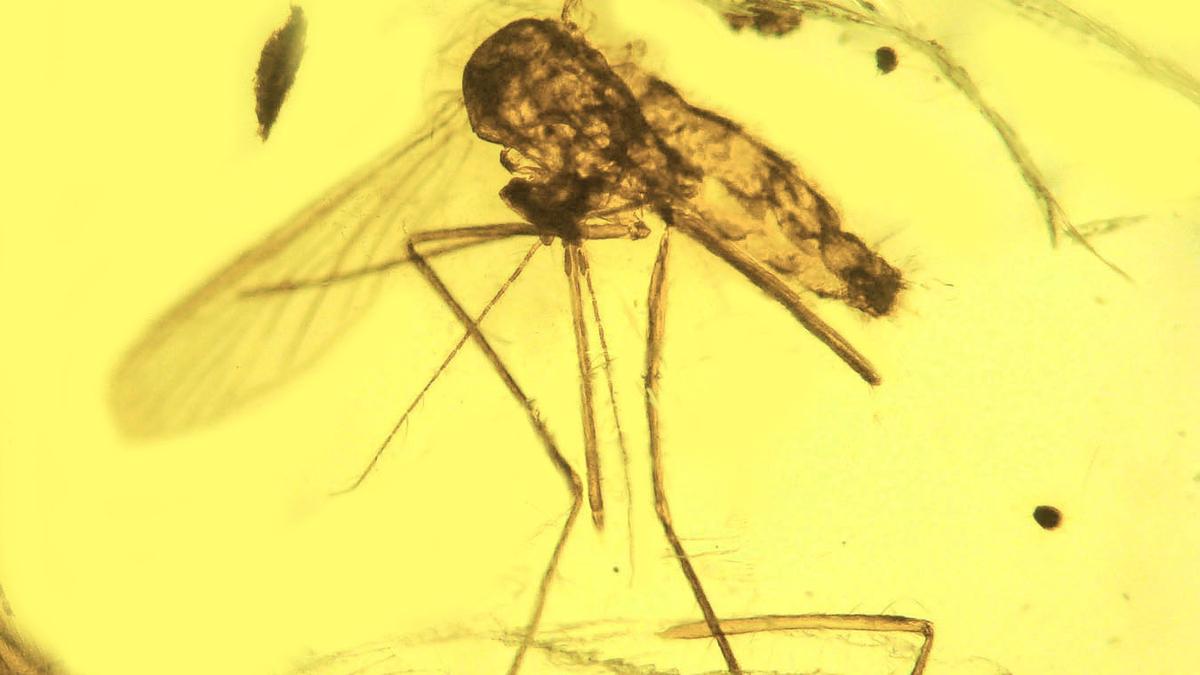
The fossils, however, told a different story. Fossilised mosquitoes in amber are rare and relatively young. The oldest known specimen is about 100 million years old. Modern-looking forms didn’t appear until around 56 million years ago.
If mosquitoes existed for 200 million years, older fossils should exist, yet none have been found. The molecular studies that supported the ancient timeline also had misaligned genetic trees, leading researchers to suspect the timeline had been overestimated.
Hidden bias
To resolve this question, the PNAS study team used large-scale genome data to rebuild mosquito evolution by analysing thousands of conserved genetic markers known as benchmarking universal single-copy orthologs and ultraconserved elements, which change very little over time. Comparing these markers across dozens of species revealed a new evolutionary tree that contradicted some of the field’s assumptions.
The problem, the researchers argued, lay in how mosquito DNA had been interpreted.
A phenomenon called branch attraction bias had skewed previous analyses, making unrelated groups appear more closely related. In mosquitoes, the effect was especially strong in the genus Anophelinae, whose genomes have shifted from G- and C-rich DNA to A- and T-rich sequences. This shift made Anopheles appear more distantly related than it actually is.
To correct it, the team analysed whole genomes from across major mosquito lineages instead of relying on a few mitochondrial genes, accounting for known biases.

Still, Dr. Soghigian noted a limitation: “Their sampling is heavily biased towards Anopheles and excludes many other mosquito groups,” which could make relationships on the evolutionary tree appear closer or more distant than they really are, and lead to inaccurate conclusions about when and how different mosquito lineages diverged.
Root of the tree
When the team reconstructed the genetic trees, two versions of mosquito evolution emerged. One matched the two-subfamily hypothesis, dividing mosquitoes into Anophelinae and Culicinae. But the second, called the Anophelinae-Culex sister relationship, suggested that Anophelinae mosquitoes are actually closely related to the Culex group.
Based on this, the researchers proposed that Culicinae mosquitoes don’t constitute a single, unified lineage but several distinct ones. This reorganisation in turn reshaped the mosquito timeline.
However, Dr. Soghigian contended: “Finding the ‘root’ of an evolutionary tree can be tricky. When organisms have been evolving for hundreds of millions of years, a lot can change in their genomes. Using fast-evolving genes or distant outgroups can easily throw off where we think the root lies, and I think that’s what happened here.”
But Mac Pierce, the first author of the new study and a postdoctoral scholar at the University of Hong Kong, said the confusion may stem as much from long-standing assumptions as from technical bias.
“For years, the framework of mosquito evolution wasn’t questioned, creating an anchoring bias,” he said. “People assumed there were two subfamilies, so mosquito fossils were placed into these by default; these were then used in phylogenetic dating studies as calibrations for the timing of mosquito evolution. Genetic studies that observed conflicting signals assumed that this was just phylogenetic bias or noise in the data.”
Triassic origin
Dr. Wiegmann also called the new findings into question, however: “The finding of a younger age for mosquitoes isn’t defensible given the wealth of evidence that contradicts it.”
For instance, a 2023 study co-authored by Dr. Soghigian used genomic data from 256 mosquito species to place mosquito origins in the early Triassic Period, about 217 million years ago.
More recently, two fossils, dating from about 100-120 million years ago, resemble modern species: one similar to Anopheles (reported in September 2025) and the other, the first known fossil mosquito larva (to be published in February 2026). Both findings predate the timeline proposed by the PNAS study.
Dr. Pierce however said fossils are difficult to interpret: “They’re often misidentified or based on too few traits. One supposed early Anopheles may not even be a mosquito. Since we don’t know what early mosquito larvae looked like and similar traits can evolve in unrelated species, even though the larval fossil seems genuine, it likely belongs to an extinct lineage.”
One way to reconcile the different conclusions, he added, is to “take more genetic data from a wider range of mosquito species, better evolutionary analyses, and a fresh look at old fossils and datasets”.

Evolving with Plasmodium
The new study also proposed that mosquitoes and malaria parasites evolved together. Different mosquito species transmit Plasmodium to different hosts: Culex mosquitoes spread it to birds and reptiles, Anopheles spread it to mammals.
The study estimated that their common ancestor likely arose around 43-46 million years ago, coinciding with the diversification of the Plasmodium parasite, in turn suggesting that mosquitoes and the parasite influenced each other’s biology over millions of years.
However, Dr. Soghigian said, “There isn’t strong evidence that Plasmodium shaped mosquito divergence as they describe. Pathogens do influence mosquito evolution today, but the deep-time connection they propose is less convincing.”
“The 2023 study and the new fossil record both place these mosquitoes long before they could have been associated with Plasmodium,” Dr. Wiegmann added. “The younger age in [the new study] comes from different assumptions about fossil ages and analytical choices, which led them to a younger hypothesis on the age of mosquitoes.”
And so the debate continues, even as the new study emphasised that its dataset covers only 14 of the more than 100 mosquito genera and that their analysis is an early step. Expanding it should help clarify how mosquito behaviour, ecology, and disease transmission evolved.
Manjeera Gowravaram has a PhD in RNA biochemistry and works as a freelance science writer.
/ends