


Skip to content
  • Facebook
  • X
  • Linkedin
  • WhatsApp
  • YouTube
  • Associate Journalism
  • About Us
  • Privacy Policy
  • 033-46046046
  • editor@artifex.news
Artifex.News

Artifex.News

Stay Connected. Stay Informed.

  • Breaking News
  • World
  • Nation
  • Sports
  • Business
  • Science
  • Entertainment
  • Lifestyle
  • Toggle search form
  • India Break Multiple Records En Route To 4-1 T20I Series Win Over England
    India Break Multiple Records En Route To 4-1 T20I Series Win Over England Sports
  • Access Denied World
  • Bangladesh mourns some 200 deaths as student protests wind down and thousands are arrested
    Bangladesh mourns some 200 deaths as student protests wind down and thousands are arrested World
  • Bangladesh Cricket Board withdraws Mustafizur’s NOC for PSL
    Bangladesh Cricket Board withdraws Mustafizur’s NOC for PSL World
  • Access Denied World
  • Consumer demand important factor in greening of products, services: Piyush Goyal
    Consumer demand important factor in greening of products, services: Piyush Goyal Business
  • Meghan Markle’s Lifestyle Show To Premiere January 15 On Netflix
    Meghan Markle’s Lifestyle Show To Premiere January 15 On Netflix World
  • How A Call From A “Beautiful” Woman Can Turn Your Life “Ugly”
    How A Call From A “Beautiful” Woman Can Turn Your Life “Ugly” Nation
ADHD stimulants are being used recreationally, with consequences for users

ADHD stimulants are being used recreationally, with consequences for users

Posted on November 24, 2025 By admin


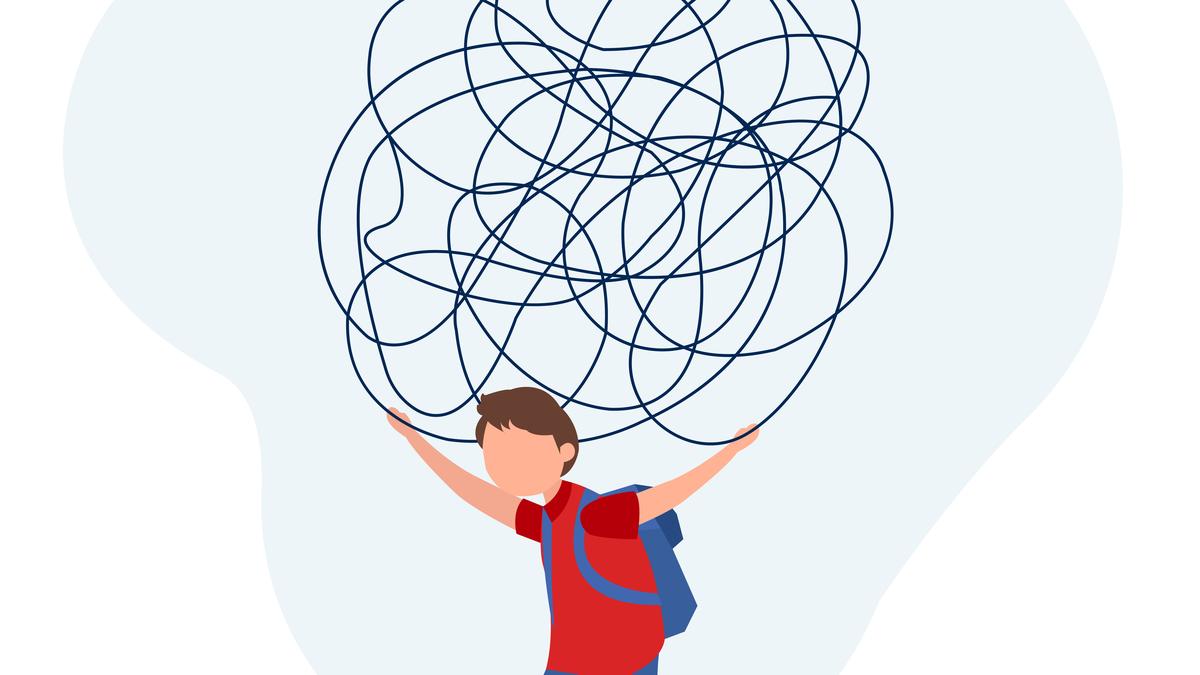
Not long ago, most people thought of attention deficit hyperactivity disorder, or ADHD, as a childhood condition that would eventually be outgrown. Now it’s everywhere.

TikTok videos describe “ADHD moments” that feel instantly familiar, clinics are booked out for months, and adults are finally getting diagnoses that explain years of chaos and exhaustion.

Also Read: ADHD drugs do not improve cognition

This visibility has helped people understand ADHD. However, it has also led to a shift in how medicines intended to alleviate symptoms are being used and, in some cases, misused.

What is ADHD? How does medication treat it?

ADHD affects how the brain handles attention, motivation, and self-control. For some, this means racing thoughts, missed deadlines, and constant restlessness. For others, it feels like a fog of distraction that makes following through on tasks frustratingly difficult.

Brain imaging studies in people with ADHD show subtle differences in how attention and reward circuits communicate. These systems rely on chemical messengers such as dopamine and noradrenaline. When the signalling of these messengers is less efficient, even simple, everyday tasks become harder to start and sustain.

Medicines such as methylphenidate (Ritalin) and lisdexamfetamine (Vyvanse) increase dopamine and noradrenaline activity in the brain, thereby enhancing focus, motivation, and impulse control.

Large clinical reviews also show wider benefits, including reduced risks of depression, substance misuse, and even criminal behaviour in people with ADHD.

How many people take ADHD medications?

Stimulant prescriptions more than quadrupled between 2013 and 2023, from about 800,000 to more than 4 million scripts per year.

More people getting diagnosed and treated is a positive step. But it also means far more medication is circulating in the community and it’s easier for these drugs to be shared, sold, or used by someone they weren’t prescribed for.

The most recent National Drug Strategy Household Survey estimates roughly 400,000 Australians — about one in 48 people — used prescription stimulants non-medically in the past year. Among those in their 20s, this figure rises to about one in 20.

Why do people without ADHD use these drugs?

Some people use stimulants to stay awake studying or working long hours. Others use them recreationally, seeking a “high” or to suppress their appetite.

Online, they’re often touted as “smart drugs” — or cognitive enhancers — promising to enhance productivity and brainpower. This isn’t a new idea. In the 1970s, psychologist Corneliu Giurgea coined the term “nootropic,” arguing “man is not going to wait passively for millions of years before evolution offers him a better brain”. But more than 50 years later, science doesn’t support that dream.

Research shows much of the “boost” people feel from stimulants comes from expectation rather than actual improvement. In one experiment, university students who believed they had taken Ritalin reported feeling more focused and euphoric even when they had a placebo — a sugar pill with no active drug.

For those without ADHD, stimulants can make you feel more awake and confident, but they don’t actually make you smarter. A controlled trial found that while stimulants led people to work longer and try harder, the quality of their work dropped, especially for those who performed well without the drugs.

So, these medications might push you to put in more effort, but that effort doesn’t always translate into better results.

What are the risks?

Medications such as Ritalin and Vyvanse are made to strict pharmaceutical standards, so many people assume they are safer than illicit drugs.

But their safety depends entirely on careful medical supervision, including appropriate dosing and regular health monitoring. Without this oversight, and when mixed with alcohol and other substances, risks increase sharply.

When people misuse these drugs — taking higher or more frequent doses — they risk developing a tolerance, meaning they need increasingly larger amounts to feel the same effects.

The high also wears off sharply, leading to a “crash” of fatigue, irritability and low mood, which can push people to take more. Over time, this cycle may trigger anxiety, insomnia and heart problems.

Reflecting this, a study of emergency department presentations for stimulant-related problems from 2004 to 2014 found visits rose alongside greater availability.

How are these medications controlled?

In Australia, ADHD stimulants are Schedule 8 controlled drugs, meaning their prescribing is tightly regulated; however, rules differ by State and territory. New national ADHD guidelines recommend more consistent oversight, shared care between specialists and GPs, and better follow-up to reduce misuse and diversion.

Policy is evolving, but harm reduction hasn’t yet caught up. Compared with alcohol, tobacco, or cannabis, public education on prescription stimulant misuse remains minimal.

Australia’s history offers a cautionary tale about responding to the misuse of prescription medications. When opioid and benzodiazepine prescribing surged in previous decades, supply restrictions alone failed to curb misuse.

Instead, people turned to black markets and unregulated online sources, where counterfeit and high-potency products fill the gap. If stimulant policy follows a similar path — focusing on control but neglecting prevention and education — we risk repeating those mistakes.

In the United States, rising stimulant prescriptions have been accompanied by sharp increases in misuse and stimulant use disorder — the clinical term for addiction. In response, health agencies adopted more balanced approaches — integrating prescription drug monitoring programs, clinician training on safer prescribing and community-based education campaigns.

As awareness and diagnosis of ADHD continue to rise in Australia, adopting these measures — including real-time prescription monitoring — could reduce harms while preserving access for those who genuinely need treatment.

This article is republished from The Conversation under a Creative Commons license. Read the original article.



Source link

Science Tags:ADHD, ADHD medication regulation, ADHD stimulants, ADHD stimulants health risks, Misuses of ADHD stimulants

Post navigation

Previous Post: South Africa’s G20 debt focus to be tested as U.S. takes the chair
Next Post: ‘Shining example of determination’: PM hails India blind women’s team’s T20WC triumph

Related Posts

  • PM Modi I-Day speech: First made-in-India semiconductor chip to come in market by this year end, says Modi
    PM Modi I-Day speech: First made-in-India semiconductor chip to come in market by this year end, says Modi Science
  • How the Aravalli Hills formed and why they look the way they do
    How the Aravalli Hills formed and why they look the way they do Science
  • ISRO’s orbit raising operations for NVS-02 satellite disrupted by valve malfunction
    ISRO’s orbit raising operations for NVS-02 satellite disrupted by valve malfunction Science
  • Kerala Monsoon 2026: How to track clouds through IMD INSAT 3D-S satellite imagery
    Kerala Monsoon 2026: How to track clouds through IMD INSAT 3D-S satellite imagery Science
  • Smart Irrigation Plan can save 10-30% of irrigation water in drought-prone regions: IIT Bombay research
    Smart Irrigation Plan can save 10-30% of irrigation water in drought-prone regions: IIT Bombay research Science
  • Sunflowers ‘dance’ to get more sunlight, scientists find
    Sunflowers ‘dance’ to get more sunlight, scientists find Science

More Related Articles

India’s Aditya-L1 spacecraft successfully escapes sphere of Earth’s influence India’s Aditya-L1 spacecraft successfully escapes sphere of Earth’s influence Science
Going to Mars? Speak to a psychologist first Going to Mars? Speak to a psychologist first Science
Ketamine pill offers hope, and risks, for treatment-resistant depression Ketamine pill offers hope, and risks, for treatment-resistant depression Science
Kerala Monsoon 2026: How to track clouds through IMD INSAT 3D-S satellite imagery Kerala Monsoon 2026: How to track clouds through IMD INSAT 3D-S satellite imagery Science
This century, heat waves are moving slower and lasting longer This century, heat waves are moving slower and lasting longer Science
Over-reliance on smear microscopy for TB detection continues Over-reliance on smear microscopy for TB detection continues Science
SiteLock

Archives

  • October 2026
  • September 2026
  • August 2026
  • July 2026
  • June 2026
  • May 2026
  • April 2026
  • March 2026
  • February 2026
  • January 2026
  • December 2025
  • November 2025
  • October 2025
  • September 2025
  • August 2025
  • July 2025
  • June 2025
  • May 2025
  • April 2025
  • March 2025
  • February 2025
  • January 2025
  • December 2024
  • November 2024
  • October 2024
  • September 2024
  • August 2024
  • July 2024
  • June 2024
  • May 2024
  • April 2024
  • March 2024
  • February 2024
  • January 2024
  • December 2023
  • November 2023
  • October 2023
  • September 2023
  • August 2023
  • July 2023
  • June 2023
  • May 2023
  • April 2023
  • March 2023
  • February 2023
  • January 2023
  • December 2022
  • November 2022
  • October 2022
  • September 2022
  • August 2022
  • July 2022
  • June 2022
  • May 2022

Categories

  • Business
  • Nation
  • Science
  • Sports
  • World

Recent Posts

  • Saudi Supreme Court sets aside Sri Lankan migrant worker’s death penalty
  • Nedumbassery accident: CPI(M) stages protest march to police station over ‘indifference’ in handling of case
  • Why CJI Surya Kant said ‘no’ to Rahul Gandhi’s request to meet | Explained
  • September WPI Inflation rises to 11.39% as food, fuel and manufactured goods prices increase
  • Frankfurt-Delhi Air India flight diverted to Jaipur following bomb threat

Recent Comments

  1. RobertTes on UP Teacher Who Asked Students To Slap Muslim Classmate
  2. Manuelret on UP Teacher Who Asked Students To Slap Muslim Classmate
  3. RobertTes on UP Teacher Who Asked Students To Slap Muslim Classmate
  4. RobertTes on UP Teacher Who Asked Students To Slap Muslim Classmate
  5. BrentWes on UP Teacher Who Asked Students To Slap Muslim Classmate
  • Sri Lanka Says “Won’t Allow Anyone To Harm India’s Security”
    Sri Lanka Says “Won’t Allow Anyone To Harm India’s Security” World
  • ‘No Fear’ As Union Berlin Make Champions League Debut At European Royalty Real Madrid
    ‘No Fear’ As Union Berlin Make Champions League Debut At European Royalty Real Madrid Sports
  • India Crash Out With 0-3 Loss To Second-String Japan In Badminton Asia Mixed Team Championships
    India Crash Out With 0-3 Loss To Second-String Japan In Badminton Asia Mixed Team Championships Sports
  • Rupee falls 41 paise to close at 94.56 against U.S. dollar
    Rupee falls 41 paise to close at 94.56 against U.S. dollar Business
  • Access Denied Business
  • Riyan Parag Reveals Gautam Gambhir Factor Behind 3 Wickets In 1st T20I
    Riyan Parag Reveals Gautam Gambhir Factor Behind 3 Wickets In 1st T20I Sports
  • Access Denied World
  • Waqf Panel Dissatisfied With Karnataka, Madhya Pradesh, Rajasthan Responses
    Waqf Panel Dissatisfied With Karnataka, Madhya Pradesh, Rajasthan Responses Nation

Editor-in-Chief:
Mohammad Ariff,
MSW, MAJMC, BSW, DTL, CTS, CNM, CCR, CAL, RSL, ASOC.
editor@artifex.news

Associate Editors:
1. Zenellis R. Tuba,
zenelis@artifex.news
2. Haris Daniyel
daniyel@artifex.news

Photograher:
Rohan Das
rohan@artifex.news

Associate Journalists
1. Subrata Paul - AN/2020/01
2. Quamruz Zaman - AN/2021/22
3. Ahmed Sha - AN/2021/035
4. Ajay Kumar Shaw - AN/2021/39
5. Tahqiqul Hoda - AN/2021/21

Artifex.News offers Online Paid Internships to college students from India and Abroad. Interns will get a PRESS CARD and other online offers.
Send your CV (Subjectline: Paid Internship) to internship@artifex.news

Links:
Associate Journalism
About Us
Privacy Policy

News Links:
Breaking News
World
Nation
Sports
Business
Entertainment
Lifestyle

Registered Office:
72/A, Elliot Road, Kolkata - 700016
Tel: 033-22277777, 033-22172217
Email: office@artifex.news

Editorial Office / News Desk:
No. 13, Mezzanine Floor, Esplanade Metro Rail Station,
12 J. L. Nehru Road, Kolkata - 700069.
(Entry from Gate No. 5)
Tel: 033-46011099, 033-46046046
Email: editor@artifex.news

Copyright © 2023 Artifex.News Newsportal designed by Artifex Infotech.