




By November, as the festival lights of Diwali fade and winter approaches, Guwahati usually enjoys cooler evenings, lower humidity, and a calm that signals the close of the tea-harvesting season. But in recent years, this rhythm has grown uncertain. Persistent heat, delayed rainfall, and muggy air now linger well past October, blurring the boundaries of Assam’s once-distinct seasons.
For tea growers, these shifts from the traditional climatic cycle aren’t just uncomfortable: they’re existential.
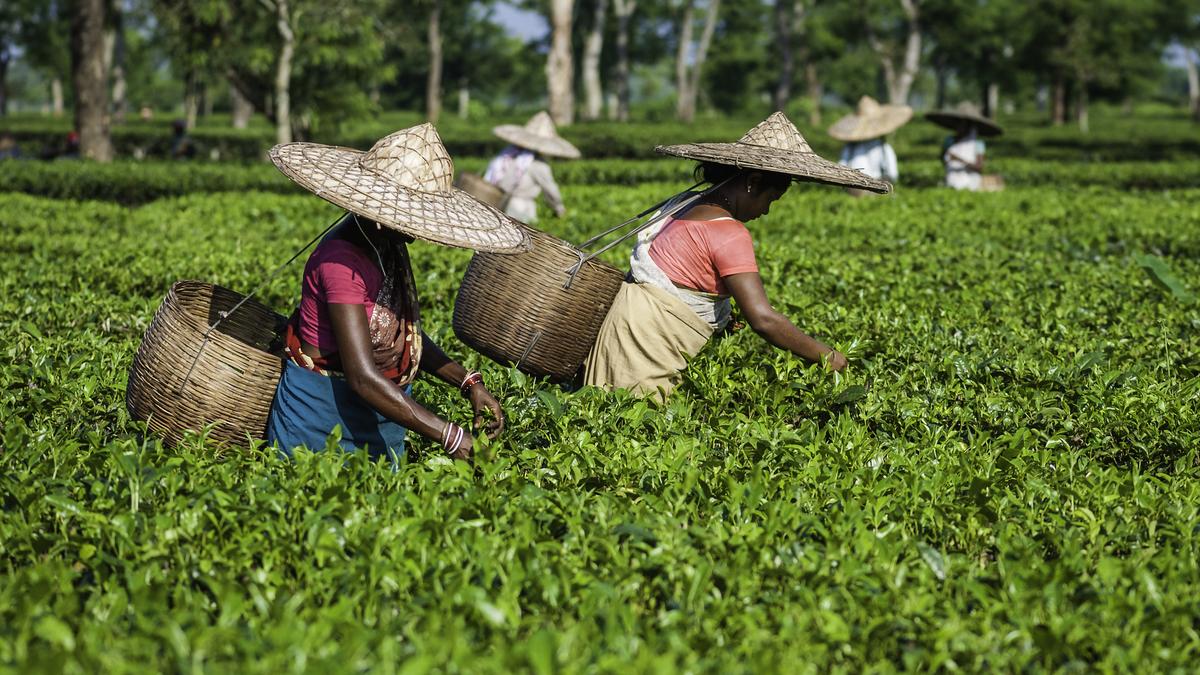
The tea plant was introduced to Assam in the 19th century and has since become both a global commodity and the economic lifeline for over 12 lakh workers, many of them women. Yet its fragile harmony with the local environment is being tested.
Extended dry spells, abrupt downpours, rising night-time temperatures, and new pest patterns are making tea yields increasingly unpredictable. Farmers speak of blackened leaves, wilting bushes, and erratic flush cycles that defy long-trusted weather cues.
“We have not seen such weather-induced stress in 30 years,” Tea Board advisor N.K. Bezbaruah said recently, underscoring how climate change is steadily eroding the ecological and economic stability of the State’s tea heartland.
Despite such hardships, tea prices have barely kept pace with inflation. Auction prices in India have reportedly grown by only 4.8% annually in the last three decades, versus 10% for staples like wheat and rice. In real terms, returns to tea growers remain stagnant, squeezed between climate shocks and rising costs of wages, agrochemicals, energy, logistics, and irrigation. Tea prices have turned volatile and, despite short-lived corrections, the long-term trend shows no gainful improvement.
For Assam’s planters, this is a cruel paradox: the weather grows harsher but the market offers no reward for resilience. Many estates now face shrinking margins and ageing bushes, unable to reinvest in climate-resilient varieties. The very regions that power India’s $10 billion tea economy now confront a future where climate unpredictability threatens both livelihoods and the legacy of one of the world’s most popular beverages.
Growing tea
Tea thrives within narrow environmental parameters: an annual temperature range of about 13º to 28º C, with optimal growth occurring when mean temperatures remain close to 23-25º C. Rainfall requirements are equally stringent, averaging 1,500-2,500 mm per year, distributed evenly to keep soils consistently moist but well-drained. Tea also prefers slightly acidic soils (pH 4.5-5.5) that are deep, friable, and rich in organic matter — conditions once abundant across the Brahmaputra valley.
Climate change is altering these thresholds. Rising mean and maximum temperatures, shifts in rainfall seasonality, and declining soil moisture now challenge the very foundation of tea cultivation in the region.
One study by the Tea Research Association and the Ethical Tea Partnership modelled the future of Assam’s tea under future climate scenarios described by the UN Intergovernmental Panel on Climate Change (IPCC). Specifically, the projections for Assam’s tea regions were developed using Global Circulation Models under the IPCC’s RCP 2.6 and RCP 4.5 scenarios.
The researchers combined 50 years of historical climate data, including rainfall, temperature, and bioclimatic variables, with future climate grids generated by the WorldClim database at a resolution of 1 km. Using the MaxEnt species distribution model, they mapped the current suitability of tea-growing regions and predicted shifts by 2050.
They found that both minimum and maximum temperatures are set to climb across all regions, stressing plants and reducing nutrient absorption. Precipitation was projected to decline in winter and pre-monsoon months — critical for plant growth — while increasing erratically during the monsoon. Currently, South Bank, Upper Assam, and Cachar enjoy “very good” suitability for tea, but by 2050 these areas could lose much of their advantage, forcing tea cultivation to shift towards higher altitudes like Karbi Anglong and Dima Hasao.
Flavour and aroma — the hallmarks of premium Assam teas — depend on precise climatic rhythms. Erratic weather will thus disrupt this delicate balance as well, threatening global competitiveness.
The study also found that the average minimum temperature in Assam had risen by 1º C in the last 90 years and that the region also lost around 200 mm of rainfall a year in this time.
Perhaps a more serious problem is the increased incidence of new pests and diseases attacking tea bushes. Extreme heat above 35º C hampers tea plants’ ability to absorb nutrients, stunting leaf growth and making the tea bushes vulnerable to pests. Unlike the paddy farmers of Punjab, the tea growers of Assam receive little government aid when drought or heat strikes.
Adapting to a warmer future
Tea growers, researchers, and corporations have been encouraging climate-resilient practices, such as seed-grown varieties with deep taproots alongside high-yield clones to strengthen resilience to drought. Soil conservation measures such as mulching, cover crops, and organic amendments can help retain moisture while agroforestry through shade trees and companion crops can moderate heat stress and reduce pest pressure.
Innovations in water management, including micro-irrigation, rainwater harvesting, and drainage systems that mitigate both drought and flooding risks are equally important.
Multistakeholder programmes such as ‘trustea’, the India Sustainable Tea Code, are already contributing to a climate resilient supply chain by verifying 1.4 lakh small growers and reaching 6.5 lakh workers through sustainable agriculture practices, efficient water use, and integrated pest management, thus building climate resilience at scale.
Economic diversification into fruits and spices, speciality and organic teas, fisheries and livestock, tea tourism, and direct-to-consumer trade can further cushion the industry against climate risks. The industry also needs policy support that treats tea on par with other crops, sustained investment in research, and capacity building to secure the future of every cup of Assam tea.
The tea tribes that form the backbone of Assam’s plantation workforce, also represent a powerful political constituency. With State elections due in early 2026, their concerns over rising costs, stagnant wages, and climate-driven hardship are likely to feature prominently, turning the State’s tea gardens into a crucial arena of both livelihood and electoral debate.
Anurag Priyadarshi is former Sustainability Director at Tata Consumer Products and a non-executive director at the Rainforest Alliance (USA), the world’s largest sustainable agriculture program.