Skip to content
  • Facebook
  • X
  • Linkedin
  • WhatsApp
  • YouTube
  • Associate Journalism
  • About Us
  • Privacy Policy
  • 033-46046046
  • editor@artifex.news
Artifex.News

Artifex.News

Stay Connected. Stay Informed.

  • Breaking News
  • World
  • Nation
  • Sports
  • Business
  • Science
  • Entertainment
  • Lifestyle
  • Toggle search form
  • Access Denied World
  • IPL 2024 Playoffs: 2 Scenarios That Would See RCB Secure Top 4 Berth
    IPL 2024 Playoffs: 2 Scenarios That Would See RCB Secure Top 4 Berth Sports
  • Continued focus on infrastructure, inclusive development
    Continued focus on infrastructure, inclusive development Business
  • Watch: What to expect from the Trump-Xi summit
    Watch: What to expect from the Trump-Xi summit World
  • Top NDMA Official Kamal Kishore Appointed Special Representative Of UN Disaster Risk Reduction
    Top NDMA Official Kamal Kishore Appointed Special Representative Of UN Disaster Risk Reduction Nation
  • Wayanad township houses on schedule, to be completed by Oct 31: Keralam Minister Siddique
    Wayanad township houses on schedule, to be completed by Oct 31: Keralam Minister Siddique Nation
  • People of Srinagar remain reluctant voters as district records 29.24% turnout
    People of Srinagar remain reluctant voters as district records 29.24% turnout Nation
  • Man Robs Three Houses To Fund Maha Kumbh Travel
    Man Robs Three Houses To Fund Maha Kumbh Travel Nation
What’s the issue with the way Africa is shown on maps? | Explained

What’s the issue with the way Africa is shown on maps? | Explained

Posted on August 22, 2025 By admin


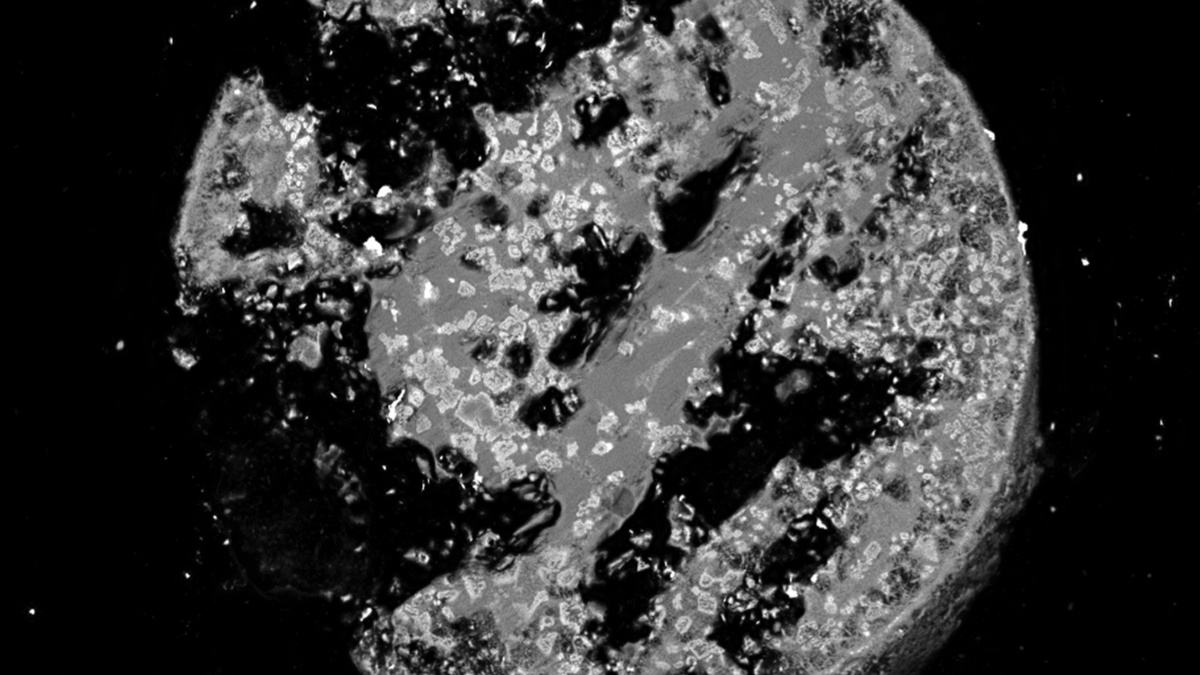
The story so far: The African Union (AU) has endorsed the ‘Correct the Map’ campaign to replace the Mercator map projection with alternatives such as the Equal Earth map. At the heart of this demand is the charge that the Mercator projection, still widely used in schools, media, and online platforms, systematically distorts the sizes of landmasses, shrinking Africa while inflating Europe, North America, and Greenland. By backing the call, the AU has expressed hope that a fairer projection will restore geographical accuracy and correct what it characterises as centuries of symbolic marginalisation.

Why is the Mercator map under fire?

The Mercator projection was designed in 1569 by Flemish cartographer Gerardus Mercator, who was trying to solve a navigation problem. When a ship follows a fixed compass direction, the path it traces is a line on a sphere and a curve on flat maps. This made it awkward for sailors to translate a bearing into a usable course they could plot on a chart.

Mercator’s projection stretched the north-south scale so that all rhumb lines appeared as straight lines. Sailors could now draw a straight line across the map at a chosen compass angle and follow that heading consistently at sea. Thus, together with Edward Wright’s 1599 mathematical tables, the Mercator projection is believed to have catalysed European exploration and colonial expansion. To achieve this convenience, Mercator distorted scale: landmasses close to the poles appeared larger while those near the equator appeared smaller than in reality.

As a result, Africa, which covers 30 million sq. km, often appears on Mercator maps roughly as large as Greenland, which is 14x smaller. Europe also looks comparable in size to Africa although the continent is a third as large. Similarly, Canada, Russia, and northern Europe appear bloated while tropical regions like Africa, South America, and India are diminished.

Over time, wall maps in offices, atlases, and on digital platforms defaulted to Mercator’s rectangular format because it was familiar and convenient, further reinforced by textbooks of the 20th century.

However, critics have argued that such distortions subtly condition how people perceive relative importance. A continent depicted as smaller seems less powerful and even less worthy of attention.

Why are maps distorted?

There is no perfect way to flatten the surface of a sphere onto a rectangle, rendering every map a compromise. Mathematicians and cartographers tasked with projecting a globe onto a plane need to distort one or more of area, shape, distance or direction. Experts have said the choice of which property to preserve and which to surrender is a technical as well as political act.

The Mercator projection is a conformal map, which means it preserves local shapes and angles. But to achieve this, Mercator stretched landmasses near the poles, inflating their apparent size and diminishing those of equatorial regions like Africa and South America.

By contrast, the Equal Earth projection preserves the relative sizes of continents and countries, ensuring that Africa appears far larger than Europe or Greenland, as it is in reality. However, landmasses also appear curved or stretched. The orthographic projection makes a different trade-off. It portrays the earth as it would look from space, as if viewed from a great distance. While this choice makes it visually intuitive, this projection is limited by the fact that it shows only one hemisphere at a time and areas near the edges appear compressed.

How does the distortion affect Africa?

Experts have said for many years now that the Mercator projection has reinforced Africa’s marginalisation in the global imagination. By making the continent look small, the map suggested, consciously or not, that Africa was less consequential. This perception seeped into textbooks, policymaking, and popular culture.

As Rabah Arezki, a former World Bank economist, has said, the “standard projection was a political tool” that aided colonial domination, making Africa look “small and conquerable then” and “irrelevant now”. Likewise, the AU’s deputy chairperson Selma Malika Haddadi has described the Mercator map as falsely portraying Africa as “marginal”.

Thus, the AU as well as advocacy groups like Africa No Filter and Speak Up Africa have articulated a move away from the Mercator projection as a way to reclaim dignity.

What happens next?

The leading alternative to the Mercator projection is the Equal Earth projection, created in 2018 by Tom Patterson (US National Park Service), Bojan Šavrič (then with American GIS company Esri), and Bernhard Jenny (Monash University, Australia). It preserves relative areas sacrificing shape, i.e. continents appear stretched or curved.

The Equal Earth projection preserves the relative sizes of continents and countries, ensuring Africa appears far larger than Europe or Greenland, as it is in reality. However, landmasses also appear curved or stretched.
| Photo Credit:
Strebe (CC BY-SA)

Another option is the Gall-Peters projection repopularised in the 1970s. It also preserves area but stretches continents vertically, making them appear elongated. Just as Mercator wanted to help sailors, as political scientist Arthur Klinghoffer wrote in his 2006 book, ‘The Power of Projections’, “Peters was trying to challenge basic assumptions inherent in the Mercator projection with the aim of influencing social and political attitudes. His elongated images were shocking, and made people examine their cartographical frame of reference.”

In 1979, a 21-year-old Australian named Stuart McArthur published the “Universal Corrective Map of the World” that turned the world map 180° and showed Australia at the top. He was reportedly sick of being teased as being from “Down Under”.

The AU’s endorsement is the most significant institutional backing yet for the ‘Correct the Map’ campaign. Campaigners have also petitioned the U.N. Committee of Experts on Global Geospatial Information Management to adopt Equal Earth. The World Bank has already said it is phasing out Mercator in favour of Equal Earth. National Geographic and NASA’s Goddard Institute for Space Studies have also been using it. Google Maps introduced a 3D globe option in 2018, although its mobile app still defaults to Mercator.

This isn’t expected to be easy, however, as the Mercator projection is entrenched in classrooms, news graphics, and even some AU-affiliated websites. Displacing it altogether will entail revising textbooks, redesigning curricula, updating digital interfaces, and overcoming institutional inertia.

Published – August 22, 2025 11:15 am IST


Source link

Science

Post navigation

Previous Post: Access Denied
Next Post: Access Denied

Related Posts

  • Previously unknown alloy found in Hiroshima blast debris
    Previously unknown alloy found in Hiroshima blast debris Science
  • Counting calories: a brief history
    Counting calories: a brief history Science
  • Solar Eclipse February 2026: Where, when and how to watch it in India?
    Solar Eclipse February 2026: Where, when and how to watch it in India? Science
  • Major oil spill threatens Hara mangrove forests in Persian Gulf
    Major oil spill threatens Hara mangrove forests in Persian Gulf Science
  • AI a ‘big opportunity’, essential to ensure its benefits reach all: President Murmu
    AI a ‘big opportunity’, essential to ensure its benefits reach all: President Murmu Science
  • What likely caused the extreme ice-age more than 700 million years ago?
    What likely caused the extreme ice-age more than 700 million years ago? Science

More Related Articles

NASA just shut down a planetary defence mission that tracks asteroids. Now what? NASA just shut down a planetary defence mission that tracks asteroids. Now what? Science
SpaceX Falcon 9 may resume flights while FAA probe underway SpaceX Falcon 9 may resume flights while FAA probe underway Science
NASA says decision on Boeing Starliner crew’s path home coming Saturday NASA says decision on Boeing Starliner crew’s path home coming Saturday Science
How BioPharma SHAKTI can transform biologics with non-animal models How BioPharma SHAKTI can transform biologics with non-animal models Science
A decade among the stars: India’s first space observatory AstroSat completes 10 years A decade among the stars: India’s first space observatory AstroSat completes 10 years Science
Sci-Five | The Hindu Science Quiz: On Planetary Nebula Sci-Five | The Hindu Science Quiz: On Planetary Nebula Science
SiteLock

Archives

  • October 2026
  • September 2026
  • August 2026
  • July 2026
  • June 2026
  • May 2026
  • April 2026
  • March 2026
  • February 2026
  • January 2026
  • December 2025
  • November 2025
  • October 2025
  • September 2025
  • August 2025
  • July 2025
  • June 2025
  • May 2025
  • April 2025
  • March 2025
  • February 2025
  • January 2025
  • December 2024
  • November 2024
  • October 2024
  • September 2024
  • August 2024
  • July 2024
  • June 2024
  • May 2024
  • April 2024
  • March 2024
  • February 2024
  • January 2024
  • December 2023
  • November 2023
  • October 2023
  • September 2023
  • August 2023
  • July 2023
  • June 2023
  • May 2023
  • April 2023
  • March 2023
  • February 2023
  • January 2023
  • December 2022
  • November 2022
  • October 2022
  • September 2022
  • August 2022
  • July 2022
  • June 2022
  • May 2022

Categories

  • Business
  • Nation
  • Science
  • Sports
  • World

Recent Posts

  • Poor rains this monsoon bleed farmers, power utilities
  • U.S. lawmakers express outrage over foiled plot to attack Hindu temple in Illinois
  • CJP Tiranga rally: Movement around Connaught place likely to be affected, says Delhi Traffic police
  • Netflix names former Disney executive Rice as new content chief as Bajaria departs
  • CJP Tiranga march LIVE | Delhi Police allows flag-waving by select group, urges public to stay away

Recent Comments

  1. Davidbrurf on UP Teacher Who Asked Students To Slap Muslim Classmate
  2. Danielwhipt on UP Teacher Who Asked Students To Slap Muslim Classmate
  3. Danielwhipt on UP Teacher Who Asked Students To Slap Muslim Classmate
  4. CharlesGah on UP Teacher Who Asked Students To Slap Muslim Classmate
  5. Danielwhipt on UP Teacher Who Asked Students To Slap Muslim Classmate
  • Access Denied
    Access Denied Nation
  • Access Denied
    Access Denied Nation
  • Infosys Receives Rs 341 Crore Tax Demand For Assessment Year 2020-21
    Infosys Receives Rs 341 Crore Tax Demand For Assessment Year 2020-21 Nation
  • The ingredients of India’s biopharma ambitions
    The ingredients of India’s biopharma ambitions Science
  • Iran Nuclear Facilities More Exposed Than Ever To Strikes: Israeli Minister
    Iran Nuclear Facilities More Exposed Than Ever To Strikes: Israeli Minister World
  • After Amit Shah’s “Treachery” Attack, Sharad Pawar’s “Decorum” Counter
    After Amit Shah’s “Treachery” Attack, Sharad Pawar’s “Decorum” Counter Nation
  • Indian Institute of Astrophysics astronomers find new method to predict amplitude of upcoming solar cycle
    Indian Institute of Astrophysics astronomers find new method to predict amplitude of upcoming solar cycle Science
  • Access Denied World

Editor-in-Chief:
Mohammad Ariff,
MSW, MAJMC, BSW, DTL, CTS, CNM, CCR, CAL, RSL, ASOC.
editor@artifex.news

Associate Editors:
1. Zenellis R. Tuba,
zenelis@artifex.news
2. Haris Daniyel
daniyel@artifex.news

Photograher:
Rohan Das
rohan@artifex.news

Associate Journalists
1. Subrata Paul - AN/2020/01
2. Quamruz Zaman - AN/2021/22
3. Ahmed Sha - AN/2021/035
4. Ajay Kumar Shaw - AN/2021/39
5. Tahqiqul Hoda - AN/2021/21

Artifex.News offers Online Paid Internships to college students from India and Abroad. Interns will get a PRESS CARD and other online offers.
Send your CV (Subjectline: Paid Internship) to internship@artifex.news

Links:
Associate Journalism
About Us
Privacy Policy

News Links:
Breaking News
World
Nation
Sports
Business
Entertainment
Lifestyle

Registered Office:
72/A, Elliot Road, Kolkata - 700016
Tel: 033-22277777, 033-22172217
Email: office@artifex.news

Editorial Office / News Desk:
No. 13, Mezzanine Floor, Esplanade Metro Rail Station,
12 J. L. Nehru Road, Kolkata - 700069.
(Entry from Gate No. 5)
Tel: 033-46011099, 033-46046046
Email: editor@artifex.news

Copyright © 2023 Artifex.News Newsportal designed by Artifex Infotech.